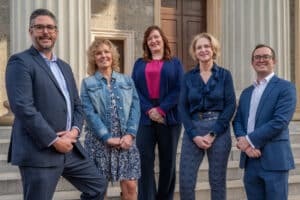
In the five years since Archbishop William E. Lori established the Institute for Evangelization – building on the work of a former Department of Evangelization but significantly expanding its scope and reach – it has become a spark and an inspiration, bringing encouragement and resources to parishes as they help form missionary disciples.
“We had a wonderful Department of Evangelization, but only a limited number of parishes engaged it,” before the change, the archbishop said. “Now, almost every parish is engaged by the institute.”
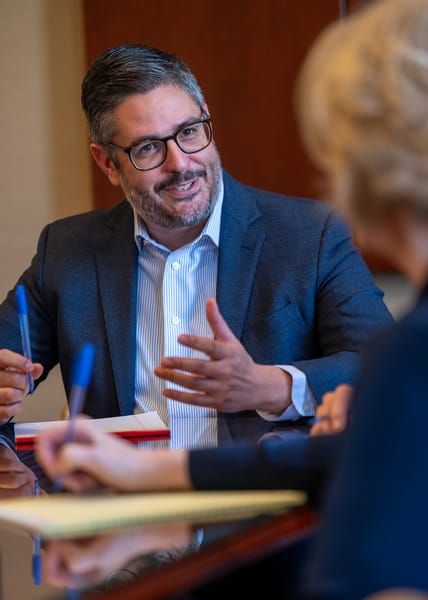
Under the leadership of Executive Director Edward Herrera, the institute unites several archdiocesan offices that support faith formation and pastoral ministry, including marriage and family life, campus ministry, youth and young adult ministry, ministry to incarcerated people and their families, divine worship and ministry to people with disabilities. Together, they serve parishes not with a single program but with a posture of accompaniment.
Through the Office of Parish Renewal, Emmaus Teams meet regularly with pastors and parish leaders to listen, assess local realities and help identify practical next steps. That approach reflects a broader insight Archbishop Lori said has emerged repeatedly in parish work.
“One thing that we are finding pretty much across the board is that in order to form our young people in the faith, we must form them in the family with mom and dad, brothers and sisters,” Archbishop Lori said, adding that this makes it less of a burden or obligation and more a part of family life.
“It makes the home a place where the faith is taught and handed on,” he said.
Families at the center
That conviction has taken concrete shape at St. John in Westminster, where Father Mark Bialek said the institute helped the parish rethink family faith formation, also called whole-life catechesis. After Archbishop Lori issued new sacramental guidelines, St. John became one of the first parishes in a pilot program celebrating confirmation at age 9.
Father Bialek said the Church once assumed that evangelizing children would naturally draw parents deeper into the faith. Experience, he said, has shown the reverse is often true. Many parents have not received sustained formation since their own confirmation.
“Allowing mom and dad to be there as we’re forming their son or daughter is much more of a collaborative approach,” he said.
According to Kenn deMoll, director of formation and innovation, survey results from the parish’s Fire Fellowship program showed measurable growth. Seventy-five percent of respondents said their family prioritized Mass more intentionally, 63 percent said conversations about God became more natural, and half reported growth in their prayer life.
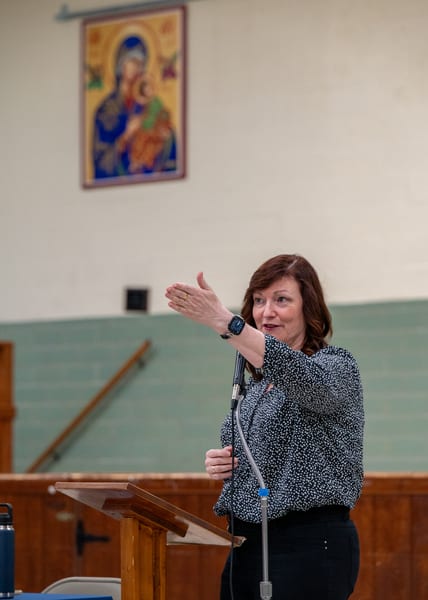
While results vary by family, Father Bialek said the approach allows parishes to meet people where they are. “You’re trying to individualize things,” he said, “because they’re all in different parts of the journey.”
The parish also encouraged confirmation families to use the Hallow prayer app, and found that even after confirmation, they were committing to daily prayer.
“While anecdotal, a number of parents have mentioned how special it was for them to receive confession on their child’s first confession retreat. From the parents who have shared, that experience really was motivating for them to help their child receive the sacraments and to develop a greater sacramental life as a family,” deMoll said.
Measuring mission, not just attendance
Father Bialek said it is hard to measure success in evangelization because what works for some families won’t work for others. “You might have a general plan for everybody, but then you’re really kind of homing in and you’re trying to individualize things for particular families to see how it’s going to better work for their schedule and where they are in the life of faith, because they’re all in different parts of the journey,” he said.
In a similar way, the Institute for Evangelization staffers work with each parish to see what its needs are. The Emmaus Teams within the Office of Parish Renewal are one way the institute does this, with two parish renewal specialists assigned to each of three regions of the archdiocese. Archbishop Lori notes that recalls how Jesus sent out his disciples two-by-two in the early Church.
Father Stephen Hook, pastor of Our Lady of the Chesapeake in Lake Shore and St. Jane Frances in Riviera Beach, works with Wayne Hipley and Kristen Stamathis, the specialists who help in his area. His two parishes, which combined in the last few years into a pastorate, are drafting a plan, based on listening sessions held in the parish and monthly meetings with parish staff.
Hipley especially has been helpful to Father Hook in providing resources, best practices and mentorship. He and parish renewal specialists also help with accountability, Father Hook said.
As executive director of the Institute for Evangelization, Herrera said even its work has evolved in the five years since its establishment. The goal remains to assess the needs of parishes and support and engage them.
He noted that Archbishop Lori cast his vision for evangelization in his first pastoral letter, “A Light Brightly Visible,” in 2015. A follow up, “A Light Brightly Visible 2.0” in 2021 gave the institute its charge as it reflected on how the Church and society would emerge from the COVID pandemic.
In “A Light Brightly Visible 3.0,” released in 2025 and focused on implementation of the Seek the City to Come initiative that merged parishes in the city, the archbishop noted, “While the renewal of the Church is by no means confined to individuals, nonetheless the heart of the Gospel, the kerygma, must shine forth in the minds and hearts of those in leadership, whether clergy, religious or lay. Preaching and formation must be done in an attractive, missionary spirit. The door must be open to a new generation of Church leadership, formed in missionary discipleship.”
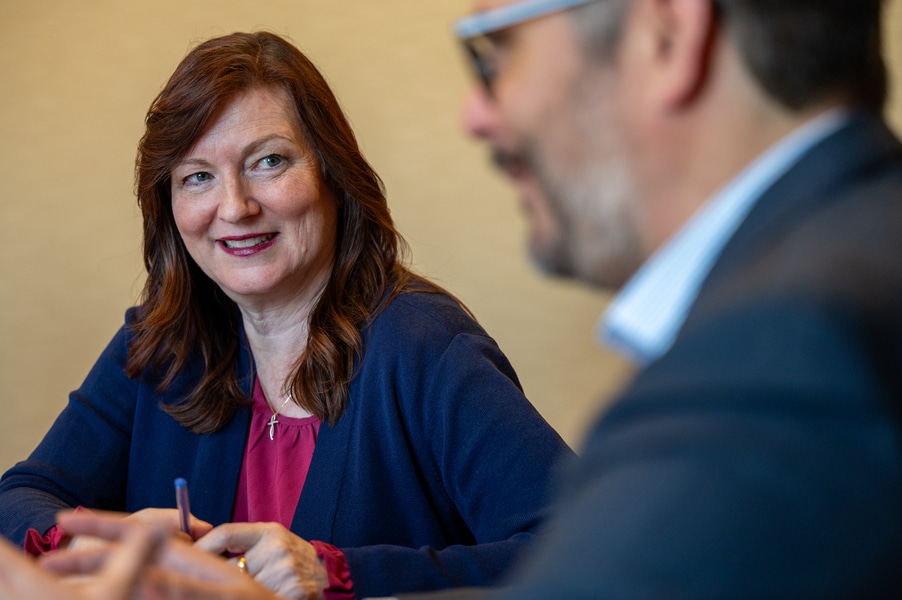
Herrera said the institute strives to accompany parish leaders so that they can, as Archbishop Lori said, “enliven the evangelizing work of the local church.”
That shifts the focus from programmatic – creating and running programs for different age groups – to accompaniment, that is, working with parish staff and leaders to refocus their efforts with parishioners and families.
He said he hopes the institute can continue to support parishes affected by Seek the City as they carry out their mission of evangelization. He also wants to help parishes assess where they are and where they want to be. “One of the challenges for renewal is that we aren’t the best at essentially measuring things, you know, like we’ve got certain key metrics,” he said.
The archdiocese already measures some things, such as attendance at Masses, sacraments administered and number of people educated in Catholic schools and formation programs. Those are often lagging metrics, in that the information is gathered after the fact, for example, tabulated every fall in the Annual Consolidated Report by the archdiocese. Even so, he said, there is some positive movement in Mass attendance. And Father Bialek noted that St. John experienced double-digit growth in Christmas Mass attendance in 2025.
“But I think we also want to, at a certain point, be looking at our individuals in our parishes growing in discipleship and growing in relationship with the Lord,” Herrera said, “and that’s a harder thing to measure.”
All the parishes in the archdiocese now use Ministry Platform to manage parishioner information. Eventually, that could provide data on how many people are involved in small faith groups or mission programs, Herrera said. “It’s kind of a culture shift that we need to make so that that way we can look strategically at how we’re moving our parishes forward,” he said.
Uncommon structure
The structure of the Institute for Evangelization is unusual among other dioceses in the country. Julia Dezelski, associate director of Marriage and Family Life at the U.S. Conference of Catholic Bishops, said she knows of no other such framework. “It really may have just been an inspiration to Archbishop Lori to rethink things in a different way,” she said.
From her perspective at the national level, it would be easier if every diocese had the same structure and programs, but just as each parish is different, so are the needs of each diocese. “Every diocese should really meet the needs of its local church in the way that is most effective. But I think the Institute for Evangelization is really an innovative way of reaching the people in the parish.”
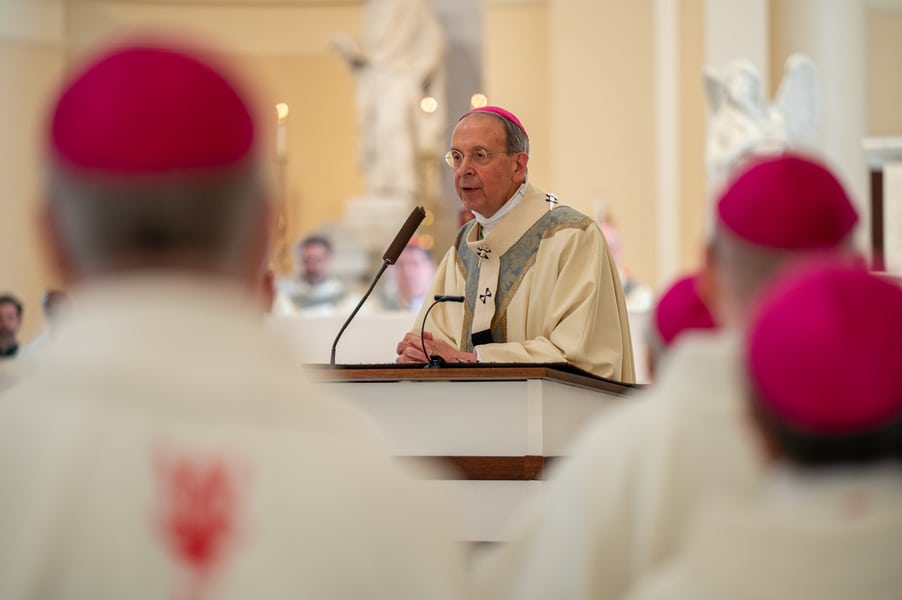
She said the archbishop’s vision of the fundamental goal of mission work, with the parish as the hub of missionary activity, is important. The fact that through the parish renewal teams, the archdiocesan staff become collaborators with parishes helps ensure the archdiocese can assist the parishes in fulfilling that mission.
She said the structure of the Church can often be seen from the top-down, with the pope, bishops, pastors, etc. But there is also the principle of subsidiarity in Catholic social teaching, in which decisions and functions should be made at the lowest or most local level. “Respecting the principle of subsidiarity allows parishes to have a certain amount of independence,” Dezelski said.
“But there’s also a sense of service,” she said, noting that “superiority only should translate into service, as we know from Christ himself.”
Dezelski said that when the archdiocese places itself at the service of the parish, as it does with parish renewal specialists, “that’s a perfect example of how the diocese is really meeting the needs of the parish and building up that local church effectively. And so, if the parish knows that it can reach out to the diocese for whatever needs it has, whether they’re pastoral or more practical … that’s a real wonderful example of how there’s a certain respect and also a sense of service that is being provided there.”
The institute’s Herrera sums it up: “Bureaucracies don’t evangelize, right? …
“Evangelization happens locally at the parishes, and it’s our job as the institute to really support and equip parish leaders, accompany pastors and parish leaderships in doing that work of evangelization,” he said.
The institute for Evangelization includes several offices and divisions:
Executive Director
Office for Parish Renewal
Office of Divine Worship and Archdiocesan Music
Office of Family, Youth and Young Adult Ministry
Marriage
Family
Youth Ministry
Missionary Discipleship
Catholic Youth Sports
College Campus Ministry
Liaison with Ministries at Catholic Universities
Young Adult Ministry
Office of Life, Justice and Peace
Respect Life
Disabilities Ministry
Deaf Ministry
Prison Ministry
O’Dwyer Retreat Center
Email Christopher Gunty at editor@CatholicReview.org
Read More Local News
Copyright © 2026 Catholic Review Media
