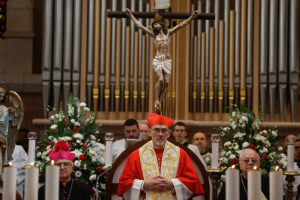
Cardinal Pierbattista Pizzaballa said the use of God’s name to justify war is a grave sin, stressing that God is present with those who suffer and die in conflict, not with those who exploit religion for political ends.
“The abuse and manipulation of God’s name to justify this and any other war is the gravest sin we can commit at this time,” the prelate said. “War is first and foremost political and has very material interests, like most wars.”
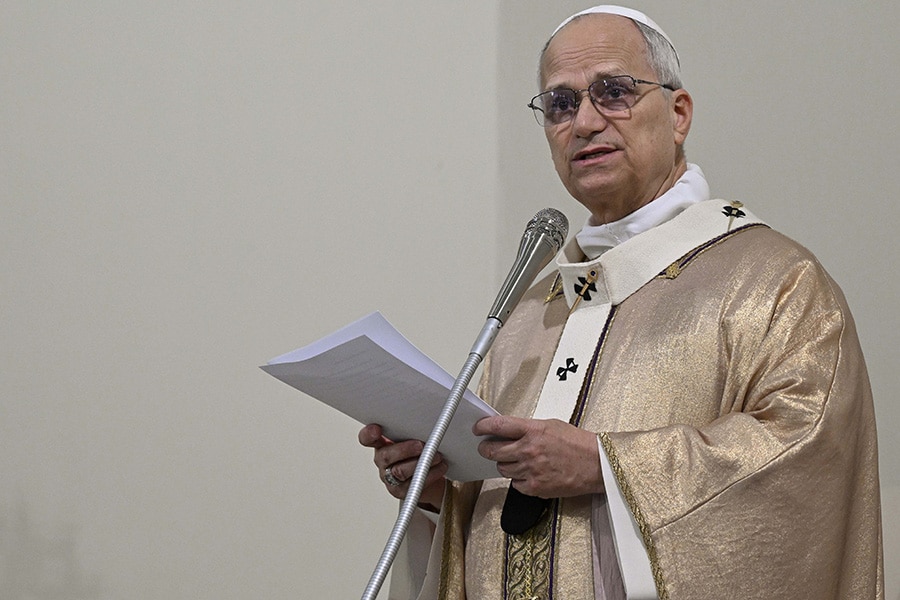
Speaking via video link from Jerusalem at a March 15 webinar organized by the International Oasis Foundation, Cardinal Pizzaballa, the Latin patriarch of Jerusalem, warned against what he described as “pseudo-religious language.”
“We must do everything we can to leave no room for this pseudo-religious language, which speaks not of God, but of ourselves,” he said, speaking publicly for the first time since the U.S. and Israel-Iran war broke out Feb. 28.
His remarks were published first by the Pontifical Institute for Foreign Missions’ AsiaNews agency March 16. The organizer of the webinar, the Italian Oasis Foundation, is a Catholic organization based in Milan and dedicated to fostering mutual understanding and dialogue between Christians and Muslims. It was founded in 2004 in Venice by Cardinal Angelo Scola, then patriarch of Venice and later archbishop of Milan.
Responding to remarks by U.S. Defense Secretary Pete Hegseth, who cited Psalm 144 during a March 10 Pentagon briefing, Cardinal Pizzaballa said believers must reject attempts to frame the conflict in religious terms.
“There are no new crusades,” he said.
“If God is present in this war, He is among those who are dying, who are suffering, who are in pain, who are oppressed in various ways, throughout the Middle East,” the patriarch said.
“This conflict has religious connotations, but they are manipulations: those who wish to bring religion into it exploit the name of God,” he underlined.
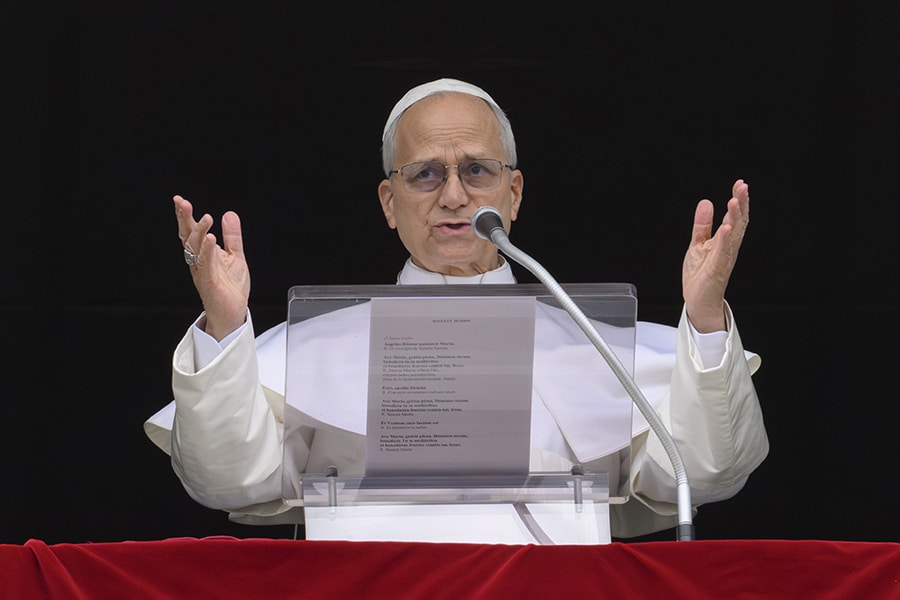
Cardinal Pizzaballa also referred to repeated appeals for peace by Pope Leo XIV, acknowledging they are unlikely to be heeded.
“We know that Leo XIV’s appeals will fall on deaf ears,” he said, “but we must continue to speak the truth. Information is a weapon in this conflict.”
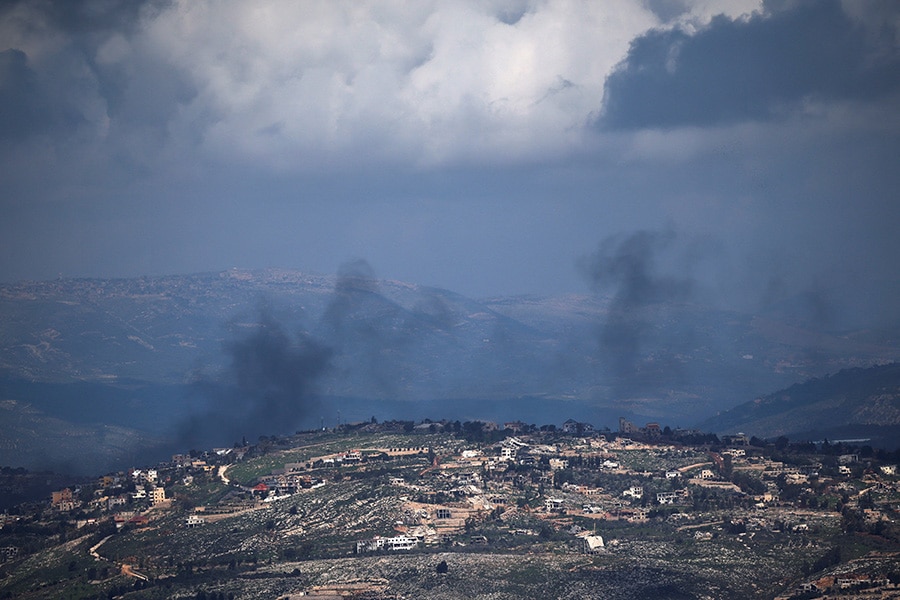
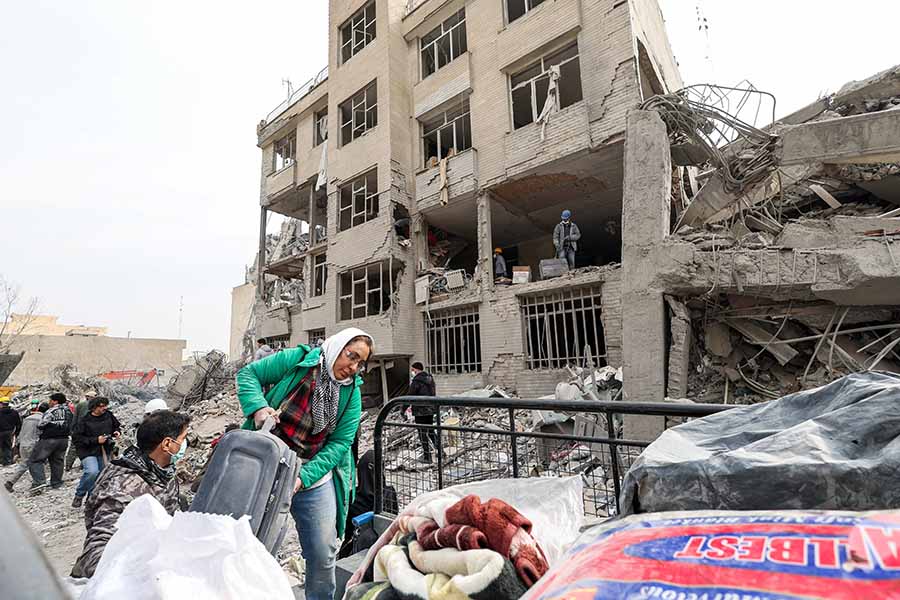
He said decades of violence in the Middle East have produced “the human devastation in which we now find ourselves.”
“What is built on violence perishes; it has no future, but it also creates a void around itself: fear, resentment, hatred — all that which, in Christian language, belongs to the world of death. It does not allow you to see anything beyond yourself,” the cardinal underlined.
The cardinal also highlighted the role of media in shaping perceptions of the conflict, describing information as “part of the conflict itself.”
“The role of journalists is not merely to report the news, but to scrutinize it critically, to help the reader make sense of what we find, to provide as accurate an interpretation as possible, or at the very least to help them form a critical view and make their own judgment,” he said.
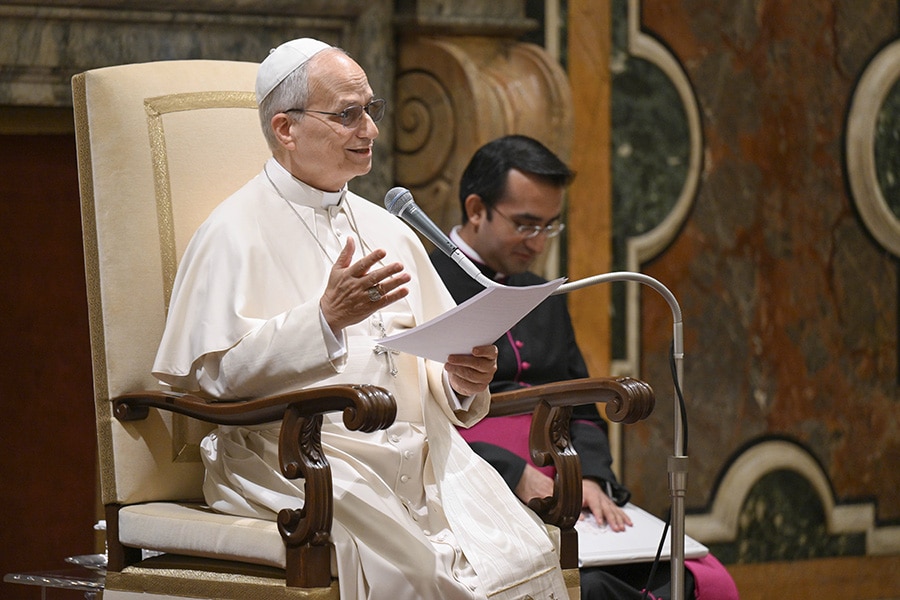
A day after Cardinal Pizzaballa spoke in the live-streamed event, Pope Leo urged the media to show the human face of suffering amid war and to verify news so as not to recirculate “propaganda” or become a “mouthpiece for those in power.”
“Always, but especially in the dramatic circumstances of war, such as those we are currently experiencing, the media must guard against the risk of becoming propaganda,” the pope said in an address to broadcast journalists who produce the TG2 news programs for the Italian state-owned television channel, Rai 2.
Cardinal Pizzaballa further pointed to what he described as an information blackout surrounding Gaza, where he said humanitarian conditions remain severe. About 2 million people are displaced, much of the territory is destroyed and medical supplies, including basic antibiotics, are scarce, he said.
“Gaza has been forgotten, yet the situation remains dire. In the West Bank, there are almost daily attacks by settlers on Palestinians,” he pointed out.
Cardinal Pizzaballa is in constant contact with the Holy Family Parish that he last visited ahead of Christmas 2025 on a pastoral visit.
He said, “There is no longer a problem of hunger, but there are still 2 million displaced people, deprived of everything; 80% of the Strip is still destroyed, and no reconstruction has begun,” he pointed out.
“Thirty-six hospitals are partially operational, but medicines are lacking, even basic antibiotics. People are literally living in the sewers; the images cannot convey the smells,” he highlighted.
“It is impossible to understand how and when this dramatic situation will be resolved: The Board of Peace has not yet understood what it should do. And in any case, it is a sort of vicious circle: if Hamas does not hand over its weapons, Israel will not withdraw; Hamas will not hand over its weapons unless Israel withdraws. Everything remains at a standstill,” the cardinal said March 15.
Earlier in February, the leading Holy Land prelate strongly criticized the U.S.-led Board of Peace, an international body chaired by U.S. President Donald Trump to oversee the governance and reconstruction of Gaza.
At a Feb. 6 event at the Roman parish of San Francesco a Ripa Grande, Cardinal Pizzaballa was asked by moderator Maria Gianniti, Rome correspondent for the Italian news channel RAI, about his thoughts on the Board of Peace.
“What do I think of the Board of Peace? I think it is a colonialist operation: others deciding for the Palestinians,” Cardinal Pizzaballa said, according to a report by Italian newspaper Il Sole 24 Ore.
During the March Oasis Foundation event, as reported by AsiaNews, the cardinal said in the West Bank, near-daily attacks by Israeli settlers on Palestinian communities continue, along with widespread movement restrictions and a growing number of checkpoints.
He also expressed concern about recent Israeli government measures affecting land registration and the recognition of Palestinian academic qualifications, warning of further strain on Palestinian communities and Christian institutions, including schools that rely on teachers from nearby areas.
These “are just two examples,” he said, “to illustrate how complicated the situation remains for all of us.”
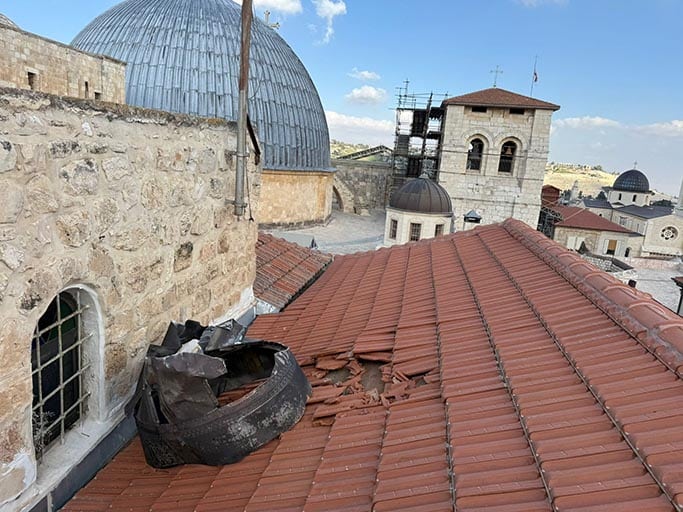
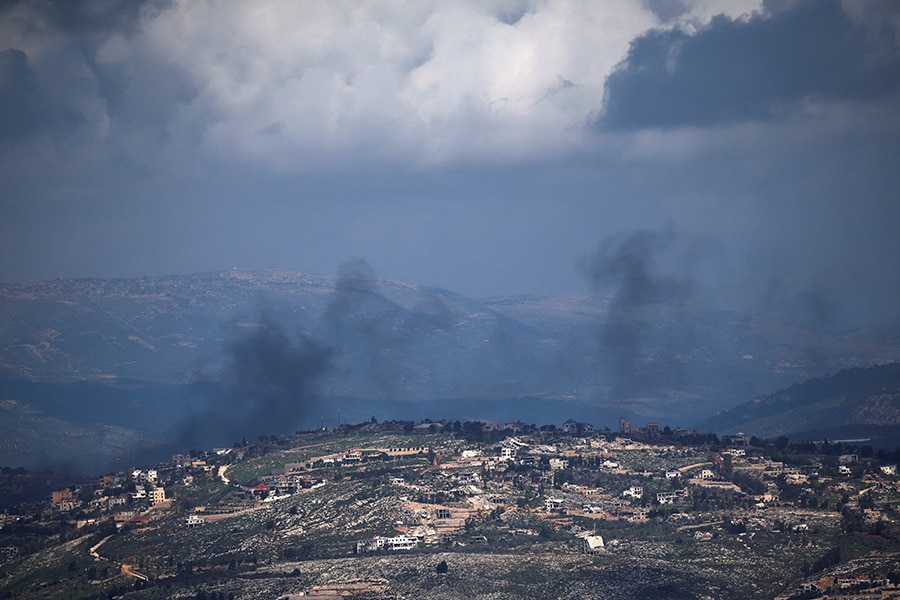
Meanwhile, on March 16, missile and interceptor fragments fell in and around the Old City, including near the Temple Mount, the Church of the Holy Sepulchre, the Jewish Quarter and the Western Wall, The Jerusalem Post reported, with Rabbi Shmuel Rabinowitz of the Western Wall and Holy Sites condemning Iranian fire toward Jerusalem.
Read More Conflict in the Middle East
Copyright © 2026 OSV News
