Josephite Father William Norvel, a forceful voice for Black Catholic identity who spent more than six decades challenging the institutional church to live up to its claim of being universal, died March 8. He was 90.
A pioneer in bringing Gospel music into Catholic liturgy following the Second Vatican Council, Father Norvel helped shape the spiritual life of Black Catholic communities nationwide. He contributed to the groundbreaking Black Catholic hymnal “Lead Me, Guide Me” and founded the first Gospel choirs at Catholic churches in Washington, D.C., and Los Angeles.
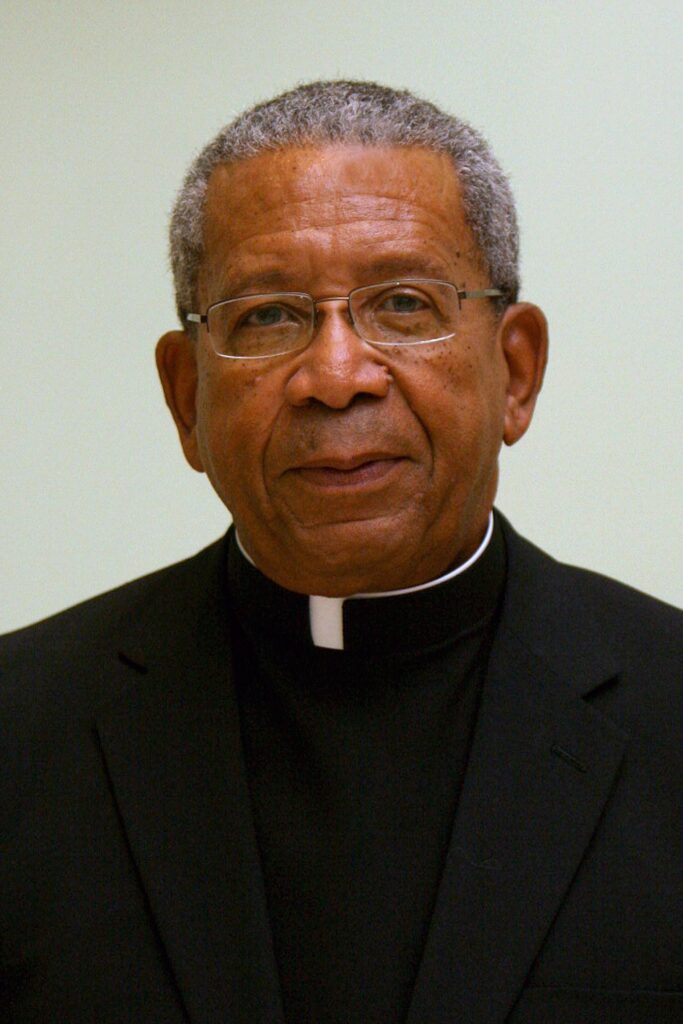
His fellow Josephites later elected him the 13th superior general of his Baltimore-based religious community, the St. Joseph’s Society of the Sacred Heart, making him the first Black man to lead the Josephite community and the first Black to head a Catholic religious community of priests and brothers in the United States.
“He spoke up for Black Catholics in a time when that was still a surprising conversation for the American hierarchy,” said Dominican Father D. Reginald Whitt, adjutant judicial vicar in the Tribunal of the Archdiocese of Baltimore.
As a young Black seminarian studying in Washington in the 1970s, Father Whitt and other Black seminarians looked up to Father Norvel. The Josephite priest often spoke about Black Catholic spirituality and later served as president of the Black Catholic Clergy Caucus from 1985 to 1987.
“He was just a model, holy priest and a true son of the Church,” Father Whitt said. “He always showed intelligence and he instilled in young Black people – not just seminarians, but in the youths of his parishes – a real sense of our God-given dignity.”
From 1996 to 2000, Father Norvel was pastor of St. Francis Xavier in East Baltimore, the first Black Catholic parish in the country, where he had previously served in the late 1960s. During his tenure, he expanded the parish’s choir offerings and oversaw the creation of a chapel.
His pastoral leadership was tested in 1998 when a young woman was shot and killed outside the church as she stepped from her car to drop off children at a day-care center in the parish complex.
Father Norvel rushed to her side with several parishioners just minutes before the start of the parish’s 8 a.m. daily Mass. In the days that followed, he urged the community to respond with faith.
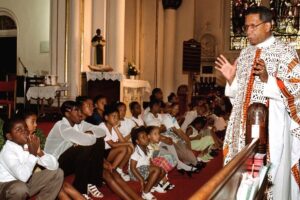
On the first Sunday after the killing, he gathered children around him during Mass and spoke about the sanctity of life and the call to love every person, according to a 1998 Catholic Review story.
“Life is precious,” Father Norvel told the children. “You must cherish life.”
He said that love must extend to every person, “even the drug addicts on the street who make us feel uncomfortable.”
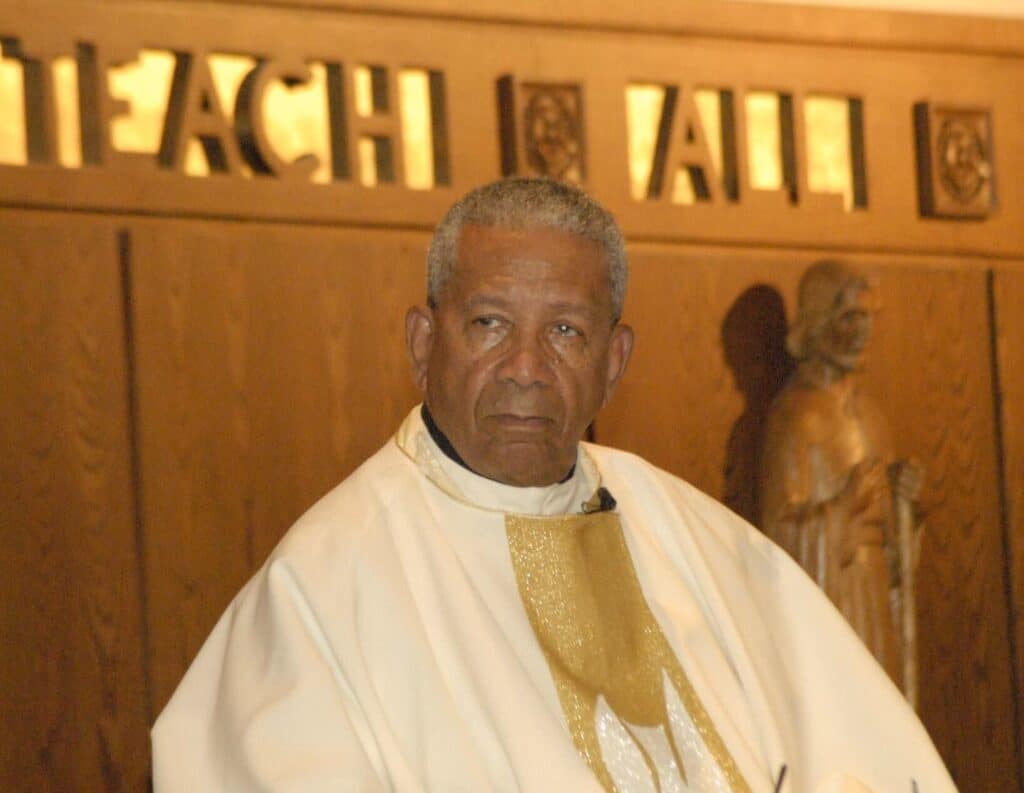
He also said that “we must help families instill principles based on the moral teachings of Jesus Christ.”
Darleen Thomas, former longtime secretary at St. Francis Xavier, said Father Norvel had a “stately” presence and was “very focused.” His homilies were always “very Scripture-focused, detailed and enlightening,” she said, and his expansion of choirs at the parish had a “very positive” effect on the faith community.
“Music helped bring the joy of God to everybody,” Thomas said.
Therese Wilson Favors, former director of Black Catholic ministry for the Archdiocese of Baltimore, said Father Norvel was gifted in helping to “pastorally groom” people for leadership and in launching new initiatives.
“He recognized talent when he saw it blooming,” she said. “He mentored so many people to recognize their purpose and to stay focused on such purposes.”
Favors worked with Father Norvel and Bishop John Ricard, S.S.J., a former auxiliary bishop of Baltimore, in the early days of forming the National Black Catholic Congress when Father Norvel served on the planning committee.
“He often helped us to grow in clarity of the movement and to understand the evangelization potential of such an initiative,” she said.
Josephite Father Donald Fest, a former pastor of St. Veronica in Cherry Hill and current pastor of St. Joseph in Alexandria, Va., said Father Norvel also played a key role in cultivating Josephite vocations in Africa. Father Norvel helped establish a Josephite house of formation in Iperu-Remo, Nigeria, serving as director of formation there in the early 2000s. He helped open the door to numerous Africans becoming Josephite priests serving in the United States.
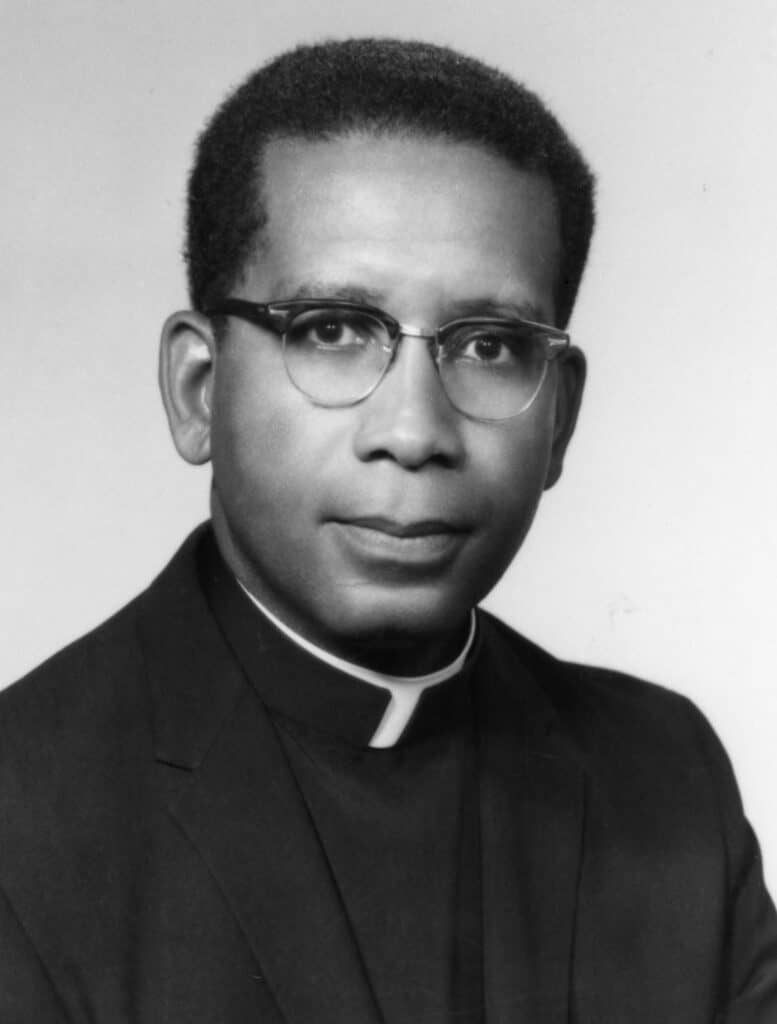
“He had a great influence on the classes that were preparing to come to the United States,” said Father Fest, adding that current priests who knew Father Norvel as seminarians in Africa had a great love for him.
“He introduced them to American things and he even brought an Oblate Sister of Providence to Nigeria to help them with accent modification,” Father Fest said.
Born in Pascagoula, Miss., Father Norvel felt called to the priesthood from a young age. Faced with discrimination in his home diocese, his pastor encouraged him to join the Josephites, a society of priests and brothers dedicated to serving the Black Catholic community.
Father Norvel was ordained to the priesthood in New Orleans in 1965. In addition to serving in Baltimore at St. Francis Xavier, he had assignments in Mississippi; Washington, D.C.; California; Alabama; and Louisiana. He served as superior general of the Josephites from 2011 to 2015. He suffered a stroke in 2019.
“He connected us to our historical and cultural roots,” Favors said. “What a blessing it was to know such a man of faith and vision.”
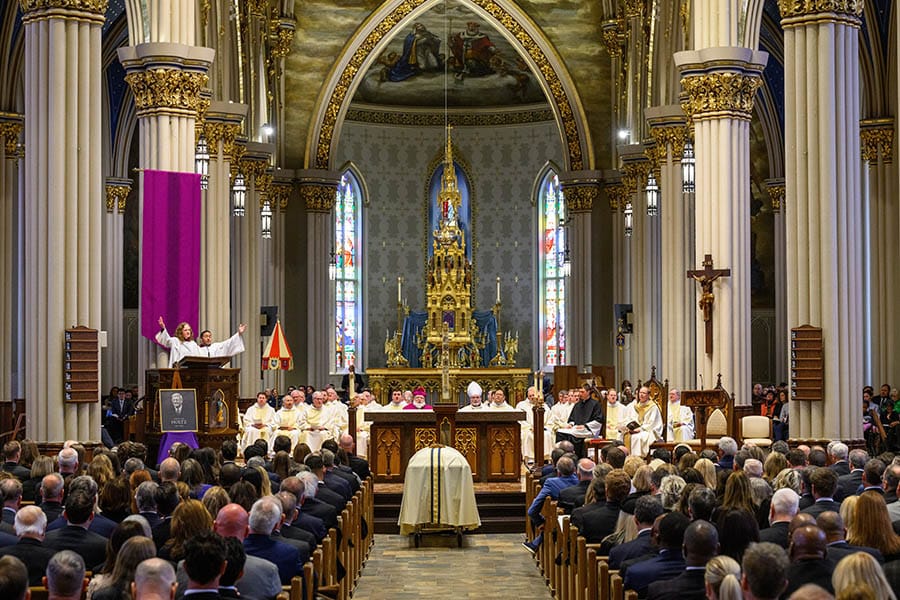
A viewing will be held March 18 from 9 to 11 a.m. at Our Lady of Perpetual Help in Washington, D.C., followed by an 11 a.m. funeral Mass. There will also be a viewing March 26 from 9 to 11 a.m. at St. Peter the Apostle in Pascagoula, Miss., followed by an 11 a.m. memorial Mass.
Email George Matysek at gmatysek@CatholicReview.org
More obituaries
Copyright © 2026 Catholic Review Media
