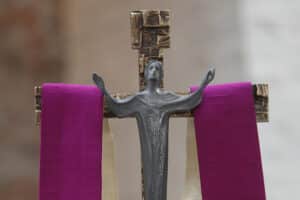
Perhaps fear, after all, is at the root of all sin. I used to think it was selfishness, but it’s not. Even selfishness is rooted in fear.
We can see this in the early wreckage of our Lenten practices: We are afraid of material poverty, and so we selfishly hold back on our almsgiving. We are afraid of hunger, and so we selfishly reach for the bread and chocolate. We are afraid of what we might find within ourselves and our interior lives, and so we selfishly cut short our prayers, or abandon them, completely, for something that we tell ourselves is “more fun” or “more important.”
Obviously, we should not fear these things. Prayer, fasting and charitable giving are edifying and spiritually powerful practices that always, always redound to our benefit.
Be not afraid of giving alms, because God is never outdone in charity. If you think about this, you know it is true.
Be not afraid of fasting, because, as Pope Benedict XVI reminded us, it grows compassion by opening our eyes to the deprivations of others and, acts “as a ‘therapy’ to heal all that prevents (us) from conformity to the will of God,” which should be the ultimate goal of our Christian lives.
Be not afraid of prayer — even the challenging silence of contemplation. Prayer brings us before the feet of Christ and sets loose upon the world a most subversive (yet powerful though unseen) force for good.
Granted, falling short in these three major works of Lent is not actually sinful, but it’s fair to reason that if fear can influence us away from them, it can mislead us in other ways.
Fear of not “keeping up” with neighbors or family members or friends can lead us into living a falsehood that keeps us dishonest, in debt and full of self-doubt.
Fear of being alone can drive us to ignore our gut instincts (which are usually spot-on) and our better angels (who are often responsible for those instincts) and end up trusting the wrong person, or accepting the wrong job, or reaching for the wrong goals until — having planted ourselves far from where God intended — we exist in a desperate misery that leads us into further darkness.
Fear of “missing out” has us embracing political, social or even religious “trends” that we don’t even like, thus surrendering our truest selves to the world rather than to the stability of the unchanging Christ.
We should already know this about fear — it should be obvious, simply because of how frequently some variation of “Do not be afraid” or “Have no fear” or “Do not fear” occurs in Scripture. Jesus, of course, says it a lot. In fact, it’s almost as if he is saying, “do not sin because you are too scared to trust. Do not be afraid to be changed. Do not be afraid of the mob mentalities, or of being jeered at or rejected; do not run away from God’s plans for you, because my father’s plans are always to the good, even if they cost you something — even if they cost your very life. Only do not be afraid, then you can see where you are rightly being led, and can follow in trust.”
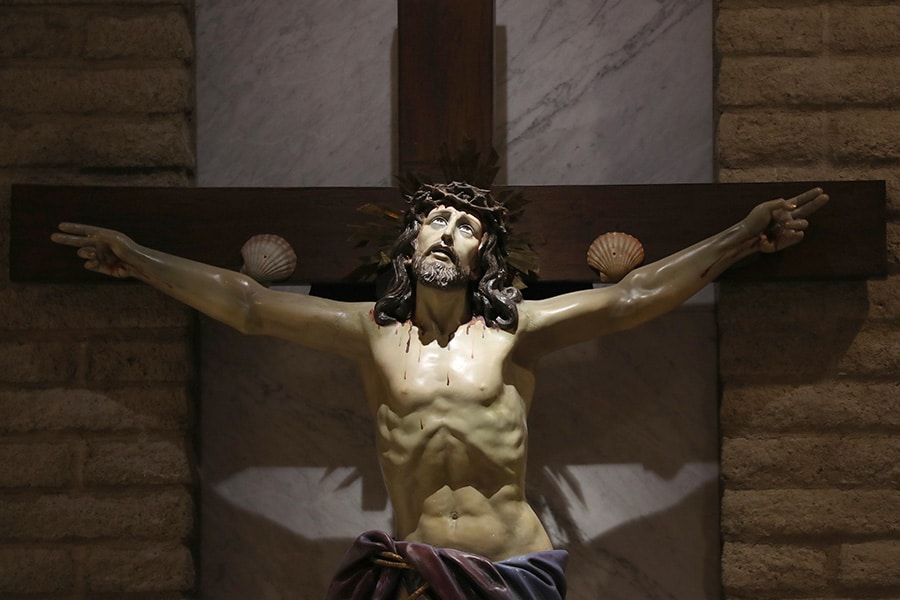
Perhaps Christ said those very things to himself, while praying and sweating blood on the rock of Gethsemane, before backing them up completely in his passion and on the cross.
Of course, Jesus was the perfection of love — the All Love — and perfect love casts out fear (1 Jn 4:18).
It is human to be afraid. But this year, in our Lenten disciplines, let us place all of the fears we’re conscious of — or will admit to — into the vast depths of the Sacred Heart of Jesus, the Christ, who said, “Do not be afraid, little flock, for it is your Father’s good pleasure to give you the kingdom” (Lk 12:32).
Read More Commentary


Copyright © 2026 OSV News
