We human beings cannot earn the ultimate prize of life on our own. God gives it as a gift.
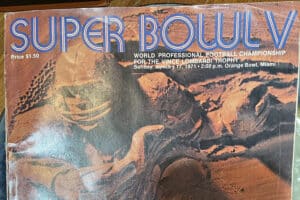
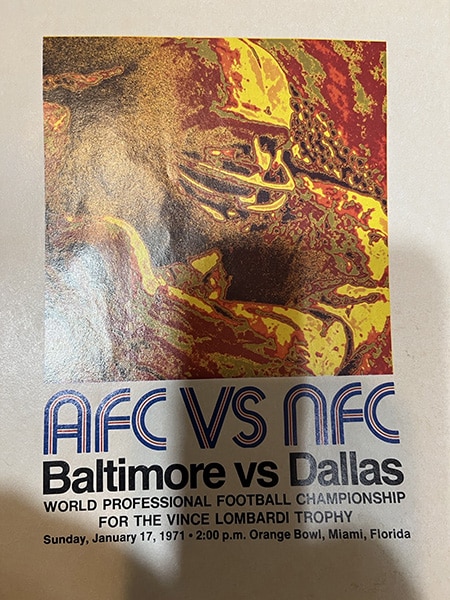
Baltimore’s first Super Bowl championship – a 16-13 victory over the Dallas Cowboys in Super Bowl V on Jan. 17, 1971 – reflected that truth in a way rarely seen in sports. It was the last NFL title for the Colts in Charm City and for legendary Catholic quarterback Johnny Unitas. And by the Colts’ own admission, it was not a championship they earned through dominance alone.
Sports usually preach a simple gospel: work hard, execute flawlessly and you deserve victory. The Baltimore Colts lived that creed (and its limits) during two brilliant but heartbreaking seasons in the late 1960s.
Those years came when Maryland, a land named for the Blessed Mother, followed two Sunday rituals: attend Mass and watch the Colts. Baltimore even prohibited Colts kickoffs before 2 p.m. so fans could receive the Eucharist and hear the Word if they chose.
Under devout Catholic coach Don Shula, the Colts lost just three of 31 games in 1967 and 1968. Yet they came away empty-handed.
In 1967, Baltimore finished with the league’s best record but missed the playoffs after a season-ending loss to the Rams. In 1968, the Colts were historically dominant – until Super Bowl III. There, turnovers by Catholic players Earl Morrall, Tom Matte and Unitas himself led to a stunning 16-7 loss to the Jets.
Sixteen months of near-perfection produced guilt, shame and doubt – reminders that neither teams nor people are saved by works alone.
The 1970 Colts returned under new coach Don McCafferty not as an unstoppable force, but as a determined one. They reached Super Bowl V against the Dallas Cowboys, a franchise desperate to exorcise its demons after four consecutive playoff failures. Both teams carried the weight of past disappointments into the harshest possible spotlight.
But when dominant defenses meet anxiety-ridden offenses under championship pressure, the result can be chaos.
Baltimore and Dallas combined for 12 turnovers in what would become known as the “Blunder Bowl.” The Colts alone committed seven – two more than their infamous Super Bowl III collapse – along with a blocked extra point off the foot of rookie Jim O’Brien. Yet despite being afflicted by their own mistakes at every turn, they never despaired. As St. Paul writes to the Corinthians, they were “perplexed, but not driven to despair.” Through seven offensive failures on the grandest stage, they refused to be crushed.
Only once did Dallas convert a Baltimore turnover into a touchdown. Time after time, the Colts’ defense bore the offense’s burdens – absorbing fumbles and interceptions, erasing sins and allowing only 10 points off those mistakes.
Grace arrived again and again. A stop here. A forced turnover there. A tying touchdown run by Tom Nowatzke late in the fourth quarter that made it 13-all and gave the Colts life.
With regulation winding down, grace granted one more chance. After a Mike Curtis interception, Baltimore moved into range for a final attempt. Jim O’Brien, who had already missed an extra point and a 52-yard field goal, lined up again – this time from 32 yards away with nine seconds remaining.
As the sun set, the rookie’s kick sailed through the uprights. The Colts won 16-13.
Decades later, some members of that team still believed they did not earn that championship. Baltimore never doubted them. Nor should they doubt themselves.
God shows us that our imperfections can become fields of second chances – moments when perseverance, mercy and shared burden accomplish what perfection never could.
On that Super Sunday, a team from the land of Mary was blessed and full of grace.
Read More Commentary



Copyright © 2026 Catholic Review Media
