WASHINGTON (OSV News) — Authoritarian regimes increasingly threaten the cause of international religious freedom, lawmakers and witnesses at a House subcommittee hearing on the topic said Feb. 4.
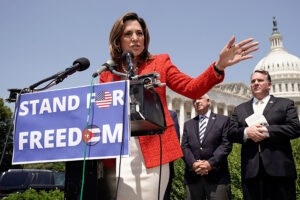
In a joint subcommittee hearing chaired by Rep. Chris Smith, R-N.J., chair of the Subcommittee on Africa, and Rep. Maria Salazar, R-Fla., chair of the Subcommittee on the Western Hemisphere, lawmakers considered key challenges in promoting international religious freedom abroad, with some expressing concern about certain steps the Trump administration has not yet taken on the issue.
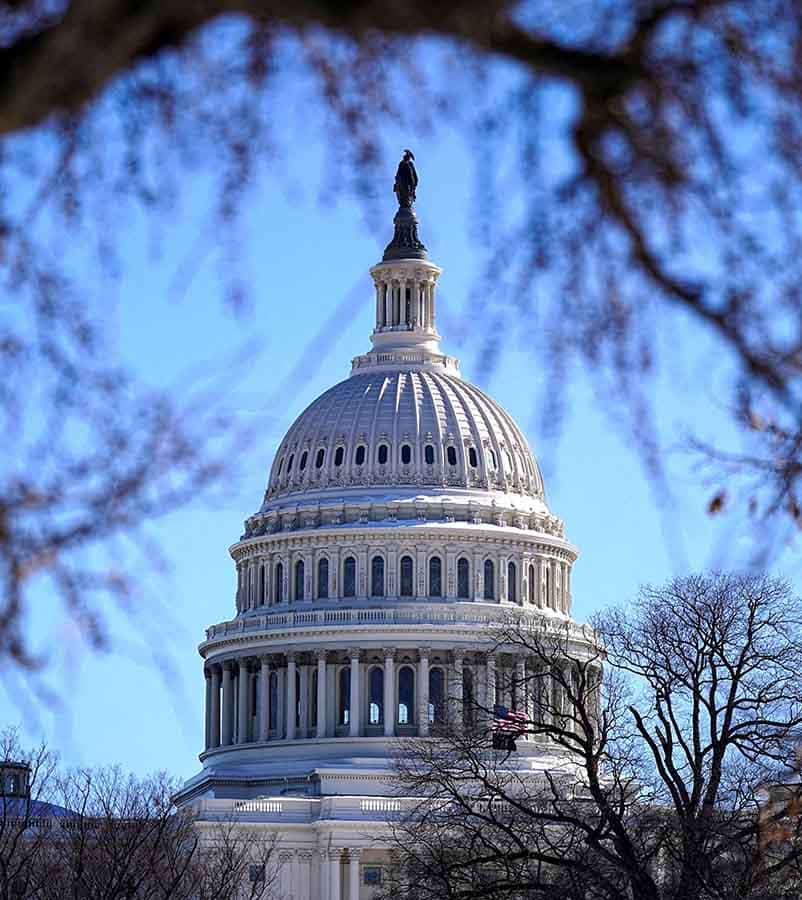
The hearing coincided with the sixth annual International Religious Freedom Summit in Washington the same week.
“Religious freedom is not an ‘American’ right alone, but one that belongs to every human being on earth,” Smith said in his opening statement. “Yet, all around the world today, religious persecution is festering and exploding. What has been unconscionable for decades and centuries has gotten worse.”
But some of the committee’s Democrats suggested the Trump administration was not responsive enough to vulnerable populations that were not in alignment with its political priorities.
“Freedom of religion or belief is a fundamental human right,” Rep. Sara Jacobs, D-Calif, the ranking member of the Subcommittee on Africa, said in her opening statement. “This right is universal, and it must be applied equally to everyone, no matter what religion or belief they practice, or if they practice none at all.”
“So far, it seems to me, the administration’s interest in religious freedom only goes so far, and it mostly applies to the plight of Christians abroad,” Jacobs continued, pointing to Uyghur communities in China, Tibetans, the Rohingya in Myanmar and religious minorities in Iran as among pressing causes for concern.
“But,” she said, “I hope the Trump administration proves me wrong.”
But Rep. Joaquin Castro, D-Texas, ranking member of the Western Hemisphere Subcommittee, also pointed to “Christian churches in Israel” and “the Catholic Church in Gaza” that “have been bombed” as an international religious freedom concern. He was referring to Holy Family Parish in Gaza, which was damaged by a widely condemned July 17 Israeli strike that killed three and wounded more than 10.
Sam Brownback, former ambassador-at-large for international religious freedom at the U.S. Department of State, said at the hearing that “the amount of Christian killing around the world is at an all time high for Christendom,” but “I can repeat that statement for a number of faiths.”
“We are seeing something unprecedented, really, right now in the world,” Brownback, also co-chair of the IRF Summit, said. “And I’ve been in this work in this space for some period of time, there’s an alliance of nations that’s emerged that see religious freedom as the greatest internal threat to their dictatorial control. This alliance of communist, authoritarian, totalitarian regimes will literally stop at nothing to control people of faith. They see people of faith as a threat.”
Stephen Schneck, commissioner for the U.S. Commission on International Religious Freedom, concurred that “we face an unprecedented global crisis for freedom of religion.”
“Many millions of people around the world are being denied the freedom to practice their faith and are persecuted because of what they believe or what they don’t believe,” Schneck said. “The crisis is inseparable from the retreat of liberal democracy and the global rise of authoritarianism.”
USCIRF, an independent, bipartisan U.S. federal government commission that monitors religious freedom around the globe, pointed to a rise in authoritarianism around the globe as a key threat to the cause of international religious freedom in its 2025 annual report.
But Schneck expressed concern that “international religious freedom has been subordinated to a transactional foreign policy which emphasizes bilateral deals and economic leverage over values-based diplomacy.”
Witnesses pointed to the designation of Nigeria as a country of particular concern as a welcome step from the Trump administration in response to violence in that country by Islamist groups perpetuated against predominantly Christian communities, but also in some cases moderate Muslim communities.
The State Department designates “countries of particular concern,” or CPCs, for particularly severe freedom of religion or belief violations under the International Religious Freedom Act. IRFA requires the U.S. government to designate CPCs annually, which are defined in law and policy as countries where governments either engage in or tolerate “particularly severe violations” of religious freedom. Non-state actors who engage in similar conduct are designated as “entities of particular concern.”
But Castro argued the strikes the Trump administration carried out in Nigeria “in the name of protecting Christians,” were done “while cutting assistance that would actually address discrimination against religious communities.”
Some religious freedom advocates have expressed concern about cuts to programs that aimed to advance religious freedom through the U.S. Agency for International Development, the government’s now-shuttered humanitarian aid agency in countries around the globe.
USAID’s remaining functions were absorbed into the State Department on July 1. Cuts to its funding included funding for efforts by Catholic and other faith-based humanitarian groups.
Read More Religious Freedom
Copyright © 2026 OSV News
