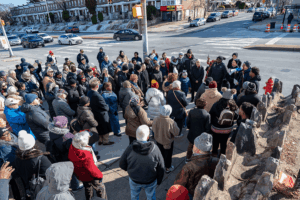
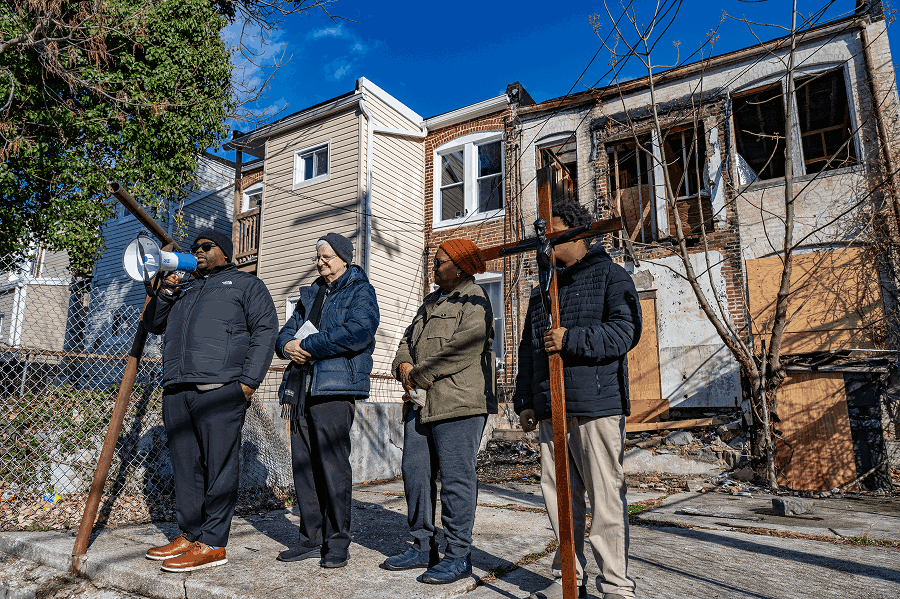
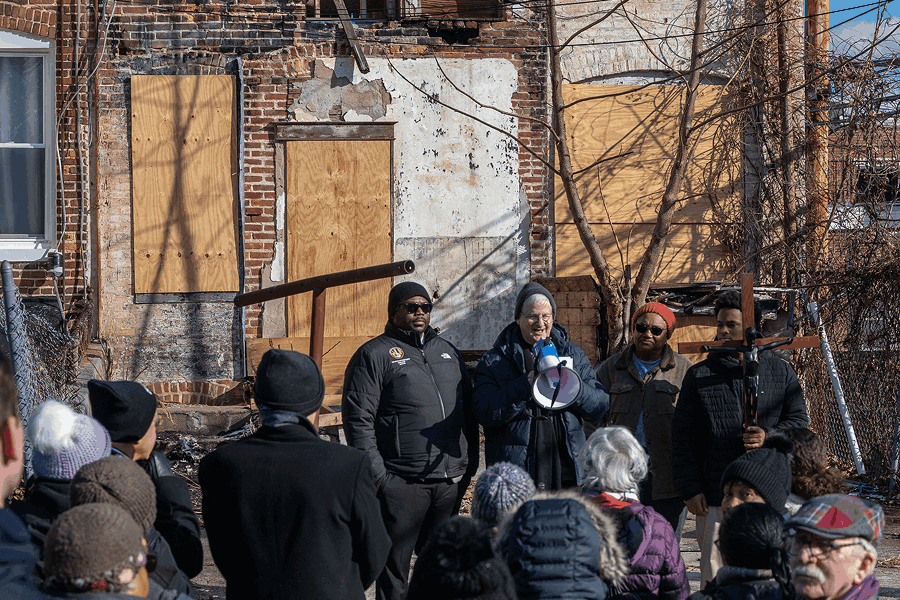
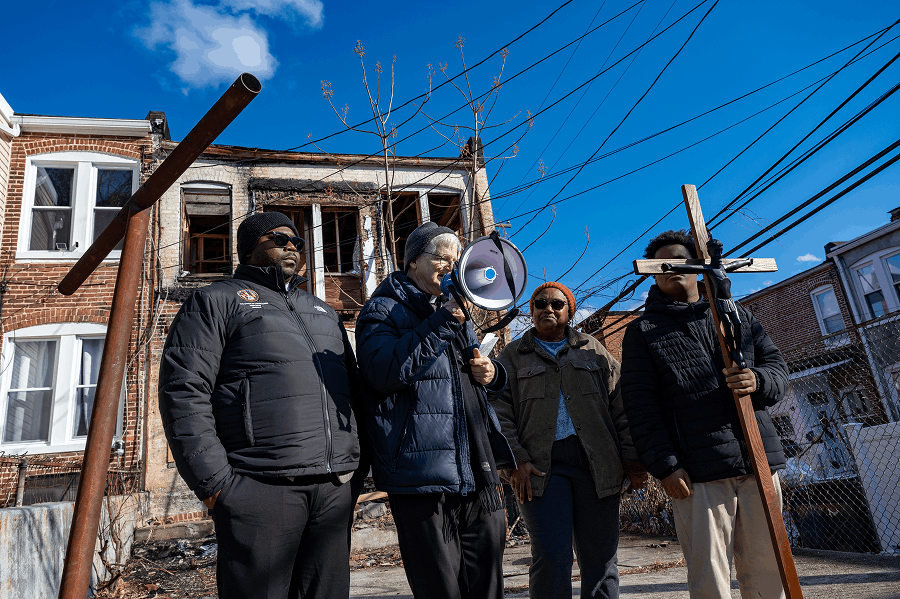
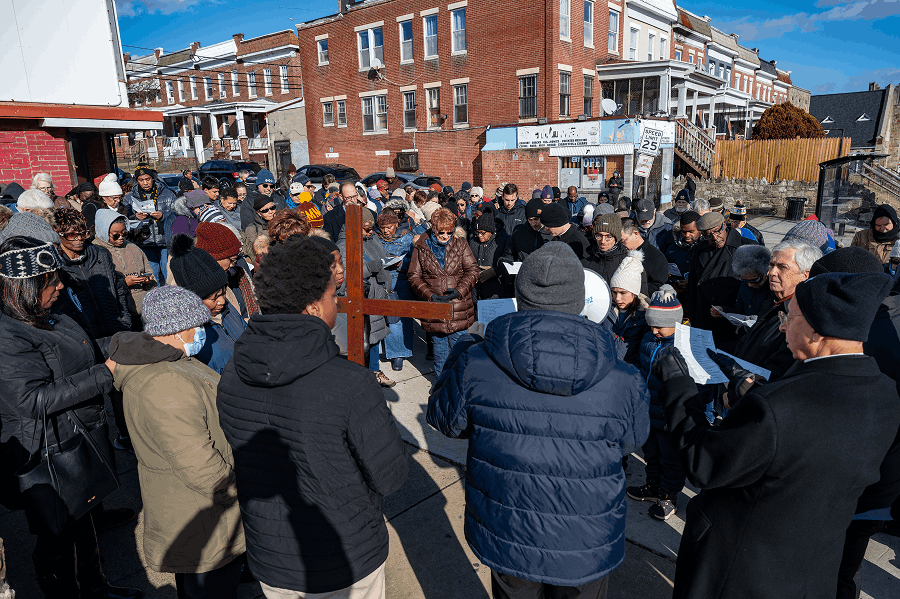
Under a bright winter sun, Monsignor Richard J. Bozzelli and an altar boy carrying a processional cross led a peace walk along Edmondson Avenue and neighboring West Baltimore side streets Jan. 19, tracing a familiar yet sobering route around St. Bernardine Church.
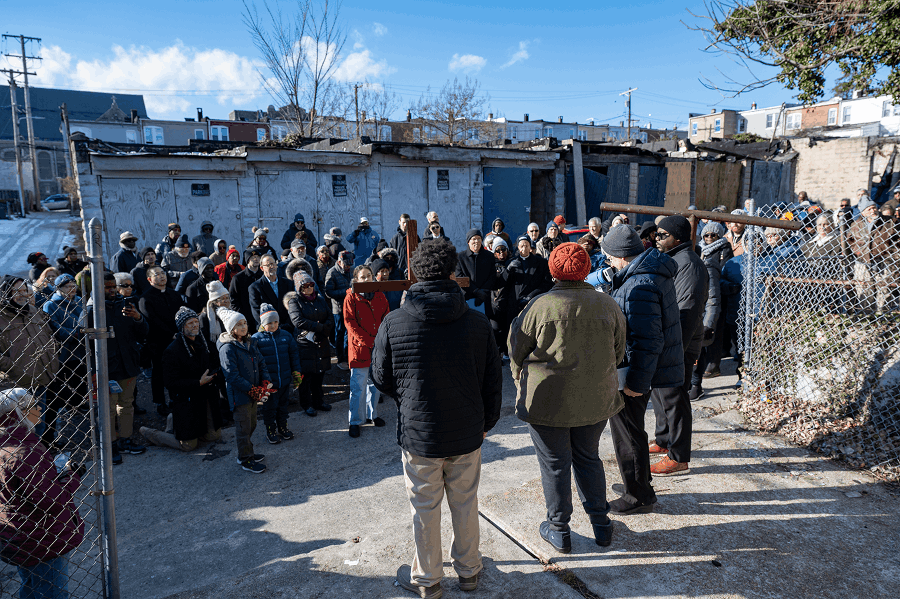
The crowd followed carefully, navigating icy patches on the sidewalk. Laughter and conversation rippled through the group, falling silent only when the procession paused at sites of homicides, where prayers were offered for lives lost and families left behind.
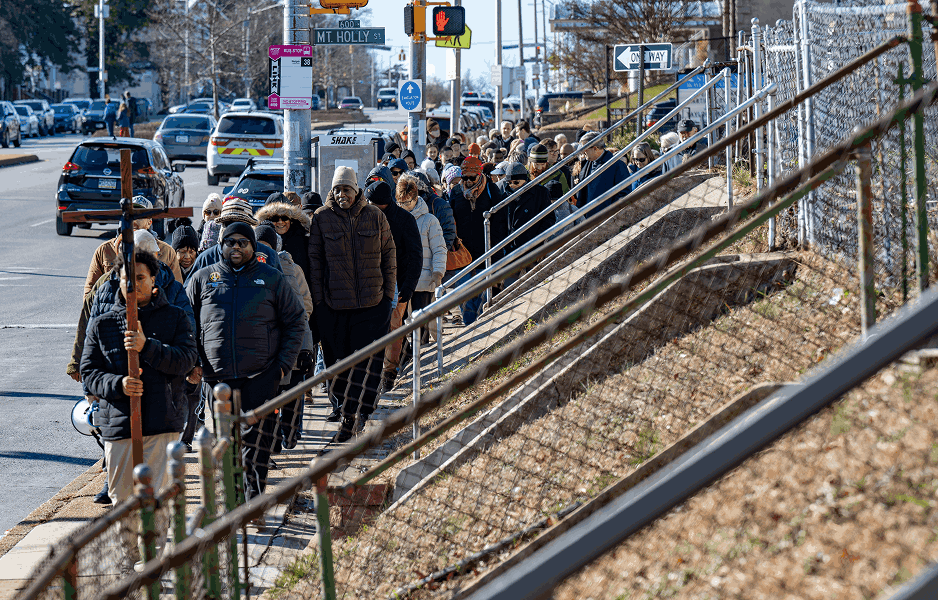
“I’m here because I wanted to support the efforts of this community,” said Jeri McLean, a St. Bernardine parishioner, as she walked. “I live in this community, and I think it is a great thing that all these people have come together in prayer and to show their faces, to show the community that we care and that we need change.”
Now in its 13th year, the annual walk is sponsored by St. Bernardine and Historic St. Peter Claver in memory of the Rev. Dr. Martin Luther King Jr. and Monsignor Edward Michael Miller, a former St. Bernardine pastor who died in December 2013 while preparing for Sunday Mass.
“This is just a wonderful day to honor Father Miller and to remember and honor Martin Luther King,” said Denise Stanley, a St. Bernardine parishioner, as she joined the walk. “We’re going to stop at different places where there have been murders. It’s tragic. It’s a shame, but such is life. But we keep it in prayer and do what we have to do within the community.”
The walk unfolded against a stark reality: 22 homicides occurred in the neighborhoods surrounding St. Bernardine and St. Peter Claver in 2025. Before the procession began, Monsignor Bozzelli reminded participants that the victims “were real people, with real families and real homes, and some of them are neighbors right here.”
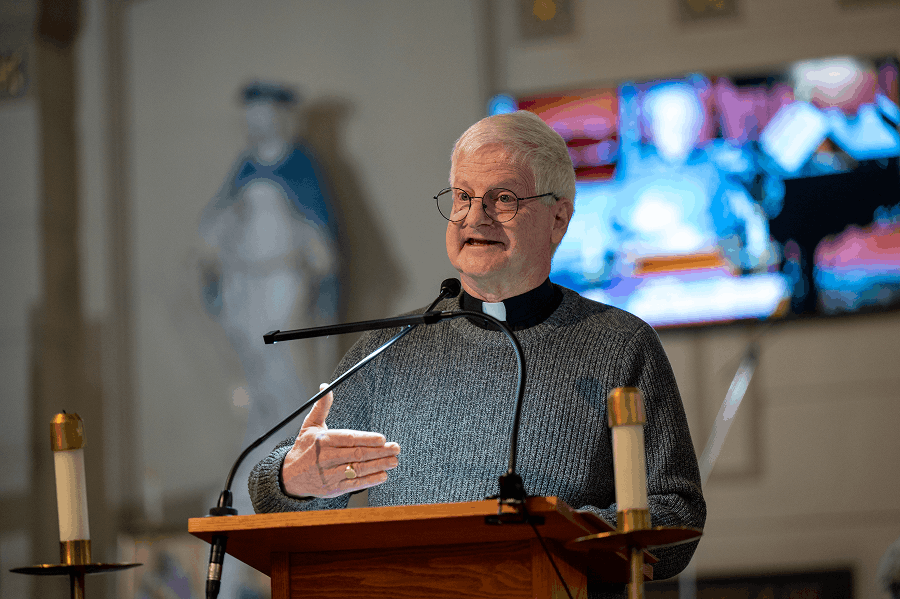
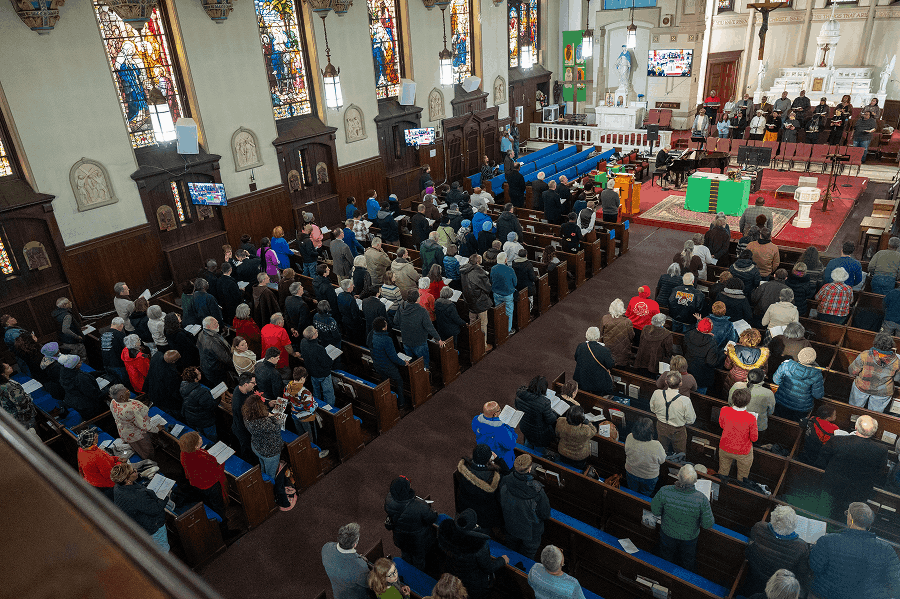
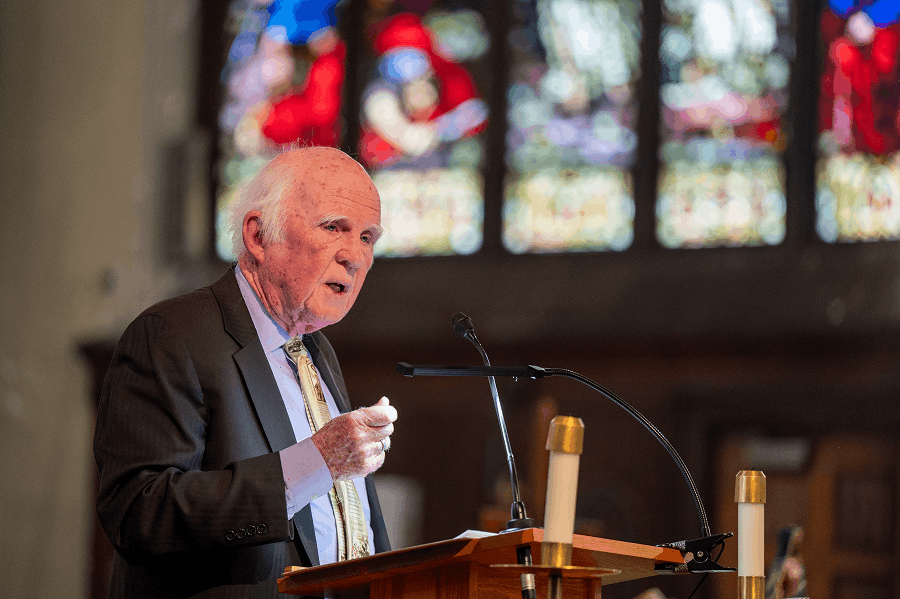
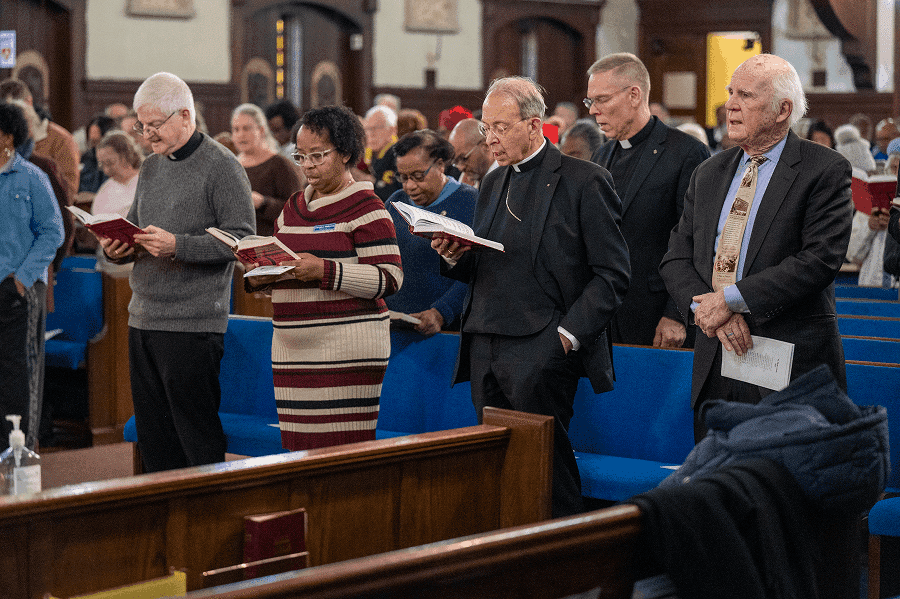
Earlier in the day, participants filled St. Bernardine Church to near capacity to hear remarks from Archbishop William E. Lori and a talk by Pulitzer Prize-winning author and historian Taylor Branch, renowned for his work on Rev. King and the American Civil Rights Movement. Special musical selections by the church choir, directed by Tony Small, set a reflective tone before the walk commenced.
“It is important to remember and to emulate Dr. Martin Luther King Jr., especially at this time when our nation is so badly polarized, when politics has turned violent, and public rhetoric, vitriolic,” Archbishop Lori said. “By turning our attention once again to the principles of nonviolence that Rev. Dr. Martin Luther King Jr. taught and exemplified, we find a better way forward in the ongoing struggle for racial justice and equity.”
Deloris Hawthorne, a St. Bernardine parishioner, shared memories of her “spiritual buddy,” Monsignor Miller, recalling his deep commitment to “becoming a welcoming church.”
“You knew he was a true believer, and he made you one also,” Hawthorne said.
In introducing Branch, Jesuit Father Gregory Chisholm, local superior of the Jesuits, said Branch’s book “Parting the Waters: Martin Luther King and the Civil Rights Movement 1954 to 1963,” “helped him enormously” by providing historical context as a Black Catholic priest.
“It helped me to understand why things work and to help other people as a preacher as to why things are,” Father Chisholm said.
Branch reflected on his childhood in the segregated South of the 1950s, recalling trips to baseball games with his father and Peter, a Black employee of his father’s dry-cleaning business. The trio would joke and laugh during the drive, only to separate once they arrived at the stadium.
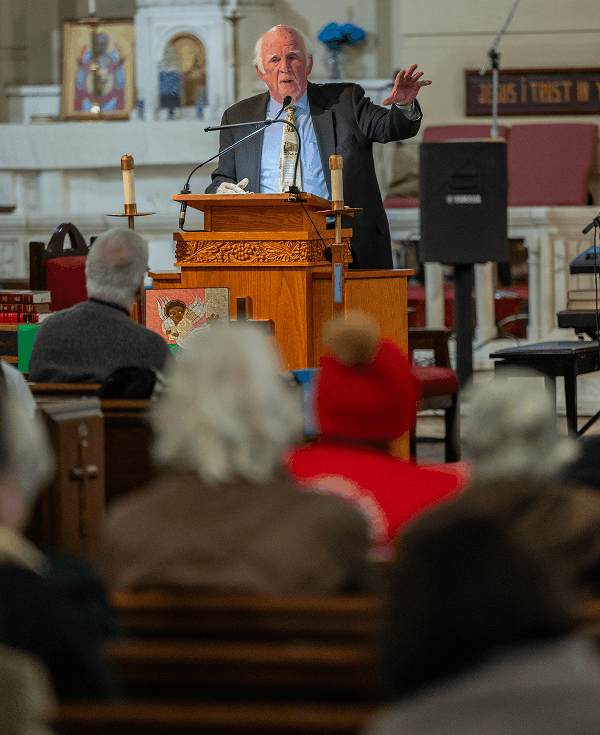
“My dad would say, ‘I don’t like this,’” Branch said. “Even as an 8-year-old boy, I knew not to ask what that meant. There was something radioactive about it. It was about the race situation in Atlanta in the 1950s.”
He described the contradictions of the era – popular songs by Ray Charles, the Temptations and Johnny Mathis filling the radio while daily life was marked by sit-ins and Ku Klux Klan activity.
“People were fearful,” he said. “They were scared to death.”
He also spoke of King’s sermons and King’s reluctance to allow teenagers to march during the Birmingham campaign, despite the now-iconic images from May 3, 1963. Those images, Branch said, became the “turning point of the 1960s.”
“When people saw these photographs of what was happening to Black children in Birmingham … there were almost 800 demonstrations across the United States, even in the world within the next six weeks,”
Change, Branch said, is never easy, but it requires commitment to the same principles that fueled the Civil Rights Movement.
“Take a step toward somebody that might make you a little bit uncomfortable and you will find the spirit of the Lord moved you,” Branch said. “And you find out that other people are similarly moved, all things are possible.”
During the peace walk, participants paused at multiple homicide sites to pray and reflect. At an empty lot near the church, the group also honored two victims of drug overdoses.
“We walk together to be a witness of peace in our neighborhood and in our city, And we walk to remember,” Monsignor Bozzelli said.
Although the lot is not owned by the church, St. Bernardine maintains it. Baltimore City Councilman Paris Gray, who represents the 8th District, thanked Monsignor Bozzelli for the parish’s ongoing efforts to acquire the property.
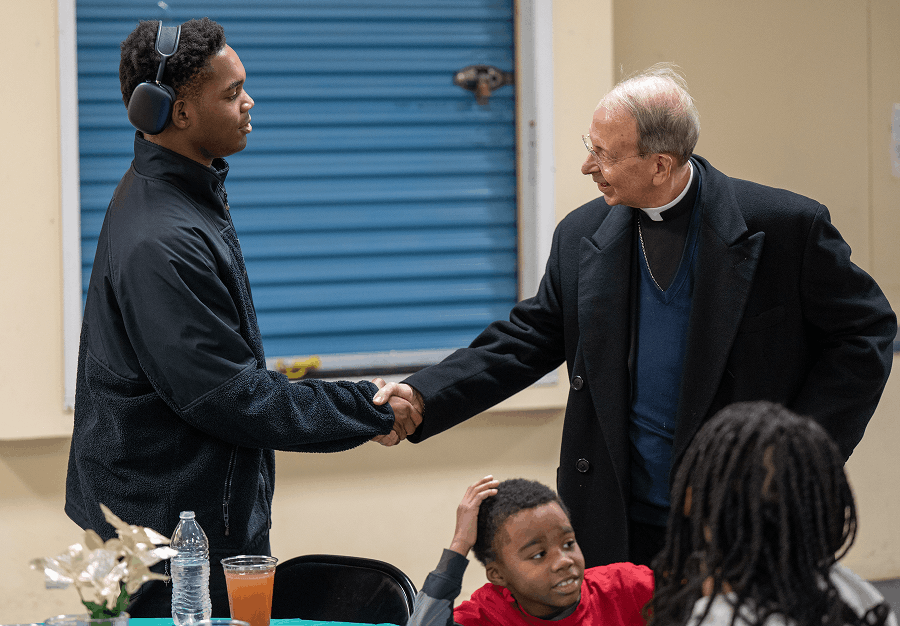
A communal luncheon featuring an array of soups and chilis – including Monsignor Bozzelli’s venison chili – followed the walk.
“We have folks from the city and county, Catholics and non-Catholics,” Monsignor Bozzelli said. “St. John the Evangelist in Columbia, our sister parish, sent a busload of folks.”
Mike Jacko and his wife, parishioners of St. Vincent de Paul, attended with their children, ages 9 and 6.
“We’ve tried to teach them about racism and civil rights since they were young and having them out to do that in a prayerful way so it is not just a day off from school,” Jacko said. “It was important for us.”
Email Katie V. Jones at kjones@CatholicReview.org

READ MORE LOCAL NEWS
Copyright © 2026 Catholic Review Media
