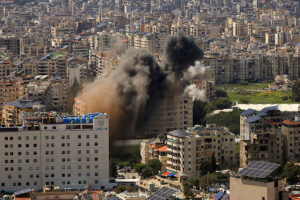
(OSV News) — As the death toll in Lebanon continues to rise following devastating strikes by the Israeli military, the Vatican’s representative in the country said the bombardment “is not the right path.”
In an interview with Vatican News published April 8, Archbishop Paolo Borgia, apostolic nuncio to Lebanon, who visited southern Lebanon with Cardinal Bechara Rai, patriarch of the Maronite Catholic Church, called for a “ceasefire here and the start of negotiations to stabilize Lebanon in relation to Israel.”
“The conflict situation is not easy and only serves to deepen divisions, as well as to sow death and destruction. As is well known, what Israel wants is the disarmament of Hezbollah, and this goal has not been achieved. A truce would reopen the door to diplomacy,” he said.
Israel pressed on with its April 8 attack on alleged Hezbollah targets in Lebanon, killing at least 254 people and wounding hundreds more.
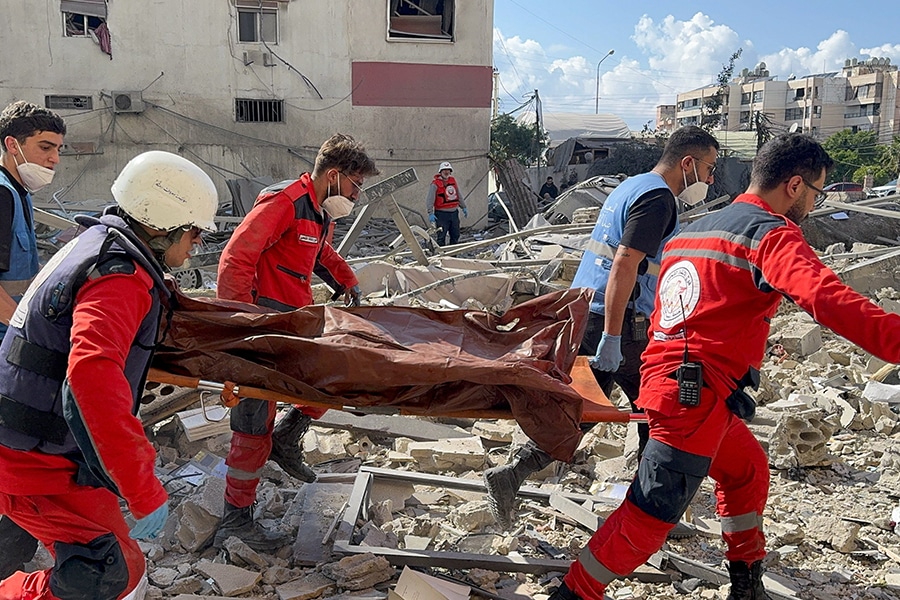
In an April 8 report published by Avvenire, the newspaper of the Italian bishops’ conference, Beirut correspondent Nello Scavo said the aftermath of the Israeli attacks in Beirut were “pure horror.”
According to multiple news reports, Israel forces hit more than 100 targets across Lebanon, including in Beirut, the Bekaa Valley and southern regions, prompting disagreements between the U.S. and Iran on whether Lebanon was included in the ceasefire agreement.
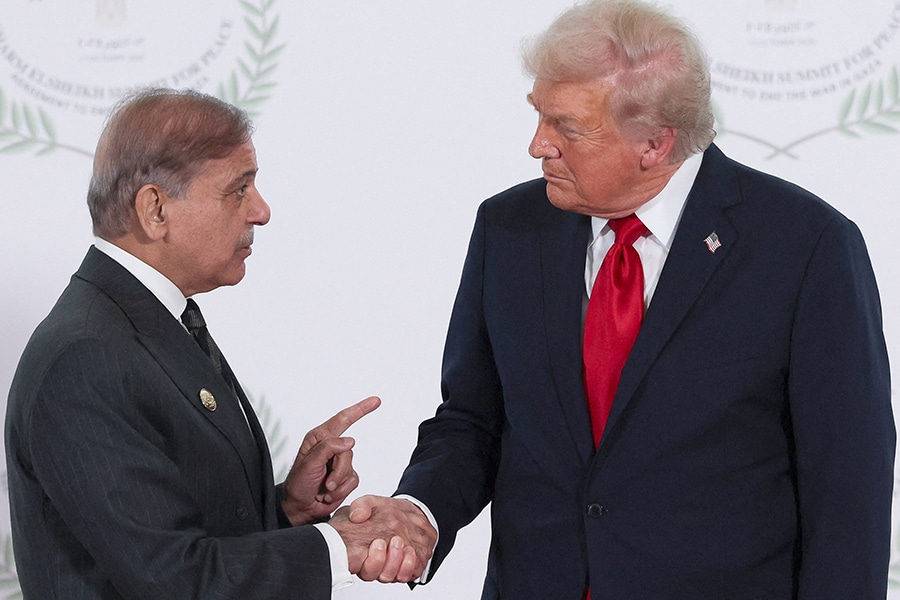
In response to the Israeli attacks on Lebanon, Iran closed the Strait of Hormuz, while both the United States and Israel argued that the Pakistani-brokered ceasefire did not extend to Lebanon, The Associated Press reported.
After the ceasefire was announced April 8, Israeli Prime Minister Benjamin Netanyahu contradicted claims by Pakistan that Lebanon was included in the agreement. U.S. Vice President JD Vance also told journalists during his visit to Hungary that Lebanon was not included in the deal and that it was a “legitimate misunderstanding.”
“Neither us nor the Israelis said that that was going to be part of the ceasefire,” Vance said, according to ABC News.
Avvenire’s Scavo reported that buildings where mostly Sunni and Christian residents lived were “pulverized” and disputed claims by the Israeli Defense Forces that it targeted Hezbollah headquarters and military systems.
“With our own eyes, we see the destruction in working-class neighborhoods, streets where children used to play, and buildings near hospitals and schools,” he wrote, noting that in the southern Lebanese city of Sidon, about a dozen young people were killed while at a restaurant.
Scavo called Israel’s assurances that it would minimize civilian casualties “a mockery.”
Regarding the Israeli attacks, Archbishop Borgia told Vatican News that “there has never been an attack like this” and that the death toll may be even higher “because many may still be under the rubble.”
“Lebanon has experienced so many wars that I don’t know if this is the darkest hour. Every hour is difficult and involves different people and circumstances,” he said. “Every war is unique, yet all bring pain and increase destruction. I don’t think one can say this is the darkest moment or not, given that Lebanon has lived through war for more than 50 years.”
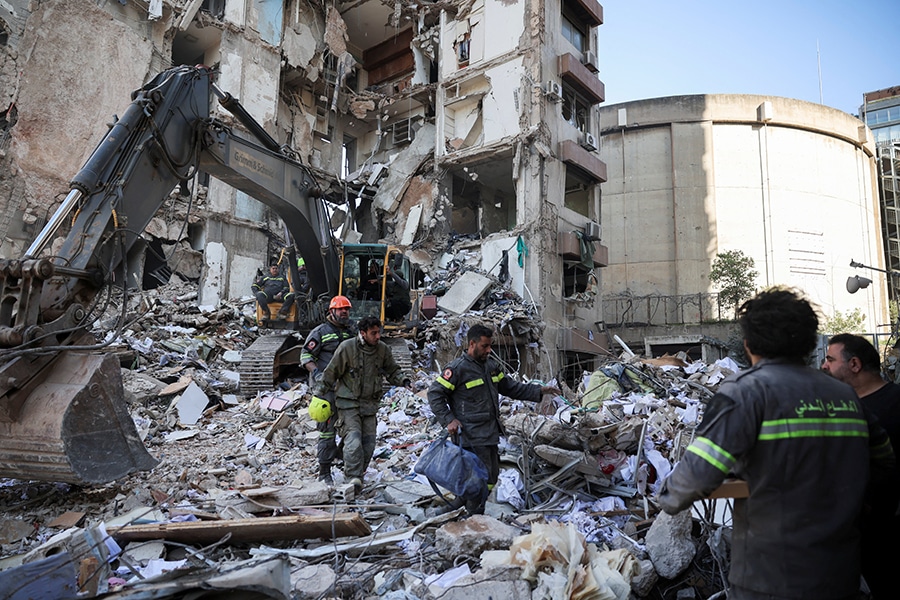
Archbishop Borgia said there was “much suffering” in Beirut and in southern villages, and there “is a lot of anxiety and uncertainty about the future, as well as a sense of loneliness due to the isolation they are experiencing.”
“They can’t go anywhere,” the archbishop said. “They feel they are carrying a burden alone. That is why we go to visit them: they must feel the presence of the universal and Lebanese Church, especially the presence of the Holy Father, as well as many people of goodwill who help and support those living through these tragedies.”
The escalation drew strong international reaction, including from European leaders. Prime Minister Pedro Sanchez of Spain said that Netanyahu’s “contempt for life and international law is intolerable.”
“It’s time to speak clearly: Lebanon must be included in the ceasefire; The international community must condemn this new violation of international law; the European Union must suspend its Association Agreement with Israel; And there must be no impunity for these criminal acts,” he wrote April 8 on X.
Italian Prime Minister Giorgia Meloni issued a statement after Israeli forces fired warning shots at an Italian military convoy operating under the United Nations Interim Force in Lebanon, or UNIFIL.
Echoing Sanchez’s call for Lebanon’s inclusion in the ceasefire agreement, Meloni said that although Hezbollah’s “decision to drag the nation into this conflict was irresponsible,” Israel’s attacks on Lebanon, “which have already resulted in too many deaths and an unacceptable number of displacements, must end immediately.”
Italian Foreign Minister Antonio Tajani summoned Israel’s ambassador to Italy and, in an address to Parliament, reiterated that “Italian soldiers in Lebanon are off-limits” and that Israeli armed forces have no authority to even “touch the Italian military.”
Asked about his prayer for Lebanon as Pope Leo XIV prepares to lead a prayer vigil for peace April 11, Archbishop Borgia prayed that “peace may be achieved, and that people may live calmly and serenely.”
“Peace is just; it is something that gives the possibility, through reconciliation, to open oneself to life. War is only death,” he said.
read more conflict in the middle east
Copyright © 2026 OSV News
