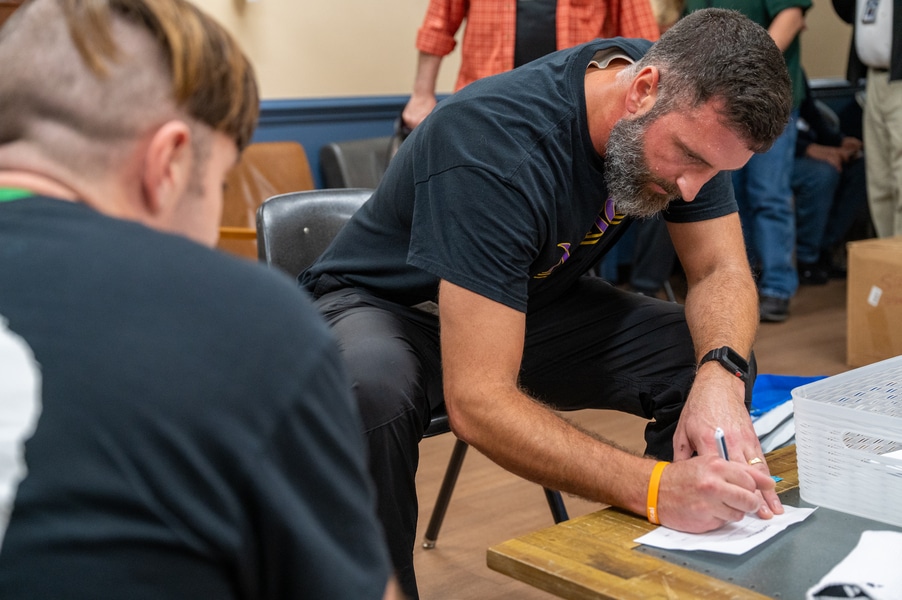
Michael Brown’s feet hurt so badly he just wanted to stay off them. A resident of Helping Up Mission in Baltimore for a little over four months, he said the pain in his feet, knees and back left him feeling forgotten.
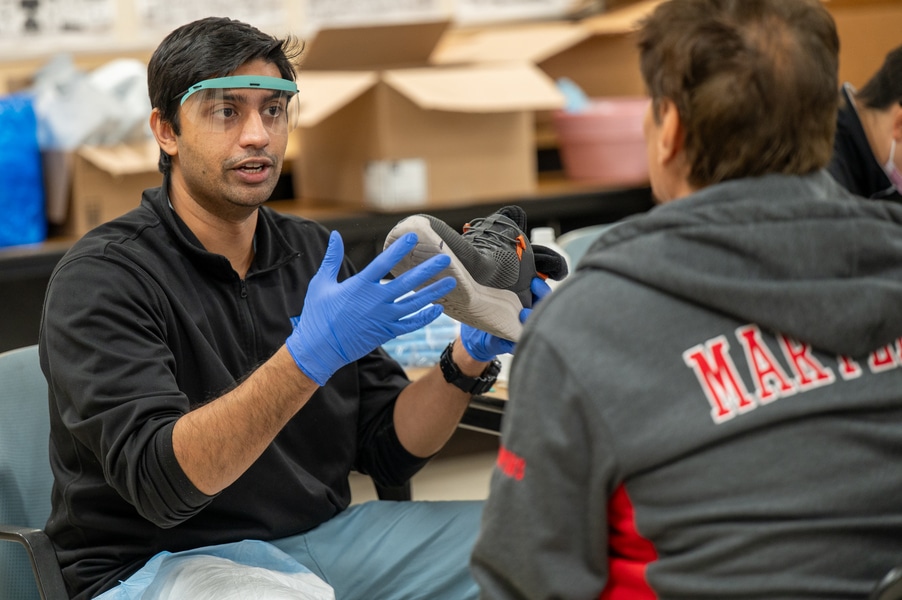
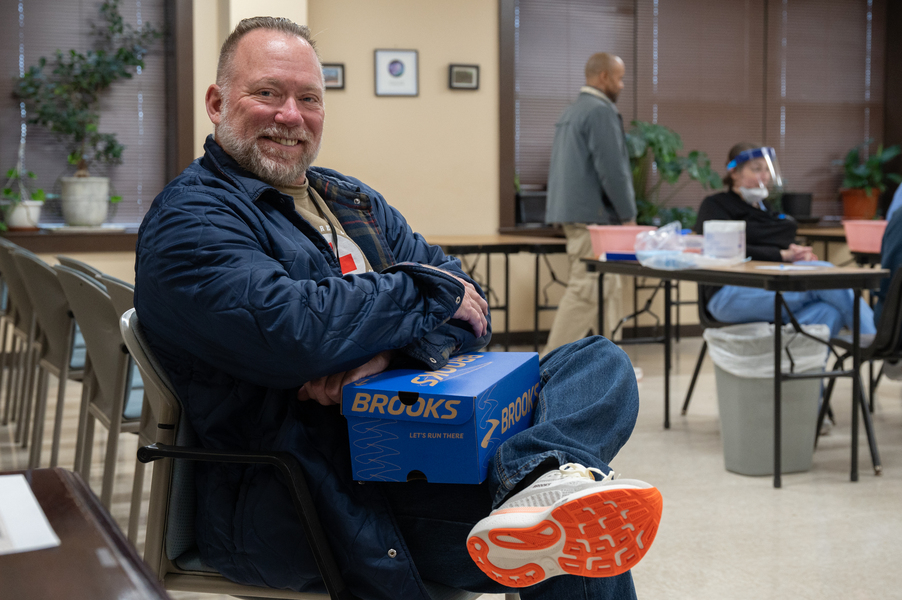
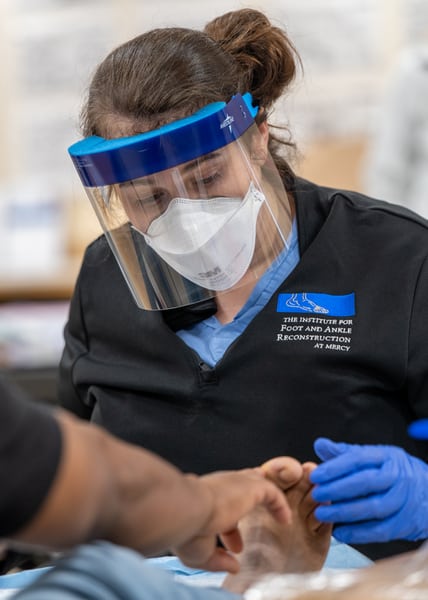
“Sometimes you feel like nobody cares. For me, this means the world,” Brown said as he received a foot exam Nov. 25 from the surgical team of The Institute for Foot and Ankle Reconstruction at Mercy Medical Center in Baltimore. After slipping on his new socks and shoes, he added, they “feel amazing.”
Brown was one of about 80 men receiving free foot evaluations and footwear at Helping Up Mission in Baltimore. With clippers in hand and cases of new socks and shoes ready for distribution, Mercy’s surgical team partnered with Dick’s Sporting Goods and Royal Farms for the 2025 effort. The tradition, begun in 2007, offers simple care that often has life-changing impact.
Helping Up Mission, on East Baltimore Street, is a faith-based residential program that serves about 500 men confronting addiction, homelessness and trauma. Its approach, rooted in what it calls “where sacred and science come together,” focuses on restoring residents’ physical, spiritual and emotional well-being.
Kris Sharrar, the mission’s director of philanthropy and a coordinator for the event, said the goal is always personal and practical.
“We’re intending to meet the person (client) where they are with the needs they may have,” he said.
Sharrar knows the impact firsthand. A 2007 graduate of Helping Up Mission’s yearlong spiritual recovery program, he vividly remembers the boots he received at the same outreach years ago. If someone is dealing with painful feet, he noted, he or she is unlikely to focus on deeper issues. Treating the whole person – body included – is essential.
That need has only grown as fentanyl and even animal tranquilizers enter the drug supply, often without a user’s knowledge. One impulsive act, Sharrar warned, can be fatal. Such realities make the mission’s work even more urgent.
Dr. Vandan Patel, a surgeon with The Institute for Foot and Ankle Reconstruction at Mercy, said the team comes back each year because the need is unmistakable.
“Talking with these guys, they have their own individual stories, and some of them are pretty difficult,” said Patel, who began participating in the outreach during his 2022–23 Mercy fellowship.
Routine footcare may be easy for those with resources, he said, but it’s not easy for people navigating addiction, poverty or life on the street. Even basic nail care or treating minor issues can help residents get back on their feet – “literally.” And the gratitude they show, he added, isn’t something many of them experience often.
For Patel and his colleagues, the outreach also provides a reset from the daily grind of appointments, clinics and surgeries. Taking time to offer care that is both simple and deeply needed, he said, lifts everyone involved.
“That makes you appreciate why we started to do this in the first place,” Patel said.
Email Kevin J. Parks at kparks@CatholicReview.org