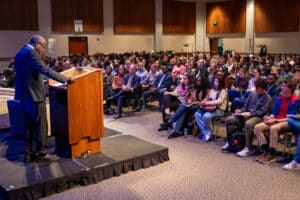
The violence is organized, systematic and serves a chilling purpose. Women and girls in the Democratic Republic of the Congo – some as young as 6 months old – endure what Dr. Denis Mukwege described as “extreme sexual violence,” their bodies used as weapons in a war fueled by the world’s insatiable demand for minerals.
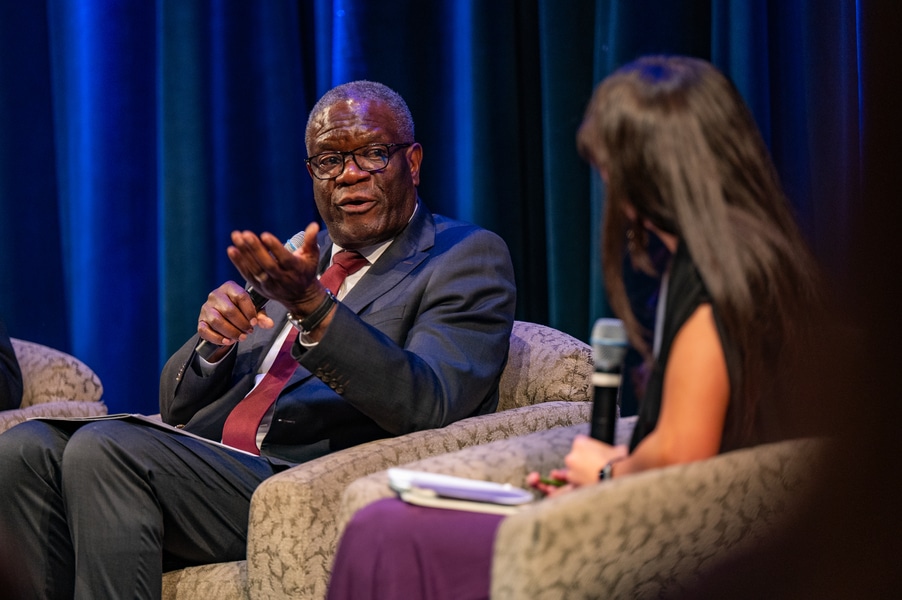
“People of the Congo suffer. The demand for these minerals has turned our homeland into a battlefield,” Mukwege told a crowd gathered Nov. 19 at Loyola University Maryland’s McGuire Hall in Baltimore. “Women’s bodies are used as weapons of war.”
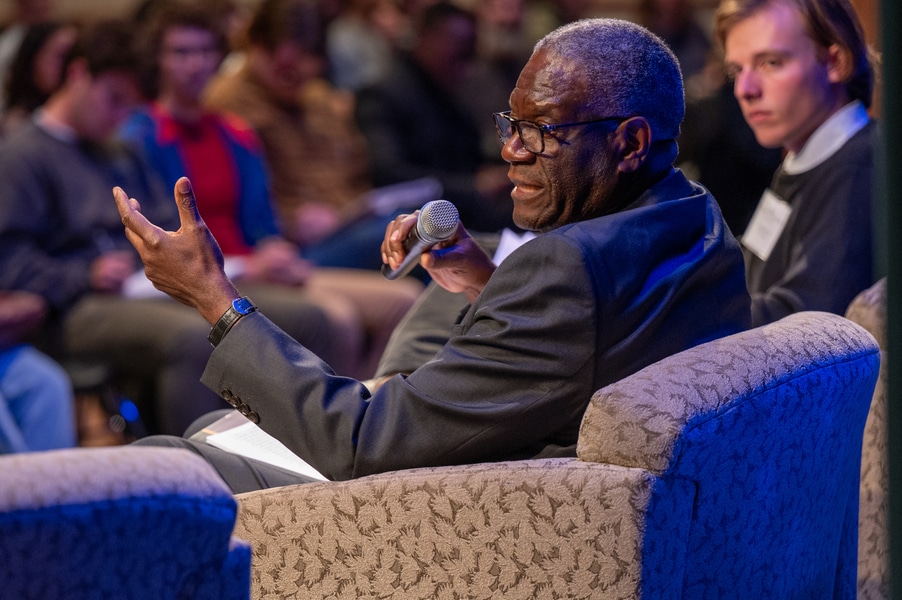
The 2018 Nobel Peace Prize winner and renowned gynecological surgeon didn’t mince words about the connection between the technology in everyday devices and the suffering in his homeland. The minerals needed for artificial intelligence, smartphones, computers, electric cars and medical devices come from Congolese soil, and the cost is measured in human devastation.
“It serves a purpose: to control territory, reaching minerals that the entire world depends on,” he said, explaining that the violence toward women is not random but calculated, “as they power the technologies we use every day.”
At Panzi Hospital, which Mukwege founded in Bukavu, he and his team treat survivors whose experiences challenge comprehension. “Their suffering is almost impossible to describe, yet our survivors I meet also show me the strength of the human spirit and the will to live and to rebuild,” he said.
Sexual violence, Mukwege noted, plagues conflict zones worldwide, from Ukraine to Sudan. But in Eastern Congo, it is tied directly to an international system that “values minerals more than human lives.”
A call to young people
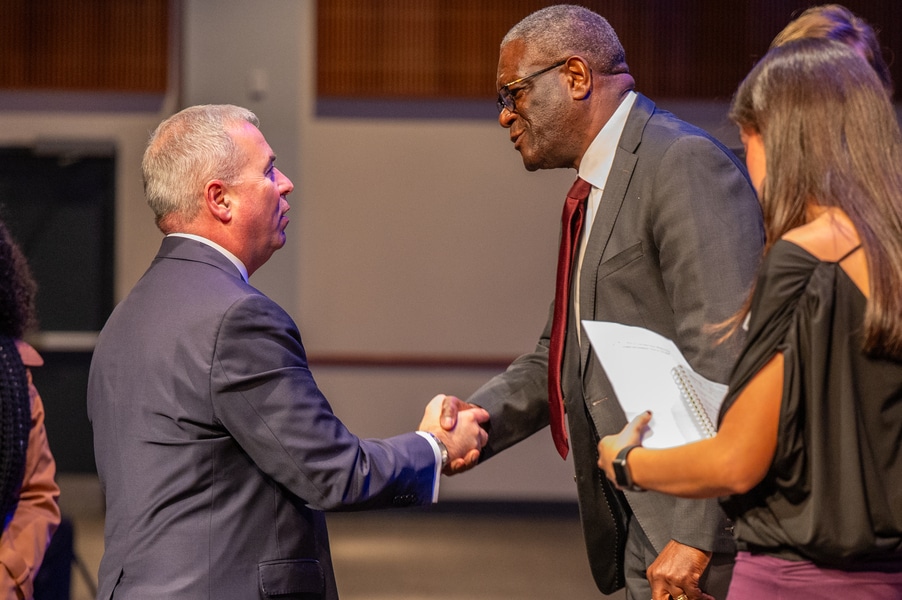
Mukwege came to Loyola as the featured guest for the Jesuit university’s Hanway Lecture in Global Studies, which brings global leaders to campus to address pressing international issues. Past speakers have included former British Prime Minister Tony Blair and human rights activist Nadia Murad, who shared the 2018 Nobel Peace Prize with Mukwege. The free event was open to the public and livestreamed.
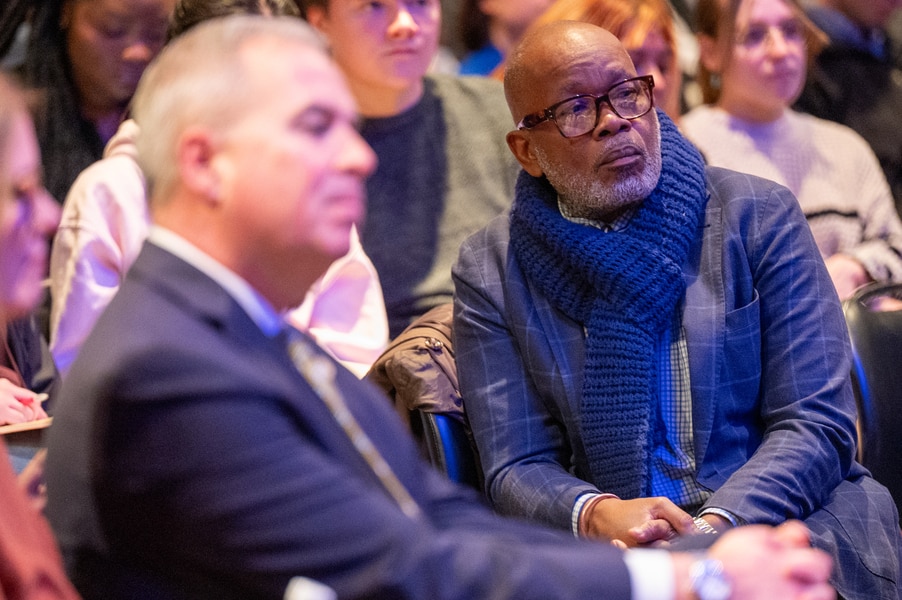
Looking over a crowd of about 430, Mukwege expressed hope in the next generation.
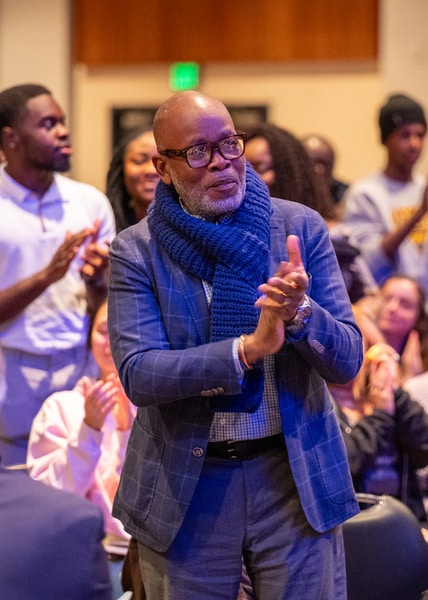
“It’s always a special privilege to speak with young people,” he said, adding that he was “really, really impressed” with the students he had met earlier. “I see in young people not only curiosity, but also the courage and imagination that our world so desperately needs today. We need, really, our young people to take more responsibility.”
The younger generation, he said, has “the power to change” this story by demanding justice “where older generations have looked away.”
“Transformation begins with truth,” Mukwege said. “The comfort of one part of the world cannot be built on the suffering of another. I dream a different future for Congo. A country where minerals fund schools, health centers and not militia. Where women walk in certainty and dignity. Where technology serves humanity rather than exploiting it. This dream is possible.”
Young people, he said, “can be the conscience of this new global economy.”
“As you study, invent and create, I ask you to keep one simple question in your mind. ‘Will this make the world more just?'” he asked the crowd. “If your answer is ‘yes,’ then you are helping to build a world where progress is measured not only by technology, but by humanity.”
Breaking the silence
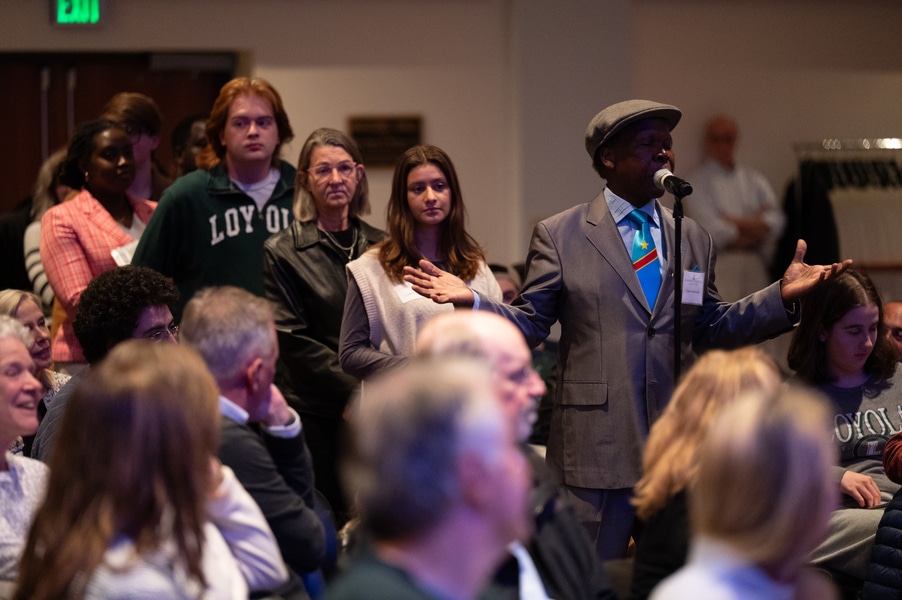
The son of a Pentecostal minister whose Christian faith is an important part of his life, Mukwege participated in a discussion with two student moderators before taking questions from the crowd.
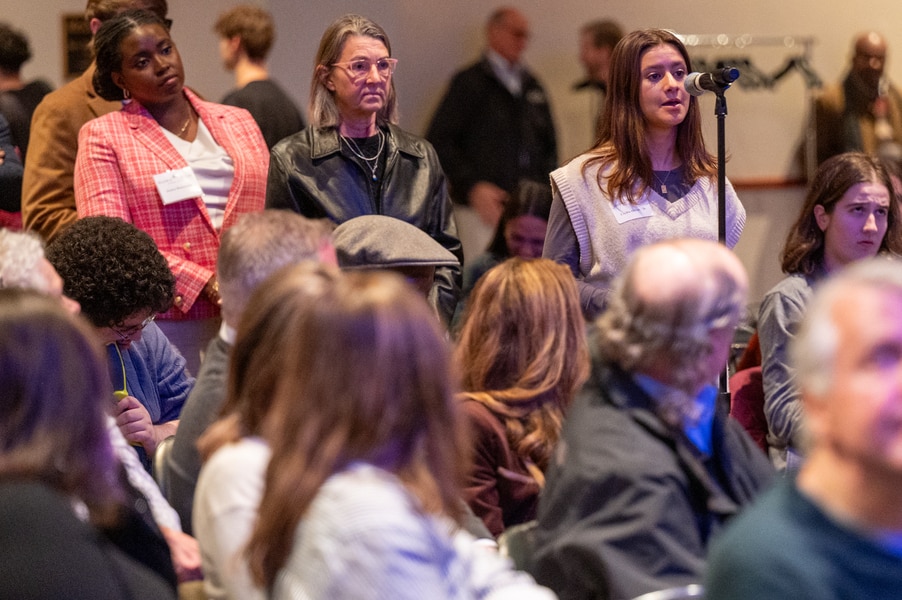
When a student asked how to initiate conversations about sexual violence – an uncomfortable topic – Mukwege emphasized that silence perpetuates the problem. By not wanting to talk about it, to keep victims silent, is a way to go on using sexual violence to destroy communities, he explained.
“The only way to get the freedom is really to break silence,” Mukwege said. “Let me tell you tonight that your voice means a lot. When you use your voice, you can make the change in our world, but when you keep silent and you think others will do it, no one will do it.”
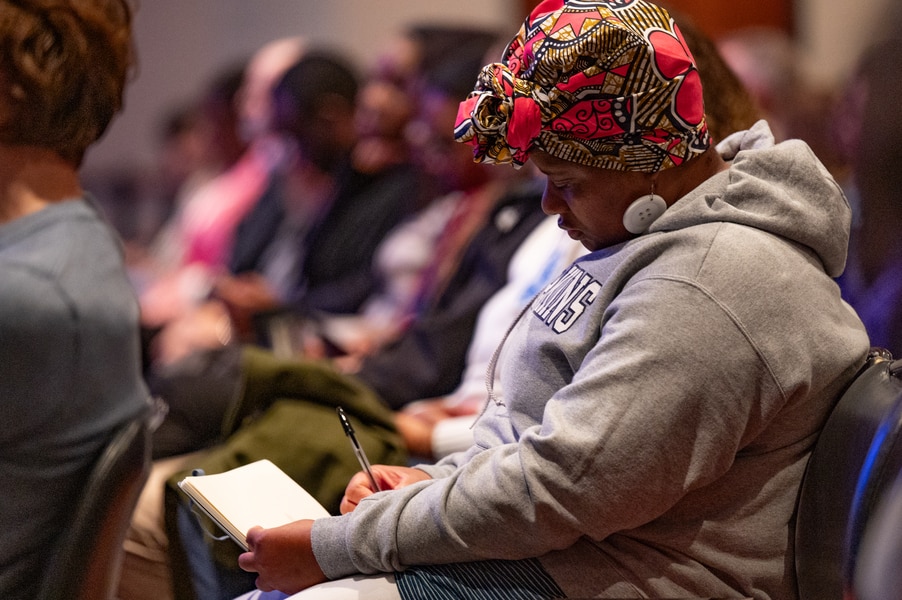
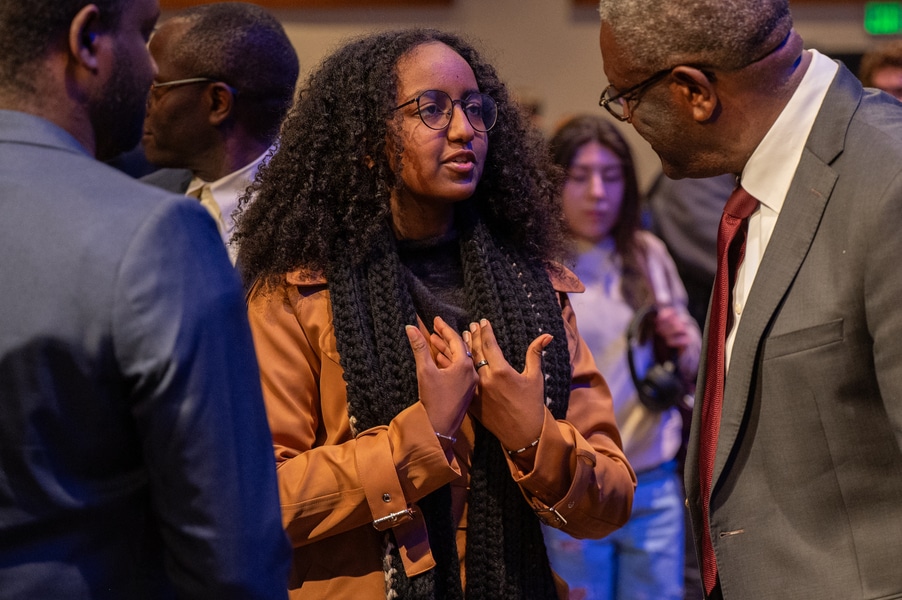
The message resonated deeply with attendees, including Yvonne Mutshipayi, a native of Congo who was a teenager when the war started. Now working on her doctorate at The Johns Hopkins University in Baltimore, she travels between the United States and Congo for her work.
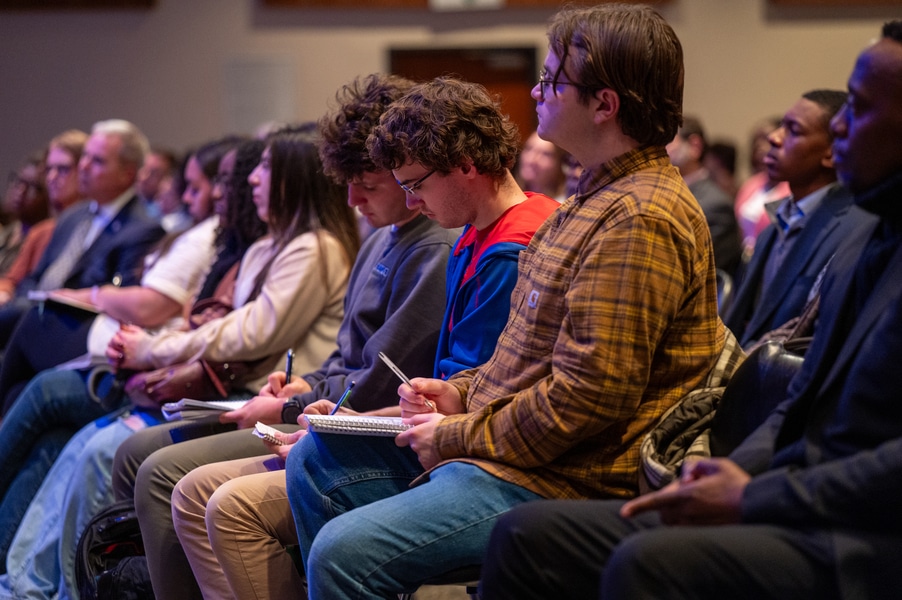
“It is way safer for me to work from here than to go back home to bring about the change I want to bring,” Mutshipayi said. “We have no other choice but to be brave. Being brave is the only option we have, it is not like we have better choices. We’ll take better choices.”
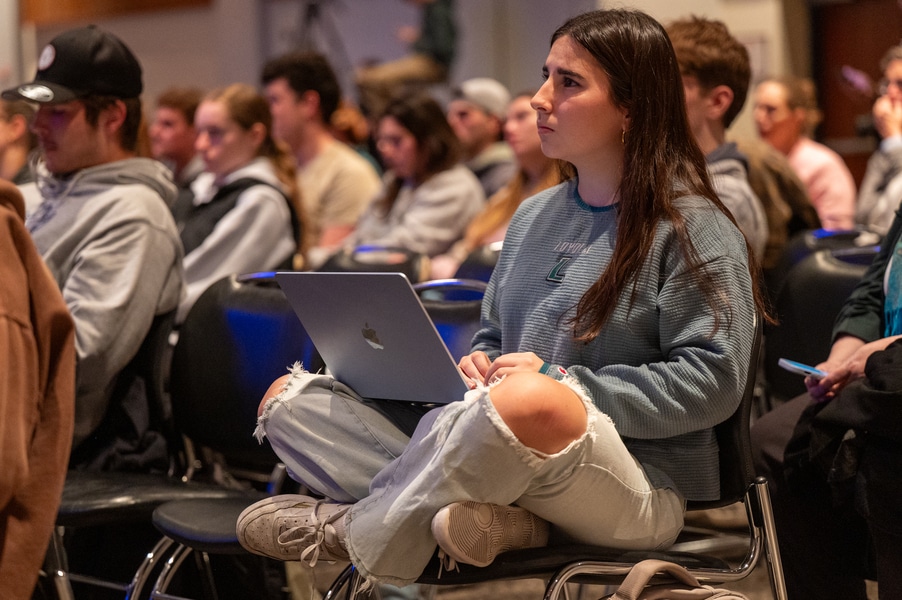
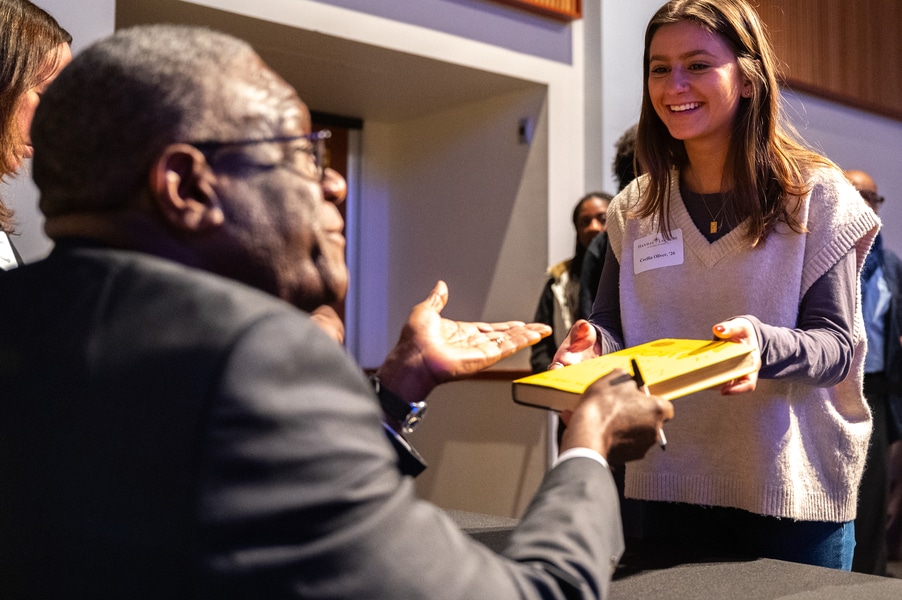
Cecilia Oliver, a senior global studies major from Annapolis, admitted she didn’t know much about Congo before reading Mukwege’s book “The Power of Women.”
“I’m definitely somebody who kind of critiques everything. I am quite aware of the equalities that exist and interconnections between all global systems,” Oliver said. “As young people, we are inheriting this world with all of this destruction and all of these hardships that exist. We have a responsibility to speak up about these injustices and not just let them slide under the rug.”
Lang Gibson, a senior from Baltimore who served as a student moderator, found inspiration in Mukwege’s book while reading it for class. “It really instilled in me the responsibility that we have to uplift our fellow humans,” Gibson said.
Alfred Nkere, a parishioner of the National Shrine of St. Alphonsus in Baltimore who grew up with Mukwege in the Congo, has lived in Baltimore for “quite some time” working as an adjunct professor at Loyola and now running a small business. Mukwege, he said, is “a global citizen” who belongs not only to the Congo.
“Today there are so many crises going on,” Nkere said. “To have him here, again to remind us of the conscience of people, of what is happening, is encouraging. The hope is that this will bring some kind of awareness into this new generation, the young generation. These are the future leaders. Hopefully this will vibrate in their consciousness to bring about change in the world.”
Nkere added that all of the crises today are because “we have pushed God aside.”
“God has to be at the center of what we do,” Nkere said. “We are here to continue the work that Christ has started.”
Mukwege, who met with Pope Francis in 2021, has faced death threats for his outspoken work for justice and accountability regarding war crimes. Catholic Congolese bishops have expressed solidarity with him.
Email Katie V. Jones at kjones@CatholicReview.org
To view more photos from this event, click through the slideshow below:
Read More Local News
Copyright © 2025 Catholic Review Media
