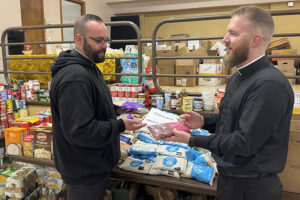
ST. PAUL, Minn. (OSV News) — Redemptorist Father John Schmidt, pastor of St. Alphonsus in Brooklyn Center, was cautiously optimistic as he heard the news Feb. 12 that “Operation Metro Surge” was nearing an end.
“We’re optimistic about the proposed drawdown from ICE (U.S. Immigration and Customs Enforcement), but very cautious as well to see what the impact might be for the parish,” Father Schmidt told The Catholic Spirit, news outlet of the Archdiocese of St. Paul and Minneapolis.
“I think people may be, initially, just very wary as well, just to see what this would shape up to look like and what any ongoing enforcement might resemble in the coming days and weeks,” he said.
U.S. Border Czar Tom Homan announced Feb. 12 that many of the 2,000 federal immigration enforcement agents in the Twin Cities and other parts of Minnesota since Dec. 1, 2025, would begin leaving. The Department of Homeland Security, or DHS, called the increased enforcement effort “Operation Metro Surge.”
The federal enforcement push led to thousands of people protesting in the Twin Cities, and two Minneapolis residents were shot by federal agents in separate incidents: Renee Good, 37, on Jan. 7 and Alex Pretti, also 37, on Jan. 24. Both died.
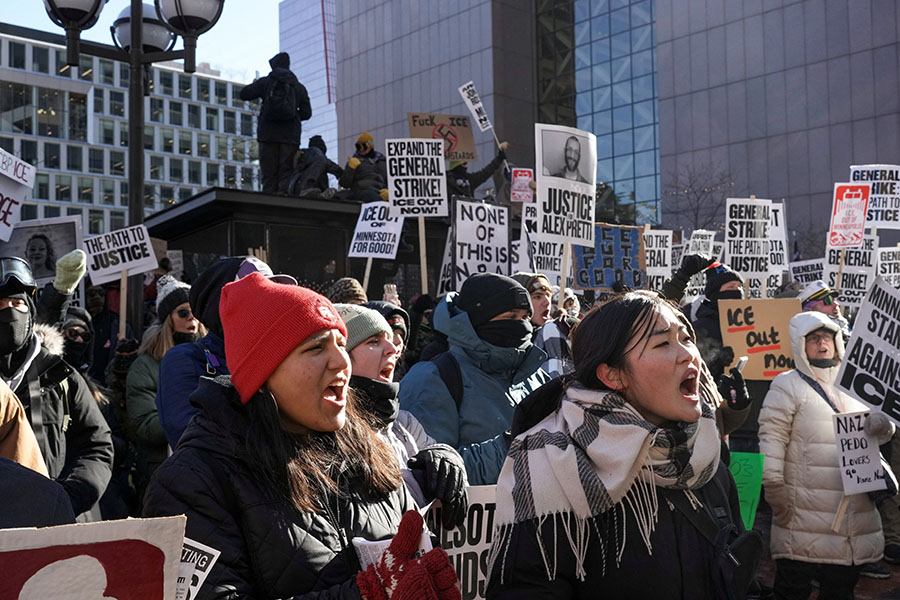
Because some immigrants didn’t want to leave their homes for fear of being detained, parishioners at St. Alphonsus and other parishes across the Archdiocese of St. Paul and Minneapolis delivered food, offered spiritual accompaniment and met other needs.
Mary Synstelien, 83, helped St. Alphonsus deliver food to Latino families.
Sometimes a father walked outside to accept assistance, sometimes it was a mother with a teenager, Synstelien said. In some cases, window shades were drawn in hopes it appeared that no one was home, she said.
They broke into smiles of gratitude and joy as they accepted packages of meat, vegetables, eggs, milk, tortillas and other items, Synstelien said.
“It’s kind of like someone actually cares, in this time of what I consider evil happening,” Synstelien said Feb. 10, before news of the federal drawdown. “It makes me want to cry when I think about it.”
Assistance in food and rent helped about 160 Latino families at St. Alphonsus, Father Schmidt said. Mass attendance at St. Alphonsus plummeted, faith formation was solely online beginning in December, and calls for holy Communion and pastoral visits in homes grew, Father Schmidt said.
St. Alphonsus also is home to a large immigrant population from Africa, including Liberia, Nigeria, Cameroon and Togo, Father Schmidt said. But the Latino community — many from Mexico, El Salvador, Dominican Republic, Guatemala and Ecuador — appeared to be the most impacted, he said.
“Maybe because this enforcement seems to be targeted toward Latino groups, and of course, the Somalian community, which isn’t here” (at the parish),” Father Schmidt said, referring to President Donald Trump highlighting social services fraud investigations and convictions in Minnesota that have included some members of the Somali community.
In another example of parishes in the archdiocese responding to the needs of immigrant families, volunteers at St. Stephen-Holy Rosary in Minneapolis, the heart of a large Latino community, unpacked 300 pounds of donated chicken Feb. 6 and placed the packages into a freezer. Romaine lettuce, baby spinach and other vegetables were unpacked next and placed into Ziploc bags on their way to about 165 families in need.
Volunteers Josselyne Bounay, 32, and Iridian Martinez, 27, parishioners of St. Stephen, worked alongside Bill Muske, 63, and Patrick LaCombe, 67, both of St. Bartholomew in Wayzata. The two parishes have a longstanding “sister parish” relationship that includes members of St. Bartholomew pitching in to help the largely immigrant population at the Minneapolis parish, LaCombe said.
The next day, Feb. 7, about a dozen drivers from St. Bartholomew distributed the food.
It was the second major food delivery from St. Stephen-Holy Rosary since the increase in federal immigration enforcement began. In addition to food assistance, about 35 families sought help with rent, said Father James Stiles, pastor.
The list for assistance grew as fear in the community increased and time marched on. People didn’t go to work, shop or attend school for fear of being detained — whether they were in the country without documents or had the documents to be in the U.S. legally, Father Stiles said.
“There was a turning point, really around the time of Alex Pretti,” Father Stiles said. “There was a turning point where people just said, ‘No more. I’m not leaving my home.'”
The number of immigrants impacted and parishes that helped them also grew as the enforcement effort widened, Father Stiles said.
Back at St. Alphonsus, a large hall at the parish held canned goods, corn flour mix, tortillas, sugar, diapers and other items.
Eileen Irgens, 72, and a member of St. Alphonsus, said she volunteers as a tutor at Sharing and Caring Hands’ Mary’s Place in Minneapolis, which offers transitional housing for families. She is worried about the long-term impact of the increased immigration enforcement on children and families.
Recently tutoring five children, she noted that four of them had not been in school recently due to their families’ concerns about immigration enforcement.
“They are so sad because they love school, where they are with other students, getting lunch,” Irgens said. Her own 9-year-old granddaughter has been worried about some of the protests hurting her mother, who works in downtown Minneapolis, Irgens said.
“Even kids who are not directly impacted” are concerned about what is taking place around them, Irgens said. “We have no idea what the reach is for all our kids.”
Long-term impact was also on Father Stiles’ mind at St. Stephen-Holy Rosary. Even as the extra 2,000 federal agents prepare to leave Minnesota, memories, emotions and difficulties will remain, the priest said.
“How do we tend to this?” Father Stiles asked. “Because this can’t just be like, ‘Oh, that was a bad memory.’ It’s like, no, that actually was a real experience. It really, deeply affected us. Our kids, that’s the thing, our kids are suffering right now.
“We need to get up, and we need to calm each other down and attend to each other and just encourage each other and pray with each other for healing,” Father Stiles said.
Reduced Mass attendance
One measure of harm done by the federal immigration enforcement efforts in Minnesota is reduced Mass attendance by members of immigrant communities, said Father James Stiles, pastor of St. Stephen-Holy Rosary in Minneapolis.
“We’ve seen about a 75 percent reduction in attendance,” he said Feb. 6. The 9 a.m. Sunday Spanish Mass on a busy day would draw about 700 people, Father Stiles said. “Now, we’re down to about 100” or 150 people, he said.
“One of the things that we’ve been saying around here is if they can’t come to Christ, Christ will go to them,” Father Stile said. “So, we’re saying, OK, we have got to build some teams of people” who aren’t concerned about being pulled over by federal immigration agents and who can deliver holy Communion, he said.
“We’re probably, maybe two weeks behind the curve on this. But as you know, this has been a very unpredictable situation,” he added.
A meeting set up to start planning the delivery teams was called off Jan. 24, for example, Father Stiles said. That was the day federal agents shot Minneapolis resident Alex Pretti, 37, less than a mile away from the church. Pretti died. Rather than holding the meeting, Father Stiles spent time making certain people around the church campus were safe.
Read More Immigration & Migration
Copyright © 2026 OSV News
