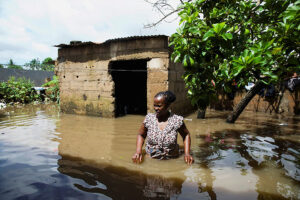
As deadly floods hit southern Africa, Pope Leo XIV prayed for the affected, with Catholic bishops in the region urging support for thousands struck by the climate change-related disaster.
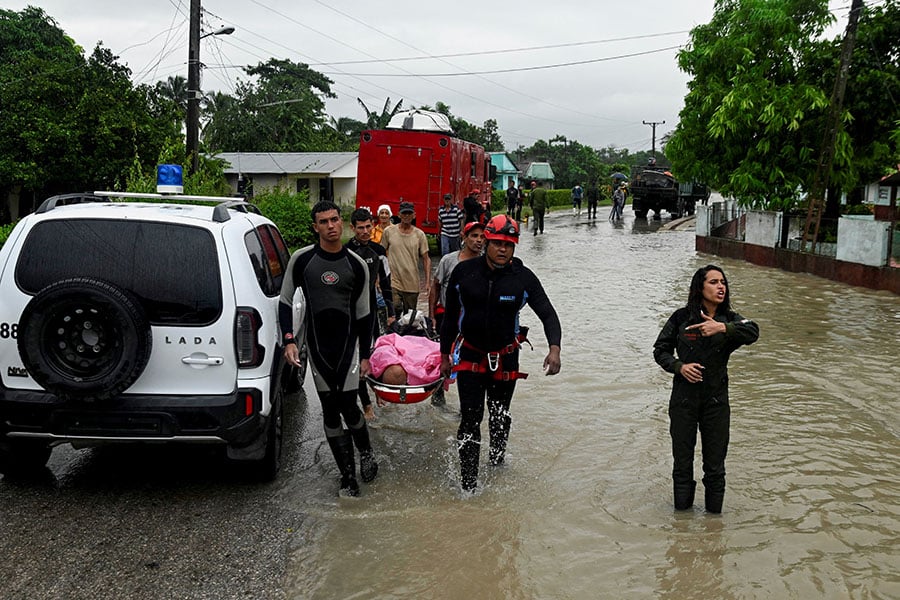
The severe flooding — resulting from weeks of intense and unrelenting rainfall since Dec. 26 — has killed hundreds of people in the region and forced thousands into centers for the internally displaced.
The floods have also affected large swaths of farmland and destroyed roads, bridges and critical structures, including water sources and health facilities, putting the region at risk of disease outbreaks.
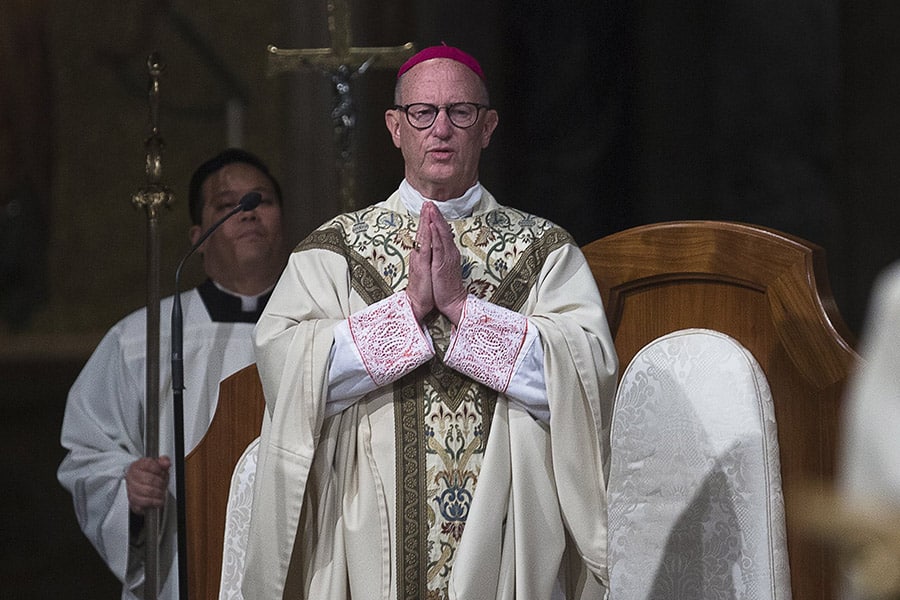
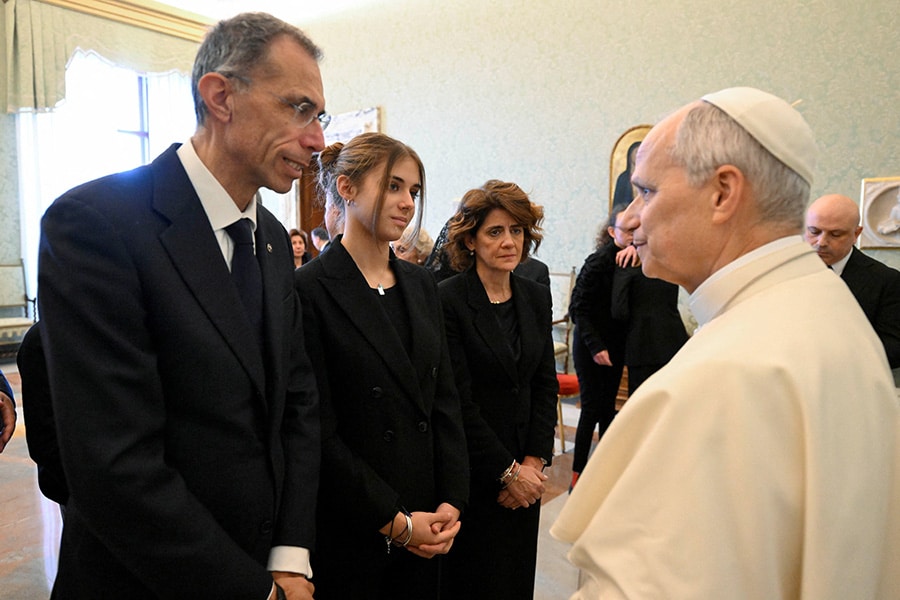
During his Sunday Angelus prayer from the widow of the Apostolic Palace Feb. 1, Pope Leo prayed for the victims of recent storms.
“I assure you of my prayers for the dead and for those who are suffering as a result of the storms that have struck Portugal and southern Italy in recent days,” he said, adding: “Let us also not forget the people of Mozambique who have been severely affected by flooding.”
The pope also prayed for southern African flood victims on Jan. 18 during his Sunday Angelus.
In the most recent tragedy related to heavy rains in the region, over 200 people reportedly died in eastern Congo after a mine collapsed.
Women and children extracting coltan — a mineral used to manufacture electronics such as smartphones and computers — are said to be among the victims, the BBC reported Feb. 1.
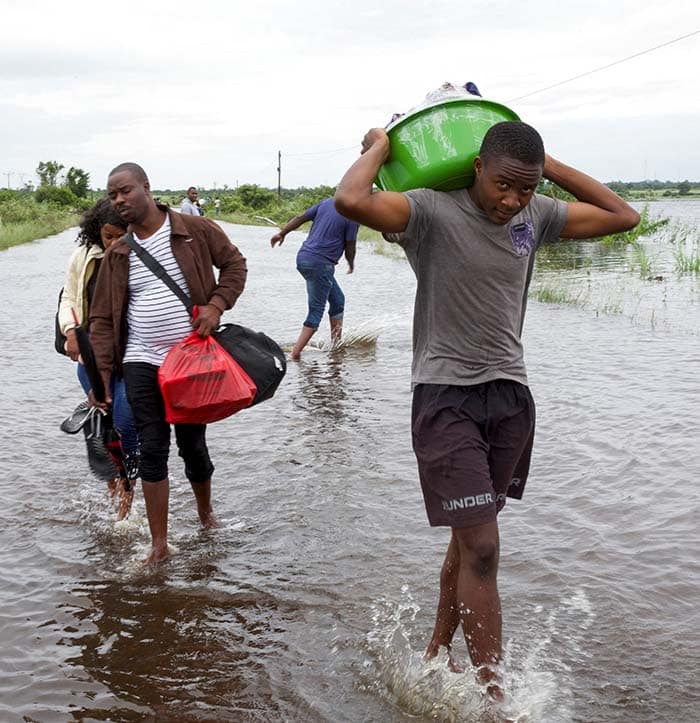
The floods have struck Mozambique, Eswatini, northern South Africa and Zimbabwe.
In Mozambique, at least 700,000 people in six provinces were affected, with essential transport routes cut off — making it difficult for humanitarian assistance to reach the people.
Scientists believe climate change has contributed to the intense rainfall, with the La Niña phenomenon playing a key role.
El Niño and La Niña are opposite phases of the El Niño/southern Oscillation cycle in the Pacific Ocean. El Niño features warmer-than-average ocean temperatures in the eastern Pacific and weakened trade winds. Conversely, La Niña is characterized by colder-than-average water in the same region, driven by stronger trade winds.
Although local and regional churches are responding to the flooding, officials say the magnitude of the disaster outweighs the groups’ resources.
Cardinal Fridolin Ambongo Besungu of Kinshasa, president of the Symposium of Episcopal Conferences of Africa and Madagascar appealed on Jan. 30 to the international community to come to the aid of the populations affected by the flooding in southern Africa.
“Our hearts go out to the thousands of people who have lost their homes, livelihoods and loved ones,” said Cardinal Ambongo Besungu in a SECAM statement. “The images of destruction and despair serve as a stuck reminder of the fragility of human life and the urgent need for our collective response to this humanitarian crisis.”
The cardinal said while immediate relief was needed for those living in temporary shelters, support was also necessary to help the affected communities restart their lives, rebuild their homes and livelihoods and regain their dignity and hope.
Archbishop Liborius Ndumbukuti Nashenda of Windhoek, Namibia, president of Interregional Meeting of Bishops in southern Africa, thanked Pope Leo for his prayers and renewed the pope’s call for international attention to the tragedy, appealing to humanitarian organizations, governments and people of good will “to offer a helping hand to those affected by this tragic event.”
On Jan. 30, the United Nations’ Office for the Coordination of Humanitarian Affairs, or OCHA, appealed for $187 million for urgent lifesaving assistance to the people affected by the floods in Mozambique.
Meanwhile, churches in South Africa have also reported widespread disruption, including damage to homes, roads and bridges, and loss of life, and welcomed the government’s decision to classify it as a national disaster to strengthen national coordination and relief efforts.
Read More Disaster Relief
Copyright © 2026 OSV News
