PHILADELPHIA (OSV News) — Amid division and geopolitical turmoil, an ecumenical expert is encouraging the faithful to remain steadfast as they observe the international Week of Prayer for Christian Unity Jan. 18-25.
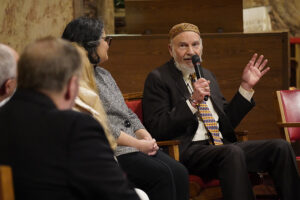
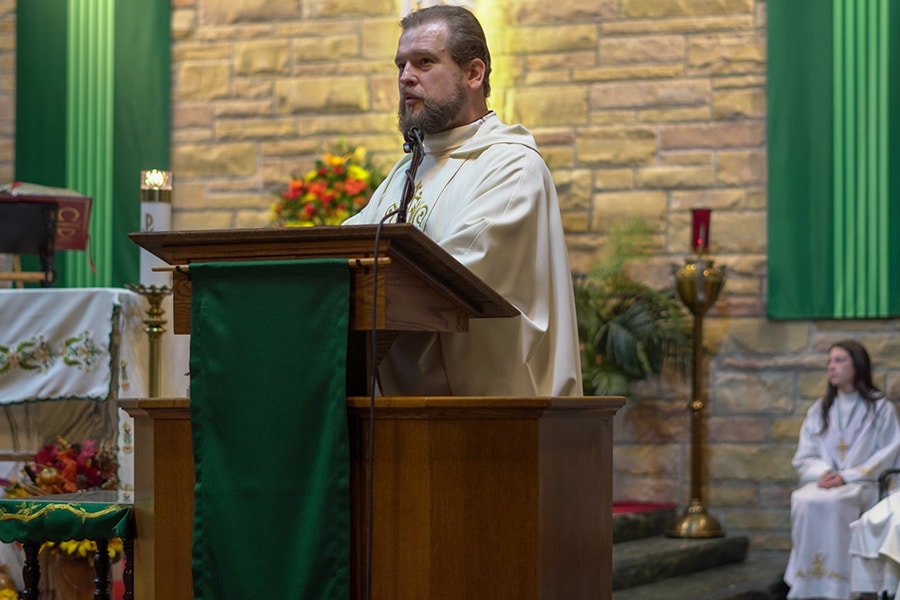
This year’s commemoration “is even more relevant” since “there’s so much division in our world,” said Msgr. Gregory Fairbanks, an ecumenical expert and dean of the diaconal formation school at St. Charles Borromeo Seminary in Ambler, which is part of the Archdiocese of Philadelphia. “I think it’s even more important to recognize that we can come together, at least as Christians, for a common purpose: to pray.”
The annual observance, formally instituted in 1968 by the Vatican and the World Council of Churches, traces its roots to the 18th century, with Pentecostal, Anglican and Catholic clergy all promoting prayers over the intervening decades to restore the bonds among believers.
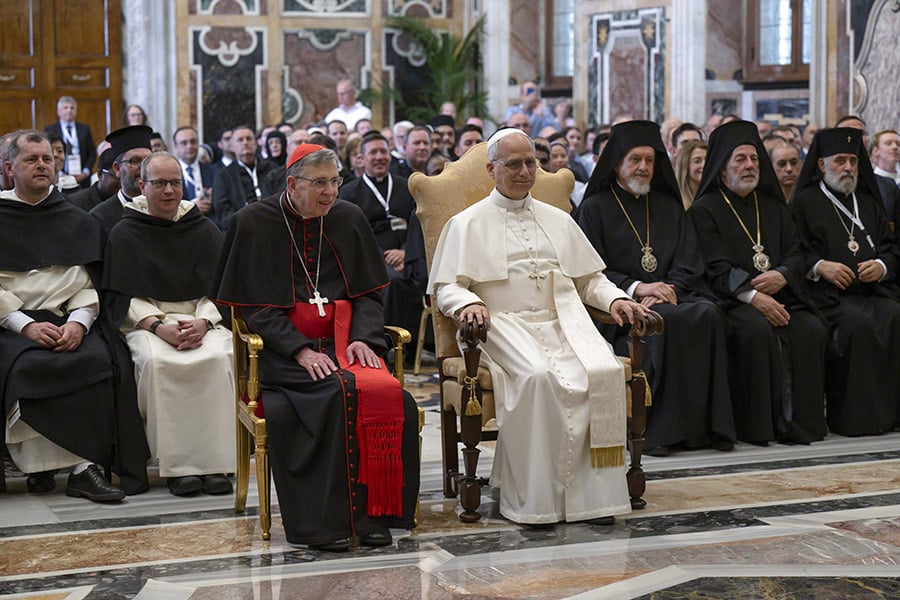
Among Catholics, Pope Leo XIII, Franciscan Friar of the Atonement Father Paul Wattson, Dominican theologian Father Yves Congar and St. John XXIII were prominent advocates of ecumenism, derived from the Greek word “oikoumene,” meaning “the whole inhabited world.”
In its decree “Unitatis Redintegratio,” the Second Vatican Council declared “the restoration of unity among all Christians” was “one of (its) principal concerns.”
The theme for this year’s observance is taken from Ephesians 4:1-13, in which St. Paul focuses on the oneness of the body of Christ.
Prayer materials and resources for the 2026 week of prayer — which are available on the website of the Vatican’s Dicastery for Promoting Christian Unity — were drafted by the Armenian Apostolic Church’s interchurch relations department.
The work of Christian unity can seem daunting, especially since the number of Christian denominations has reflected a “geometric progression of division” over the past century, said Msgr. Fairbanks.
According to the International Bulletin of Mission Research, the world’s 2.6 billion Christians spanned some 50,000 denominations in 2025, with that number projected to rise to 64,000 by 2050.
Msgr. Fairbanks clarified to OSV News that there has been some discussion among academics as to the report’s criteria for defining a denomination, a debate that could impact the total number of reported denominations. But the division is nonetheless extensive, and it usually centers on decision-making in a given faith tradition, he said.
The recent celebration of the 1,700th anniversary of the Council of Nicaea and the Nicene Creed have imparted renewed impetus to the work of Christian unity, said Msgr. Fairbanks.
“I think the biggest accomplishment was the fact that it (the Nicaea commemoration) happened, that they were able to pull off having a good portion of Christianity be represented to show our unity in faith, the unity under the creed, unity under the belief that was articulated 1,700 years ago,” he said.
Specifically, the commemoration highlighted “the essential aspects of our faith,” he said. “And that’s a good reminder for us to base our unity, or at least this step in the prayer for unity, in the creed, and in our common Christian faith and beliefs.
And, said Msgr. Fairbanks, “Even when we don’t have unity yet, that doesn’t mean we stop working for it or stop praying for it.”
Referencing Jesus’ prayer in John 17:1-26, Msgr. Fairbanks said, “If Christ calls us to unity, which he did in John’s Gospel, then we have an obligation as Christians to do our best — trusting, of course, that unity is going to come in God’s time, but with our cooperation, and that we need to work together to put aside what really isn’t that important.”
He added that “Unitatis Redintegratio” reminds the faithful that “every movement of renewal and Christian unity starts with a renewal of one’s own faith.”
“We have to first examine our own consciousnesses to figure out, ‘OK, what’s holding me back as an individual, as well as a community, from even seeking full visible unity?'” he said. “We break down barriers by engaging with people, by praying with people, by trusting them.”
Although “we’re not going to solve the issues overnight,” and “it may take centuries,” he said, “we have to at least engage with other Christians, and see the Christ in them, even if we’re not ready to have full visible unity yet.”
Read More World News
Copyright © 2026 OSV News
