
Leaders of the Maryland Catholic Conference say the state will face another big push for physician-assisted suicide, which is opposed by church teaching, when the 2024 General Assembly session begins Jan. 10.
Jenny Kraska, MCC executive director, said there is an expectation that legislation to allow people to end their lives with the help of prescription drugs will get a renewed push to move through the legislative process this year.
“We have a lot of legislators who are new in the general assembly since the last time this went to a floor vote in either chamber and we also have a governor who has expressed his support of PAS,” she said.
The MCC is the public policy arm of the state’s bishops, including the archdioceses of Baltimore and Washington, which includes several Maryland counties, and the Diocese of Wilmington, Del., which includes the Eastern Shore.

A lot of factors are working against the church’s position on PAS, “but that’s not to say that we still can’t make a difference and make our voices heard, and this year it will be more important than ever that people are contacting their legislators here and letting them know that they oppose physician-assisted suicide,” Kraska said.
Although her office has not yet seen a draft of the bill, it is likely to follow the template from the last seven or so years, with only slight differences each time.
The expected legislation is problematic in many ways, but mostly because there are no safeguards in the bill to protect the elderly, people with disabilities and other vulnerable groups.
Those seeking the lethal prescription would not have to go to their own doctor – who would be expected to know the patient and his or her history.
Kraska said that since most doctors will not prescribe drugs for assisted suicide, “oftentimes what ends up happening is there’s just a handful of doctors in any given state where this passes who will actually write the prescription for these drugs.”
This means that, at a most vulnerable time in a person’s life, they may go to a doctor who knows nothing about them or their body chemistry.
Kraska pointed to an exposé that was done in Oregon after that state legalized physician-assisted suicide. Barbara Wagner, an Oregonian who battled lung cancer, had done well with treatments but the cancer returned. She was still ready to fight the cancer, but the Oregon Health Plan, her insurer, would not cover her last hope for treatment, a drug that cost $4,000 a month.
Instead, the state health plan offered to cover the drugs for death by physician-assisted suicide, which cost about $50. According to a 2008 report about the incident from ABC News, “Opponents say the law presents all involved with an ‘unacceptable conflict’ and the impression that insurance companies see dying as a cost-saving measure. They say it steers those with limited finances toward assisted death.”
Kraska said that with the expense of some experimental or newer life-saving medications, “unfortunately a cost is put on life at its end stages.”
She said PAS has been offered to people who are depressed or have mental illness, even if they have no physical ailments.
A poll in early 2023 in Canada, where PAS was legalized in 2021, showed that more than a quarter of Canadians supported medical assistance in dying – which is how PAS is known there – for those whose only affliction was poverty (27 percent) or homelessness (28 percent).
Kraska cited a recent Washington Post op-ed column that suggested prescribing PAS for those with eating disorders.
“It’s really Orwellian to think that this is how we would view really serious diseases like eating disorders or conditions like homelessness, that the only option we would give people is assisted suicide,” she said.
There are always pushes to add more coverage for palliative care, which focuses on providing relief from symptoms and stress of an illness, including pain. Kraska said a study is underway in Maryland to see if the cost of palliative care can be covered under Medicare.
However, she added that when the cost of continuing palliative care is compared to the cheaper lethal PAS drugs and the fact that those people no longer need any care because they’re no longer living, the cost-benefit analysis does not favor palliative care.
Kraska said the legislation may require a mental health evaluation for the patient, but recent iterations have not specified that it should be done by a mental health professional or someone who is familiar with the patient. “More than likely, these are going to be doctors who are in favor of assisted suicide who are recommended by the doctors who are writing the prescription. So, it becomes sort of this vicious circle of people who are all supportive of these efforts who are going to be the ones making the evaluations and writing the prescription,” she said.
Another safeguard missing from past PAS bills is that the prescriptions are not tracked or monitored once the pills are dispensed. Some patients fill the prescription for themselves in case things get bad and they can’t handle their condition anymore.
A lot of the prescriptions go unused, sitting in a medicine cabinet or someplace else at home, where they can be misused or abused by family members or others. “It’s a really dangerous reality of the fact that, people who get these prescriptions, if they’re not using them, these drugs are sitting out there, and we have no way to track them, to know what’s happening to them, to protect others against them,” Kraska said.
The MCC will again work with the Marylanders Against Physician-Assisted Suicide, a coalition that includes including doctors, medical professionals, the disability community and other faith groups.
She said it’s a helpful sign that the American Medical Association recently reaffirmed its position against PAS. The AMA represents physicians across the country “to promote the art and science of medicine and the betterment of public health,” according to its website.
“If there is a silver lining to this debate, it’s nice to know that the group that speaks for medical professionals is still on the right side when it comes to the issue,” Kraska said, “because I know that they’ve been under tremendous pressure for years to at the very least to go neutral, if not (in favor of) physician-assisted suicide.”
During the upcoming session, Kraska said the MCC will also monitor legislation on education, housing, juvenile justice, the environment and climate change, and food insecurity issues, especially childhood hunger.
In November 2024, an amendment will be on the ballot in Maryland to enshrine abortion and reproductive rights in the state Constitution. Kraska acknowledged that the MCC and others who denounce the effort face an uphill battle, because such legislation has passed in other states since Roe vs. Wade was overturned in 2022. Maryland is expected to be one of between nine and 12 states with similar ballot initiatives this year.
The abortion issue is complicated in Maryland because the state stopped collecting data on abortions and sending it to the Centers for Disease Control and Prevention in the early 2000s. Some data is collected on publicly funded abortions, but it is minimal and mainly for budget purposes.
“There’s no other medical procedures that I’m aware of that we that we don’t track and have data on,” Kraska said.
To sign up for legislative updates and alerts from the Maryland Catholic Conference, visit
mdcatholic.org/advocacynetwork.
Email Christopher Gunty at editor@CatholicReview.org

Archbishop Lori will celebrate vigil for peace
After President Donald Trump issued an ultimatum to Iran earlier this week that threatened a “whole civilization will die” if certain conditions were not met, Archbishop William E. Lori announced he will celebrate a Vigil for Peace at the Cathedral of Mary Our Queen in Homeland April 11 at 6 p.m.
Continue Reading Archbishop Lori will celebrate vigil for peace
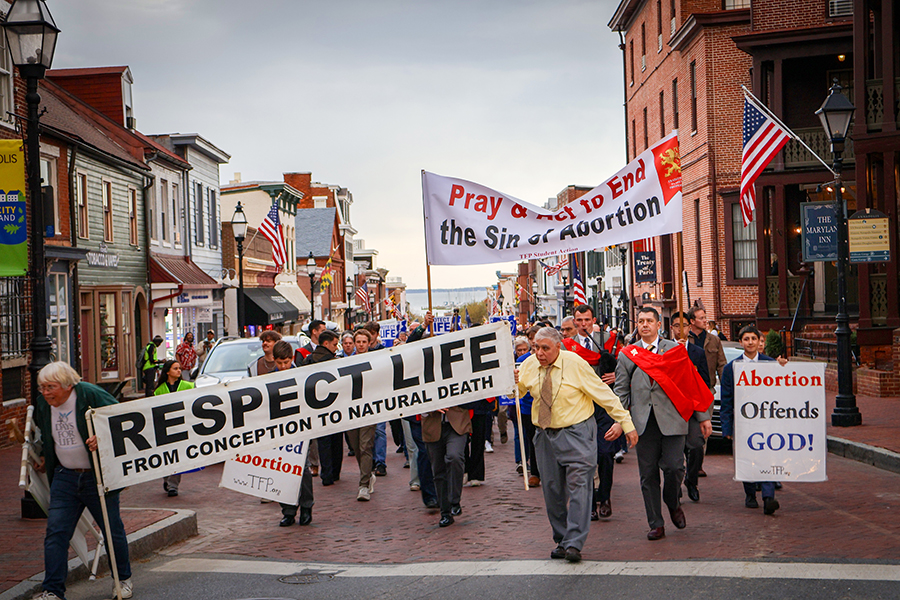
Fired Planned Parenthood whistleblower addresses Maryland March for Life
On a warm April 6 evening in Annapolis, Mayra Rodriguez – Planned Parenthood’s 2016 Employee of the Year – stood before several hundred participants at the 47th annual Maryland March for Life with a starkly different message. She urged those gathered to confront what she described as the truth about abortion and its consequences.
Continue Reading Fired Planned Parenthood whistleblower addresses Maryland March for Life
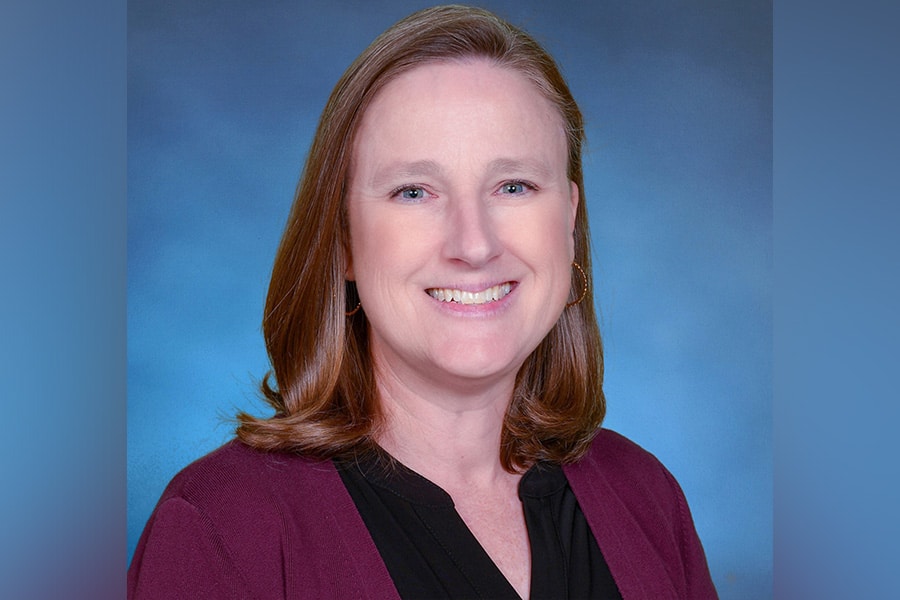
Archdiocese of Baltimore Catholic schools name new associate superintendent
The Archdiocese of Baltimore announced March 31 the appointment of Heather Cucuzzella as associate superintendent of its Catholic schools.
Continue Reading Archdiocese of Baltimore Catholic schools name new associate superintendent

Radio Interview: A conversation with local converts
This Easter marks a remarkable moment in the Archdiocese of Baltimore, where more than 1,280 catechumens and candidates entered into full communion with the Catholic Church — a number drawn from those attending formal rites and not including several hundred others welcomed at individual parishes. In this episode of Catholic Review Radio, host Rita Buettner highlights two of these journeys.
Continue Reading Radio Interview: A conversation with local converts
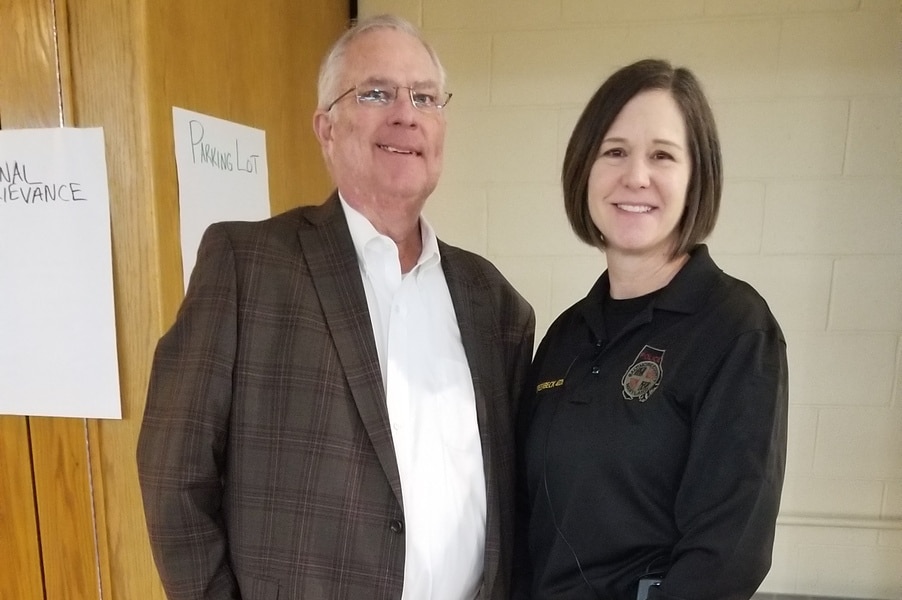
Parishes get training to be welcoming, but alert to safety
Safety and security start with being welcoming. One of the handouts at the Westminster seminar, “The Power of Hello,” addressed how greeting people who come to the church helps provide a welcoming environment, as well as giving ushers a chance to assess any areas of concern. It’s not meant to create a sense of paranoia, but caution.
Continue Reading Parishes get training to be welcoming, but alert to safety
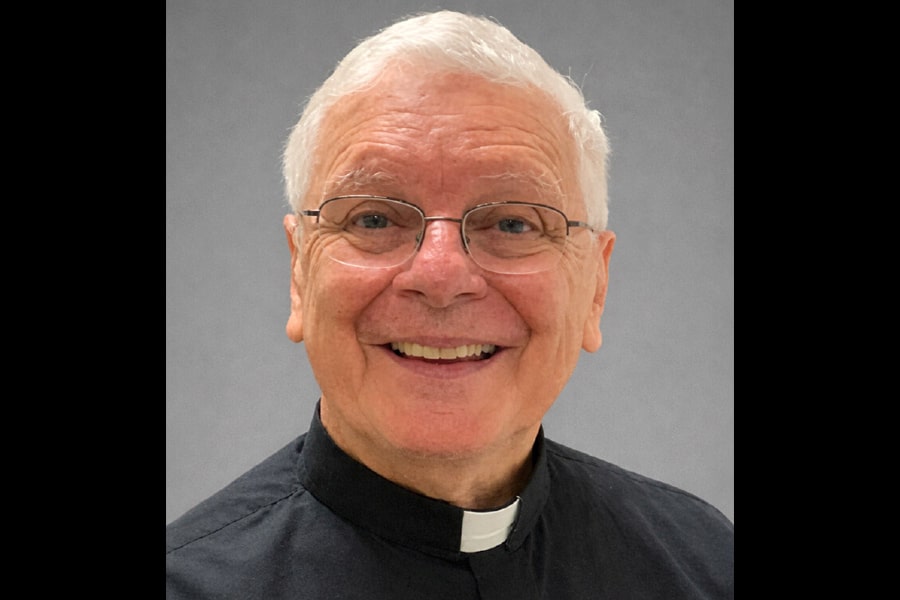
Father Joseph P. Lacey, S.J., longtime pastor of St. Alphonsus Rodriguez, dies at 85
Jesuit Father Joseph P. Lacey, who spent more than two decades as pastor of St. Alphonsus Rodriguez in Woodstock and 22 years as a missionary in India, died March 28 at the St. Claude La Colombière Jesuit Community in Baltimore. He was 85.
Copyright © 2023 Catholic Review Media
