Russia’s latest missile strikes on Kyiv and other Ukrainian cities were aimed deliberately at civilians and civilian infrastructure and bear clear signs of crimes against humanity, Major Archbishop Sviatoslav Shevchuk said, as Ukraine enters another week of winter fighting.
“This week” — the 206th of Russia’s full-scale invasion of Ukraine — “has truly been a week of heroic struggle for humanity, human life, light, and warmth,” said Major Archbishop Shevchuk, the head of the Ukrainian Greek Catholic Church.
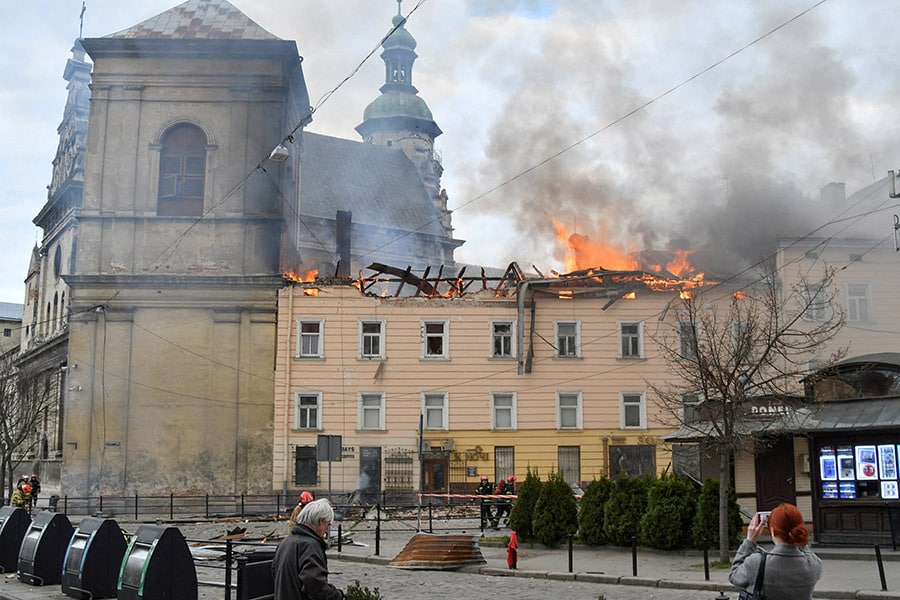
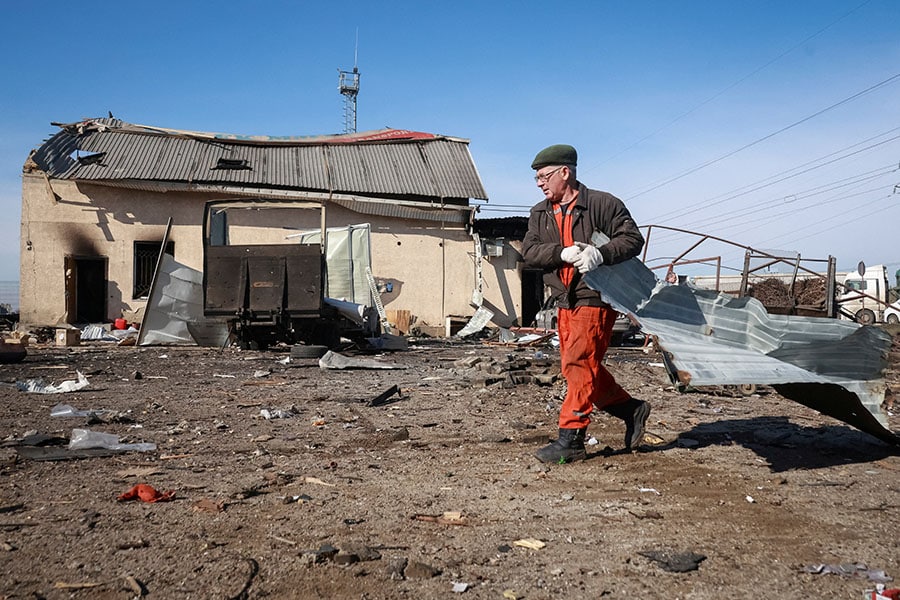
In the statement shared with OSV News Jan. 25, Major Archbishop Shevchuk described heavy fighting along the entire front line, from the northern regions of Sumy, Chernihiv and Kharkiv to Odesa and Zaporizhzhia in the south, but said the defining feature of the past days was a sharp escalation of attacks on civilians.
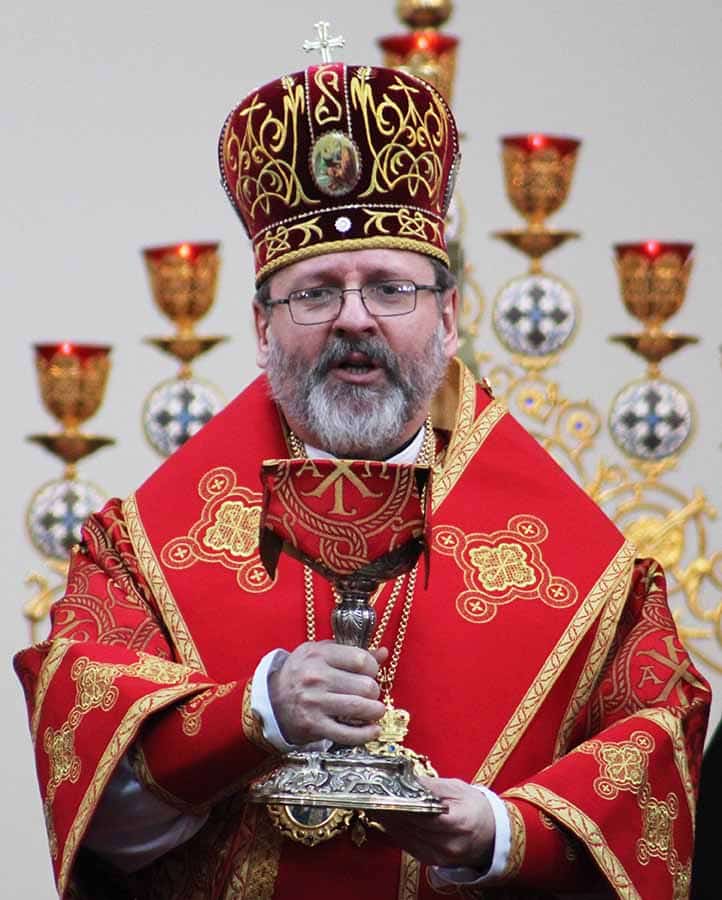
“At a time when international talks are being held in Davos and the United Arab Emirates on an energy truce and other ways to stop this terrible, sacrilegious war, Russia is launching increasingly active strikes on peaceful cities and villages,” Major Archbishop Shevchuk said, pointing out that Kyiv, the capital, has been an “epicenter” of the strikes.
Major Archbishop Shevchuk said the scale and type of weapons used in the attack on Kyiv had not been seen “for months,” and recalled that similar missiles had previously destroyed an entire apartment building in Dnipro.
“This time, 12 missiles were fired at one city — Kyiv,” he said.
According to Major Archbishop Shevchuk, the purpose of the strikes is clear: “The goal is to destroy Ukraine’s infrastructure, particularly its energy sector, and freeze Ukrainians,” adding that “these are very obvious signs of crimes against humanity, against international law, against the rules and moral norms of warfare,” he said.
The top Ukrainian prelate also described the consequences of power outages during winter conditions.
“If there is no heat or light in a multi-story building in Kyiv, then immediately the apartment, the dwelling, turns into a cold trap,” Major Archbishop Shevchuk said, emphasizing that when temperatures drop below 50 degrees Fahrenheit, sewer and water systems immediately freeze.
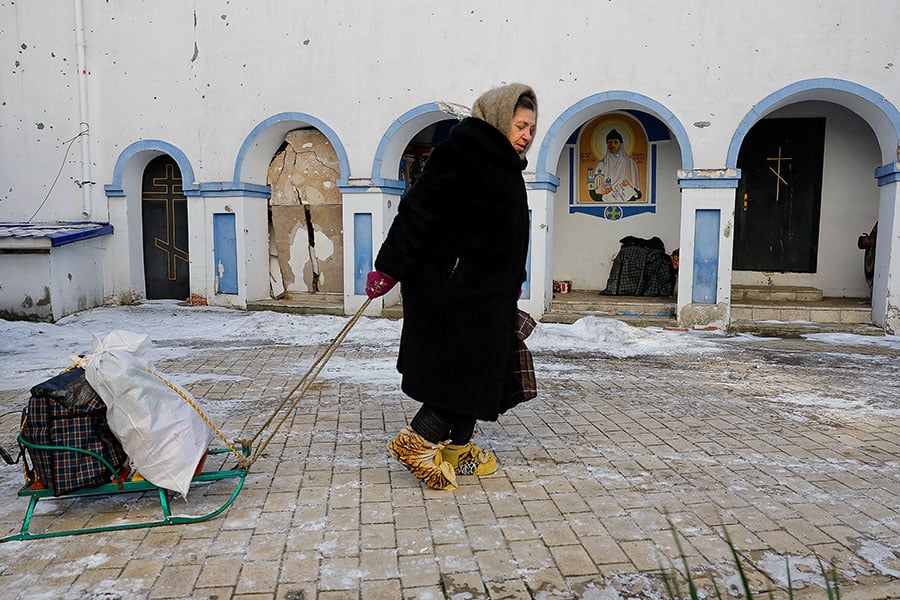
Despite the attacks, Major Archbishop Shevchuk said civilian life continues under extreme conditions. “It is amazing to look into the faces of our men, women, girls, boys, elderly people, and children who are going to church this morning in Kyiv, praying and demonstrating the highest levels of heroism, courage, and resilience in such circumstances,” he said, stressing that the attacks on civilians have not achieved their intended effect.
“While our enemies may be attempting to demoralize us by attacking the civilian population, each such assault only makes us stronger,” Major Archbishop Shevchuk said. “Each such tragedy brings Ukrainians closer together.”
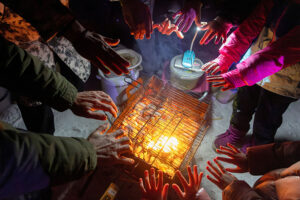
Relentless Russian attacks on Ukrainian infrastructure continue, including in the capital, Kyiv, where people are forced to flee to government-run tent shelters, which offer basic services and heat during blackouts. Two weeks after a massive Russian attack obliterated the power grid in the capital and in cities across the country — Ukraine has been plunged into the worst winter energy crisis since Russia launched its full-scale invasion.
Speaking on behalf of civilians and soldiers, Major Archbishop Shevchuk appealed for international attention. “On behalf of those children who live in those cold Kyiv homes, we want the whole world to hear the voice from Kyiv, which once again declares: Ukraine stands, Ukraine fights, Ukraine prays.”
As the country nears four years of war Feb. 24, on Jan. 24, according to Reuters, Russia launched another large-scale attack on Ukraine’s energy system, leaving about 1.2 million homes without electricity and cutting heating to thousands of buildings in Kyiv and surrounding regions. At least one person was killed and dozens were injured, authorities said. Emergency crews worked to restore services amid harsh winter conditions.
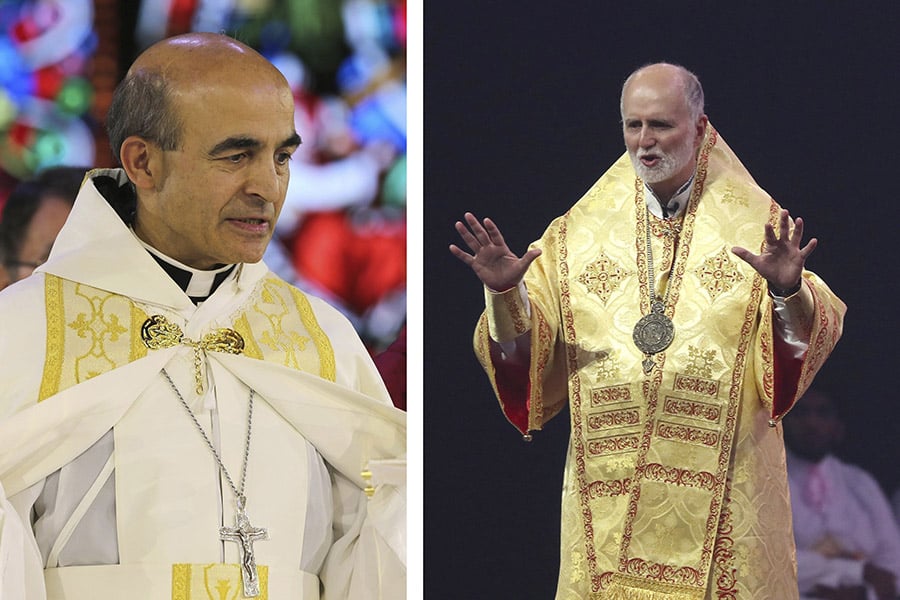
The assessment of the situation in Kyiv was echoed by Cardinal Konrad Krajewski, the papal almoner, who has coordinated Vatican’s humanitarian assistance to Ukraine since the start of Russia’s full-scale invasion.
Bombarding the crucial infrastructure when temperatures dipped as low as minus 4 degrees Fahrenheit in mid-January and remained below freezing is “genocide,” Cardinal Krajewski told OSV News Jan. 23.
“I was in Kyiv during the winter several times,” he added. “It is a nightmare when the city is left without power at this time of the year. It is a deadly risk for people.”
He also criticized waning international attention. “Ukraine has been abandoned,” Cardinal Krajewski told OSV News. “Since the focus of the world is on Venezuela, Gaza and other places, Russia is deliberately targeting Ukraine, thinking they can do whatever they want.”
The situation in Kyiv also prompted an appeal from Cardinal Grzegorz Rys of Kraków, Poland, who — after sharing with the faithful on Jan. 24 a private message he received from Major Archbishop Shevchuk, describing “another hellish night” in Kyiv amid subzero temperatures — said the Jan. 25 collection from all Kraków’s churches will be donated to the Kyiv Church.
“We cannot remain indifferent,” Cardinal Rys said, urging his faithful to respond with generosity and concrete support for the urgent needs of the Ukrainian community, and saying the cost of the first power generator will come from his own pocket.
As winter continues and attacks persist, Major Archbishop Shevchuk said unity to help across churches and communities remains a defining response to the war.
In this way, he said “we oppose any instrumentalization, any use of religion, especially Christianity, to serve the powerful of this world.”
Read More War in Ukraine


Copyright © 2026 OSV News
