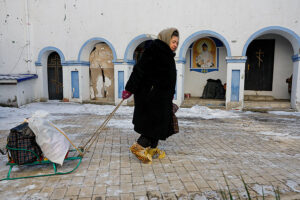
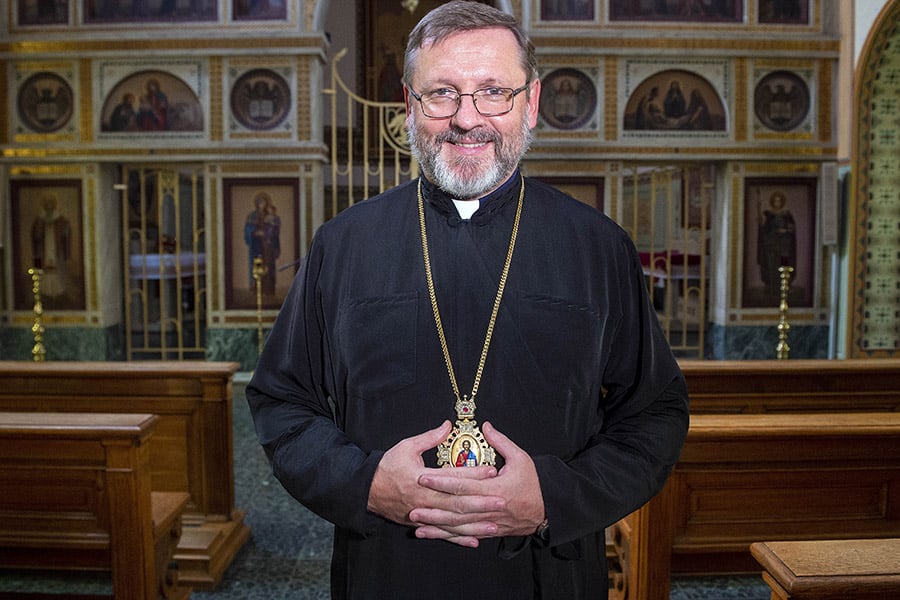
Nearly four years after Russia launched its full-scale invasion of Ukraine on Feb. 24, 2022, intensified Russian attacks on civilian infrastructure are deepening the country’s humanitarian crisis — and faith remains central to Ukraine’s endurance, the country’s outspoken prelate told OSV News.
Speaking ahead of the fourth anniversary of the invasion, Major Archbishop Sviatoslav Shevchuk said churches are no longer only places of worship but are increasingly functioning as shelters and humanitarian support centers for civilians.
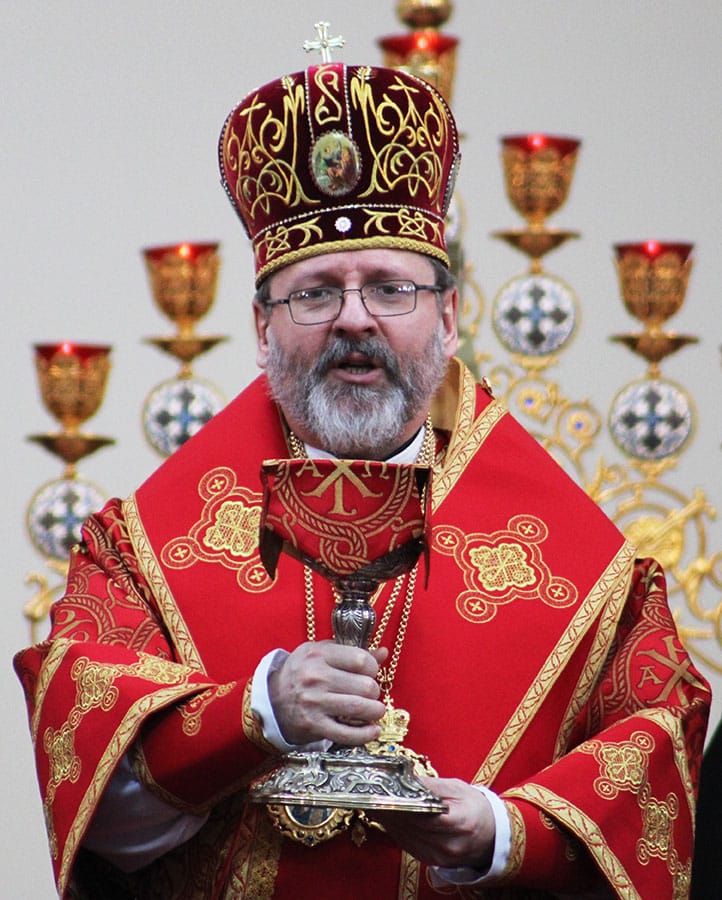
The head of the Ukrainian Greek Catholic Church said the war has reshaped everyday life in Ukraine and significantly expanded the role of the Church. He also warned that international attention is gradually shifting away from Ukraine even as civilian suffering intensifies.
Major Archbishop Shevchuk said the conflict is affecting not only the country’s physical landscape but also the faith and outlook of ordinary Ukrainians.
“For Ukraine, each day is a day of blood, death, tears and struggle,” Archbishop Shevchuk told OSV News Jan. 26. “We see that especially now, during this harsh winter, when attacks continue. This is not only a military war. It is also an informational and diplomatic war. Sometimes the world becomes a victim of Russian propaganda.”
Official casualty data reflects the scale of the violence he described. According to the United Nations Human Rights Monitoring Mission in Ukraine, 2025 was the deadliest year for civilians since the beginning of the full-scale invasion.
The U.N. documented at least 2,514 civilians killed and more than 12,000 injured — a 31% increase compared to 2024 and roughly 70% higher than in 2023. The figures include only verified casualties in areas under Ukrainian government control, meaning the overall numbers are likely higher.
Since February 2022, more than 14,500 civilians — including 745 children — have been confirmed killed, with tens of thousands more injured. Humanitarian organizations are scaling up efforts to meet an unprecedented need.
Across the country, an estimated 10.8 million people — including both internally displaced and war-affected residents who remain in their communities — will require humanitarian support this year, according to the U.N.
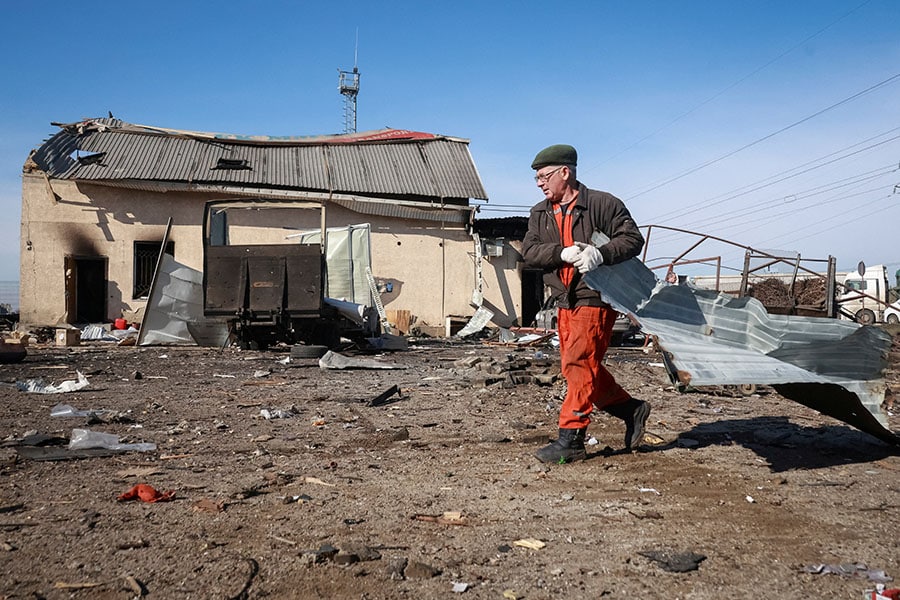
Major Archbishop Shevchuk said a growing share of civilian suffering results from sustained attacks on infrastructure, particularly energy and heating systems, which have intensified during winter months.
“Every night, especially in Kyiv where I live, we hear warnings” followed by “rockets, drones and missiles from the sky,” he told OSV News. “The aim of these attacks is the infrastructure of our cities — power plants and heating systems — and they are being destroyed systematically.”
The archbishop said temperatures in Kyiv have frequently fallen below 14 degrees Fahrenheit this winter, creating dangerous living conditions for residents when utilities fail.
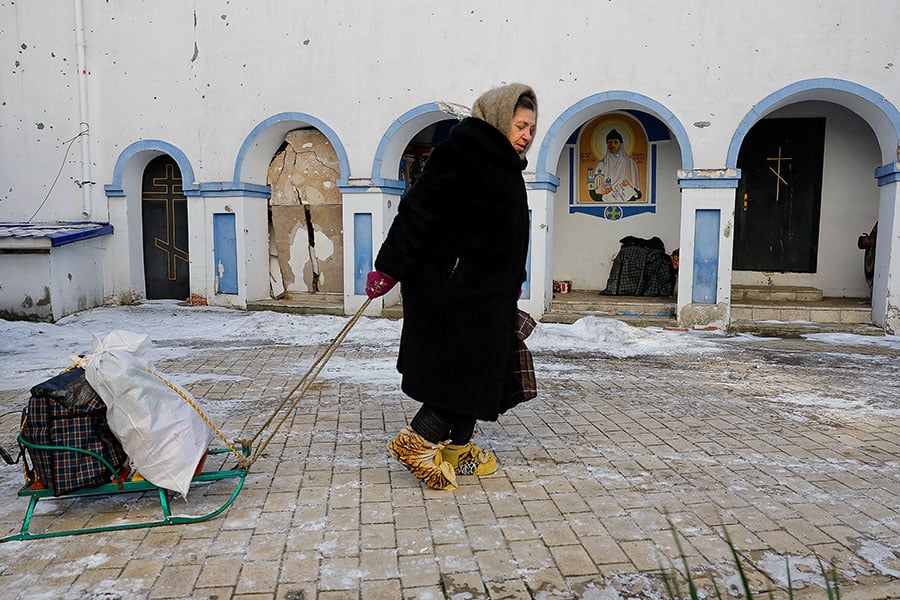
In many apartment complexes, damaged energy systems mean indoor temperatures remain only slightly higher than outside. Water and sewage systems freeze, pipes burst, and residents are left for days without heating, electricity or running water. Some buildings face months without functioning heating because repairs cannot be completed until warmer weather arrives.
“Imagine living in such conditions,” Major Archbishop Shevchuk said. “In Kyiv, about 60,000 residents have already left the city. We are seeing a new wave of internal climate refugees.”
He said many people, particularly the elderly and families without alternative housing, remain in apartments where survival depends on irregular electricity supplies. In some neighborhoods, electricity is the only available energy source for cooking or heating.
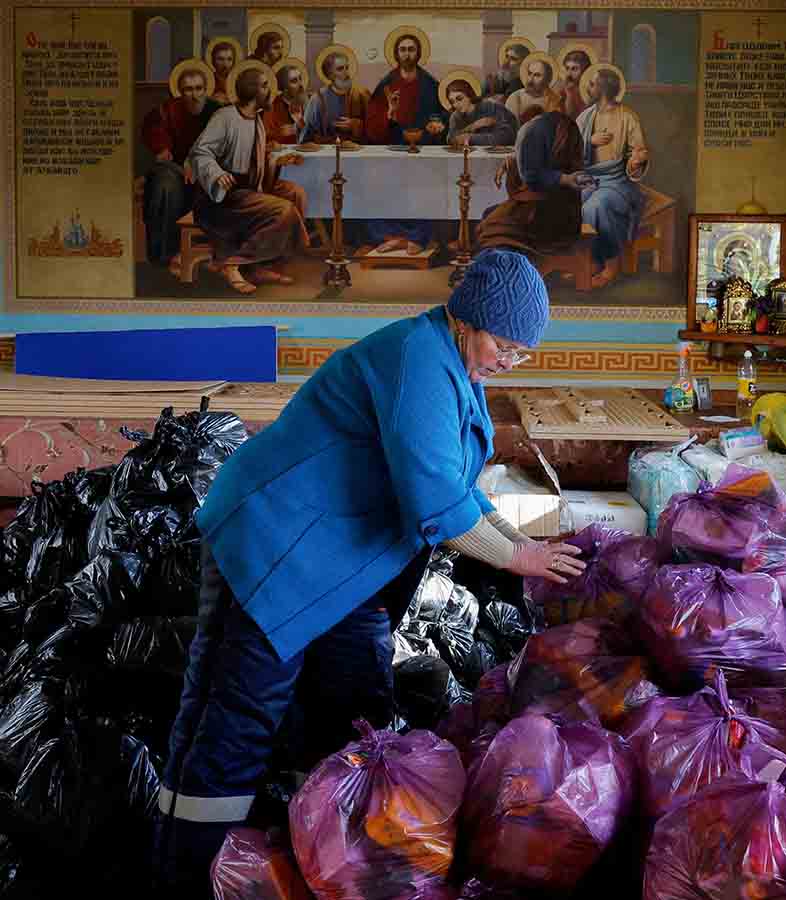
To respond to these needs, Major Archbishop Shevchuk told OSV News, the Ukrainian Greek Catholic Church has transformed its pastoral structures into humanitarian networks.
“Our parishes and monasteries have become humanitarian hubs,” he said. “On the first day of the full-scale invasion, hundreds of people came to our cathedral seeking shelter in the crypts. Today, our cathedral functions 24 hours a day as a place of light, warmth, food and medicine.”
The archbishop emphasized how priests, religious sisters and volunteers work to meet urgent needs: distributing everything from meals to power generators, offering shelter and spiritual support aligned with humanitarian aid.
Tents with generators are set up outside apartment buildings to warm up and feed those in need — often children. In neighborhoods where gas is unavailable, electricity is the only way to heat meals or charge phones. If there’s no power at all, survival is a struggle, the Ukrainian prelate stressed.
The Church, he said, shares the same hardships as the broader population.
“We live together, suffer together and serve one another,” Major Archbishop Shevchuk told OSV News.
He also said the war is reshaping religious life in Ukraine. Church attendance has increased significantly, and many Ukrainians who previously had little connection to religious practice are now seeking spiritual support.
According to Major Archbishop Shevchuk, the number of Ukrainians identifying as members of the Ukrainian Greek-Catholic Church has risen from approximately 8% before the full-scale invasion to about 12% today. He said more people are requesting baptism, receiving the sacraments and participating in church life.
“This is a moment of great conversion to God,” he said. “People are searching for meaning. I see it every day. Our churches are filled with people who had never come before.”
Major Archbishop Shevchuk stressed that “the attacks are not aimed at soldiers now — they are aimed at ordinary people. The goal is to demoralize his nation, to take away hope, to force Ukraine to capitulate.” Yet, he continued, the opposite is happening.
“After every explosion, after every rocket, we become stronger. It’s unbelievable, this resilience. This nation’s steadfastness astonishes even us,” Major Archbishop Shevchuk told OSV News.
When asked how ordinary Ukrainians are maintaining their faith amid such violence, his reply was: “There are moments when anyone would ask, ‘Where is God? Have we been forgotten?’ But our people are finding answers here — in community, prayer, perseverance,” he said.
The Ukrainian prelate also spoke of the wider world’s attention fading away. “Sometimes it seems the world forgets about Ukraine. Other crises emerge — conflicts in other regions, geopolitical distractions — and Ukraine moves to the background,” he said. “When the talk of peace processes resurges, too often Ukraine is overshadowed.”
A recent example he cited was the diplomatic activity in the United Arab Emirates involving Russian and Western representatives — followed by a particularly deadly period of Russian attacks. The prelate’s concern was that such international negotiations failed to slow the violence.
Faith, the prelate said, remains central to the country’s endurance.
“Our hope is in God — and that is the most certain hope one can have,” he said. “This war is a great shame for humanity in our time. We pray for a just and true peace, not just a cease-fire.”
Despite mounting losses, he said Ukrainians remain determined to resist. “We will not give up — not this time,” Major Archbishop Shevchuk said. “But the price we pay is human life.”
Read More War in Ukraine

Copyright © 2026 OSV News
