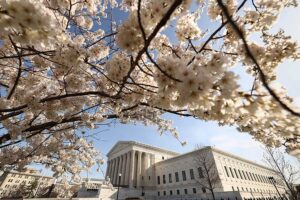
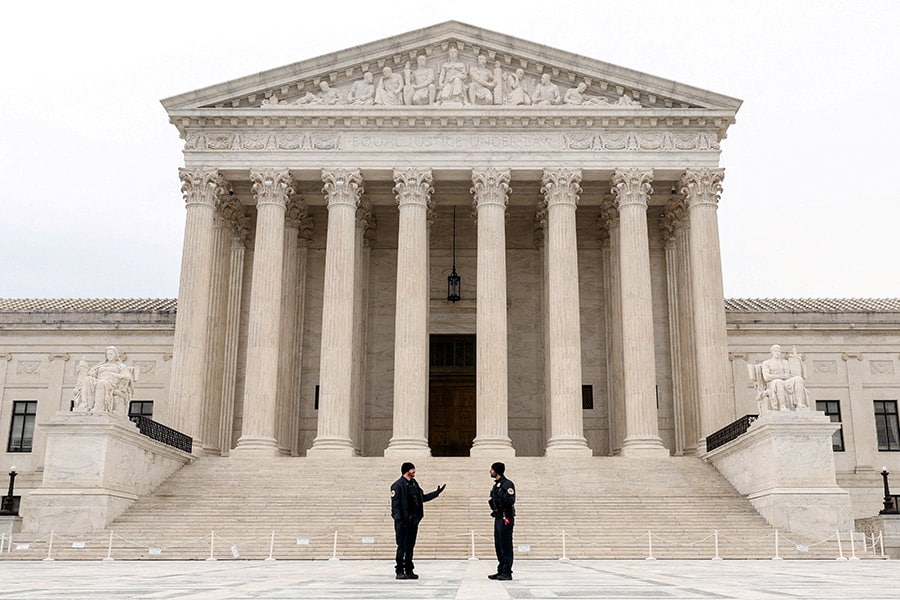
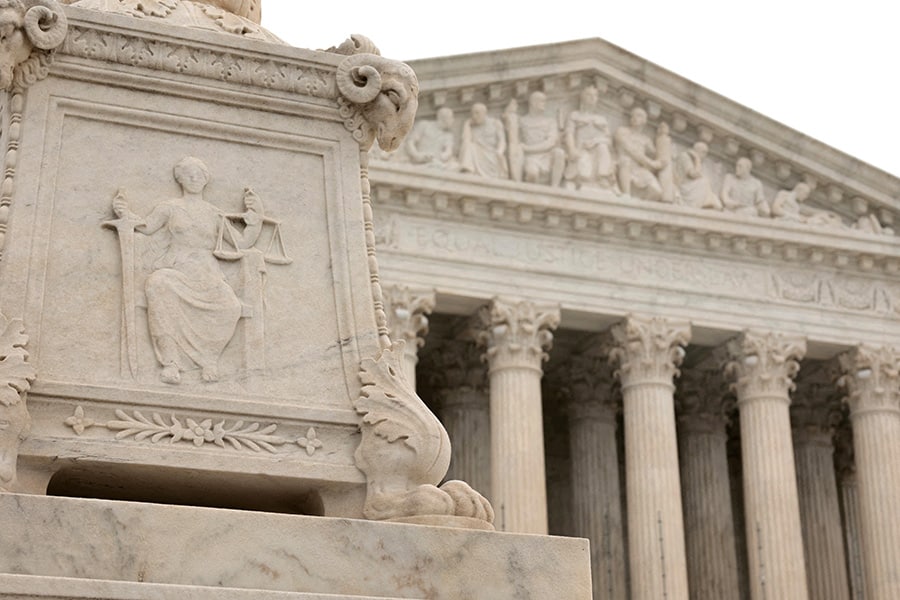
WASHINGTON (OSV News) — The U.S. Supreme Court March 31 issued a ruling finding that a Colorado law banning professional counseling services that practice “conversion therapy” for minors likely infringes on the First Amendment.
In an 8-1 ruling, the Supreme Court said the law banning “conversion therapy,” referring to efforts intended to change a minor’s gender identity that differs from the young person’s biological sex or to change their sexual orientation, likely violated the First Amendment rights of Kaley Chiles, a Christian counselor at the center of the Chiles v. Salazar case, who challenged the law.
The ruling did not strike down the law, but sent it back to lower courts. The ruling said the lower courts previously “erred by failing to apply sufficiently rigorous First Amendment scrutiny.”
Opponents of the law argue it restricts their ability to provide counseling to minors experiencing same-sex attraction or gender dysphoria, the feeling of distress that one’s biological sex and gender identity are not aligned. But supporters of the law argue such treatments are discredited, and that the ban protects children from treatments they might otherwise be forced to undergo by their parents or guardians.
But in a ruling that centered on the First Amendment aspects of the case, Justice Neil Gorsuch wrote for the majority, “The Constitution does not protect the right of some to speak freely; it protects the right of all.”
“It safeguards not only popular ideas; it secures, even and especially, the right to voice dissenting views,” he wrote.
Justice Ketanji Brown Jackson, the lone dissenter, argued the majority created “a slippery slope.”
“For the first time, the Supreme Court has interpreted the First Amendment to bless a risk of therapeutic harm to children by limiting the State’s ability to regulate medical providers who treat patients with speech,” she argued.
But Justice Elena Kagan, joined by Justice Sonia Sotomayor, wrote a concurring opinion siding with the majority that argued the scope of the case is narrow.
Kagan argued the “content-based” rather than “viewpoint-neutral” Colorado law was a unique problem.
“We need not here decide how to assess viewpoint-neutral laws regulating health providers’ expression because, as the Court holds, Colorado’s is not one,” she wrote.
The Colorado Catholic Conference said in a March 31 statement the state’s Catholic bishops “are thankful for the United States Supreme Court’s decision” and that they will “continue to advocate for parental rights and religious liberty in our state, relying on this new precedent.”
“Chiles v. Salazar precedent rejects Colorado’s ban on genuine care for minors by their parents and counselors who offer compassionate care for gender dysphoria, backed by longstanding research that shows children experiencing gender dysphoria naturally grow out of their distress and do not need life-altering medical intervention. Preventing this option to parents and practitioners puts ideology before the healthcare of children,” their statement said.
Alliance Defending Freedom Chief Legal Counsel Jim Campbell, who argued before the court in October, told reporters on a March 31 press call the ruling was “a decisive win for free speech.”
“It condemned Colorado’s unconstitutional censorship on counseling conversations,” Campbell said. “In this ruling, the court held that counseling conversations are speech protected by the First Amendment, and that Colorado’s law targeted the viewpoint of people like Kaley and her clients. This means that Colorado can’t enforce its law to censor voluntary conversations between Kaylee and young clients seeking help on issues of gender and sexuality.”
Kelley Robinson, president of the Human Rights Campaign, an LGBTQ+ advocacy group, argued in a March 31 statement the ruling was a “reckless decision.”
“The Court has weaponized free-speech in order to prioritize anti-LGBTQ+ bias over the safety, health and wellbeing of children,” she said.
But Chiles told reporters on the ADF press call that her clients often seek her out for their “shared faith.”
“I’ve worked with clients dealing with trauma, addictions and struggles with their gender and sexuality. I view my work as an outpouring of my faith,” she said, adding, “it’s crucial that families have counseling options, including options that allow kids to genuinely talk about experiencing discomfort with their bodies without the state dictating an outcome.”
In a joint amicus brief filed on Chiles’ behalf in the case before oral arguments in October, the U.S. Conference of Catholic Bishops, the Colorado Catholic Conference and The Catholic University of America argued, “Counseling would be impoverished without a sphere of protection for speech.”
“If the freedom of speech guaranteed by the First Amendment protects anything, it surely must protect the right to seek and provide advice on these critical questions of human existence,” it said.
Twenty-three states and the District of Columbia prohibit licensed providers from doing conversion therapy, according to data from the Movement Advancement Project, an LGBTQ+ policy group, while another four states and Puerto Rico restrict it without an outright ban.
During witness testimony at a March 16 hearing of the Department of Justice’s Religious Liberty Commission, Chiles argued, “Young people wrestling with identity deserve counselors who are free to speak, ask questions, listen with compassion and walk alongside them in their search for hope and restoration.”
Read More Supreme Court

Copyright © 2026 OSV News
