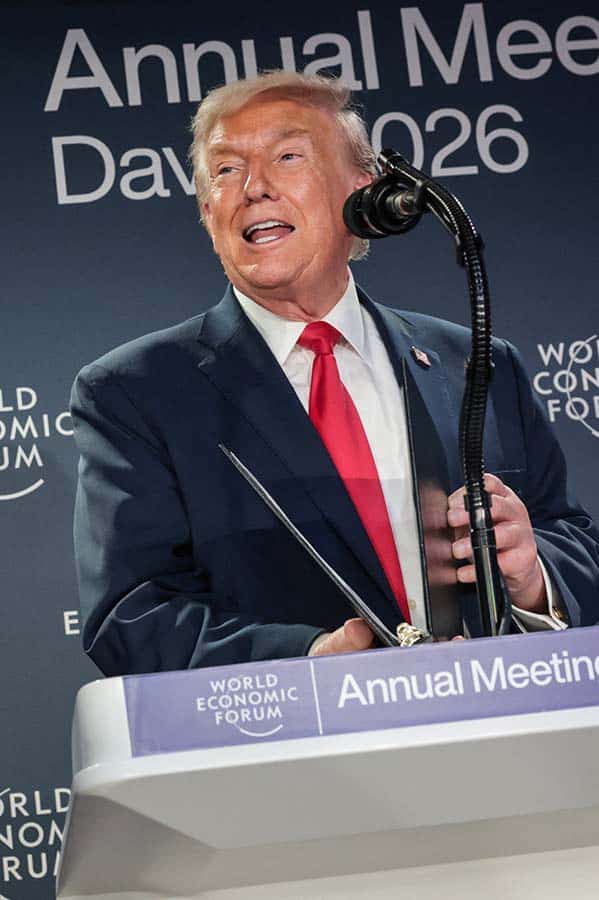
President Donald Trump ruled out the use of force to acquire Greenland in a Jan. 21 speech to the World Economic Forum, but he said the U.S. would still seek ownership of the country.
Trump and members of his administration recently escalated their rhetoric about acquiring Greenland for national security, while previously refusing to rule out the use of military force to take the Arctic island. The semiautonomous territory is part of the Kingdom of Denmark, a NATO ally, and the comments raised alarm in Europe’s capitals and among Catholic Church leaders in the U.S.
“We never ask for anything, and we never got anything. We probably won’t get anything, unless I decide to use excessive strength and force, where we would be frankly, unstoppable. But I won’t do that, OK. Now everyone’s saying, ‘Oh, good.’ …. But I don’t have to use force. I don’t want to use force. I won’t use force,” Trump said in the speech to world leaders, CEOs and investors gathered in Davos, Switzerland.
“All the United States is asking for is a place called Greenland,” Trump continued, adding, “All we want from Denmark, for national and international security and to keep our very energetic and dangerous potential enemies at bay, is this land on which we’re going to build the greatest Golden Dome ever built.”
A hypothetical use of military force against Greenland by the U.S. would amount to an attack on a NATO ally under the terms of the alliance. NATO, which was implemented in 1949, considers an attack against one or several of its members as an attack against all, and pledges collective defense in the face of such a scenario. A hypothetical attack by a NATO member against another NATO member is widely seen as a scenario that would bring about the end of the alliance.
But Trump said he would use other means to seek to acquire Greenland.
“We want a piece of ice for world protection, and they won’t give it,” Trump said, adding, “We’ve never asked for anything else — and we could have kept that piece of land, and we didn’t. So, they have a choice. You can say yes, and we will be very appreciative. Or you can say no, and we will remember.”
NATO’s Article 5 — the cornerstone collective defense clause of the alliance — has been invoked just one time in its history: in defense of the U.S. after the 9/11 terrorist attacks.
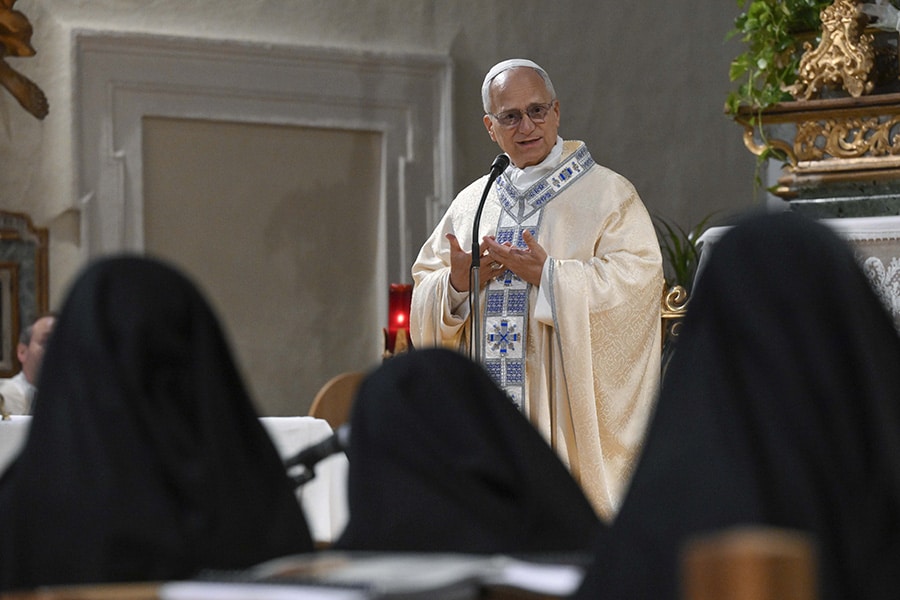
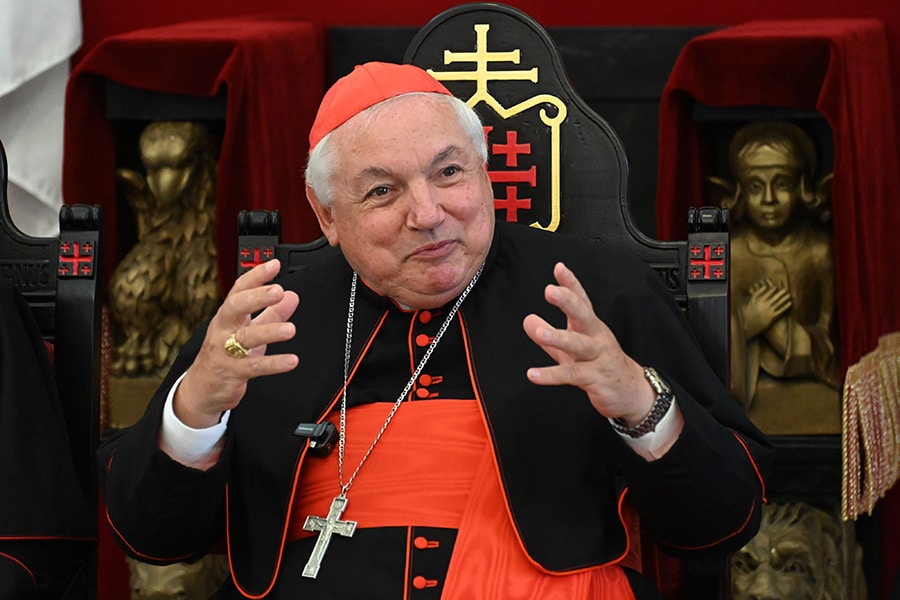
Prior to Trump’s speech, in a joint statement Jan. 19, Cardinals Blase J. Cupich of Chicago, Robert W. McElroy of Washington and Joseph W. Tobin of Newark, N.J., called for a “genuinely moral foreign policy for our nation,” and said the U.S. faces “the most profound and searing debate about the moral foundation for America’s actions in the world since the end of the Cold War.”
“The events in Venezuela, Ukraine and Greenland have raised basic questions about the use of military force and the meaning of peace,” they said.
Archbishop Timothy P. Broglio of the U.S. Archdiocese for the Military Services said in a Jan. 18 radio interview on the BBC’s “Sunday” program that he was concerned the U.S. military personnel under his pastoral care could be “put in a situation where they’re being ordered to do something which is morally questionable.”
Archbishop Broglio said U.S. soldiers could in good conscience disobey orders to participate in an invasion of Greenland.