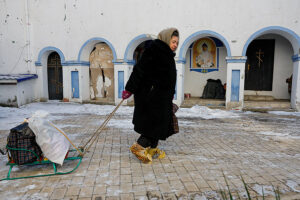
Four years after Russia launched its full-scale invasion of Ukraine, the war has fundamentally reshaped the Catholic Church’s mission — turning parishes into shelters, priests into chaplains and charity into daily survival, Ukrainian bishop and leader of charity efforts told OSV News.
“Everything has changed. The country will never again be what it was before Feb. 24, 2022,” Auxiliary Bishop Oleksandr Yazlovetskiy of Kyiv-Zhytomyr, head of Caritas-Spes Ukraine, told OSV News in a conversation marking the anniversary.
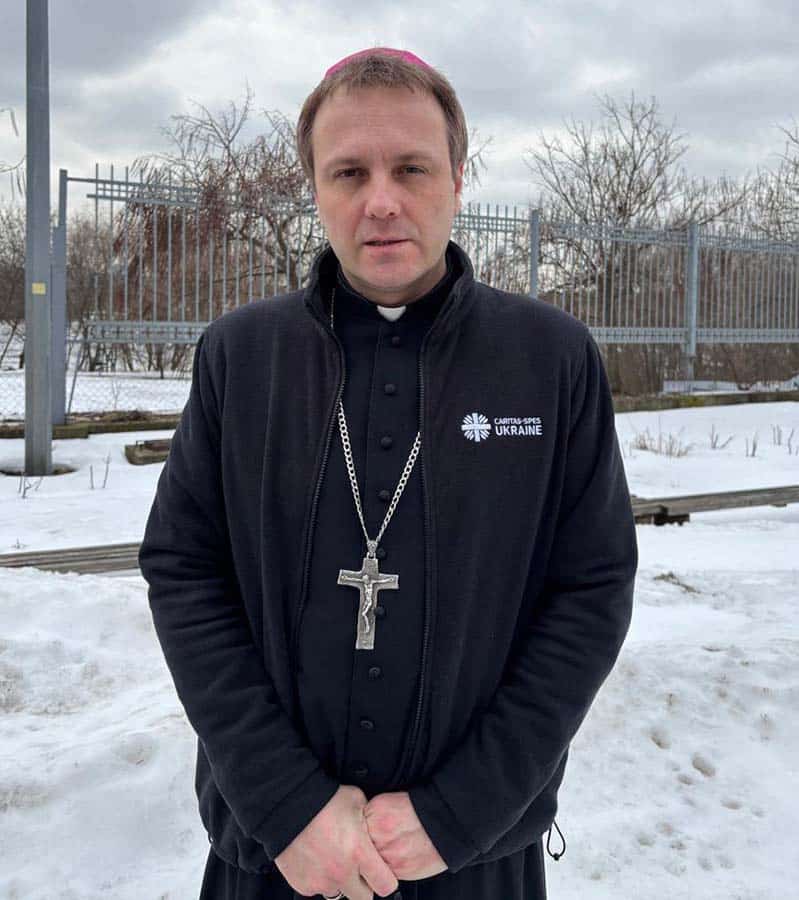
As Ukraine enters a fifth year of war amid continued missile attacks, mounting casualties and growing international uncertainty about future aid, Church leaders say the conflict has brought the Church back to its most basic identity.
“The war revealed the essence of the Church — to be close to those who suffer,” the bishop said. “Not only to preach, but to be present: to listen, to support, to share fear and hope.”
Russia’s full-scale invasion triggered Europe’s largest humanitarian crisis since World War II.
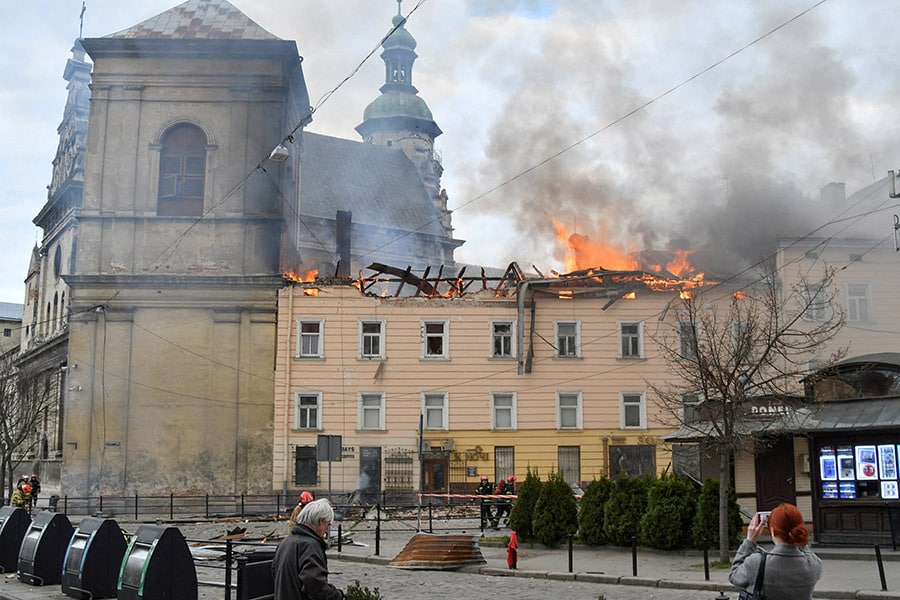
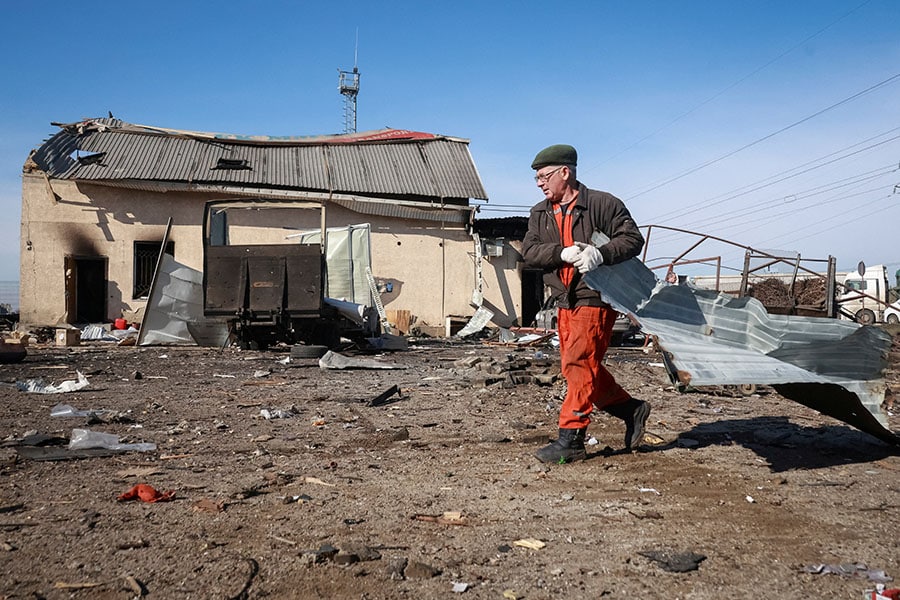
According to United Nations agencies, some 3.7 million Ukrainians remain internally displaced, while nearly 6.9 million continue to live as refugees across Europe and beyond. Entire communities have been uprooted multiple times as missile and drone attacks repeatedly damage homes, hospitals, schools and energy infrastructure — forcing reconstruction efforts to begin anew even before previous repairs are completed.
Nearly four years into the war, humanitarian needs remain massive, with millions still dependent on international aid for basic survival.
In that reality, pastoral ministry and humanitarian work have become inseparable.
“Since 2022, pastoral care cannot be separated from humanitarian service,” Bishop Yazlovetskiy told OSV News. Caritas organizations in Ukraine — both Roman Catholic Caritas-Spes Ukraine and the Ukrainian Greek Catholic Caritas Ukraine — rapidly evolved from modest social service groups into nationwide emergency networks.
“From small organizations of social assistance, Caritas became a powerful structure with centers across the country,” Bishop Yazlovetskiy said, crediting support from Caritas Europe, the global Caritas network and Church and governmental donors from across the globe.
“Unfortunately, help is already decreasing, while needs are not,” he said. “Mercy has become an everyday, urgent mission.”
The Church’s transformation is visible in moments of crisis. After Russian strikes destroyed parts of Ukraine’s energy system and cities were plunged into cold and darkness, Catholic parishes opened what were called “points of warmth and hope.”
“The Church fed people and kept them warm,” the bishop said.
War also reshaped relations among Christian communities. Pre-war disputes and competition between churches gave way to cooperation through the Ukrainian Council of Churches and Religious Organizations, representing the vast majority of believers in the country.
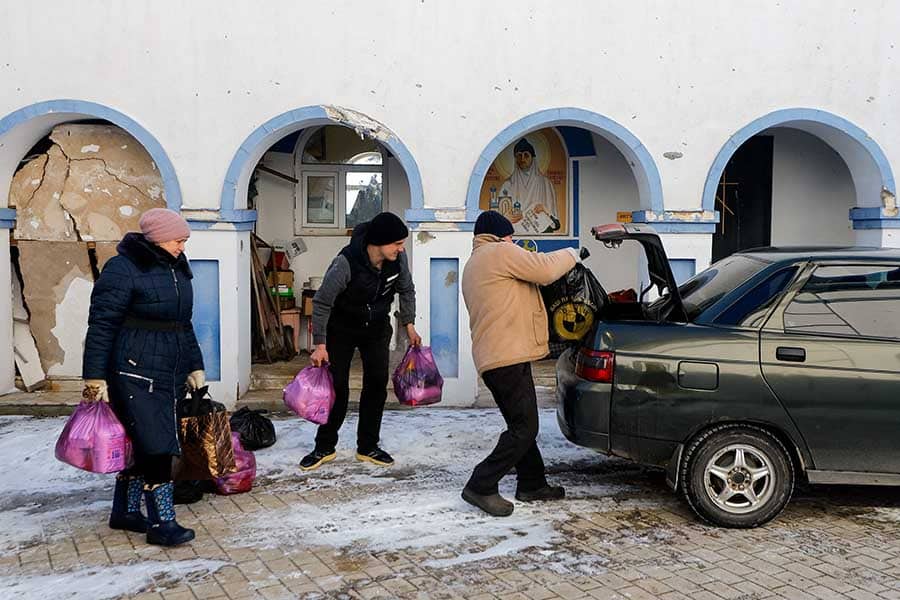
“The tragedy of war united us,” Kyiv’s bishop said. “All churches returned to their primary mission — helping the vulnerable both in word and in action.”
That visible service has changed how Ukrainians perceive the Church.
“Where the Church truly helps, trust grows,” Bishop Yazlovetskiy told OSV News. “The witness of love became more convincing than any words.”
He pointed especially to military chaplains serving alongside soldiers and in hospitals. Government approval allowing priests to serve officially with military units has brought clergy closer to frontline realities.
“In this way, the Church is also with its soldiers,” the bishop said.
International solidarity remains essential, particularly assistance from the United States.
“American aid is vital — humanitarian and military,” he said. “Americans should know that their support saves lives every day. Without this help, especially military assistance, we will not endure.” Delays in support quickly translate into loss of life, he added. “Every delay in aid is later seen in the growing number of funerals of our soldiers.”
At the same time, global spiritual solidarity continues to accompany Ukraine.
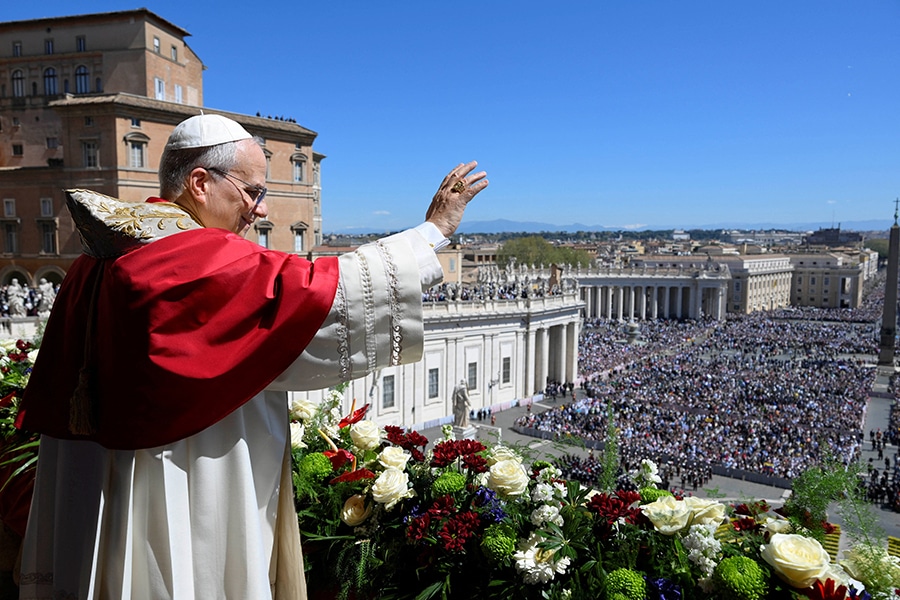
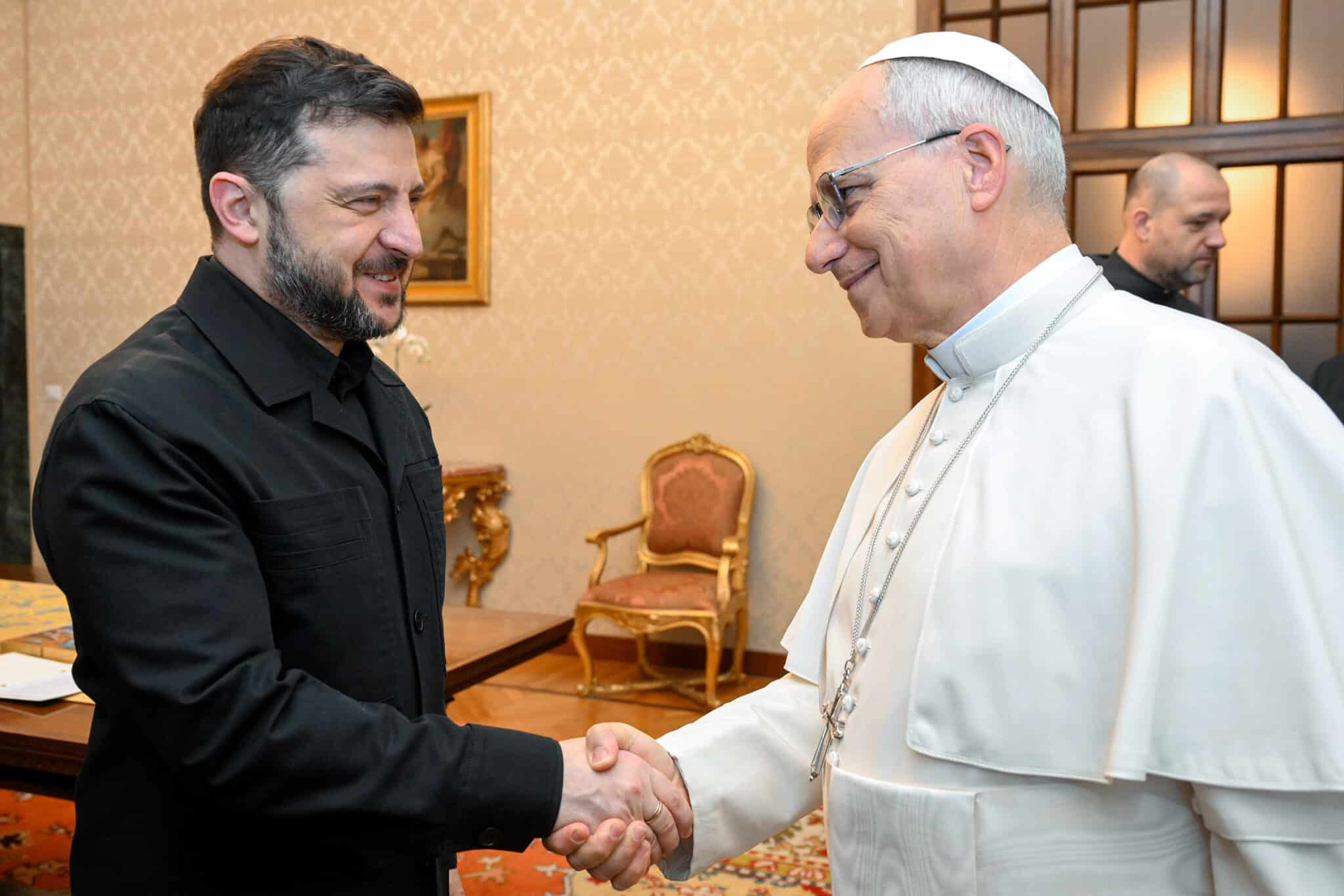
Catholic communities around the world marked the anniversary with prayer initiatives promoted by the Commission of the Bishops’ Conferences of the European Union, known as COMECE, and the Centesimus Annus Pro Pontifice Foundation, echoing repeated appeals from Pope Leo XIV for peace in Ukraine.
“Four years have passed since the beginning of the war against Ukraine,” Pope Leo said during his Angelus prayer Feb. 22. “My heartfelt thoughts remain focused on the tragic situation unfolding before the eyes of the whole world: so many victims, so many lives and families shattered, such immense destruction, such unspeakable suffering!”
Prayer gatherings were taking place in many countries, including Rome, where Cardinal Matteo Zuppi of Bologna will preside over prayer vigil of the Community of Sant’Egidio Feb. 24 at 8 p.m.
Such gestures, and prayer, Bishop Yazlovetskiy said, matter deeply.
“When we hear that the United States and European countries support us, it gives hope and strengthens people,” he said. “But when someone turns away — even one political statement — the burden of war suddenly becomes much heavier.”
Behind geopolitical debates stand deeply personal stories. The bishop recalled a widowed Catholic mother from his hometown who raised six children alone. Two of her sons have been killed in the war, while a third now fights at the front.
“Despite everything, she continues to come to church,” he said. “She writes poetry through her pain. People call her ‘a mother who cries in poems.’ Saints do not look at us only from icons — they live among us.”
Prayer in Ukraine today however reflects exhaustion more than triumph.
“People pray for a just peace, for soldiers, prisoners, the wounded and the dead,” the bishop said. “No one prays for victory. Ukrainians pray for peace — again and again, peace.”
For Bishop Yazlovetskiy, faith has not eliminated fear but has made endurance possible.
“God never shows us the entire length of the thorny road,” he told OSV News. “He lights only a few steps ahead, like a flashlight in the darkness. If people had known four years ago how long this war would last, despair would have been unbearable.”
Still, he insists hope remains stronger than despair.
“We believe love is stronger than hatred,” he said. “God is present even where darkness seems to reign. The greatest darkness today is in Ukraine — and we believe God is with us.”
Read More War in Ukraine

Copyright © 2026 OSV News
