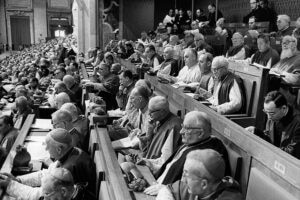
The shortest final document of the Second Vatican Council, “Nostra Aetate,” redefined the way the Catholic Church relates to Jews, Muslims and other non-Christian faiths, in part by stating that “the Catholic Church rejects nothing that is true and holy in these religions.”
Marking the 60th anniversary of the document’s release in 1965, an interreligious panel convened online Oct. 30 applauded the strides made by “Nostra Aetate” but pointed to ways in which it could be further implemented or expanded.
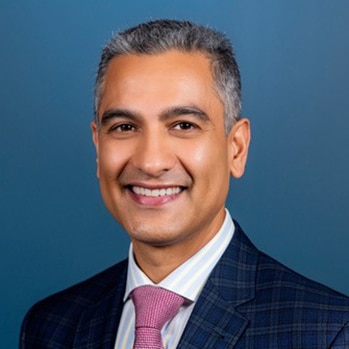
In the event hosted by the Baltimore-based Institute for Islamic, Christian and Jewish Studies, panelists discussed how the document, also known as the “Declaration on the Relation of the Church to Non-Christian Religions,” was considered “a remarkable move in the history of the church,” as it was put by Syed Atif Rizwan, director of the Catholic-Muslim Studies Program at the Catholic Theological Union in Chicago. “It had invaluable ramifications,” he said.
He noted that in section three, “Nostra Aetate” “hits on a lot of important aspects of Islamic theology that are important to Muslims.” The section observes that Muslims “adore the one God,” revere Jesus as a prophet and honor Mary.
It also says Muslims “value the moral life and worship God especially through prayer, almsgiving and fasting.”
However, Rizwan said, the document’s lack of acknowledgment of the Prophet Muhammad “gives pause” for overlooking the founder of Islam. “Recognizing what is valuable for someone else is very important.”
Moderator Heather Miller Rubens, executive director of the ICJS, said some parts of the document create difficulties, such as language acknowledging historically “a few quarrels and hostilities” between Christians and Muslims and urging “all to forget the past and to work sincerely for mutual understanding” and to promote “social justice and moral welfare, as well as peace and freedom.”
“The call to forget the past is a really hard one,” she said.
Rizwan concurred, adding that the way forward from a difficult past would be to talk through what harm has been done, “not treat it as water under the bridge” and let bygones be bygones.
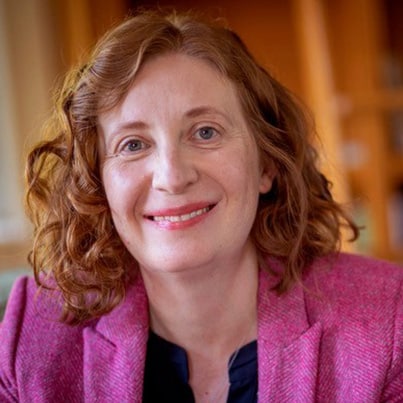
Rubens said that in interreligious relations the portion of “Nostra Aetate” ending the idea that all Jews were responsible for killing Jesus was groundbreaking. The practice of blaming all Jews for killing Jesus had throughout Christian history strained relations between the faiths.
The third panelist, Rabbi Katja Vehlow, director of Jewish Life at Fordham University, said that portion of the document illustrated that a long-entrenched belief of the church could be changed. But, she added, the language leaves a wound when it also suggests that “Christians have replaced Jews in God’s favor.”
That portion of the text reads:
“True, the Jewish authorities and those who followed their lead pressed for the death of Christ; still, what happened in his passion cannot be charged against all the Jews, without distinction, then alive, nor against the Jews of today. Although the church is the new people of God, the Jews should not be presented as rejected or accursed by God, as if this followed from the Holy Scriptures.”
Although “Nostra Aetate” explicitly decries anti-Semitism, hatred and discrimination toward Jews continues to be a factor in today’s world, the panelists acknowledged.
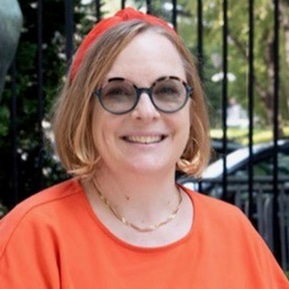
Rabbi Vehlow said that after the Oct. 7, 2023, attack on Israel by Hamas, efforts among faiths and educational institutions to better understand Judaism led to changes such as her hiring at Jesuit-run Fordham. “People told me they had lobbied for this job for 20 years.” Her job is primarily to support Jewish students, faculty and staff at the New York university, she said.
Rabbi Vehlow said “Nostra Aetate’s” legacy is a call to people of faith to “say what you need to say” and to be interlocutors, listening to what one’s counterparts in interreligious dialogue have to say.
After the program, Rubens told the Catholic Review that in the more than a dozen years she has been affiliated with the ICJS, the institute’s work has become at times more difficult, such as after the Oct. 7 attack, which strained interfaith relations. On the other hand, she said, events such as that and the ensuing war by Israel against Gaza have brought new people into the world of interfaith dialogue.
“People are capable of having hard conversations,” Rubens said. “But the challenge right now is the perception that online ‘shouting’ is the only way” to get one’s point across.
Barry Zavislan is a theology teacher at Our Lady of Good Counsel High School in Olney, who attended the online program “as part of my trade.” He is a parishioner of Our Lady Queen of Peace Parish in Middle River. Zavislan also is a part of the ICJS Fellowship for Teachers, a program to develop skills for teaching about religious diversity.
He said he studied “Nostra Aetate” as part of his master’s degree work interviewing participants in Vatican II and has had ongoing interest in the documents of the council.
But the first time he appreciated the groundbreaking changes of “Nostra Aetate” was as a child when he attended a Good Friday service at his Catholic parish. “We prayed for non-Catholics,” he said. “I was probably 8 years old and it was exhilarating. I still kind of think it’s neat that we are doing that.”
He said he was struck by the conversation in the ICJS program about how it took 20 years of petitioning for a Jewish chaplain before Fordham hired Rabbi Vehlow.
“That’s unconscionable,” he said.
Read More Local News
Copyright © 2025 Catholic Review Media
