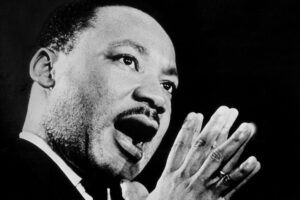
In April 1963, the Rev. Martin Luther King Jr. sat in jail in Birmingham, Ala.
Famously committed to non-violence, Rev. King was arrested after leading a peaceful march of Black protesters who were urging a boycott of white-owned stores in the deeply segregated city.
His offense? He had not been granted a permit and marched without one. As he languished behind bars, a group of eight local clergymen wrote an editorial saying the protest, in their words, was “unwise and untimely.”
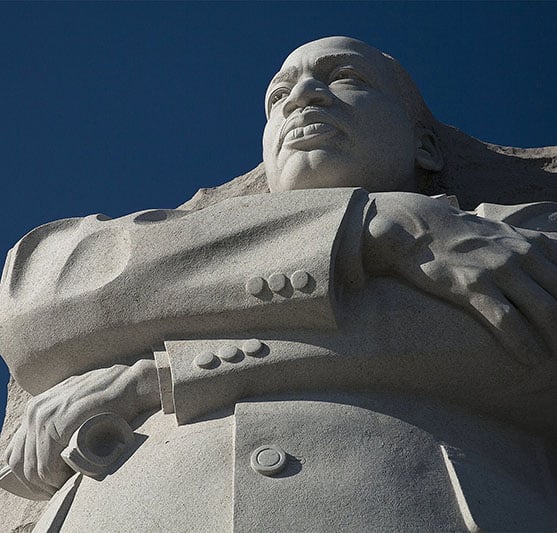
Rev. King’s 7,000-word response, “Letter from Birmingham Jail,” written in the margins of a newspaper and smuggled out by his attorney, has become a classic of the Civil Rights Movement and a good reread during Black History Month.
You can understand Rev. King’s frustration. It had been nearly a century since Black Americans had been freed from slavery, and yet they were still denied the most basic American freedoms, even the freedom to order a cup of coffee at a white man’s lunch counter. Underscoring these denials were decades of voter suppression and dehumanizing violence.
Was this protest “untimely?” When, I wonder, would these clergymen have agreed that the time was right?
Now, we find ourselves once again embroiled in dark times.
Yet I increasingly find hope in the faith response of the Catholic Church to our present crisis. Our wonderful pope, Leo XIV, has been speaking out on human dignity, the rights of the immigrant, the unborn and the need for dialogue in international relations. He decries “diplomacy based on force.”
In conjunction with our pope, the three American cardinals, Blase J. Cupich of Chicago, Robert W. McElroy of Washington, and Joseph W. Tobin of Newark, issued a joint statement reminding us that “the common good” is bedrock Catholic moral teaching.
They mention “the need for international aid to safeguard the most central elements of human dignity,” at a time when our country has drastically reduced foreign humanitarian aid, causing untold suffering and death.
Archbishop Timothy P. Broglio, archbishop for Military Services, spoke out unequivocally against using our military against Greenland, and supported the right of military personnel to obey their conscience in refusing to participate.
And all over the U.S., we see bishops, priests, congregations of religious women and Catholic laypeople speaking out in opposition to ICE actions, indiscriminate deportations and the killings of protestors in Minneapolis. The chorus of bishops protesting ICE action only grows louder.
But are American Catholics hearing this message?
How many know that we can receive alerts from the U.S. Catholic bishops on issues that are important to our faith? That we can be directed to a site where we can easily reach out to our elected representatives?
Simply go to usccb.org, click on “issues and action,” then “take action.” Sign up to receive alerts in your email box on the topics you choose. We all want to “do something” in these troubled times — here’s a way to do just that. Perhaps parish bulletins could share this information weekly.
After reading Rev. King’s letter, I wondered, who were these eight clergymen? Rev. King wrote that he knew they were “men of genuine good will.”
Were any of them Catholic? Yes, I discovered a broad range of denominations was represented, including a rabbi and a Catholic auxiliary bishop, whose obituary would later call “a civil rights advocate.”
Perhaps their words to Rev. King represented a misguided reluctance to make their faith “political.”
But the issues faced, then and today, are not Democratic or Republican issues — they are issues of human life and dignity, war, racism and the future of our planet.
The time is now.
Read More Commentary


Copyright © 2026 OSV News
