
Eric Clayton was sitting in a barbershop waiting his turn when an intriguing image popped up on his phone.
Taken just days earlier, the picture showed a seagull perched atop the roof of the Sistine Chapel as white smoke billowed from a chimney – the inefficient yet charming signal Catholics have used to announce a new pope since at least the 1914 conclave.
At the other end of Clayton’s text thread was Shannon K. Evans, his collaborator on a children’s book about Marian apparitions. The two began riffing on the now-viral image. Could it be the seed of a new story?
A flurry of messages went back and forth. Soon, they were trading ideas in a shared Google document and a full-fledged story took shape in remarkably short order.
The final result is “The Seagull on the Chapel,” published by Paraclete Press this spring.
Illustrated by Angela Edmonds, a former layout artist with Disney Animation, the book follows Maggie, a gawky seagull who yearns to become a beautiful dove, the traditional symbol of the Holy Spirit. After a string of failed attempts to transform herself into what she perceives as a more important creature, Maggie discovers that God loves her exactly as she is.
“If we can help kids realize that they’re beloved and that God delights in them, I think it’s a really firm and great foundation for all the other faith formation that will come,” said Clayton, a parishioner of Church of the Nativity in Timonium and deputy director for communications at the Jesuit Conference of Canada and the United States.
A father of two young daughters, Clayton said he wants the book to reach across generations – something families read together and talk about. Children become aware early on of what they don’t have, he said. Sometimes that means material things their peers possess. Other times, it takes the form of quieter feelings of shame or inadequacy.
What becomes especially harmful, Clayton said, is when those feelings begin “poisoning our understanding of God – that God wants us to feel less than or God has this hierarchy of people who are more important or better or more beloved.”
Clayton recalls being moved by Pope Leo XIV’s message of peace when the pontiff first addressed the world a year ago.
“I just think that it’s amazing that a year later, he has not wavered in that message, but maybe we’re hearing it differently,” he said. “We’re hearing it in a deeper way, in a more urgent way. He keeps saying, ‘Our God is a God of peace’ and ‘God loves everybody’ – and that means we need to look at everybody as God sees them and work for peace that is lasting.”
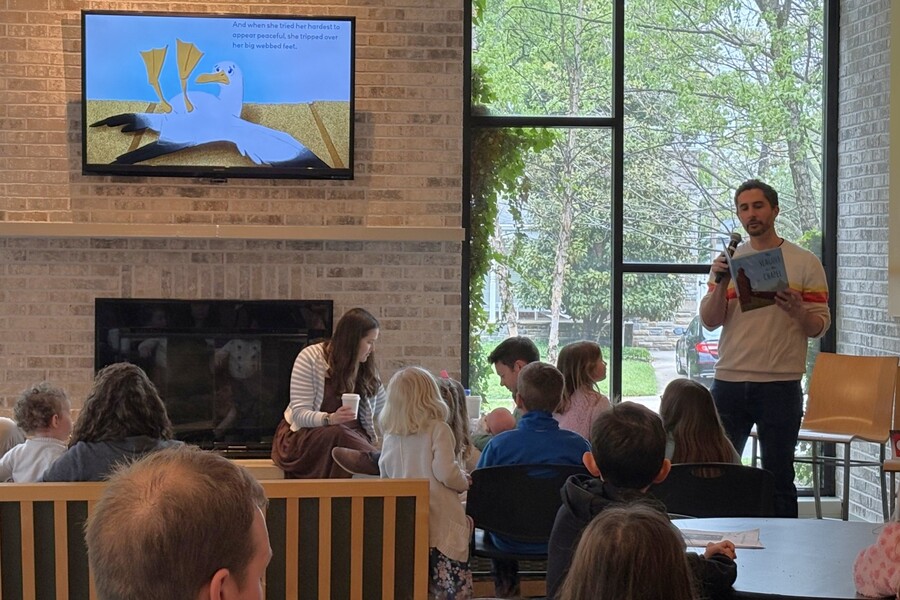
Clayton, the author of several books, has already brought the story to his home parish, where he read it aloud to a room full of children. He hopes to go further still – and hand a copy to the pope himself someday.
Email George Matysek at gmatysek@CatholicReview.org
More on books





Copyright © 2026 Catholic Review Media
