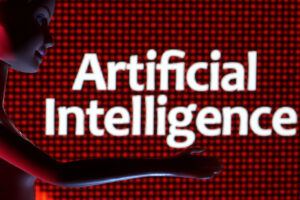
During a Gaudium et Spes 22 podcast on the encyclical Magnifica Humanitas this past June, I said to my friend Larry Chapp, perhaps more flippantly than the subject warranted, that the folks leading the AI revolution “don’t know the difference between metaphysics and Metamucil.” That is, they seem oblivious to the truth that there are deep truths inscribed into the human condition: truths that we can know by reason (and, Christians would insist, by revelation); truths that disclose the pathways to personal flourishing and social solidarity.
In her Oct. 3 Wall Street Journal column, Peggy Noonan made a similar point, pungently:
“Silicon Valley has been weird for at least two generations. Belief in strange or cultlike ideas (effective altruism, utilitarianism) has been as common as psychedelic use, strange health regimes, extreme capitalism and a kind of personally high-functioning public optimism that carries with it a world of safe houses, gas masks, private air fleets, armies of armed security. As for religious belief, many of them remind me of … early Anthropic investor Sam Bankman-Fried, who told author Michael Lewis, in his book Going Infinite, that in his rarified Bay Area childhood, ‘God was like a thing on TV. God came up but I didn’t think anyone actually believed in God.’ Mr. Lewis: ‘It told you something not just about Sam but about his upbringing that he could live for almost ten years inside the United States of America without realizing that other people believed in God.'”
Which naturally brings to mind the old trope – usually, inaccurately but understandably attributed to that master aphorist, G.K. Chesterton – that when people cease believing in God, they don’t believe in nothing, they believe in anything. Like the notion that AI has “consciousness” and should be treated as a rights-bearing moral agent. Or consider the “Aha!” experience of OpenAI CEO Sam Altman: “When I realized intelligence can be simulated, I let the idea of our [human] uniqueness go, and it wasn’t as traumatic as I thought.” And where does that lead? To a brave new world in which, as Mr. Altman suggested, “We will be the first species ever to design our own descendants,” as AI “agents” merge with human beings to produce… what? Promethean Humanity? Promethean Post-Humanity? Cyborgs?
This past July, I had a wide-ranging conversation with Cardinal Grzegorz Ryś, the archbishop of Cracow, which focused at one point on Pope Leo’s encyclical. Both the cardinal and I were grateful for the Holy Father’s insistence that the key issues raised by AI revolved around the question, who are we as human beings? An older materialism suggested that we’re just congealed stardust, the happy but accidental by-product of 15 billion years of random cosmic biochemical forces and impersonal natural selection. The new materialists at the forefront of the AI revolution now suggest that we are walking algorithms who (as in Mr. Altman’s preferred future) can be more efficient at data processing. And that drastic misconception brings us to what the cardinal and I agreed was the crucial teaching of Magnifica Humanitas on AI:
“We must avoid the misconception of equating this type of ‘intelligence’ with that of human beings. These systems merely imitate certain functions of human intelligence. In doing so, they often surpass human intelligence in speed and computational capacity, offering tangible benefits across many fields. Yet this power remains entirely tied to data processing. So-called artificial intelligences do not undergo experiences, do not possess a body, do not feel joy or pain, do not mature through relationships and do not know from within what love, work, friendship or responsibility mean. Nor do they have a moral conscience, since they do not judge good and evil, grasp the ultimate meaning of situations, or bear responsibility for consequences. They may imitate language, behavior and analytical skills, or even simulate empathy and understanding, but they do not understand what they produce, for they lack the affective, relational and spiritual perspective through which human beings grow in wisdom.” [99]
The U.S. bishops have created a task force to address the impacts of AI on religious liberty, democratic institutions, online child safety and vulnerable populations (including workers). These are genuine concerns. Permit me to suggest, however, that the Church’s primary and most urgent task in confronting AI is evangelization: doing everything we can to persuade those developing AI at breakneck speed that we are creatures of a Creator, not bipedal algorithms with data-processing capacities to be maximized.
The Church’s answer to the possibilities and dangers of AI is the biblical story of humanity, its origins, nature and destiny. That is what the Church knows. And that is what we must proclaim.
Read more commentary



Copyright © 2026 Catholic Review Media
