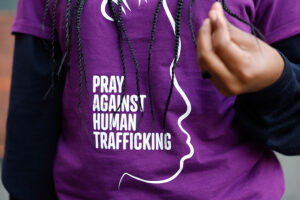
Trafficking survivor Ann Marie Jones, who now works to aid fellow survivors, told OSV News she had been “arrested 51 times for prostitution” before a unique court diversionary program opened the door to a new life.
“I would be arrested, put on probation and released,” she said. “What do I do? I had nobody to help me. I went back to what I knew. That happened so many times.”
In 2010, she managed to connect with a Philadelphia public defender who advised her to apply to a court diversionary program that provided counseling and substance abuse treatment.
“They were there to help me,” said Jones. “I was able to start trusting.”
That trust blossomed after Jones, having completed the program, came to Dawn’s Place, a Philadelphia-area residential program for survivors of sex trafficking.
“My life started over,” said Jones, now a residential coordinator at the outreach and co-author of “A Shield Against the Monster: Protecting Children from Human Trafficking.”
But as the U.S. marked its annual observance of National Human Trafficking Awareness Day Jan. 11, anti-trafficking advocates told OSV News their work is facing challenges due to funding downturns and fears of reprisal amid the Trump administration’s immigration crackdowns.
“It’s a very interesting time to be in anti-trafficking work,” said Katie Boller Gosewisch, executive director of the Alliance to End Human Trafficking, a faith-based national network dedicated to addressing modern slavery through education, survivor support and advocacy.
Founded in 2013 as U.S. Catholic Sisters Against Human Trafficking, the alliance now includes more than 200 congregations of women religious, along with coalitions and individual members. The alliance is also part of Talitha Kum, the Rome-based International Network of Consecrated Life Against Trafficking in Persons.
The alliance offers a toolkit for a full month of trafficking awareness that culminates with the International Day of Prayer and Awareness on Feb. 8, the feast of St. Josephine Bakhita, a former slave who eventually became a Canossian sister in Italy and, following her 2000 canonization, the patron saint of human trafficking survivors.
According to the International Labor Organization, some 27.6 million are trapped in a form of forced labor, and another 22 million in forced marriages.
Of those in forced labor, 39.4 percent are women and girls — 4.9 million in forced commercial sexual exploitation and 6 million in other economic sectors. Some 3.3 million, or 12 percent, are children, more than half of whom are commercially exploited for sex. Forced labor generates $236 billion in illegal profits annually.
Gosewich and other experts explained to OSV News that human trafficking entails a number of complex and interrelated issues — but at the core, said Gosewich, “it’s most important to remember that traffickers feed off vulnerability.”
“When people don’t have access to services that meet their basic needs, they become more vulnerable,” she said. “The people who get caught in the crosshairs of that intersection of vulnerability and the presence of traffickers are incredibly at risk for being trafficked.”
That risk stands to be heightened as both federal and private funding for key anti-trafficking efforts has become uncertain — and law enforcement alone can’t pick up the slack, experts told OSV News.
“I think that we’re seeing a lot of risks for survivors, and for women who are still in these situations, because it’s not always law enforcement that is necessarily going to find them or be that off-ramp, that ability to flee from a trafficker,” said Jeanne Geraci, executive director of the Milwaukee-based Benedict Center, an interfaith nonprofit that aids women in the criminal justice system.
Instead, said Geraci, “a lot of times, it is advocacy groups that are on the ground doing street outreach, doing outreach in different ways, building relationships of trust, and often being that first line of contact to help women get out of really life-threatening situations.”
And, she said, the funding for such work “is really very much in jeopardy.”
She pointed to the “two primary federal sources of funds” for anti-trafficking and victim advocacy work — monies allocated under the 1984 Victims of Crime Act, or VOCA, which created the Crime Victims Fund from criminal fines and penalties to support state and local victim assistance programs; and funds authorized through the 1994 Violence Against Women Act, or VAWA.
In 2025, the Trump administration sought to block access to some $1.4 billion in VOCA grants unless states complied with what Maryland’s attorney general office called “the administration’s extreme immigration priorities.”
A multistate lawsuit brought by several attorneys general against the Department of Justice saw the administration relent and release the funds in October.
Despite the legal victory, however, some advocacy groups are still wary of drawing attention to their anti-trafficking work with immigrants, who are at increased risk for exploitation.
“The idea that we would turn our backs on foreign-born victims or survivors of sex trafficking, or really any violent crime, is so against our values,” said Geraci. “There’s this crackdown that’s not taking that into account, and … caveats being tied to federal funding to say that you cannot serve foreign-born victims.”
One faith-based outreach declined OSV News’ request for an interview, citing fears that media attention could jeopardize the women and families it serves, given their immigration status.
VAWA funding has also come under scrutiny by the Trump administration, which has subjected the monies to compliance with federal efforts to eliminate diversity, equity and inclusion requirements.
As of October, the federal government had distributed just $9 million of VAWA funds to 29 grant recipients throughout the U.S., compared to $684 million among 880 grantees in 2024, according to the New Jersey Monitor, which cited federal data.
The contraction in support for initiatives to reduce violence against women — who are disproportionately affected by sex trafficking — isn’t limited to the U.S.
In its October 2025 report “At Risk and Underfunded,” UN Women — the United Nations’ agency for women’s affairs — found that government cuts worldwide have left more women “at risk of suffering violence with services diminishing and advocacy silenced.”
Even privately funded advocacy and support organizations are experiencing shortfalls.
“While we don’t receive any federal funds, we have noticed that some of our donors who have been good to us in the past haven’t been able to donate as much,” said Sister Meaghan Patterson, a Sister of St. Joseph, who is executive director of Dawn’s Place. “What we’re discovering is that because of the financial climate, people don’t have as much expendable finances and the ability to donate as they have in the past.”
She added, “Whether you’re receiving federal grants or whether you’re receiving private donations and grants, it’s an issue across the board.”
Amid such headwinds, Sister Linda Szocik, a member of the Sisters of St. Joseph of the Third Order of St. Francis and a longtime anti-trafficking advocate, urged Catholic faithful to persist in the struggle to end human trafficking.
“I think for one thing, it’s important not to be blindsided, to deny that it (human trafficking) is happening,” she said.
Sister Linda also encouraged the faithful to prayerfully and practically support efforts to broadly reduce the factors that make individuals more vulnerable to trafficking.
“Collaborate with good programs to be able to provide housing, and continue to advocate for funding to go in that direction,” she said. “And be active in their parishes in social justice ministries.”
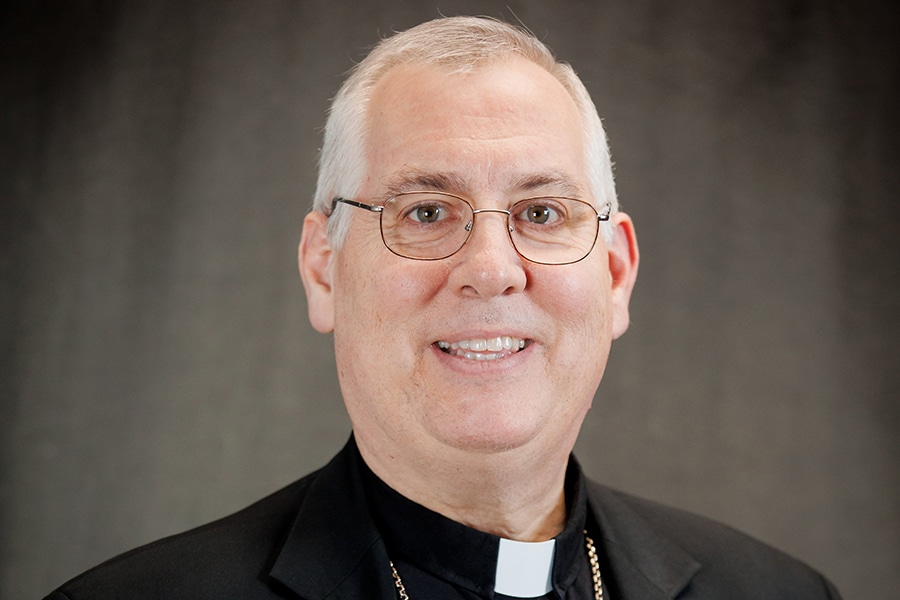
‘With all my heart I want to say how sorry we are,’ says Albany bishop as abuse settlement reached
Just over three years to the date after filing for Chapter 11 protection under the crush of nearly 440 Child Victims Act claims, the Diocese of Albany reached a $148 million settlement agreement with the survivors of sexual abuse by diocesan priests and others on March 27.
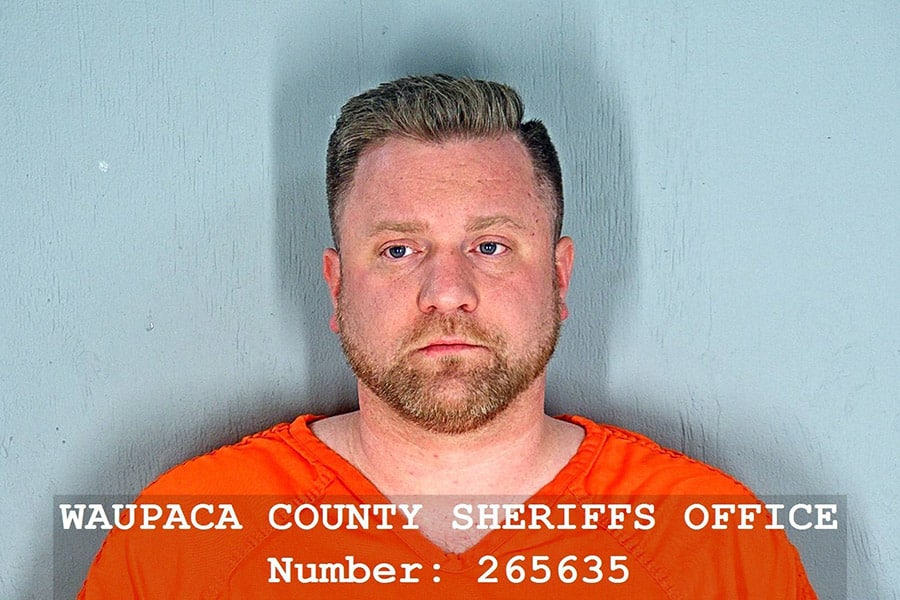
Wisconsin priest faces new charges for child sex abuse material
A Wisconsin priest arrested last year for child enticement and attempted sexual assault is facing new charges of possessing child sex abuse material.
Continue Reading Wisconsin priest faces new charges for child sex abuse material
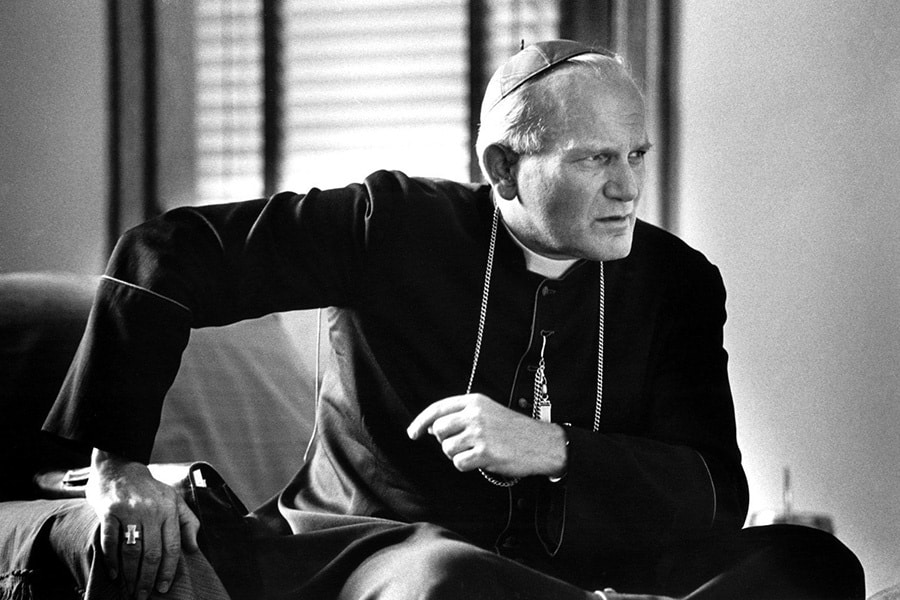
Report shows Cardinal Wojtyla’s actions were ‘exemplary’ in abuse cases, refuting previous claims
“Our research shows that Cardinal Karol Wojtyla did not transfer priests from parish to parish when he learned of their criminal activities, but he took quick action, and some of his decisions were above-standard for the time,” the March 13 report’s lead said.
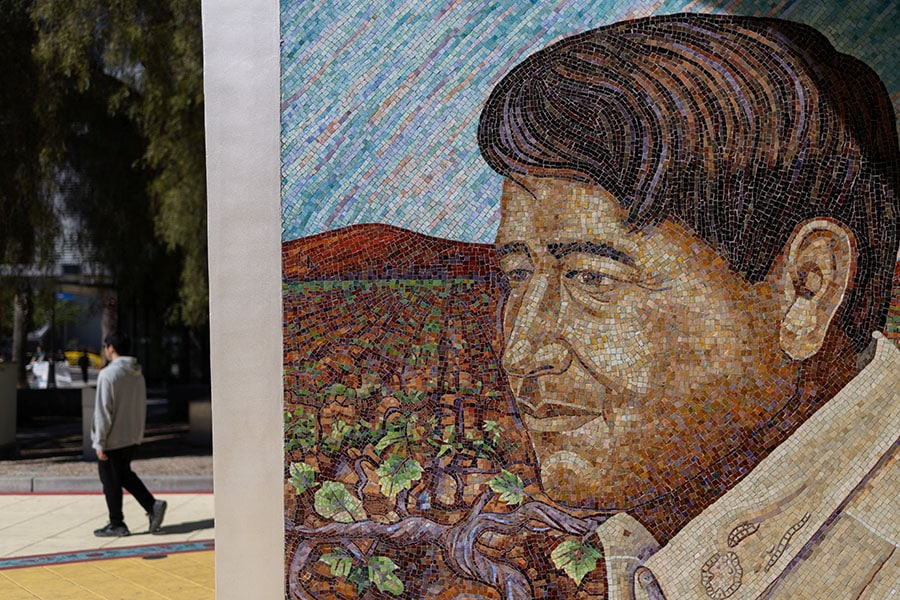
Chávez allegations show need for Church to hold prominent Catholics to account, say abuse survivors
Newly revealed sexual abuse and assault allegations against the late civil rights leader César Chávez reignite a call for the Church to “honor our stories,” a Latino clergy sex abuse survivor, who as a teenager met Chávez several times, told OSV News.
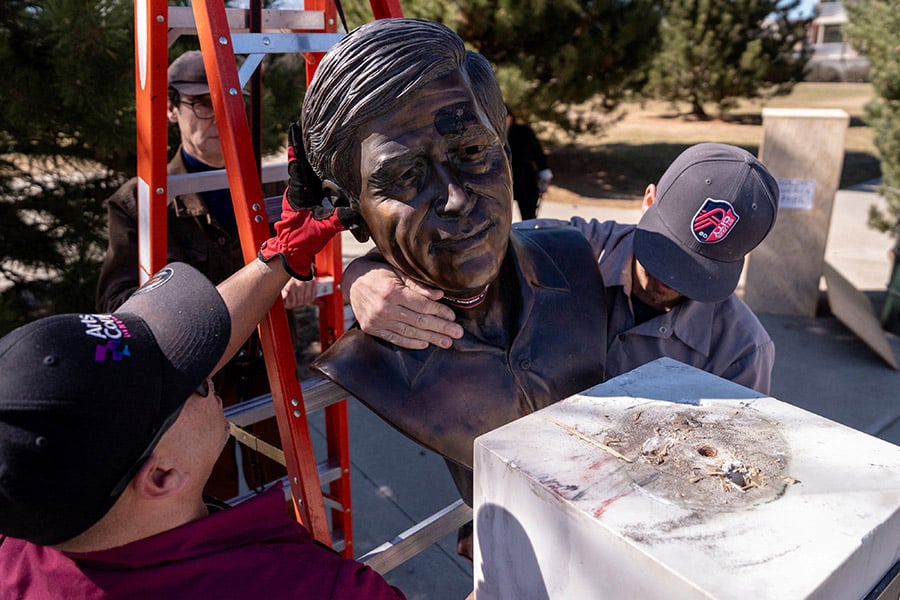
César Chávez allegations lead to canceled Masses, reassessment of his social justice legacy
Catholic dioceses and organizations are canceling events and rethinking initiatives honoring the late civil rights icon César Chávez, following newly reported allegations the activist — who publicly drew on his Catholic faith in his work — sexually abused several women and girls.
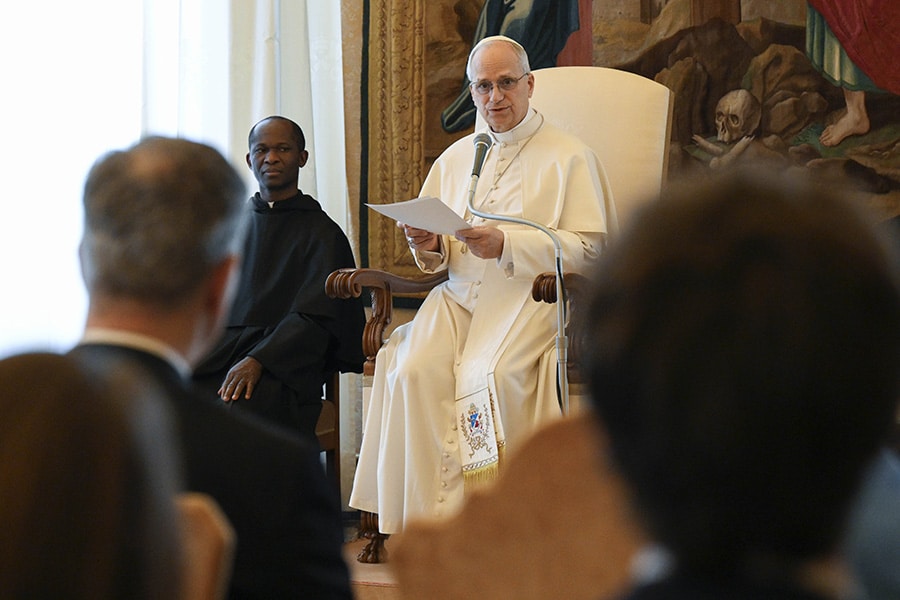
Every Church institution must listen to victims of abuse, Pope Leo XIV says
Addressing the Pontifical Commission for the Protection of Minors March 16, Pope Leo XIV underlined the importance of preventing abuse in the Church, insisting that such responsibility must be concretely confronted and not delegated.
Continue Reading Every Church institution must listen to victims of abuse, Pope Leo XIV says
Copyright © 2026 OSV News
