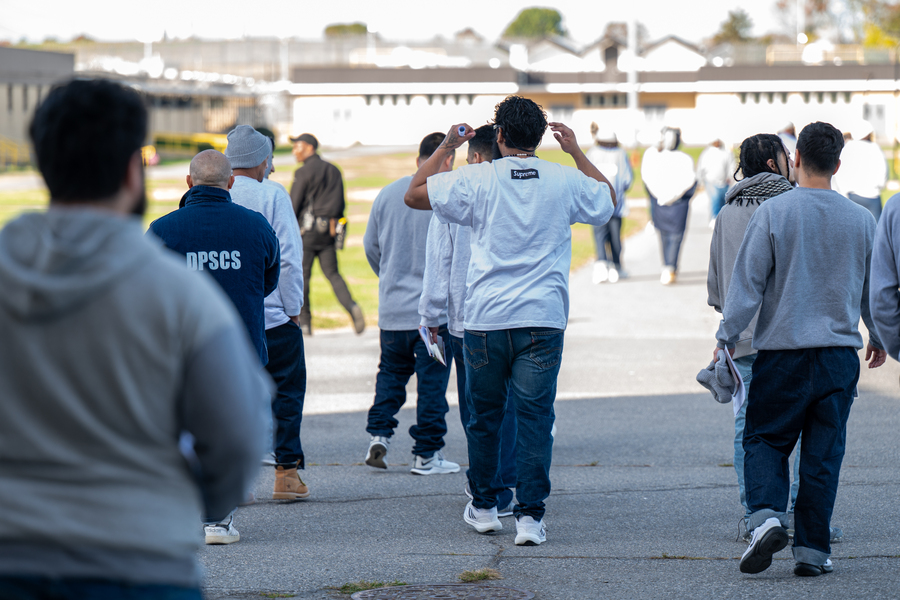
HAGERSTOWN – Some were barrel-chested, with elaborate tattoos snaking up their arms. A few had ink on their faces. One wore an eyepatch, another used a wheelchair and at least two leaned on canes.
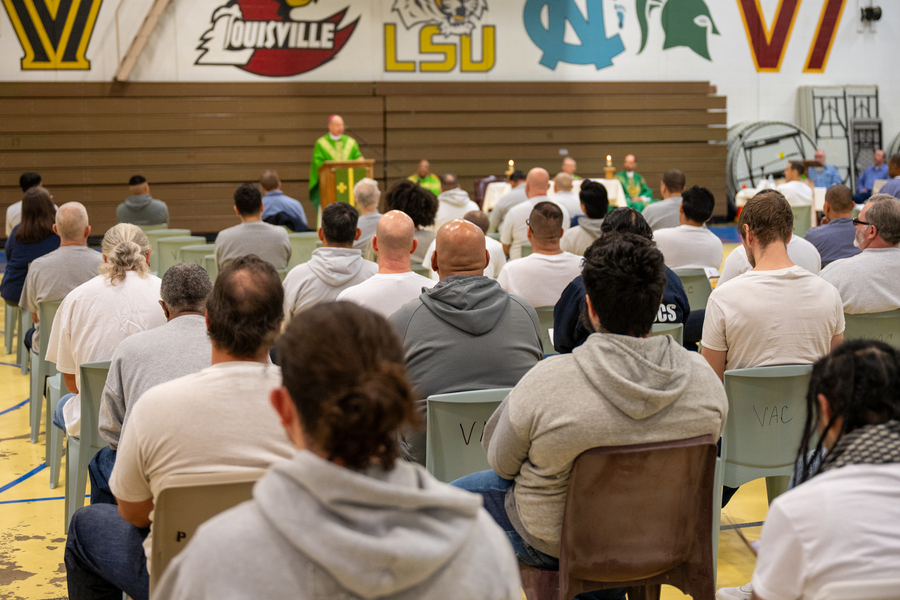
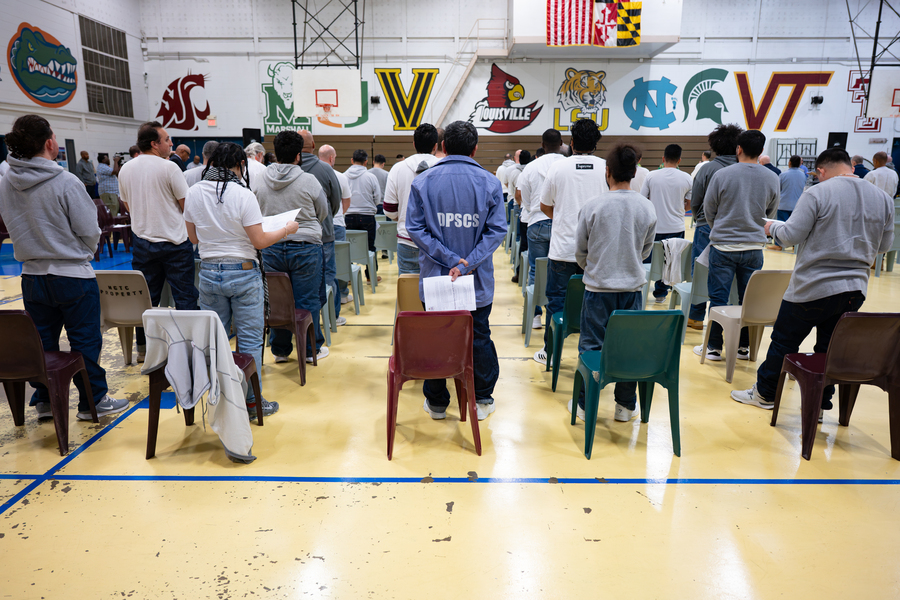
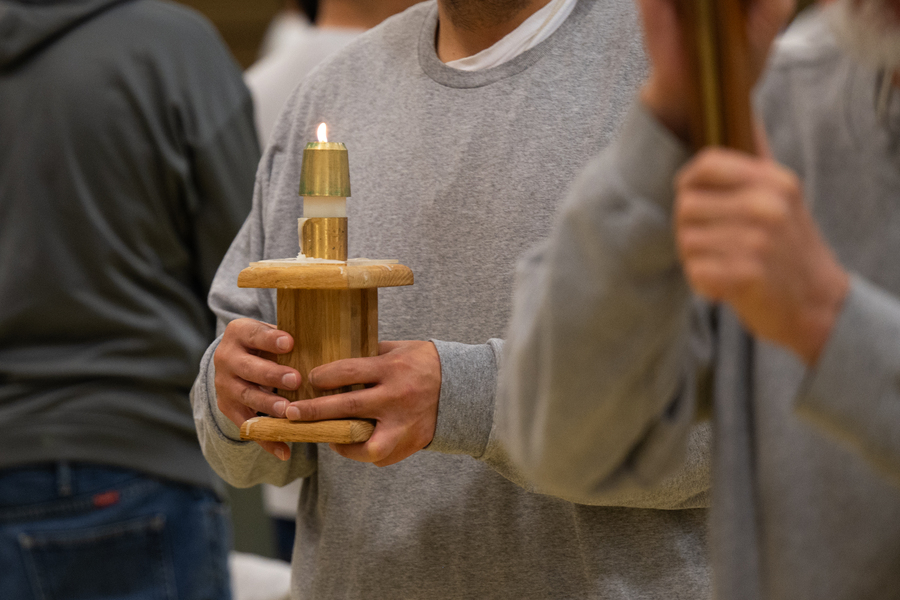
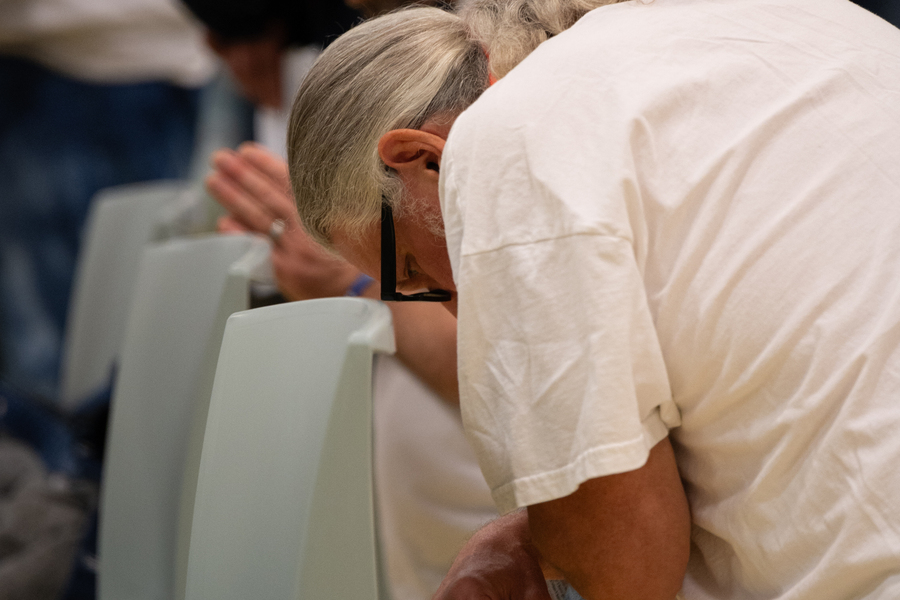
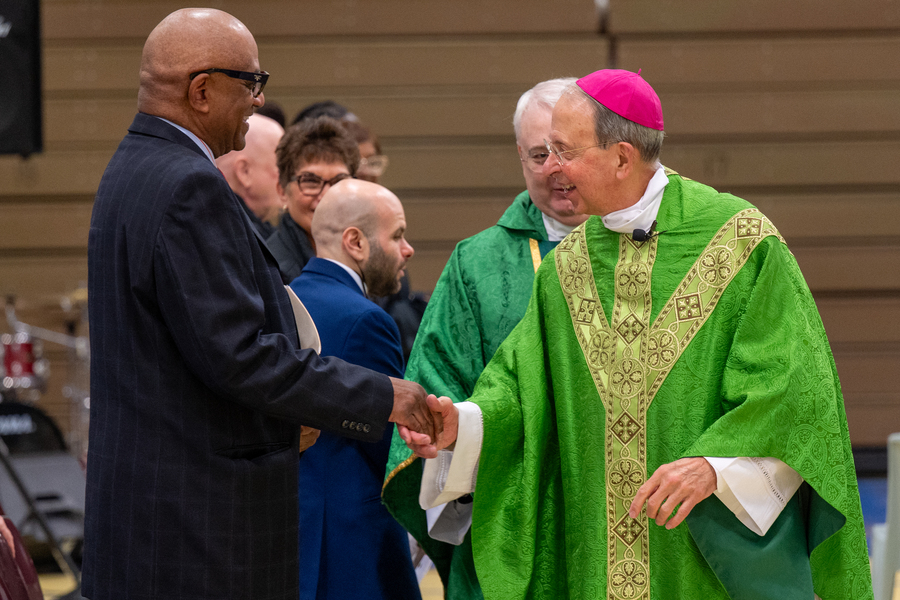
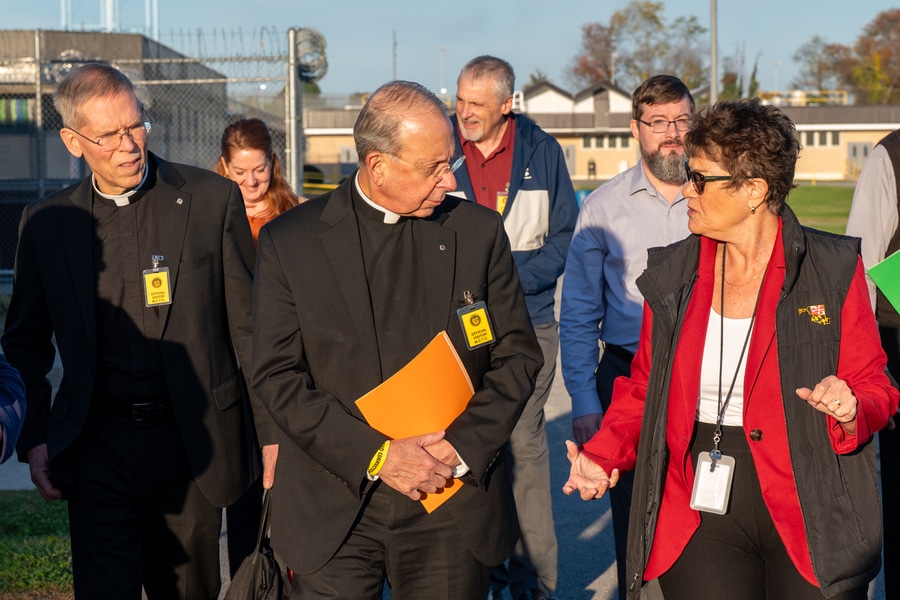
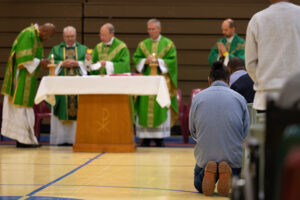
Nearly 75 inmates gathered behind barbed wire Oct. 31 at the Maryland Correctional Training Center in Hagerstown for a special Mass celebrated by Archbishop William E. Lori.
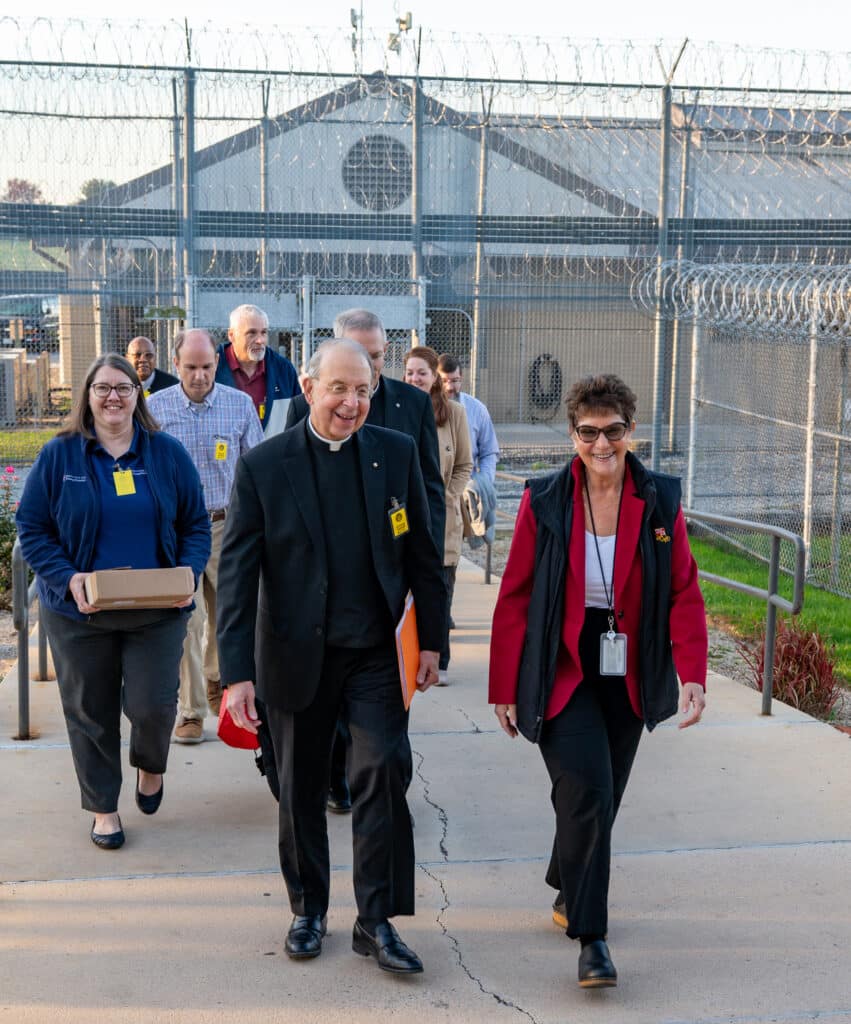
Inside a prison gymnasium, where weightlifting equipment sat idle for the occasion, Archbishop Lori urged the men to see themselves as God does.
“Your incarceration does not dictate who you are in God’s eyes,” he said. “It does not deprive you of your God-given dignity, nor of your God-given mission.”
Archbishop Lori had reached out to those in prison before. Two years earlier, he wrote a Christmas reflection that was read to inmates in prisons throughout the region. Deacon Seigfried Presberry, coordinator of prison ministry for the Archdiocese of Baltimore, said the letter saved the life of an inmate who had been contemplating suicide.
At the Oct. 31 liturgy – the first Mass he had celebrated inside a correctional facility – the archbishop reminded the men that their circumstances did not diminish their dignity in God’s eyes.
St. Paul, the archbishop noted, found freedom even in prison because his mind and heart were anchored in something the guards couldn’t touch and the state could not take away.
Highlighting the day’s Gospel, which recounts Jesus’ parable about taking the lowest place at a banquet, Archbishop Lori said Jesus was teaching more than a lesson in humility or etiquette. Jesus himself took the lowest place, humbling himself to the point of death on a cross, where he was crucified between two thieves and ridiculed by bystanders.
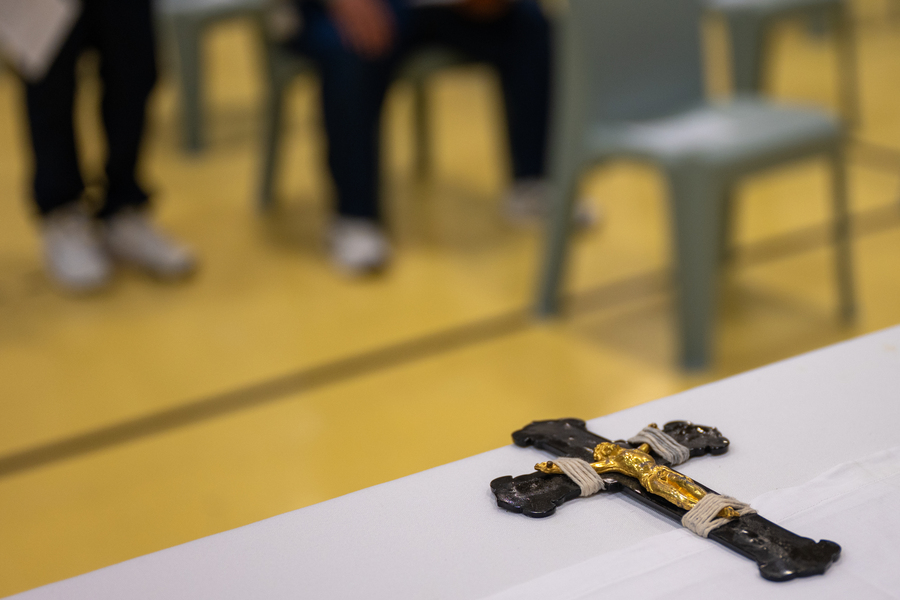
“On those days when you might feel like you’re at the bottom, you are actually standing exactly where Jesus chooses to meet us,” the archbishop said, standing before a small altar flanked by an image of Our Lady of Guadalupe.
Jesus understands human frailty, sinfulness and suffering, the archbishop said, and meets people wherever they are.
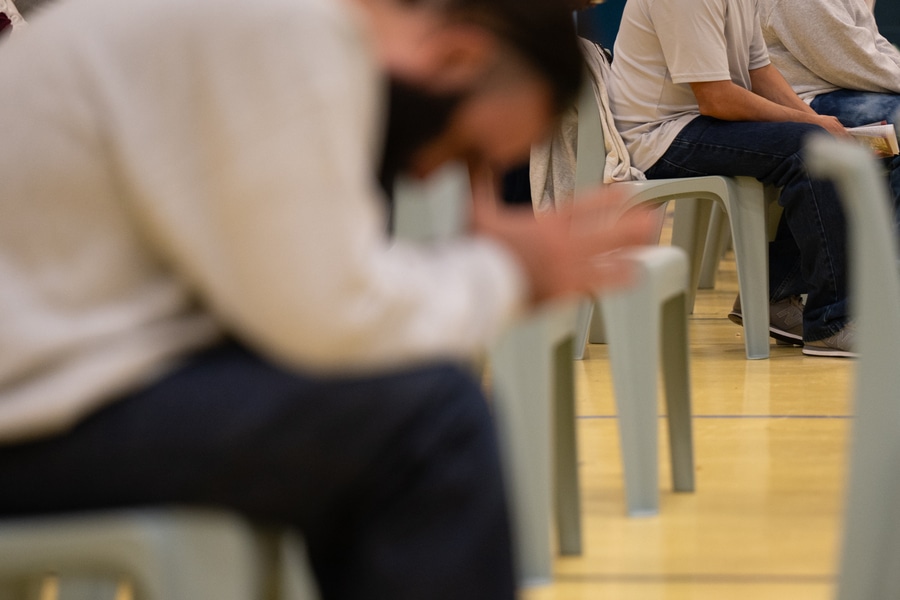
“The lowest place is not a curse if it leads us to God,” he said, explaining that being stripped of pride, status and illusions can help people recognize their deepest need: a thirst for God.
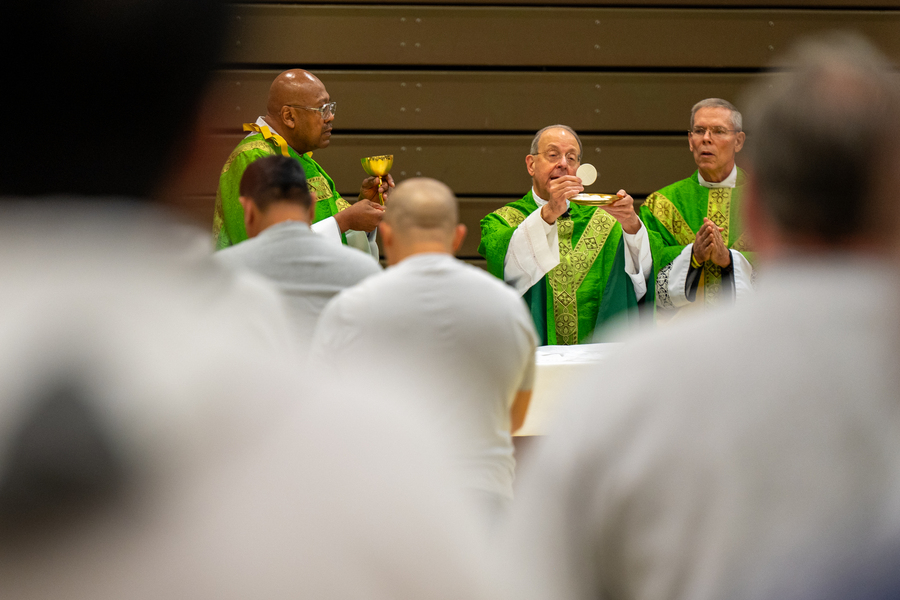
Archbishop Lori compared the Eucharist to the banquet in Jesus’ parable, where the host invites a guest to take a higher place. God, he said, looks beyond a person’s past and present circumstances and offers the possibility of a new beginning.
The Lord doesn’t wait for individuals to “have it together,” the archbishop said.
“God isn’t trying to make you into a completely different person,” he said. “Rather, the Lord wants to give you back your life made new – the best version of yourself.”
Several inmates nodded as the archbishop preached and at least one appeared moved to tears.
The archbishop said restoration can begin even within prison walls through Bible study, the sacrament of reconciliation, Mass and prayer.
“(Christ) restores the image of God in you and in me and offers us a mercy that’s stronger than sin and more powerful than death,” Archbishop Lori said.
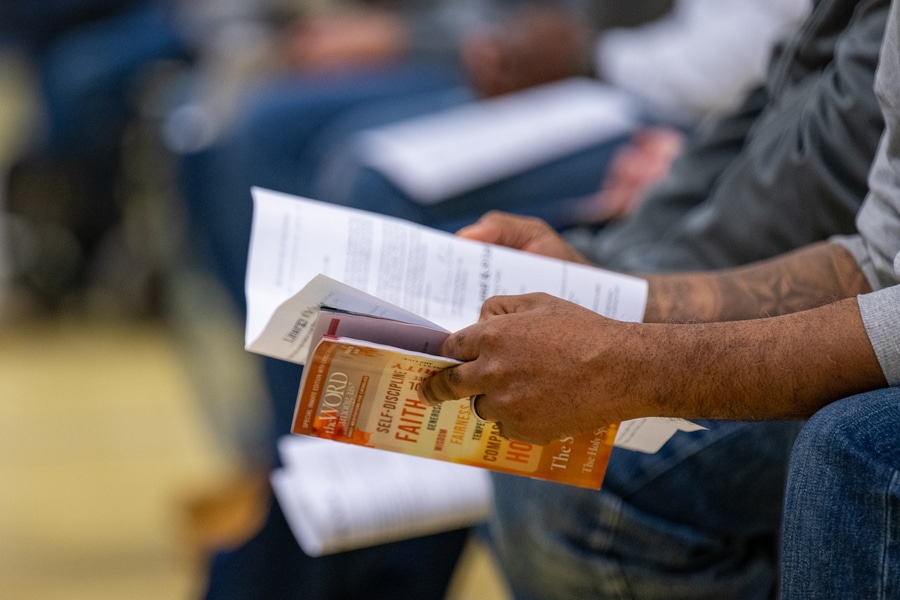
God does not measure a person’s worth by past mistakes or a sentence imposed by a court, the archbishop said, but by his love. He encouraged the inmates to let Christ live in them each day, reflecting God’s light to those around them.
God wants to impart peace beyond all understanding, the archbishop said, and to use the lives of those in prison “here and now to reflect the light of his truth and love to those around you,”
“Like St. Paul, you can make this place a sanctuary,” he said. “Let your thirst lead you to Jesus and trust that the one who has begun a good work in you will bring it to completion.”
Before Mass began, Archbishop Lori personally greeted inmates as they entered the gymnasium. Eight of their fellow inmates provided music, singing “It is Well With My Soul” and other praise hymns in English and Spanish. Some of the readings were offered in Spanish.
Owen Fowler, a 27-year-old Catholic inmate from the Washington area who has been at the Hagerstown facility for about 10 months, said he was impressed that the archbishop made time to visit the inmates.
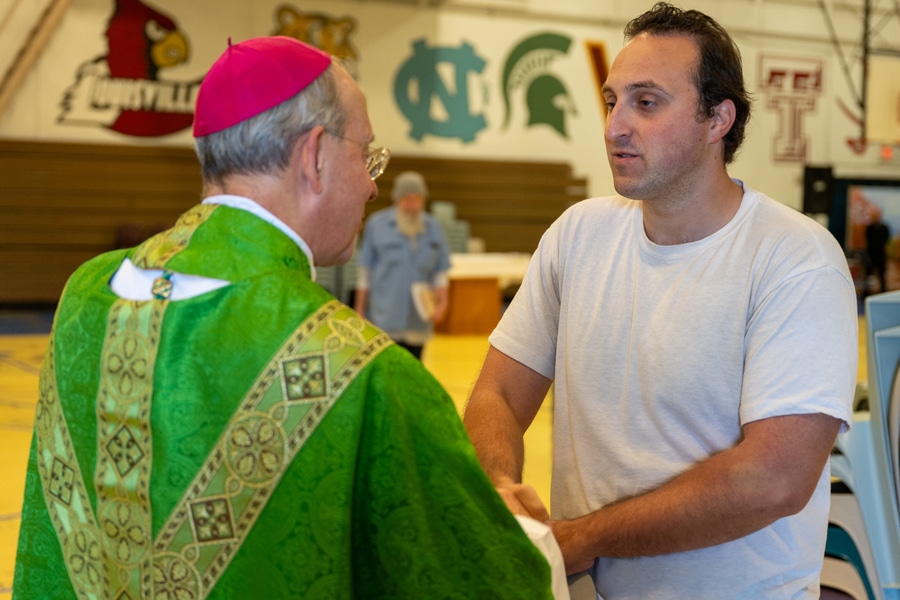
Fowler, who was born in St. Petersburg, Russia, and is serving a three-year prison term, said he reads the Bible and attends Mass when it is available. When liturgies are not available, he joins fellow inmates for informal gatherings to pray together. The Mass with the archbishop encouraged him to continue practicing his faith, he said.
Fowler said he has his sights set not only on his immediate future but also on the day of his release. He has begun shedding bad habits and taking better care of his body, he said.
“I just look forward to continuing a healthier habit for my body and getting back into the church as well so I can have a healthier body and spirit,” Fowler said.
Father James Boric, pastor of St. Mary in Hagerstown, celebrates a monthly Mass at the prison. He said inmates had been eagerly anticipating the archbishop’s visit.
“This is normally not how Mass is,” Father Boric explained. “It’s usually in the chapel with about 30 people. So they are really excited about this. It’s a very important event for them.”
Father Boric said he makes himself available for the sacrament of reconciliation each time he celebrates Mass.
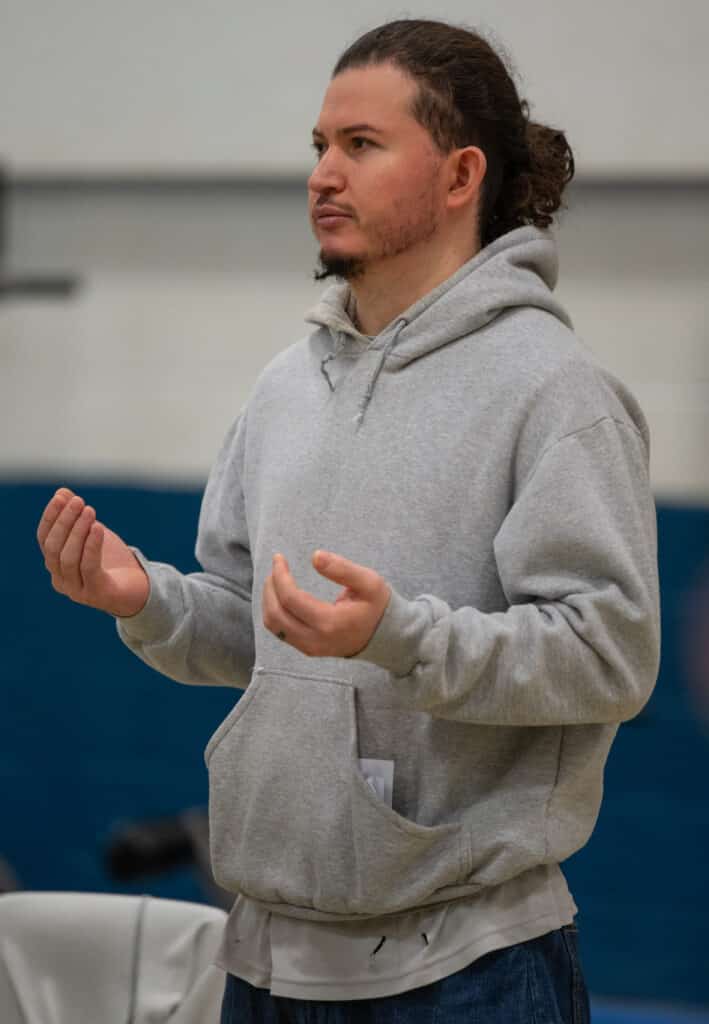
“I tell them confession and Eucharist are the most important things and if they do those, these guys can all be saints,” Father Boric said. “So they use it.”
Deacon Presbery noted that since December, every priest of the archdiocese is eligible for new identification badges that enable them to visit incarcerated people more easily for confession and pastoral care in the state prisons. Already, 16 priests have been approved for the badges. Instead of being placed on a waiting list to visit inmates, priests with the badge can visit at any time – even 2 in the morning, the deacon said.
A blessing for dogs
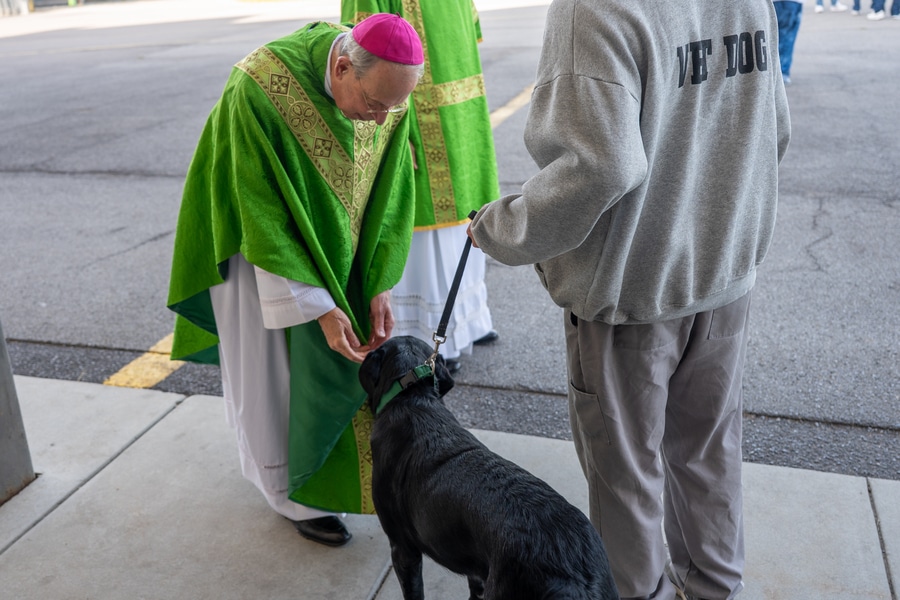
At the conclusion of Mass, Archbishop Lori blessed about six dogs being trained by inmates to serve military veterans and emergency responders through a partnership with VetDogs, a national nonprofit organization.
David Weaver, a parishioner of St. Ignatius of Loyola in Ijamsville who serves as a weekend puppy raiser with the program, takes in dogs trained by inmates as part of their development. Weekend puppy raisers help socialize the dogs by exposing them to ordinary, everyday environments.
“The inmates get the puppies when they are 3- or 4-months old and they train them for a year,” Weaver said.
About 14 puppies are currently being trained at the Hagerstown facility, Weaver said. Every three months, three or four puppies arrive for training. They are black and yellow Labrador retrievers, usually mixed with golden retrievers.
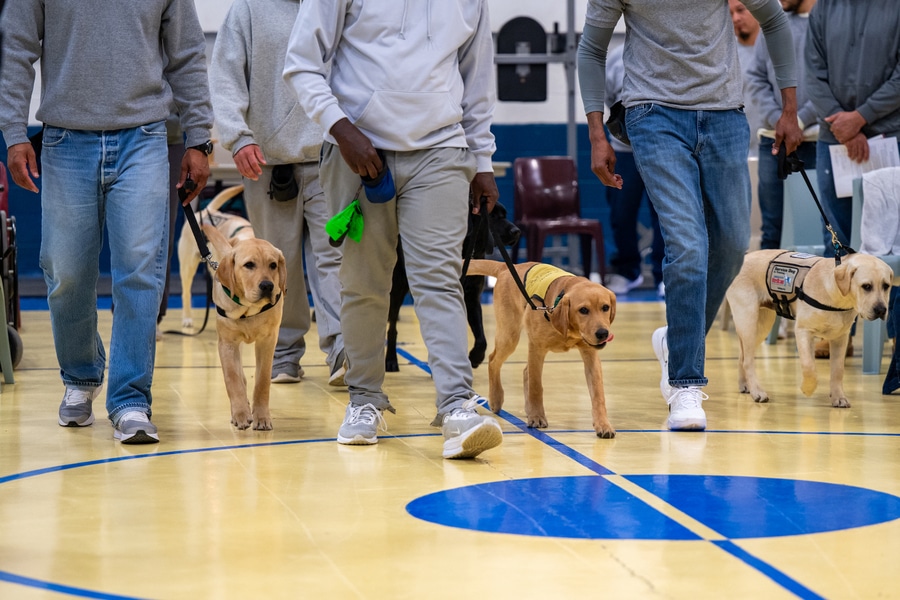
“For me as a weekend puppy raiser, this is coming full circle for me to come in and see the inmates who are training the puppies,” said Weaver, noting that it costs about $50,000 to train each dog.
Weaver described it as a special moment to see one of his puppies, “Gettings,” a 1-year-old black Labrador retriever, receive a blessing from the archbishop.
Archbishop Lori, who owns a golden retriever named Bayley, sprinkled holy water on the dogs and offered words of encouragement to their trainers.
“I’m a dog lover from way back,” the archbishop said with a smile. “I love dogs – and I think it’s a great thing that you’re training these dogs to help our vets and I just want to thank you for that wonderful service.”

Concelebrating Mass with Archbishop Lori were Father Boric; Pallottine Father Carlos Cardosa, prison chaplain in Hagerstown; and Father James Bors, the archbishop’s priest-secretary. Deacon Presberry, a former correctional officer, also assisted.
According to the Maryland Department of Public Safety and Correctional Services, more than 470 of the nearly 17,900 people housed in the state’s 17 correctional and detention facilities – whether serving sentences or awaiting trial – identify as Catholic. The Hagerstown facility visited by the archbishop has the largest number of Catholics in the state system.
Chaplain Keith Kitchen, chief of religious services for the Maryland Department of Public Safety and Correctional Services, said the archbishop’s visit offered inmates a rare opportunity to worship with the spiritual leader of the area’s Catholics. Even after their release, they may never again have the chance to be in the presence of an archbishop, he said.
“They will remember this day the rest of their lives,” he said.
Email George Matysek at gmatysek@CatholicReview.org
Also see: Prison ministry changes lives inside and outside prison walls
Use the navigation arrows below to view a photo slideshow by Kevin J. Parks.