
Days after celebrating the first day of school, Catholic schools and parishes across the Archdiocese of Baltimore are reassessing safety policies and procedures in light of the Aug. 27 shooting in Minnesota during a Catholic school Mass.
Two students were killed and 18 others injured when a lone gunman, identified as 23-year-old Robin Westman, opened fire through the stained-glass windows of Annunciation Catholic Church. Westman died at the scene from a self-inflicted gunshot wound.
“How do you stop that? How do you prevent that?” Gregory A. Farno, chancellor of the Archdiocese of Baltimore’s Catholic schools, asked in an Aug. 28 interview. “How do you stop a crazy person?”
Farno explained that principals and teachers attend leadership programs focused on emergency response: what to do, when to act and how to carry it out. Throughout the school year, staff and students practice multiple drills, including fire, active shooter, shelter-in-place and full lockdowns.
“We have trained staff and leadership of schools, and we do training with students, but there is not one single solution,” said Tom Alban, director of risk management for the archdiocese. “Staff and faculty, students may agree the best solution is to get out of the building. Where to go? A meeting place.”
Principals are urged to build strong relationships with local police by inviting officers to tour campuses and meet staff and students. Since Catholic schools do not have resource officers or police radios, these connections are essential for staying informed about neighborhood activity, Alban said.
Alban said the goal is to raise awareness in schools and in parishes with childcare, ensuring that people know the archdiocese is present and encouraging them to share information about what is happening in their communities.
All schools require visitors to show identification before entering. Ideally, each should have a secure vestibule where visitors first state their purpose, then present identification before being buzzed into the school.
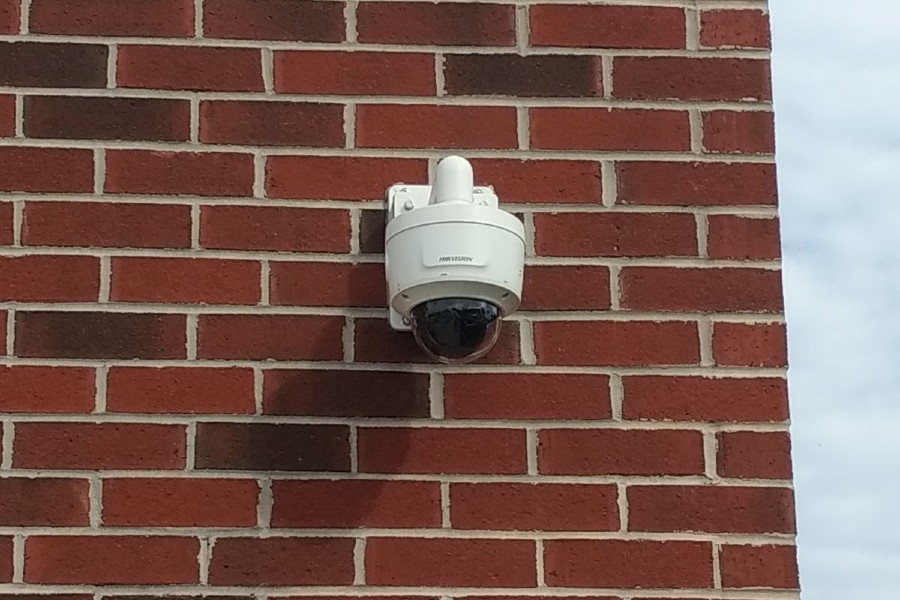
“A tremendous amount of effort is put into physical security, cameras, locked doors, to make it hard to get into the building,” Alban said. “The challenge is funding. The equipment is not inexpensive.”
In recent years, Catholic schools have been encouraged to apply for a variety of grants offered through federal, state and local programs. Schools that have obtained funding have made security improvements such as installing cameras, fencing and window screens, and replacing doors.
While every school requires students to attend Mass, schedules vary. Some offer daily liturgies, others weekly or monthly. Holy days and feast days are also common times for Masses, which are usually open to the public.
Alban emphasized that parishes should have active safety ministries, with members trained to respond to situations ranging from medical emergencies to severe weather to active threats.
“Who can take the lead and respond so it doesn’t become a bigger event than it needs to be?” Alban said. “Train ushers to know what to look for in oddities in behavior. Train to identify and deescalate difficult people.”
Even simple greetings can deter potential threats, he noted.
“Experts have found that simple recognition of coming through the door, the simple fact that someone recognized them, can be a deterrent. They feel they are known,” Alban said.
Each parish and school is unique, Alban added.
“We are working very hard to try to provide a safe environment for everyone that is in no way overwhelming or militant,” he said. “It is tough striking a balance.”
Farno emphasized that strong training and procedures are already in place but acknowledged the need to review them carefully.
“We’ve looked at this before and will look at it again,” he said. “Are we doing the right things? Are the practices and protocols in place efficient? I think they are.”
St. Mary Catholic School in Hagerstown was one of the Catholic schools in the region to be awarded $150,000 from the Nonprofit Security Grant Program, a federal grant sponsored by the Federal Emergency Management Agency. The 2021 grant was used to make security improvements. An additional grant of $150,000 was awarded to the parish for the same cause.
Amy Summers, St. Mary’s principal, said students and staff had already completed their first fire drill by the second day of classes this year.
“We probably exceed the number of drills and do more than required,” Summers said. “I feel really good about where we are. Safety first.”
Email Katie V. Jones at kjones@CatholicReview.org
Read More Schools





Copyright © 2025 Catholic Review Media
