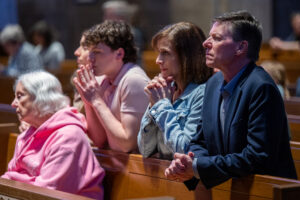
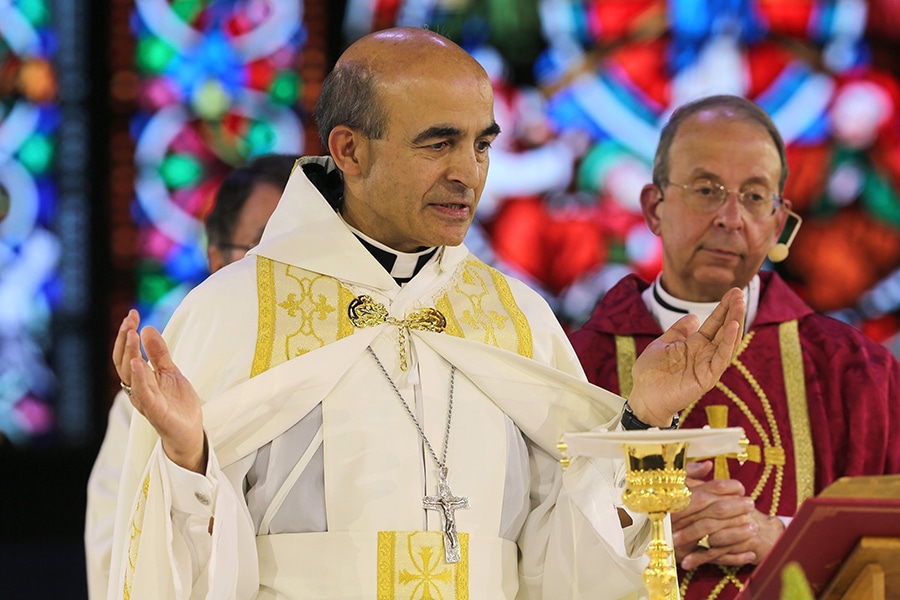
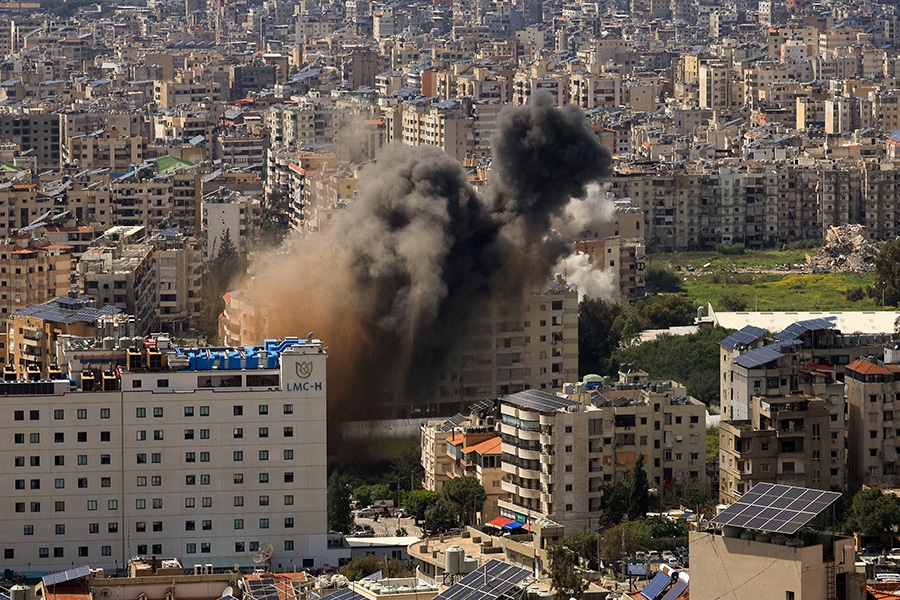
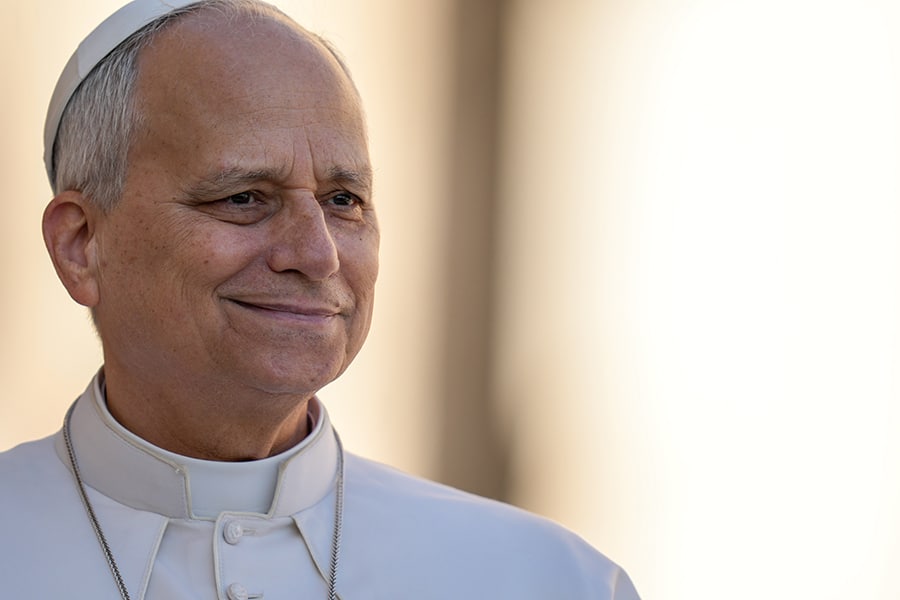
Echoing Pope Leo XIV’s repeated calls for an end to the war in the Middle East, Archbishop William E. Lori insisted during an April 11 prayer vigil that peace is more than the absence of conflict.
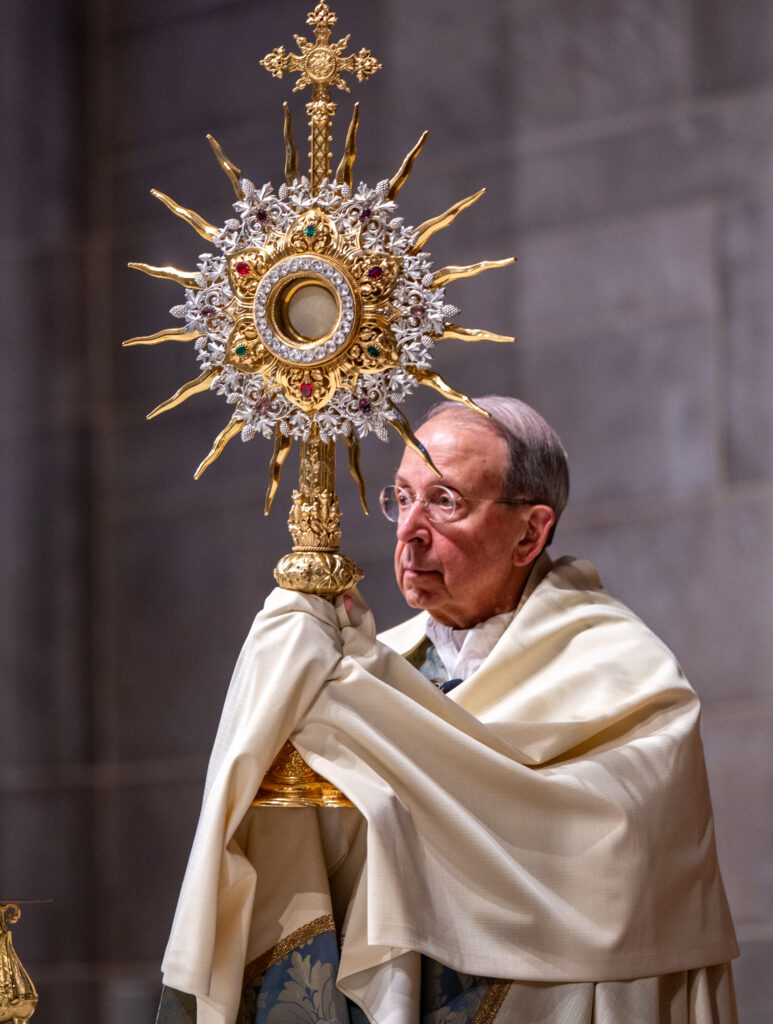
“It is a state that, by God’s grace, must be persistently pursued,” Archbishop Lori told approximately 175 people gathered for an evening prayer vigil at the Cathedral of Mary Our Queen in Homeland.
“We seek it by building bridges, rather than tearing them down,” he said, “by inviting encounter, instead of confrontation – by choosing our words with care, instead of with recklessness. We pursue it by opting for negotiation over armed conflict and by working for justice at home and abroad.”
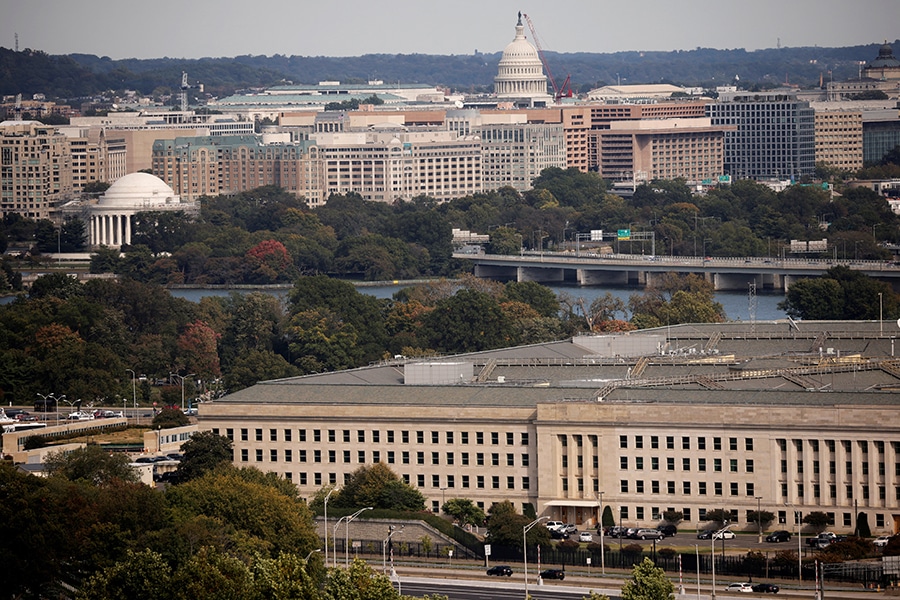
Without mentioning President Donald J. Trump by name, the archbishop rebuked the U.S. president’s social media rhetoric, which included threats of annihilating Iranian civilization. Trump’s remarks, posted April 7 on Truth Social, said “a whole civilization will die tonight, never to be brought back again,” and came shortly before a two-week ceasefire was announced.
“Threatening to obliterate an entire civilization is alien to everything we stand for as followers of Christ and as citizens of this nation,” Archbishop Lori said. “The threat to inflict mass casualties, the failure to distinguish between combatants and civilians, and the intent to reduce a nation to rubble – this cannot be how a power such as ours acts on the world stage.”
Such rhetoric, he added, “only serves to make the path to peace more treacherous.”
The peace vigil followed the cathedral’s 5 p.m. Mass and was part of a broader call by the Archdiocese of Baltimore for parishes to dedicate April 11-12 to prayer vigils for peace, adoration of the Blessed Sacrament or similar observances.
The cathedral service began with exposition of the Blessed Sacrament and readings from Scripture that emphasized peace.
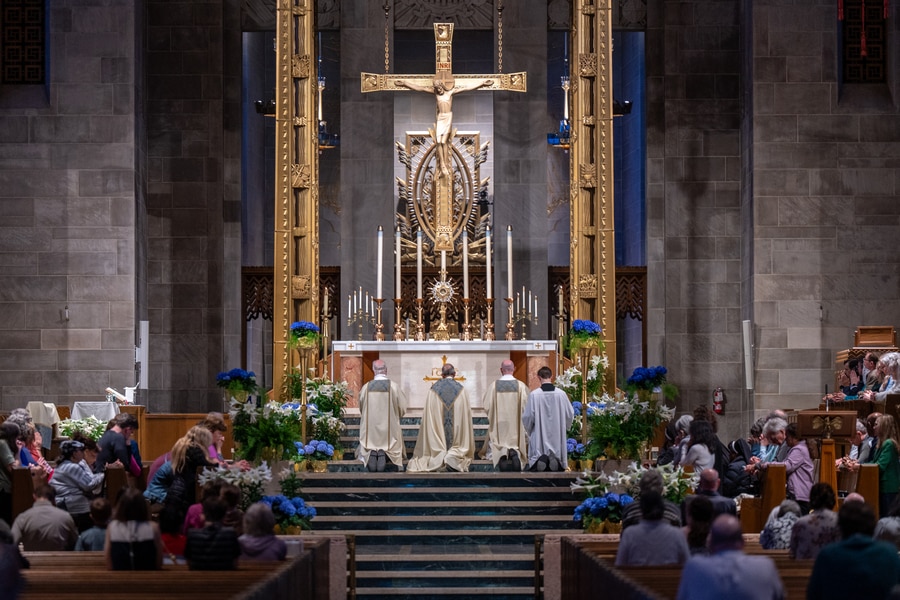
During the service, Deacon Alexander Kulik drew from Pope Leo XIV’s Easter “Urbi et Orbi” message, in which the pontiff urged those who bear arms to lay them down and called on world leaders to “let those who have the power to unleash wars, choose peace – not a peace imposed by force, but through dialogue, not with the desire to dominate others, but to encounter them.”
Deacon Kulik also noted that Archbishop Paul S. Coakley, president of the U.S. Conference of Catholic Bishops, has likewise called for an end to war. He pointed to the Gospel account of the risen Christ appearing to his disciples in Jerusalem, greeting them with the words, “Peace be with you.”
Archbishop Lori emphasized that war must remain the “very last resort” because “it always signals profound failure of human relations and structures.”
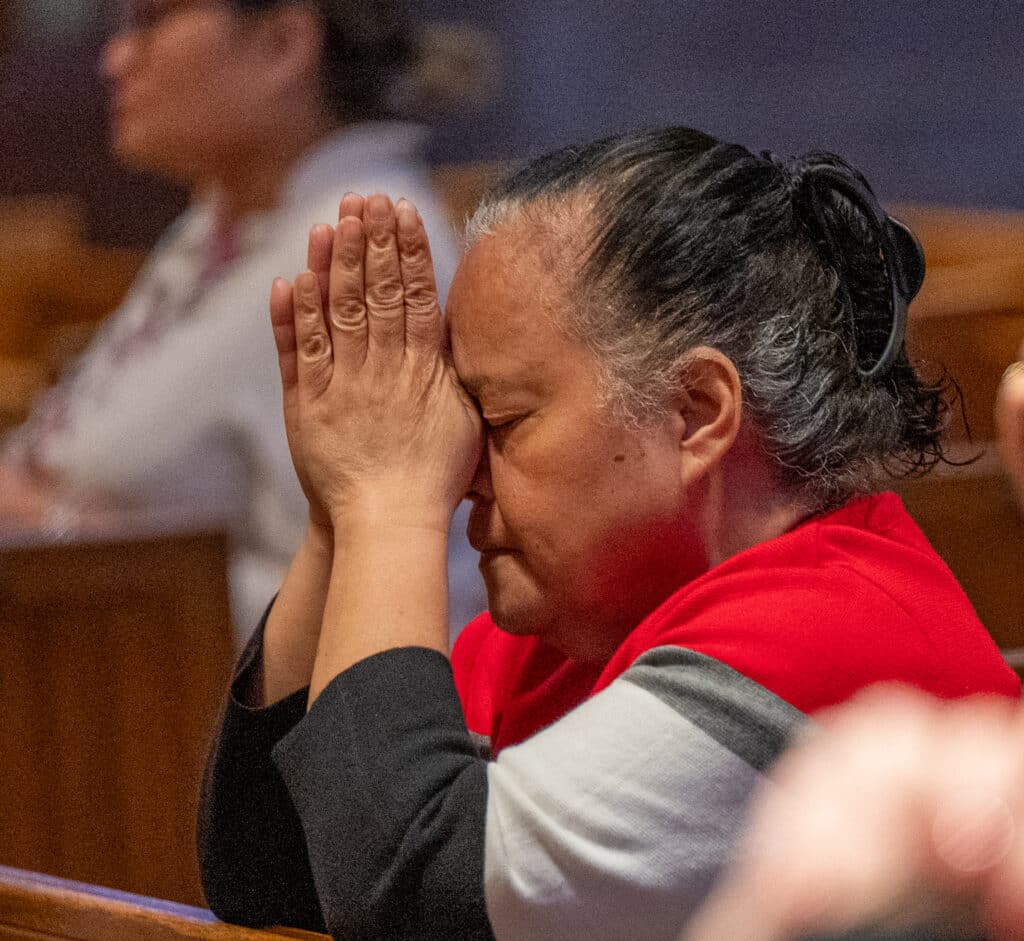
For many attendees, the vigil offered both spiritual grounding and a sense of shared purpose.
Suzanne Schlattman brought her 12-year-old son, Chris, to pray for peace. After the 45-minute service, she and her son planned to return to her home parish of Ss. Philip and James in Homewood to join her husband, Dan, and their three other children for eucharistic adoration dedicated to peace.
“It’s something we’ve been praying about a lot,” Schlattman said. “It’s nice to be a part of a community in prayer. You can have inner peace, but there’s a special peace in community.”
She said the archbishop’s emphasis on prudence, justice, courage and temperance – virtues essential to civil discourse and lasting peace – resonated. The archbishop’s recent pastoral letter, “Charity and Truth: Toward a Renewed Political Culture” discusses the application of those virtues in depth.
“We’ll be talking about it around the dinner table,” Schlattman said. “We can all grow in those virtues. We want to be a part of bringing God’s kingdom.”
Karen Saworski, a parishioner of St. Isaac Jogues in Carney, attended the vigil at a friend’s invitation. Reading about the state of the world brings stress, anxiety and a sense of powerlessness, she said.
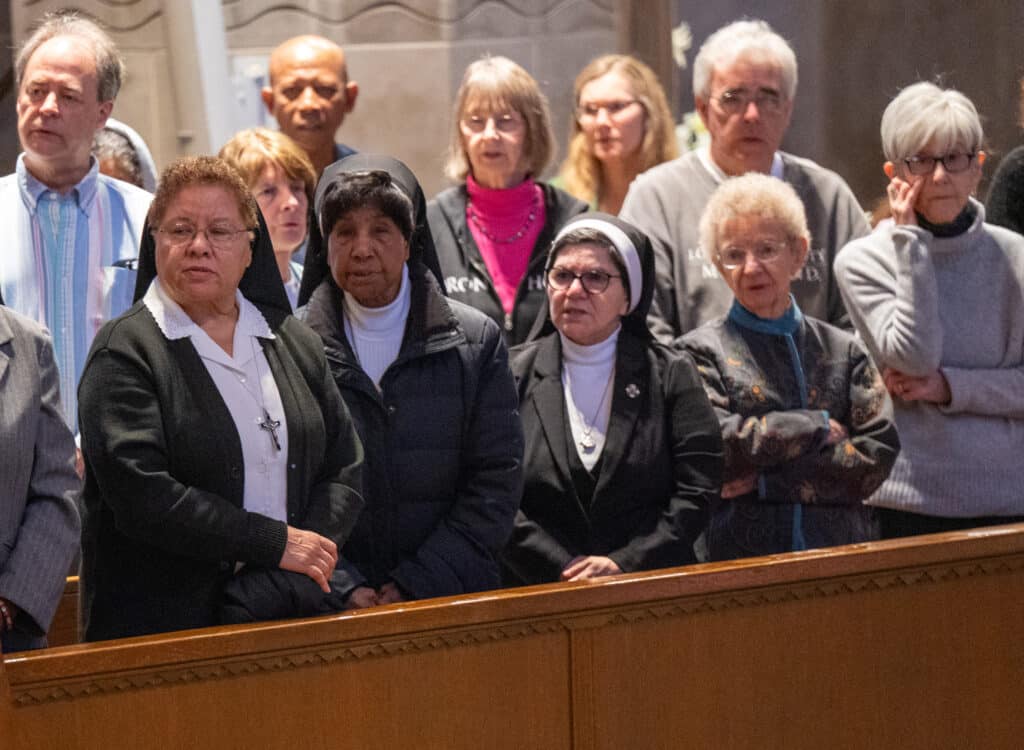
“Sometimes you have to find something positive to latch onto,” she said. “This is exactly what I needed. I needed a balm for my soul.”
Elvera Williams, who attends Mass at the cathedral and Sacred Heart in Glyndon, also found a sense of solidarity at the cathedral peace vigil. She said she believes deeply in the power of prayer.
“When prayers go up,” she said, “things happen.”
It remains unclear what will happen when the U.S.-Iran ceasefire expires April 22. Negotiations between the two countries ended April 12 without an agreement.
Email George Matysek at gmatysek@CatholicReview.org
Also see
Copyright © 2026 Catholic Review Media
