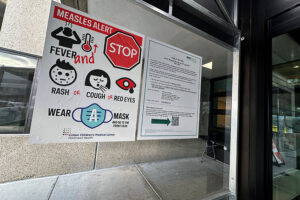
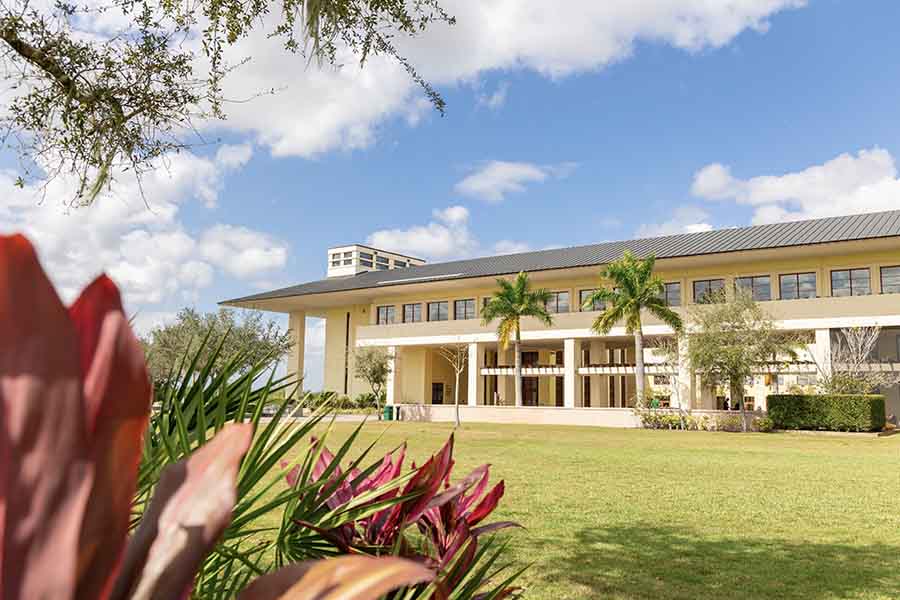
A Catholic university in Florida is battling an outbreak of measles among its students, with 7 in quarantine as of Feb. 11.
Ave Maria University reported on its website that it first became “aware of suspected cases” on its campus Jan. 28, and “promptly reported” them to the Florida Department of Health.
The cases were confirmed by the state health department on Jan. 29, said the university, which coordinated with the agency “for contact tracing and medical guidance,” while establishing protocols “for immune and non-immune community members.”
“The Padre Pio Campus Health Clinic began assessing students immediately,” said the university. “Suspected students were tested. Students, parents, faculty, and staff were notified.”
In its Feb. 11 campus health update, the school said that “since the start of the semester, 50 nurse-assessed students have progressed beyond the contagious period and now have natural immunity.”
Also known as rubeola, the highly contagious measles — marked by a distinctive rash, as well as fever and cough symptoms — can prove serious and even fatal, especially in children under the age of 5, adults over 20, pregnant women and their unborn children, and those who are immuno-compromised.
Dr. Robert H. Shmerling, senior faculty editor of Harvard Health Publishing, noted in a Jan. 26 article for that organization that in the latest outbreaks nearly 1 in 10 have required hospitalization.
He also noted a 2019 Harvard Medical School study finding that measles infection does significant damage to a person’s immune system and “may wipe out up to three-quarters of antibodies protecting against viruses or bacteria that a child was previously immune to.”
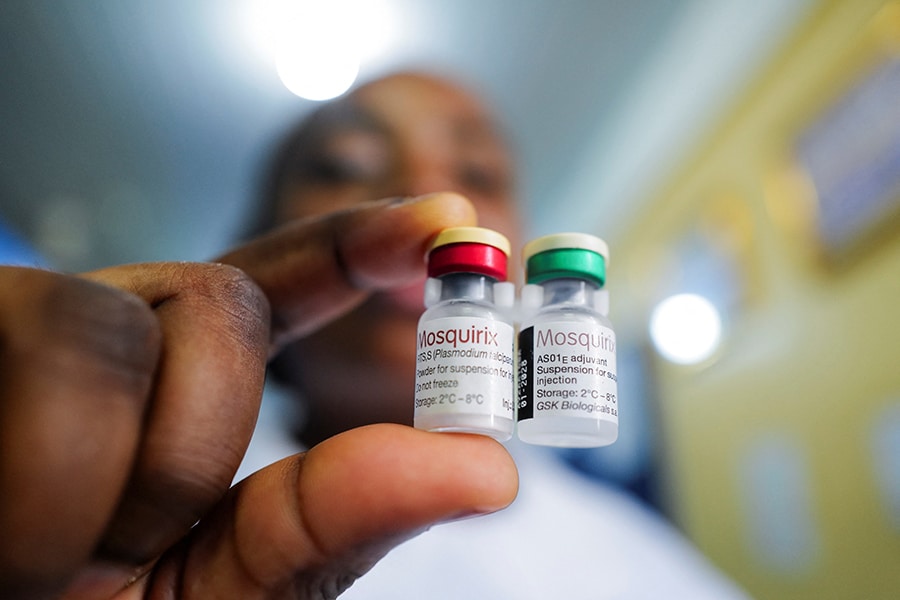
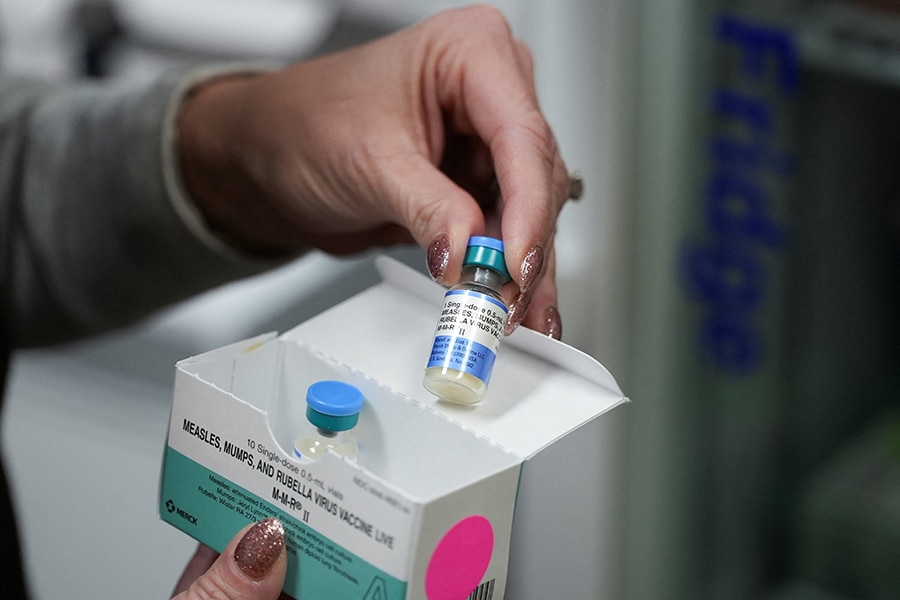
In contrast, the MMR (measles, mumps and rubella) vaccine usually provides lifelong immunity from the disease, and for those who do still contract measles, vaccination significantly reduces the disease’s effects.
Local CBS News affiliate WINK reported Feb. 12 the university had reported a total of 57 cases since the start of the current semester, a number that appeared to include the 50 post-contagious cases plus the 7 individuals currently in quarantine.
The school said that it continues “to provide care for all students regardless of test results” and that it is “closely monitoring the situation” in coordination with the Florida Department of Health.
Ave Maria said it had opened a second on-campus clinic along with its existing Padre Pio clinic “to support routine student care.”
The university noted that “per DOH (Florida Department of Health) guidance, campus operations continue, including in-person classes; Masses and confessions; dining services; and noncurricular activities.”
In addition, the university said it “continues to provide comprehensive support services to ensure our students’ health, academic, and spiritual needs are met.” This support includes providing holy Communion to students in quarantine and confession.
“We remain vigilant and prepared to respond to new cases,” said the university in its update. “We are fully committed to the health, safety, and well-being of our students and campus community. While some test results remain pending and we anticipate additional positive cases, we have received 22 negative results.”
Ave Maria also stressed that “the vast majority of the Ave Maria University community is vaccinated.”
The measles virus was isolated in 1954, and the disease was declared eliminated in the U.S. in 2000, following extensive childhood vaccinations.
However, declining vaccination rates have correlated with a resurgence of measles.
For the year 2025, the Centers for Disease Control confirmed 2,280 cases, 2,255 of which were reported in 45 U.S. states. Most of the cases (89 percent) were associated with one of the 49 outbreaks (three or more related cases) across the country.
Shmerling noted that “measles vaccination rates among school-age kids fell from 95 percent in 2019 to 92 percent in 2023.”
Downturns in vaccinations leave “many people vulnerable to measles infections,” said Shmerling, adding that “only 4 percent of the recent cases in the U.S. involved people known to be fully vaccinated.
“The rest were either unvaccinated or had unknown vaccine status (93 percent), or they had received only one of the two vaccine doses (3 percent),” he wrote.
The March for Life rally, the Basilica of the National Shrine of the Immaculate Conception and several buildings at The Catholic University of America were among infection sites for confirmed measles cases in the District of Columbia, the capital city’s health department said Feb. 7.
The Vatican has made clear that people can in good conscience use vaccines, including vaccines where research or production involved cell lines descended from fetal tissue taken from unborn babies aborted decades ago. In 2017, the Vatican’s Pontifical Academy for Life stated “all clinically recommended vaccinations can be used with a clear conscience and that the use of such vaccines does not signify some sort of cooperation with voluntary abortion.”
In 2020, during the COVID-19 pandemic, the Vatican’s doctrinal office weighed in and said that while vaccination must be voluntary, “the morality of vaccination depends not only on the duty to protect one’s own health, but also on the duty to pursue the common good. In the absence of other means to stop or even prevent the epidemic, the common good may recommend vaccination, especially to protect the weakest and most exposed.”
As of Feb. 12, the CDC has confirmed 910 cases for the current year.
Read More Health Care
Copyright © 2026 OSV News
