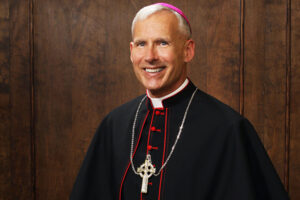
Pope Leo XIV has accepted the resignation of Bishop F. Richard Spencer, a 75-year-old former priest of the Archdiocese of Baltimore who served as auxiliary bishop for the Archdiocese for U.S. Military Services since 2010.
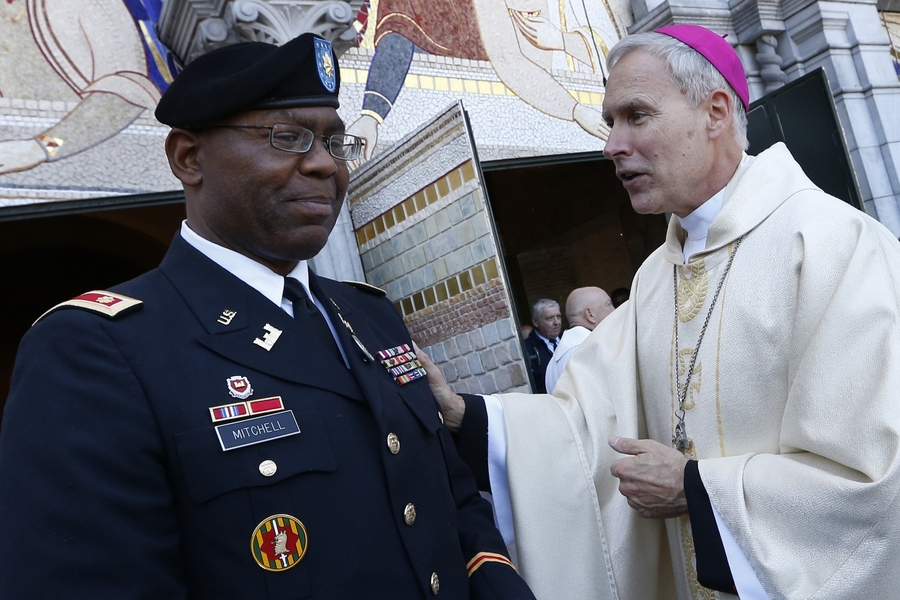
Archbishop Gabriele Caccia, apostolic nuncio to the United States, announced Bishop Spencer’s retirement June 10 in Washington, where the military archdiocese is headquartered.
Bishop Spencer, who has faced recent health challenges, most recently served as episcopal vicar for the military archdiocese’s Eastern Vicariate of the United States and previously was an episcopal vicar to Archbishop Timothy P. Broglio, leader of the military archdiocese. Before his appointment as a bishop, he served as a U.S. Army chaplain.
In a June 12 email interview with the Catholic Review, Bishop Spencer pointed to three experiences in military ministry that shaped him most deeply.
The first was Sept. 11, 2001. He was among the first chaplains selected to enter the damaged Pentagon following terrorist attacks, going in repeatedly to be with troops as they collected bodies. He prayed over the dead and consoled survivors.
“We prayed as a group before each entry and we prayed over each body that was found, packaged and returned outside to the portable morgue,” he said.
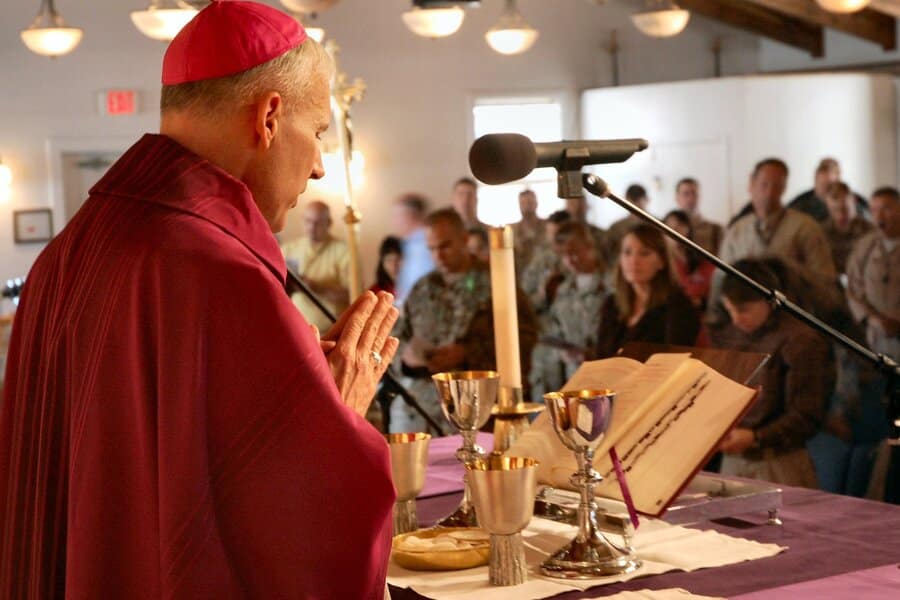
Then there were the seven combat deployments – five to Iraq and two to Afghanistan. On Good Friday 2004, one of the bloodiest days of the Iraq War, insurgents attacked a large convoy near Baghdad International Airport. As recounted in a 2010 Catholic Review profile, then-Father Spencer stood on a trash can inside a concrete bomb shelter and offered general absolution as the shelling continued.
“In the moment, you do your prayers, then move to the next situation, because it’s continuous chaos,” he said at the time. “You just offered prayers that they would see the face of God that very day and you trust and hope. We had both Iraqis and Americans die. I didn’t know who was Muslim or who was Christian – but they all got a prayer.”
Bishop Spencer also cited as especially meaningful his 12-month assignment with the Multinational Force and Observers in the Sinai Desert, a peacekeeping mission established under the leadership of President Jimmy Carter following the Camp David Accords.
“It was a true honor working with 11 nations committed toward maintaining peace between Egypt and Israel,” he said.
When Bishop Spencer was appointed auxiliary bishop with the military archdiocese in 2010, he became the first in that role authorized to enter active war zones.
Throughout his episcopal ministry, he carried a motto borrowed from Baltimore Archbishop William D. Borders, a World War II Army chaplain who had encouraged him to consider the priesthood: “I will listen that I may serve.”
Born June 10, 1951, in Sylacauga in central Alabama, Bishop Spencer first encountered the Archdiocese of Baltimore while serving as a military police officer stationed at Fort Meade during his early years as a commissioned Army officer. He entered active duty in 1974 and served several years before leaving to pursue religious life.
In 1980, drawn by a growing interest in social justice, he joined the Franciscan Order of Friars Minor as a religious brother. That experience deepened his sense of vocation and eventually led him to St. Mary’s Seminary and University in Roland Park.
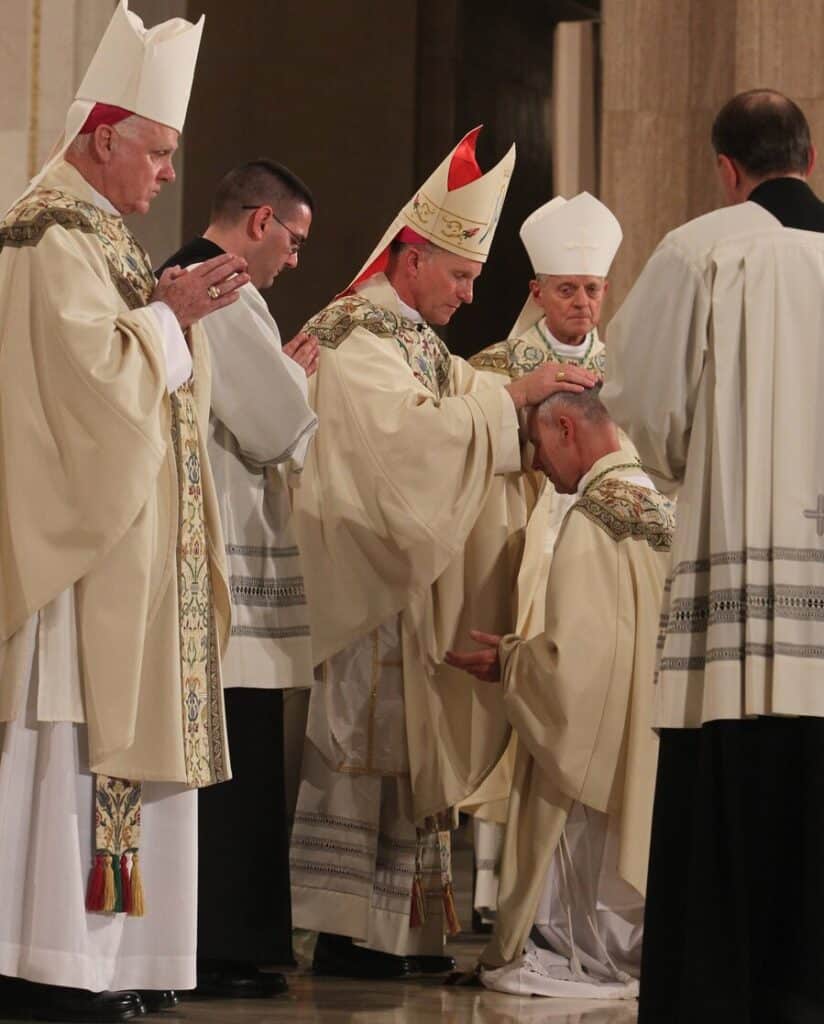
He was ordained a priest of the Archdiocese of Baltimore May 14, 1988. His younger brother, Father Robert Spencer, a priest of the Diocese of Charleston, S.C., also has a military background, having served as a U.S. Navy chaplain.
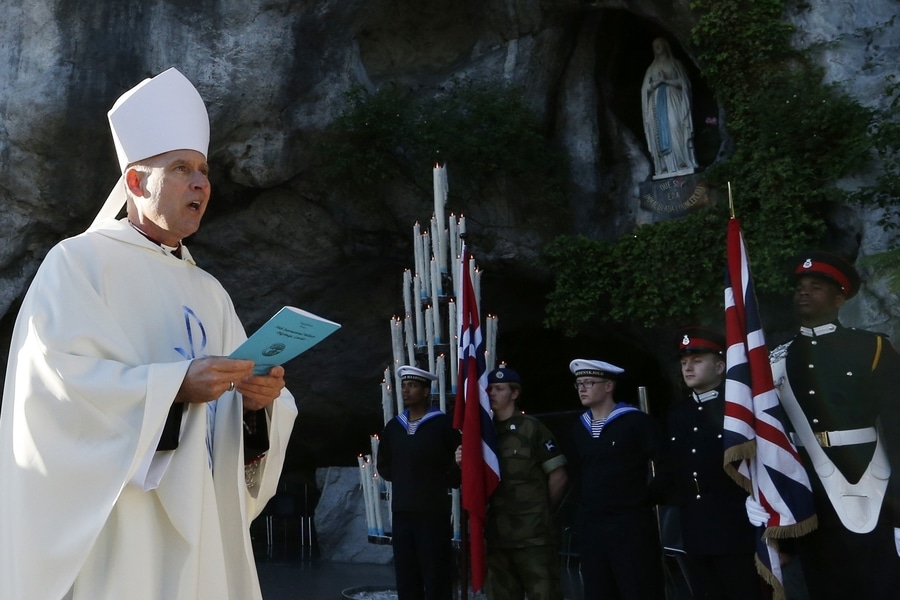
Bishop Spencer’s early priestly assignments included serving as associate pastor of Sacred Heart in Glyndon, director of the Monsignor O’Dwyer Retreat House in Sparks and pastor of St. Peter the Apostle in Oakland, the westernmost parish in the archdiocese. He later returned to military ministry as a reserve battalion chaplain and went back on active duty in 1999, serving in assignments that included Korea, Bosnia, Egypt, Germany and the Pentagon. He retired from the Army in 2014 with the rank of colonel.
In a statement released with the retirement announcement, Archbishop Broglio praised Bishop Spencer for his long service.
“He has been tireless in responding to the call and almost omnipresent in the areas of his responsibility,” the archbishop said. “No one could have asked for a more faithful, willing collaborator. While he continues to support the Archdiocese for the Military Services through his prayers and an occasional ministerial activity, I hope that he will enjoy some well-deserved rest and relaxation.”
Email George Matysek at gmatysek@CatholicReview.org
Also see:
From Baghdad to Bishop: A Soldier-Priest Called to the Front Lines of Faith (2010)
Baltimore’s Bishop Spencer installed for Military Archdiocese (2010)
Bishop Spencer honors veterans on Veterans Day (2011)
More local news

Copyright © 2026 Catholic Review Media
