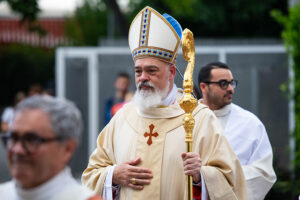
Belgian Cardinal Dominique Mathieu of Tehran-Isfahan surfaced in Rome after days of uncertainty about his whereabouts following the start of a U.S. and Israel-Iran war.
In a brief statement sent to the Belgian Catholic news site, Cathobel, Cardinal Mathieu said he arrived in Rome March 8 “not without regret and sorrow for our brothers and sisters in Iran.”
His departure from Iran, he said, was “part of the complete evacuation of the Italian Embassy, which serves as the seat of the archdiocese.”
“While waiting to return, pray for the conversion of hearts to inner peace,” he wrote.
Before his statement, Cardinal Mathieu’s whereabouts were unknown after the U.S.-Israeli-led campaign started Feb. 28. OSV News had reached out to the cardinal several times but had received no response since the start of the war.
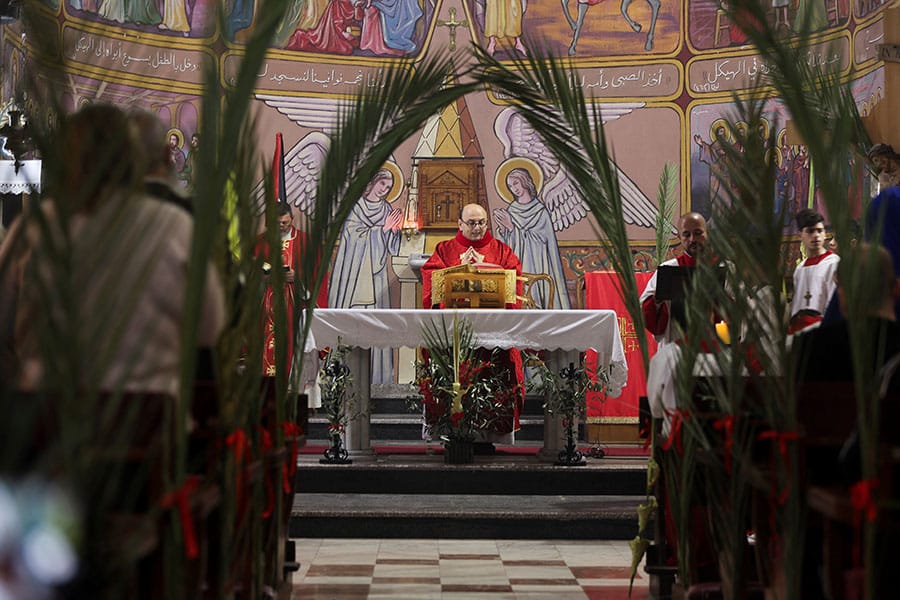
Tehran’s Cathedral of the Consolata, as well as the cardinal’s residence and administrative offices, are located on the grounds of the Italian Embassy.
Italian Foreign Minister Antonio Tajani announced March 5 that the country’s embassy in Iran would be temporarily closed.
“A group of about 50 Italian nationals led by our ambassador to Iran has crossed the border into Azerbaijan,” Tajani said, adding that embassy staff will continue to operate in the Azerbaijani capital of Baku.
“We are keeping diplomatic relations with Tehran open, in order to protect the Italians there and our national interests,” he wrote on X.
It is unknown whether the cardinal traveled with the group before his arrival in Rome, and OSV News is awaiting a response from both the Italian Foreign Ministry and the Franciscan General Curia in Rome regarding the circumstances of Cardinal Mathieu’s return.
According to Cathobel, Cardinal Mathieu is expected to meet with Vatican officials to brief them on the situation in Iran. OSV News reached out to the Vatican press office to confirm if the cardinal is expected to meet with officials, as well as with Pope Leo. By publication time, the Vatican had not responded.
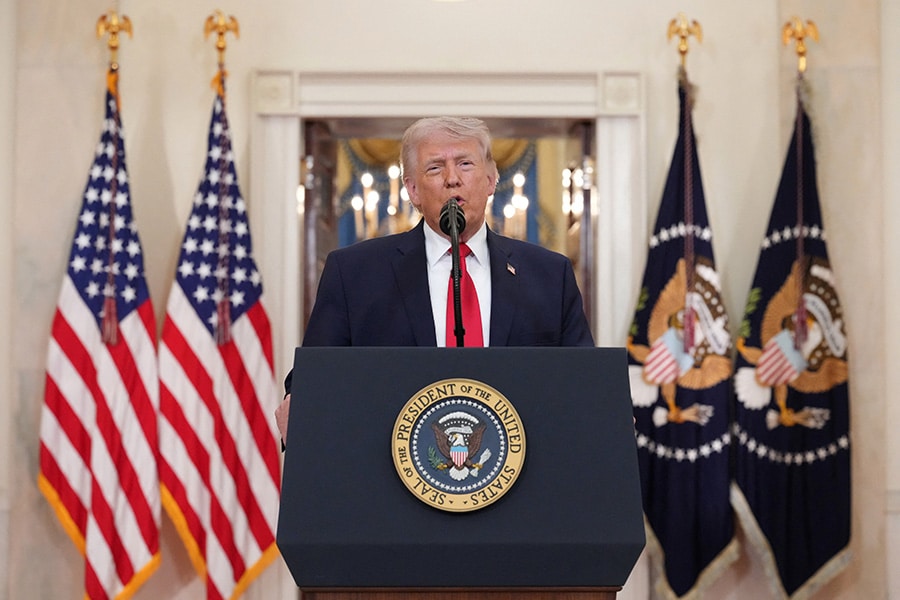
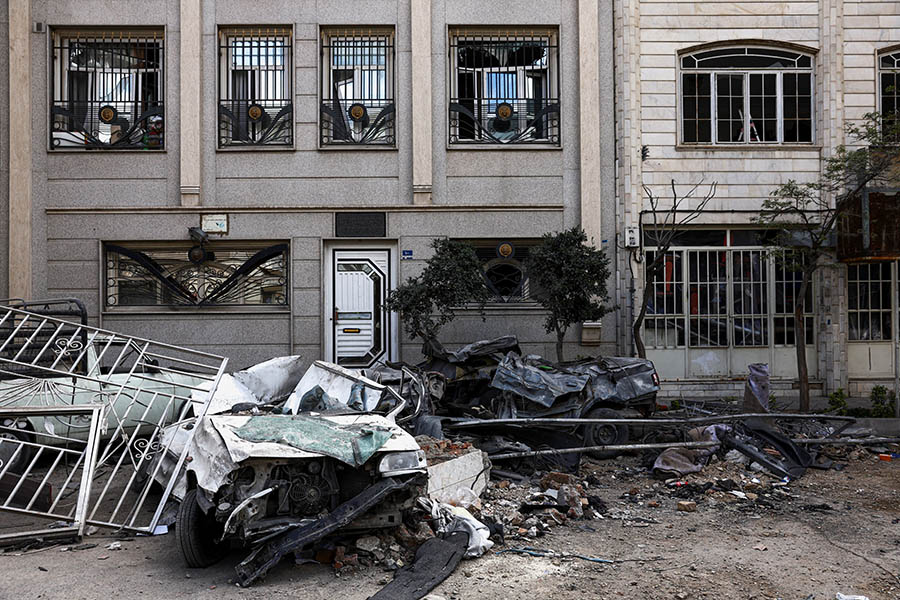
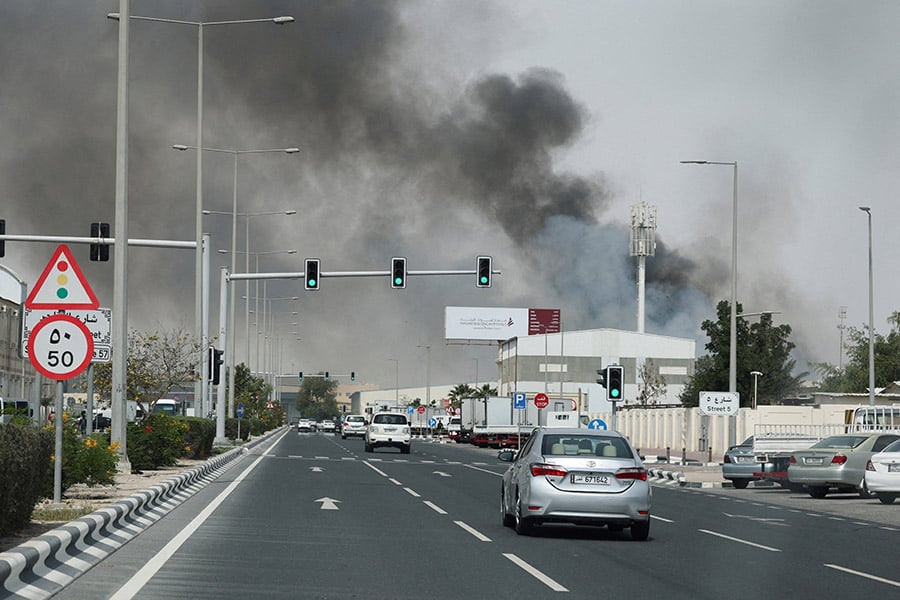
The war in Iran began Feb. 28 when the United States and Israel launched joint strikes aimed at destroying Iran’s nuclear and missile programs and weakening the country’s leadership, which they accuse of threatening Israel and destabilizing the region.
The U.S. and Israel gave similar reasons for their joint attacks on Iran in 2025.
In an interview with OSV News in July, following the 12-day war between Israel and Iran, Cardinal Mathieu said the rise of populist nationalism had led to “more barriers and increased armament, justified by fears of actual or potential attacks.”
“This leads to a climate where pre-emptive or preventive aggression is justified, and the notion of the other as a brother or sister to love diminishes,” he said. “Negotiations are often based on power balances rather than sincere dialogue and mutual understanding.”
“It is troubling to hear the idea of ‘obtaining peace by force,’ where violence becomes the only means of addressing conflicts,” Cardinal Mathieu told OSV News in July.
With the war now in its second week, the U.S. and Israel continued strikes against Iran, as well as in southern Lebanon, where a Maronite Catholic priest was killed March 9 by Israeli artillery fire.
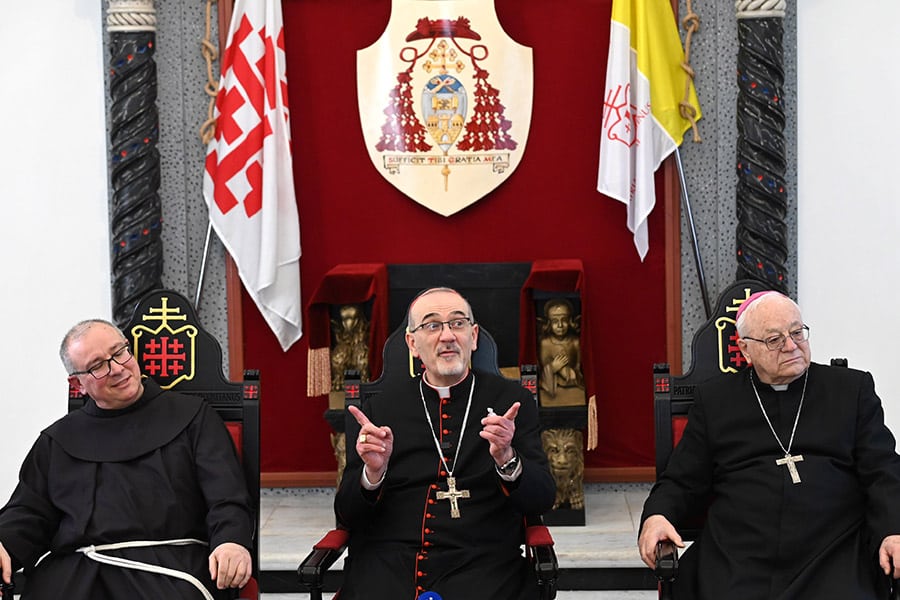
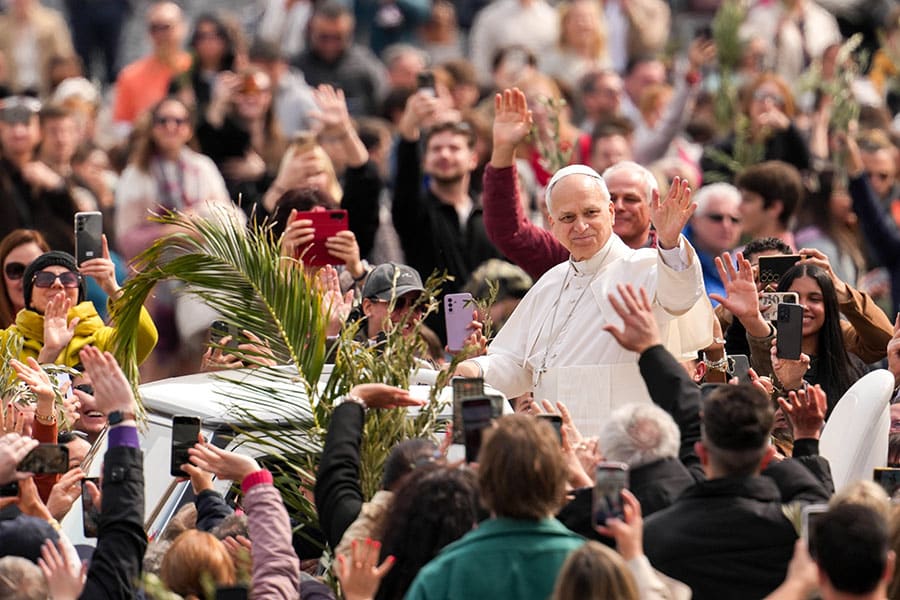
The killing of Father Pierre al-Rahi prompted a statement from the Vatican press office expressing Pope Leo XIV’s “profound sorrow” for victims of the Middle East, including the Maronite priest and “the many innocent people, including many children, and for those who were providing them with aid.”
Read More Conflict in the Middle East
Copyright © 2026 OSV News
