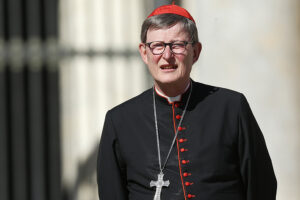
Cardinal Rainer Maria Woelki of Cologne bid his farewell to the German Synodal Way and said he won’t participate in the upcoming sixth assembly, starting Jan. 29.
“For me, the Synodal Way is over,” he said in an interview with the German Church’s Domradio. Originally, five sessions had been agreed upon, “and I participated in those,” he said.
A theological clarification of the project, begun in 2019, is urgently needed, Cardinal Woelki argued, adding: “I am truly convinced that all those involved — including those of the Synodal Way — ultimately want what is best for the Church.”
However, the path to achieving this is viewed differently, he pointed out.
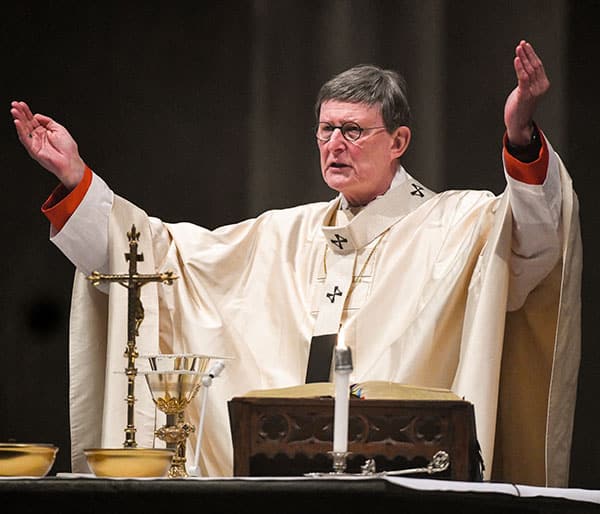
The German Synodal Way was launched as a reform process in response to a 2018 report known as the Mannheim, Heidelberg and Gießen study, or MHG, which documented widespread sexual abuse by clergy in Germany between 1946 and 2014. The findings sparked public outrage and pressured the German bishops to address systemic failures within the Church. Originally planned as a two-year initiative, the Synodal Way was extended because of the COVID-19 pandemic and ultimately concluded in 2023.
Its stated aim was to examine issues such as the exercise of power in the Church, sexual morality, priestly life and the role of women, against the backdrop of the abuse crisis.
However, the process quickly became controversial, particularly due to calls to revise longstanding Church teachings on homosexuality, women’s ordination and priestly celibacy.
Bishops from around the world warned that the Synodal Way risked separating German Catholics from the universal Church, arguing it relied too heavily on sociological and political ideologies rather than Scripture and tradition.
In 2022, the Vatican formally stated that the Synodal Way had no authority to change doctrine or governance, a move that German Church leaders publicly criticized. Pope Francis himself expressed serious concern, warning that the process was driven by elites and ideology rather than the Holy Spirit, comments that further deepened tensions between Rome and the German bishops.
Cardinal Woelki told Domradio that he had the impression “that, from a certain point onward, the Synodal Path in Germany became primarily about implementing certain church-political positions” and that one cannot discuss everything without preconceived notions. “To give a deliberately far-fetched example: We cannot vote on whether Jesus rose from the dead,” the Cologne prelate said.
The late Pope Francis, as well as his successor, Pope Leo XIV, “repeatedly emphasized that synodality is a spiritual process, a tool for evangelization.” According to this understanding, synodality without evangelization is “simply inconceivable,” Cardinal Woelki told Domradio.
The synodal assembly therefore “is not tasked with evaluating what an individual local bishop or diocese has implemented from the decisions of the Synodal Way.”
For the cardinal, synodality means “listening carefully to one another; everyone can contribute their perspective. And above all: listening together to what the Holy Spirit tells us, deliberating and discerning together.”
The decision, however, ultimately rests with “the one who has been entrusted with the office,” the archbishop of Cologne emphasized. In the Catholic Church, the bishop has “an ultimate decision-making power for his diocese, a power conferred upon him by Christ himself.”
“I promised to protect the faith of the Church and to walk the path in my diocese in unity with the pope. I intend to continue to uphold this promise,” the cardinal said, adding that at the same time, he finds it “difficult to accept the idea of being part of a body in which 27 diocesan bishops, 27 members of the Central Committee of German Catholics (ZdK), and another 27 members yet to be elected deliberate and decide together.” And that, ultimately, is what the Synodal Way is about — “even if attempts are made to phrase it differently,” he pointed out.
Cardinal Woelki described the current polarization within the German bishops’ conference as burdensome, saying: “The tensions trouble me because I don’t want to suggest that anyone doesn’t want what’s best.” He also emphasized the importance of maintaining dialogue.
Commenting on the global political situation, the cardinal said: “Where might makes right, society and morals become brutalized. Human dignity is violated, and personal rights are disregarded. This leads to a dehumanized society.”
Cardinal Woelki concluded the interview by stressing the need to reestablish a common set of values: “Dialogue instead of violence, reliability, protection of the vulnerable, solidarity and justice.”
The story was originally published by KNA, a German Catholic news agency. OSV News contributed to this report.
Read More Child & Youth Protection
Copyright © 2026 OSV News
