(OSV News) — Catholic leaders across the nation are continuing to express their shock and concern over the Trump administration’s plans to livestream a military execution.
Questions over the move span military and civil law, Church teaching, morality and human rights, as well as the psychological impact of broadcasting a state-sponsored killing.
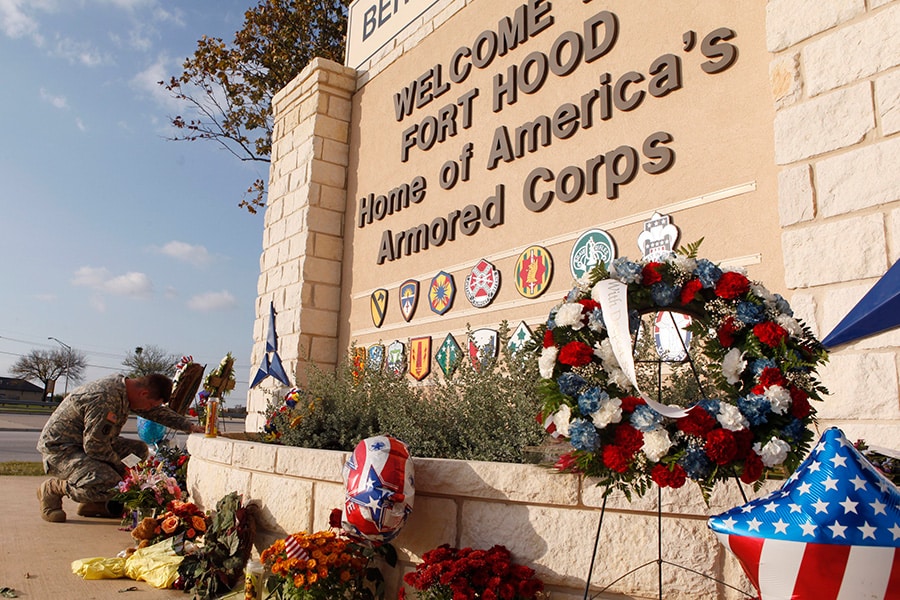
Former army psychiatrist Nidal Malik Hasan, convicted of the 2009 killing of 13 persons and injuring 32 others at Fort Hood in Texas, is set to be executed by firing squad Dec. 3.
Defense Secretary Pete Hegseth announced the execution of the wheelchair-bound Hasan would be livestreamed, although President Donald Trump has since expressed possible uncertainty about the plan he told reporters he approved.
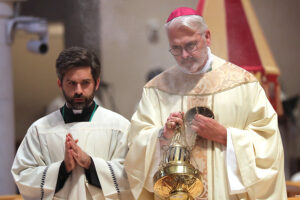
News of the livestreaming sparked shock and swift condemnation, with multiple U.S. Catholic bishops denouncing the plans as “barbaric.”
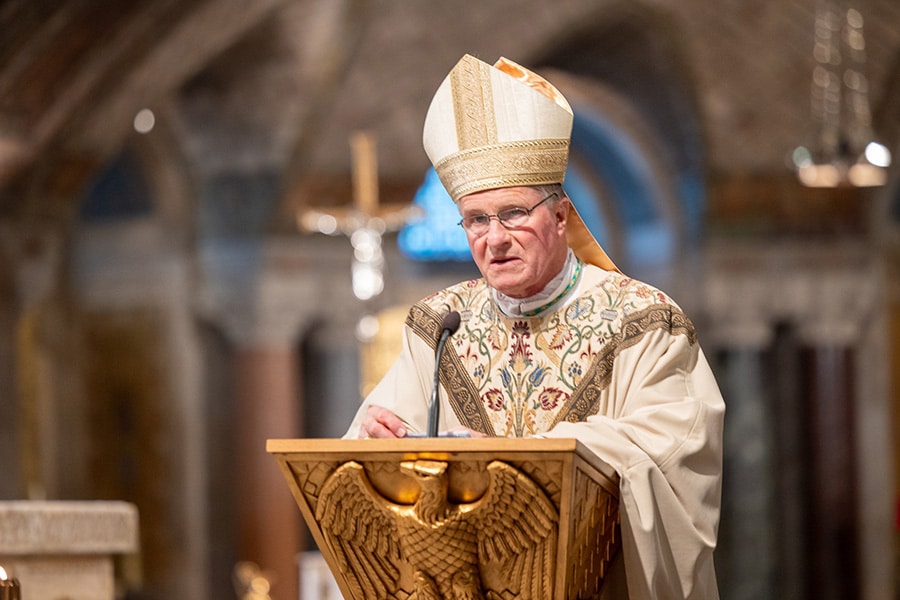
Archbishop Timothy P. Broglio of the Archdiocese for the Military Services, USA, said in a lengthy Oct. 12 statement, shortly after meeting with Pope Leo XIV, that the livestreamed execution amounted to a “public spectacle of barbarically killing our adversaries,” and obliged “any Catholics assigned to the firing squad to request to be excused from this action contrary to the teaching of the Church.” His response followed the Oct. 9 statement from Archbishop Paul S. Coakley of Oklahoma City, president of the U.S. Conference of Catholic Bishops, who denounced the livestreaming as “a barbaric promotion of a culture of death” that would “only further undermine the moral fabric of our nation and be a blight on the conscience of its people.”
“Public execution is what was done to Our Lord, not what he wills us to do,” Metropolitan Archbishop Borys A. Gudziak of the Ukrainian Catholic Archeparchy of Philadelphia told OSV News in a statement. “It is a grisly, lurid, and repulsive intention.” Describing the planned livestream as “unequivocally contrary to the Gospel” and “the last thing our country and society needs,” he added, “We are called to foster a culture of life, not the culture of death.”
Theologian and bioethicist Charles Camosy, associate professor at The Catholic University of America, said the planned livestreaming of the execution recalls “days gone by we’ve only seen in movies — the public executions that were attended broadly by the people.”
The last two public executions took place in the U.S. in 1936 and 1937. In 1936, nearly 20,000 people gathered to watch the hanging of Rainey Bethea in Owensboro, Kentucky, for rape and murder. State lawmakers in the U.S. were shocked by reports of the execution’s carnival atmosphere and moved to ban public executions. The last public execution took place the following year, with 500 people in attendance, in rural Stone County, Missouri.
“I thought that was of a time that we had left,” but “it’s back with us now,” said Camosy.
He lamented the “cheapness of human life” and “the failure of a pro-life movement that says all human life, regardless of circumstances, is valuable and dignified, and ought not to be subjected to this kind of spectacle.”
Ken Butigan, co-director of the Catholic Institute for Nonviolence and a retired professor of the practice in peace, justice, and conflict studies at DePaul University, pointed to updated Church teaching on the death penalty.
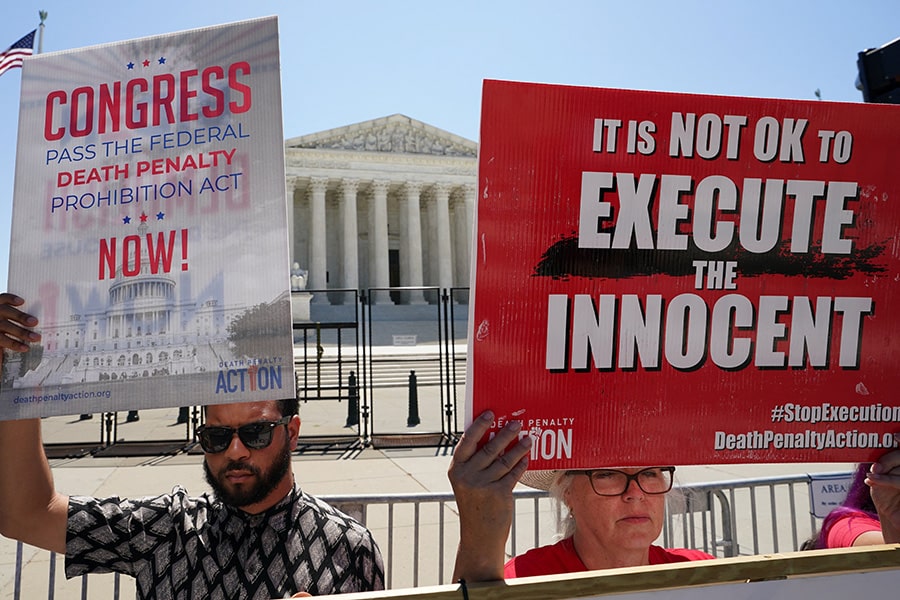
Pope Francis revised the Catechism of the Catholic Church in 2018 to clarify the Church’s teaching that capital punishment is morally “inadmissible” in the modern world “because it is an attack on the inviolability and dignity of the person.”
The late pope relied upon the teaching of St. John Paul II, who in the 1995 encyclical “Evangelium Vitae” (“The Gospel of Life”) addressed capital punishment. He found the case of authorities having to resort to the death penalty “when it would not be possible otherwise to defend society” were so rare as to be “practically non-existent” due to the modern penal system.
The saint restated the controlling moral principle from the Catechism: “If bloodless means are sufficient to defend human lives against an aggressor and to protect public order and the safety of persons, public authority must limit itself to such means, because they better correspond to the concrete conditions of the common good and are more in conformity to the dignity of the human person.”
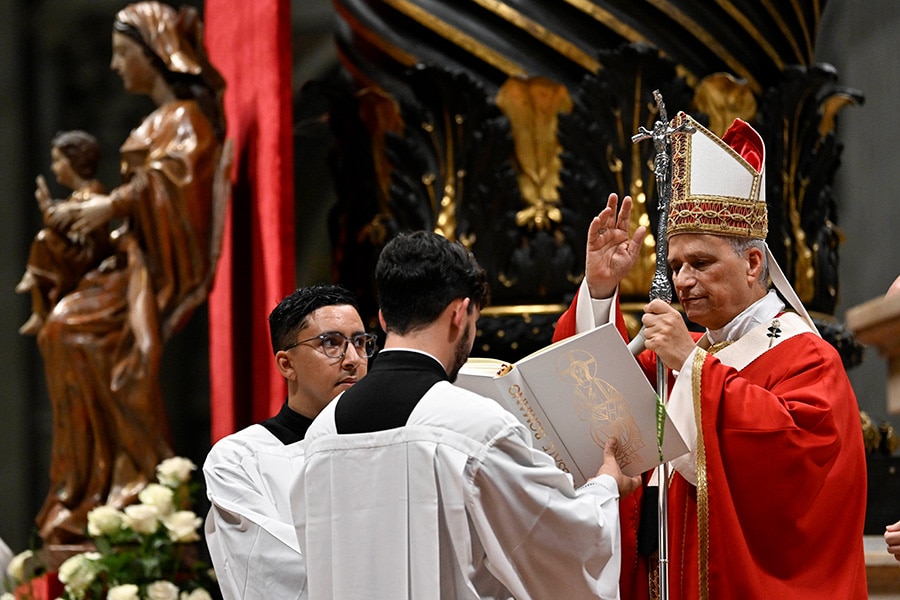
The teaching on the death penalty being morally “inadmissible” in the modern world was reiterated by Pope Leo XIV in an Oct. 10 X post for the World Day Against the Death Penalty.
“I believe we’re at a crossroads, and we can choose a new direction beyond violence,” said Butigan. “One way we can do that is to refuse to cooperate with this execution.”
Annie Phoenix, executive director of the Jesuit Social Research Institute at Loyola University New Orleans, noted that “the precondition of doing violence to any person or group of people is dehumanization.”
“So we dehumanize others in order to do violence to them,” she said. “In order to watch and to encourage other people to watch violence, we have to dehumanize the people that we’re enacting violence upon.”
Phoenix said students in her courses, many of which focus on violence in the history of the United States, have drawn “connections to lynching” with regard to the planned livestreamed execution of Hasan.
“Obviously it’s not a one-to-one connection in terms of race,” she explained. “But the fact that we would, as a country, have a government condone a public killing and ask for people to watch it really hearkens back to a very disturbing part of our history as a nation, and it’s something that should give everyone great concern. Healthy democracies don’t kill people in the public square.”
And, she said, “I think it’s doing damage to our souls. We are not meant to watch the killing, the maiming, the hurting of other people.”
Her students, most of whom are 18 years old, “are struggling to understand why, frankly, the adults in the room are acting this way.”
Mary Graw Leary, a former federal prosecutor and now professor at The Catholic University of America Columbus School of Law, raised questions as to the legality — as well as the efficacy — of the planned livestreaming.
“I find it very troubling that the military would consider doing this,” she said.
Leary also said that “there’s pretty strong evidence that the severity of punishment is much less a deterrent to crime than other factors, including the surety of punishment.”
Of the “four main theories of punishment” — specific deterrence, general deterrence, physical incapacitation of an offender, and retribution — “none of them appear to be served by this.”
Other legal experts have also cast doubt on the legal viability of the livestreamed execution in terms of both military law and federal law as a whole.
Daniel Maurer — a retired Army lieutenant colonel and now an associate professor at Ohio Northern University’s Pettit College of Law — concluded in an Oct. 11 analysis for Georgetown Law’s Center on National Security that the broadcast would likely violate the Eighth Amendment’s prohibition of “cruel and unusual punishment.”
“We know — and the Department of Justice has lots of literature on this — that exposure to violence is traumatic,” Leary said. “So the only thing that the Pentagon would be doing is exposing people to trauma.”
Read more respect life

Copyright © 2026 OSV News
