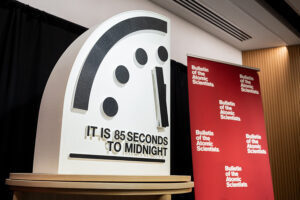
The Doomsday Clock — a model indicating how close humanity is to self-destruction through its own technologies — has edged to 85 seconds to midnight, its sponsoring organization announced Jan. 27.
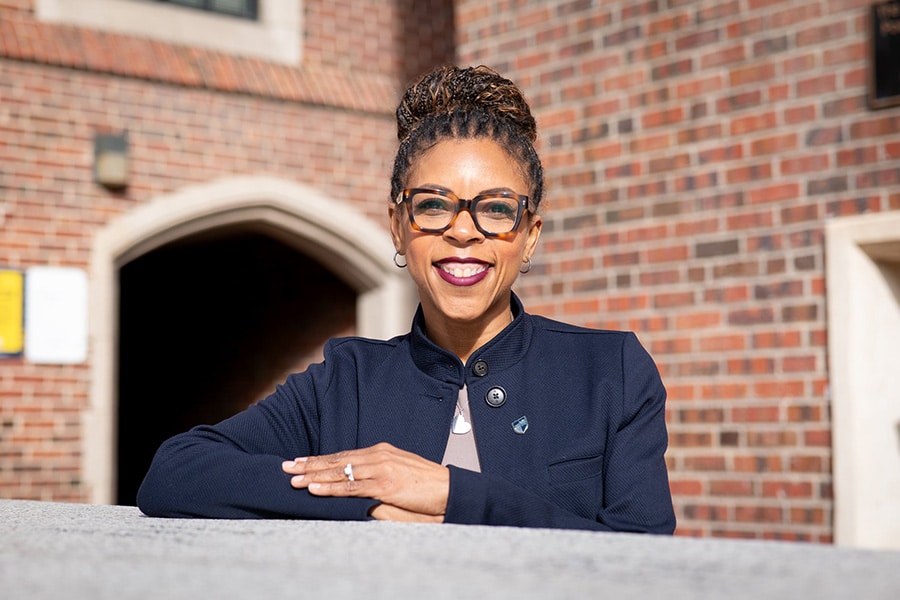
The message of the clock “cannot be clearer,” said Alexandra Bell, president and CEO of the Bulletin of the Atomic Scientists, which was founded in 1945 by Albert Einstein, J. Robert Oppenheimer and University of Chicago scientists who developed the first atomic weapons.
The urgent concerns behind the clock’s overall warning — encompassing nuclear, biological, environmental, technological and societal issues — have been increasingly highlighted in recent months by a number of Catholic leaders, including Pope Leo XIV.
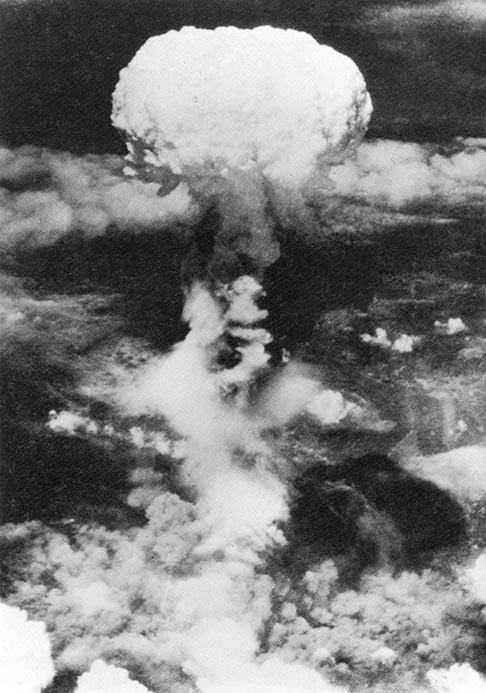
Created in 1947, the Doomsday Clock is both “a reminder of the world’s vulnerability to catastrophe and a symbol that there is still time left to act,” said the Bulletin in a Jan. 27 press release.
The clock’s time is determined each year by the nonprofit Bulletin’s science and security board in consultation with its sponsor board, whose members include eight Nobel Prize laureates.
In 2025, the clock stood at 89 seconds to midnight. Its arms were their farthest, at 17 minutes to the hour, in 1991, when the U.S. and the former Soviet Union signed the Strategic Arms Reduction Treaty, by which the two countries pledged significant downsizing of their strategic nuclear weapons arsenals.
In a Jan. 27 statement, Bell said, “Catastrophic risks are on the rise, cooperation is on the decline, and we are running out of time. Change is both necessary and possible, but the global community must demand swift action from their leaders.”
The Bulletin noted in its announcement that “growing nuclear weapons threats, disruptive technologies like artificial intelligence (AI), multiple biological security concerns, and the continuing climate crisis” were all “major factors” in repositioning the clock’s arms for 2026.
Those challenges have been compounded by “another frightening development,” specifically, “the rise of nationalistic autocracies in countries around the world,” said Daniel Holz, professor of physics, astronomy and astrophysics at the University of Chicago, in a statement included in the Bulletin’s press release.
“Our greatest challenges require international trust and cooperation, and a world splintering into ‘us versus them’ will leave all of humanity more vulnerable,” said Holz, who chairs the Bulletin’s science and security board.
In July, Cardinal Silvano Maria Tomasi, a longtime Vatican diplomat and disarmament advocate, joined Holz and other scientists at the Nobel Laureate Assembly for the Prevention of Nuclear War held at the University of Chicago. In an address during the three-day gathering, Cardinal Tomasi said that religious communities can “contribute to the global architecture of disarmament and restraint” in several “specific ways” that foster dialogue, prevention and accountability.
2021 Nobel Peace Prize laureate Maria Ressa said in the Bulletin’s Jan. 27 news release, “We are living through an information Armageddon—the crisis beneath all crises—driven by extractive and predatory technology that spreads lies faster than facts and profits from our division.”
“Without facts, there is no truth. Without truth, there is no trust. And without these, the radical collaboration this moment demands is impossible,” Ressa said, noting “we cannot solve problems” that “we cannot agree exist.”
She also urged “rebuilding our shared reality.”
The Bulletin’s official statement on the clock, issued under the direction of editor John Mecklin, cited a “failure of leadership” for the indicator’s updated status.
“A year ago, we warned that the world was perilously close to global disaster and that any delay in reversing course increased the probability of catastrophe,” said the statement. “Rather than heed this warning, Russia, China, the United States, and other major countries have instead become increasingly aggressive, adversarial, and nationalistic.”
The statement lamented that “hard-won global understandings are collapsing, accelerating a winner-takes-all great power competition and undermining the international cooperation critical to reducing the risks of nuclear war, climate change, the misuse of biotechnology, the potential threat of artificial intelligence, and other apocalyptic dangers.
“Far too many leaders have grown complacent and indifferent, in many cases adopting rhetoric and policies that accelerate rather than mitigate these existential risks,” said the statement.
The Bulletin also noted, “Even as the hands of the Doomsday Clock move closer to midnight, there are many actions that could pull humanity back from the brink.”
Among those actions are renewed U.S.-Russia dialogue on limiting their nuclear arsenals and an observance by all nuclear powers of the moratorium on explosive nuclear testing.
Other steps include investment in renewable energy away from fossil fuels, international cooperation on reducing the threat of AI-generated biological threats such as “mirror life,” and multilateral dialogue among the U.S., China and Russia to regulate the military use of AI, “particularly in nuclear command and control systems,” said the Bulletin in its statement.
A link to the Bulletin’s statement can be found here: https://thebulletin.org/doomsday-clock/2026-statement/
Read More World News


Copyright © 2026 OSV News
