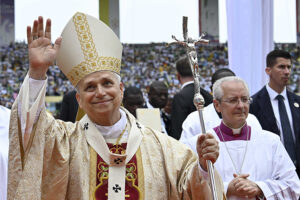
(OSV News) — Roughly two months before celebrating a year on the throne of Peter, Pope Leo XIV became one of the most quoted global leaders on the planet.
Papal diplomacy all the sudden became trendy. Be it the media spin obsessed with President Donald Trump or the Western angles of world newsrooms, for those that know him well, speaking God to power is nothing new in Pope Leo XIV’s pastoral strategy.
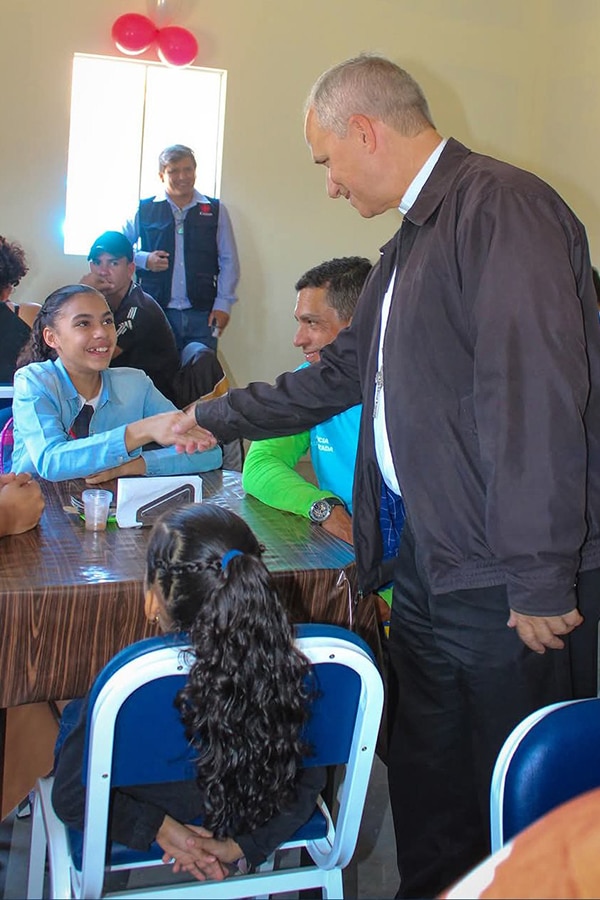
When he was a young Father Robert Prevost in Peru and then bishop in Chiclayo, he did the same — even if the scale was smaller than the global stage.
“The pope is a man of deep prayer and contemplation of reality, a lover of the Gospel,” said Armando Jesús Lovera Vásquez, who lived with Father Prevost at an Augustinian formation house in Peru for seven years. “From this perspective, I was not surprised that he called on us to seek peace and to denounce everything that threatens it.”
According to the Peruvian, who wrote the book “From Robert to Pope Leo,” the pontiff is a person “whom God has been shaping through his ministry, and I believe he is the pope for these times, by the grace of God. He is a son of St. Augustine, who allows himself to be moved by the Spirit.”
Lovera knew then-Father Prevost, who was first in Peru as a missionary during the convoluted 1990s. The young priest, his friend recalls, was not afraid in the face of the country’s severe challenges of the times.
During the late 1980s and early 1990s, Peru was facing internal war against insurgent groups. The military became extremely influential as civilian governments struggled to control the violence. Human rights abuses followed declaring emergency zones and as armed forces were given expanded powers, especially in rural areas.
The biggest driver of instability was the Maoist guerrilla group Shining Path that launched a violent insurgency starting in 1980, aiming to overthrow the state. Their tactics included bombings, assassinations and attacks on infrastructure.
No part of the country was untouched by the conflict, but the worst violence was concentrated in the Andean highlands, particularly in the Ayacucho region, where guerilla and government forces vied to control the native populace through terror.
In 1990, Alberto Fujimori was elected president as a political outsider, promising to resolve Peru’s deep economic crisis and escalating violence. On April 5, 1992, he carried out a self-coup, dissolving Congress, suspending the constitution and taking control of the judiciary with the backing of the military. Fujimori justified these extraordinary measures as necessary to defeat terrorism and stabilize the economy, ultimately leveraging this climate of crisis to legitimize a shift toward authoritarian rule.
After more brief periods of missionary work in Peru, then-Father Prevost began serving the Archdiocese of Trujillo for nine years as its judicial vicar in 1989; at the time he was also a professor of canon, patristic and moral law in the San Carlos e San Marcelo Major Seminary.
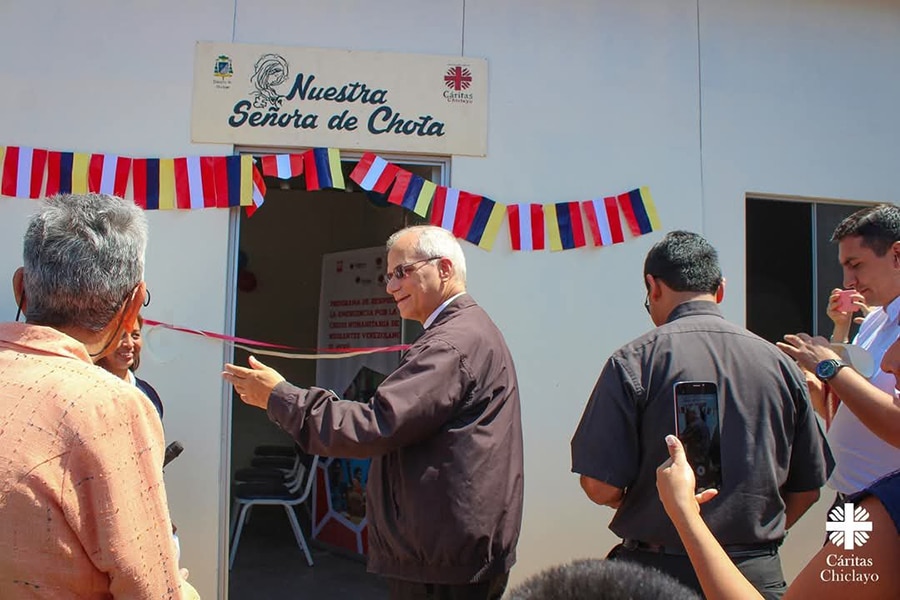
“(Father Prevost) advocated for democracy and the defense of human rights, and later, as a bishop, when he returned to Chiclayo, he had to mediate between the peasants and the mining companies,” Lovera said. “He has a well-established track record of defending human rights and justice, and hence it’s not surprising to hear his invocation, which is nothing other than an emphasis on the Gospel’s proclamation: “Blessed are the peacemakers.”
Speaking aboard the papal plane en route from Rome to Algiers, the pope said that he had seen Trump’s recent social media post lashing out at him the night before the papal trip. As tensions escalated in the Middle East and after more than a month of appeals for peace from Pope Leo, Trump lashed out at the pope April 12, calling him “weak on crime” and “terrible for foreign policy.”
“I have no fear neither of the Trump administration nor speaking out loudly of the message of the Gospel, which is what I believe I am here to do, what the Church is here to do,” the pope said during the flight in a video recorded by OSV News.
Speaking before the late night presidential post on Truth Social, Janina Sesa, who worked closely with then-Bishop Prevost as the head of Caritas in the Diocese of Chiclayo, echoed Lovera: “He always defends justice and peace. He does not stay silent.”
In Chiclayo, a coastal diocese shaped by poverty, migration and periodic natural disasters, Bishop Prevost’s leadership was tested not in theory but in crisis.
During the COVID-19 pandemic, as oxygen shortages turned deadly, he stepped beyond the traditional boundaries of ecclesial leadership to mobilize the wider community.
“He could have stayed in what belonged to the Church — spiritual support,” Sesa said. “But he acted.”
For those who witnessed it, the episode revealed a pattern that has carried into his pontificate: a leader who listens first, but who does not hesitate to act — or to speak — when human dignity is at stake.
That same instinct was visible beyond the pandemic.
Father Jorge Millán Cotrina, rector of Chiclayo’s cathedral, recalled how Bishop Prevost addressed local authorities during emergencies such as the flooding caused by El Niño, always with a focus not on politics but on people.
“In his mind are Christ and the human person,” the priest said. “That is what he defends.”
For Father Millán, that framework explains the pope’s current interventions on global conflicts.
“He is not speaking as a politician,” he said. “He is speaking from the Gospel.”
Lovera, who spoke with OSV News twice — before and after the latest exchange between the successor of Peter and the president, defined Leo as someone who is respectful, “but courageous,” insisting that in Peru the pontiff “lived many situations where he had to take a stand.”
At the same time, those close to him emphasize that his willingness to speak does not come from impulsiveness.
“He is not someone who reacts quickly,” Lovera added. “He listens, reflects, and then acts.”
That process, echoed by priests who worked with him in Chiclayo, helps explain the tone that has marked his early pontificate: measured, but firm.
That distinction — between reaction and conviction — is key to understanding the pope’s recent exchange with Trump, those who know him say.
“He does not speak to confront,” Sesa said. “He speaks when something touches the dignity of people.”
The pope himself has insisted as much, telling reporters that his calls for peace “are not meant as attacks on anyone,” but rather as part of the Church’s mission in a world marked by suffering and conflict.
For Father Millán, that clarity is not new — only more visible.
“Now the whole world sees it,” he said days before the U.S. president openly attacked Pope Leo, but the pontiff had already warned against “the idolatry of self and money! Enough of the display of power! Enough of war!” during the April 11 prayer vigil at the Vatican.
Father Millán pointed to a consistent pattern: When Bishop Prevost assumed responsibility, he did so fully, without dividing his attention.
“When he was bishop of Chiclayo, he was completely for Chiclayo,” the priest said. “Now he is completely for the Church.”
That total commitment, he suggested, requires a certain freedom — including the freedom to speak when necessary, regardless of the audience.
For those who knew him before Rome, the current moment is less a departure than an unveiling.
The man who once drove dusty roads to reach remote communities, who quietly enrolled in language classes to better serve Indigenous faithful and who rallied a city to confront a pandemic is now addressing a global audience — with the same priorities.
“He is guided by the Gospel,” Sesa said. “That has not changed.”
And if that means entering uncomfortable territory, those who know him best say, he will not hesitate.
“He is not afraid,” Lovera said. “But he is not looking for conflict either.”
Instead, they say, Pope Leo XIV is doing what he has always done — only now on a larger stage: listening, discerning and, when necessary, speaking with clarity.
“He believes someone has to say there is a better way,” Sesa said.
Read More Vatican News
Copyright © 2026 OSV News
