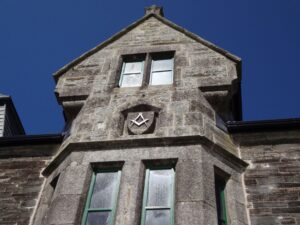
Q: As a parish priest, I found your recent article on the Church’s teaching on Freemasonry interesting, and I have a follow-up question: How can one deal pastorally with parishioners who are quick to suspect people of being Freemasons? I can think of one or two parishioners who are convinced the Vatican is infiltrated by Freemasons, and anybody in Church life they in any way disagree with must be a Freemason. They can be frustrating, as it’s hard to argue with them without them turning around and saying that you must be a Freemason! (Ireland)
A: As I’m sure you already know, it’s not really possible to give a one-size-fits-all answer to a pastoral question. The “right answer” is always going to depend on the needs and capacity of the individual person, the tone and tenor of your previous relationship (or lack thereof) with them and even the local cultural context.
Still, I can imagine how frustrating it must be to minister to the overly suspicious in general, and to those who are quick to suspect other people of being Freemasons in particular.
I suppose a first line of approach — which granted, it sounds like you may have already tried — might be to combine some basic catechesis with an appeal to commonsense based logical reasoning.
For instance, it could be helpful to start off by acknowledging that the Church does indeed forbid the faithful from joining Masonic groups or otherwise being involved in Freemasonry, and that this is an offense that is clear-cut and serious enough so as to involve some serious canonical consequences.
But at the same time, it can be pointed out that the Church does not expect the rest of the faithful to concern themselves with “rooting out” suspected Freemasons. (Additionally, at least in the United States, individuals involved in Freemasonry generally do not treat this fact as a closely guarded secret anyway.)
You can remind them that on the level of basic human and Christian virtue, it’s never a good idea to jump to conclusions, or accuse someone of a crime and to speculate on their potential guilt, without some firm, concrete evidence. Likewise, most mature adults should be able to grasp the idea that a difference of opinion doesn’t necessarily make the person they disagree with wicked or evil.
With respect to leaders in the Church, it’s entirely possible for clergy to express controversial opinions, or even in principle to make imprudent decisions in governance, without those opinions or problematic decisions being of a character specific to Freemasonry. If the person with whom you are in dialogue is convinced that a Church leader they dislike is a Freemason, you could try asking something like: “Did they do anything in particular that makes you suspect they are actually tied to a Masonic group specifically, as opposed to maybe just being wrong or mistaken on certain issues?”
But if the person you are speaking to is unwilling or unable to reason things out in this way, perhaps it could be helpful to frame it in terms of spirituality. That is, you might encourage them to pray and fast for the conversion of any and all Freemasons, known and unknown.
You could point out that, regardless of whether or not the suspected Freemasons are indeed Freemasons, these kinds of spiritual works of mercy will always do much more for the good of the Church than focusing on rumors, speculation or gossip.
Finally, you can also underscore that, at the end of the day, the Church will always be providentially guided by the Holy Spirit. Of course in the Church’s history there have been bad priests, bishops and even popes, but Jesus did explicitly promise us that the gates of hell would never prevail against his Church (Mt 16:18).
As Catholics, we aren’t required to like or personally admire all individual members of the clergy, but we are called to respect the governing offices that Christ himself established.
Read more
Copyright © 2026 OSV News
