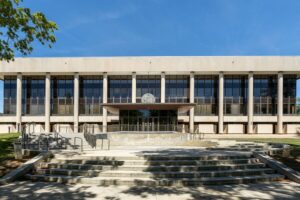
The Maryland Supreme Court has ruled unanimously that certain people named in the April 2023 report by the Office of the Attorney General cannot be named publicly.
The high court reversed lower-court decisions that would have allowed publicizing the names of individuals identified through grand jury material who were never charged with crimes.
The report related to an investigation of allegations of sexual abuse within the Archdiocese of Baltimore dating back to the 1940s. The attorney general used grand jury subpoenas to obtain hundreds of thousands of documents from the archdiocese.
“OAG did not summon any witnesses to the grand jury that issued the subpoenas, nor did the grand jury issue any indictments,” said the opinion issued by the court April 27.
Instead, the result of the investigation was a report, drafted by the Office of the Attorney General, which widely criticized the archdiocese, including clergy and laypeople who did not abuse children but who, in the attorney general’s view, did not do enough to prevent it.
The publication of the report fueled the passage of the Child Victims Act by the state legislature, which removed the statute of limitations for civil suits for damages of child sexual abuse. That law led to the archdiocese filing for Chapter 11 bankruptcy reorganization in September 2023, anticipating hundreds of potential lawsuits.
The Supreme Court opinion noted that the OAG was allowed to investigate the archdiocese.
The court’s decision hinged on longstanding principles of grand jury secrecy and how material gathered there can be used. The attorney general argued that it was in the public interest to release the names of those it alleged did not perpetrate abuse but knew about it.
Yet the court, in an opinion written by Justice Jonathan Biran, said, “Reputational harm to an uncharged person may well be more severe when criticism comes from the prosecutor that led a grand jury investigation than when it comes from the grand jury itself.”
The opinion further said: “We do not minimize the harm that so many children suffered at the hands of clergy and others within AOB. Nor do we discount the interest of the public in understanding the history of child abuse in AOB and other institutions. Investigative journalism, criminal prosecutions and civil actions have exposed much of what went on within AOB.”
In its conclusion, the opinion said, “A court may not order disclosure of secret grand jury material, over the objection of an uncharged individual, for the purpose of holding that person accountable in the court of public opinion.”
Christian Kendzierski, executive director for communications for the archdiocese, said, “The archdiocese respects the decision of the Maryland Supreme Court, which affirms longstanding grand jury practice that protects the rights of individuals. Such protection prohibits the attorney general from publicly naming individuals who were neither accused of, nor indicted for, crimes without any meaningful opportunity to defend themselves.
“The court’s decision affirms that the attorney general’s efforts to disclose the names of individuals who stand accused of no crime would violate state law surrounding grand jury proceedings and result in serious reputational harm,” Kendzierski said.
Aleithea A. Warmack, deputy communications director for the OAG, said the office declined to comment about the ruling.
Email Christopher Gunty at editor@CatholicReview.org
Also see
Copyright © 2026 Catholic Review Media
