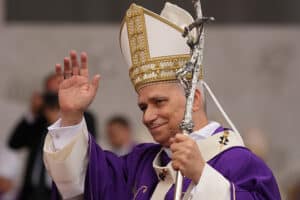
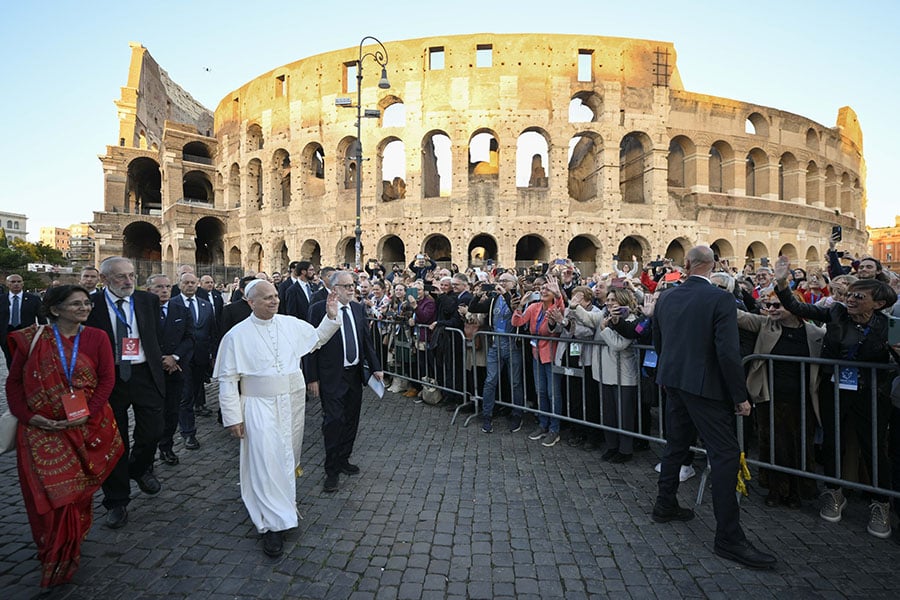
As Pope Leo XIV wrapped up his first apostolic visit to Turkey and Lebanon, he gave a hint on his flight back to Rome as to which other countries he might visit in 2026.
Speaking to journalists aboard the papal flight Dec. 2, the pope was asked by Argentine journalist Elisabetta Pique about his travel plans for the coming year.
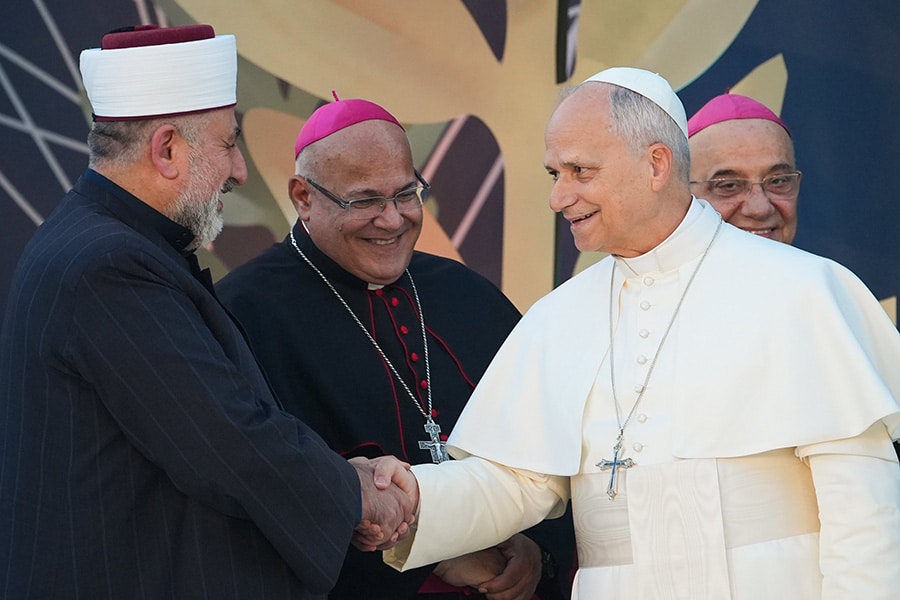
“As for trips, nothing is certain yet. I hope to make a trip to Africa. That would possibly be the next trip,” he said. “Personally, I hope to go to Algeria to visit the places from the life of St. Augustine, but also to continue the dialogue, building bridges between the Christian world and the Muslim world.”
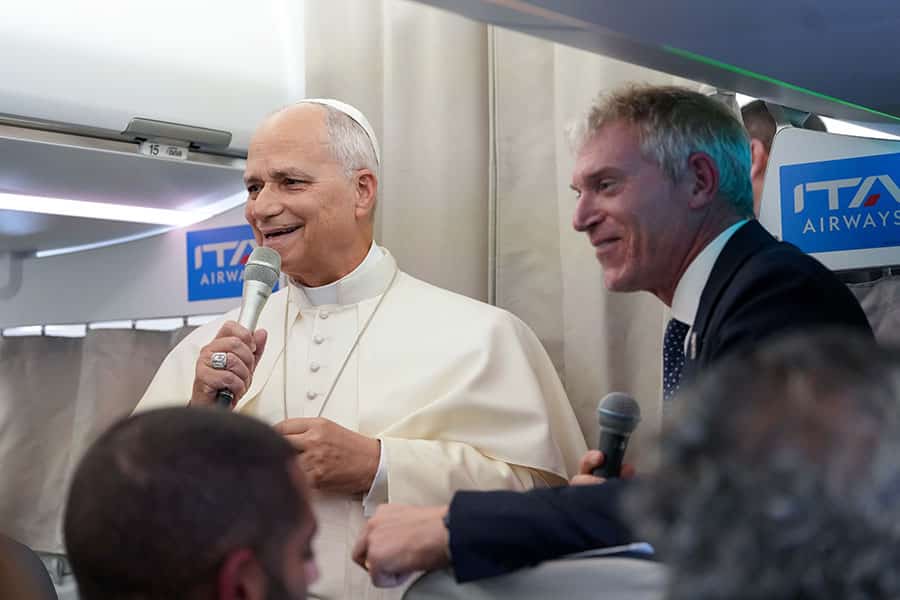
He also said that he was “working on some other countries,” including several in Latin America.
“Obviously, I would love to visit Latin America; Argentina and Uruguay are waiting for the pope’s visit. Peru, I think they will receive me, too! And then, if I go to Peru, (I could visit) many neighboring countries as well. But the plan is not yet defined,” he said.
The pope’s response echoed similar sentiments when asked the same question by journalists gathered outside the papal residence in Castel Gandolfo Nov. 18, noting that “next year we’ll start planning bit by bit.”
While several possible destinations were mentioned — including the Marian sites of Fatima and Guadalupe — the pope acknowledged that although he would be happy to travel, “the problem is scheduling with all the commitments” already in place.
Unlike his predecessor, Pope Francis, who, before his election, was considered more of a “homebody” and rarely traveled unless for official church business or an event, then-Cardinal Robert Francis Prevost could be described as a seasoned traveler.
In his role as a missionary and prior general of the Augustinian order, the future pope traveled extensively, particularly in Africa and Asia.
Drawing on his history, his words about future trips, and a healthy dose of speculation, it’s possible to get a sense of where Pope Leo intends to visit in 2026.
The ‘papal debt’
The opening of the Holy Doors in December 2024 marked the start of an intense period with major events for various groups each month.
While he was in frail health, Pope Francis dying just a day after delivering his “urbi et orbi” blessing on Easter Sunday, April 20, came as a shock to everyone.
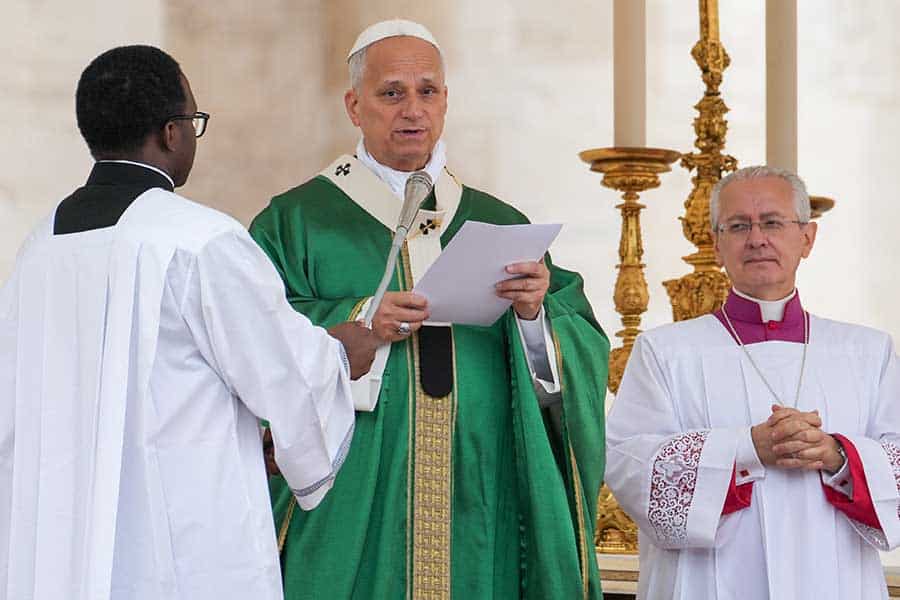
After his election, Pope Leo hit the ground running; not only did he have to dedicate time to learning the ins and outs of the labyrinth that is the Roman Curia, but he also inherited an intense schedule of events and meetings that expected the presence of the Roman pontiff.
Among these “papal debts,” outside of the arduous Jubilee events, was his trip to Turkey to mark the 1,700th anniversary of the First Council of Nicaea. Pope Francis had accepted an invitation by Orthodox Patriarch Bartholomew I to make a joint pilgrimage to mark the occasion.
The added stop to Lebanon was the fulfillment of Pope Francis’ long-held desire to visit the country, which has faced political and economic instability, and most recently, military strikes from Israel in its campaign to strike at Hamas and its allies.
But beyond Turkey and Lebanon, Pope Leo mentioned to journalists two other countries that would fall under the “papal debts” category: Argentina and Uruguay.
In 2021, as COVID-19 restrictions slowly lifted, Pope Francis met with Guzman Carriquiry, who, before being named Uruguay’s ambassador to the Holy See, had served in various offices since the pontificate of St. Paul VI.
During that meeting to present his credentials, Carriquiry said Pope Francis confirmed that a visit to Uruguay and Argentina was still on track.
“In no way is it out of the question!” the late pope said, according to Carriquiry. “I have the desire and the intention to travel to Rio de la Plata — to Uruguay, and to my country.”
A visit to both countries, especially Argentina, by Pope Leo would certainly satisfy that debt. Pope Francis, much to the dismay of his compatriots, never had the chance to visit his homeland as pope, unlike his predecessors, who did so within the first year of their pontificates.
Two homes, one possible homecoming
Though born in Chicago, Pope Leo has made no secret of the fact that a different “Chi-town” holds a special place in his heart, after greeting his “beloved Diocese of Chiclayo” in his first address after his election.
That affection is definitely reciprocated in Chiclayo, where he served as bishop from 2015 to 2023, and in Peru, which considers the pope as one of its own.
When asked at Castel Gandolfo about visiting Latin America in 2026, Pope Leo said that while Uruguay and Argentina were pending, he would like to “go to Peru, of course.”
While both sides desire a visit, Peru’s ongoing political instability and the upcoming April elections make a visit unlikely, at least in the first half of 2026.
It is standard procedure for Roman pontiffs to avoid papal visits to countries during election periods or where their presence might be used for political advantage.
Aboard the papal flight, the pope said the Vatican was “looking into” whether a possible trip to Peru and neighboring countries would happen in 2026 or 2027.
And while the next U.S. presidential election won’t be held until 2028, it doesn’t seem likely that a visit to his homeland will happen in the immediate future, given the growing divide between the Trump administration and Pope Leo over his criticism of U.S. policies targeting migrants.
Possible return to familiar territory
Aside from fulfilling commitments made by his predecessor, what can be gleaned from the pope’s words is that his first visits will be to places with which he has had personal connections, with Africa at the top of the list.
Both in his capacity as prior general of the Augustinian order and as prefect of the Dicastery for Bishops, the pope had visited Tanzania, Kenya, Congo, and especially Nigeria, which he visited nine times.
A 10th visit to Nigeria, this time as pope, would give a much-needed shot in the arm for Christians, who have increasingly become targeted for attacks and kidnappings in the country.
Algeria could be another stop, and Pope Leo made clear aboard the flight from Lebanon that his purpose in visiting the country would be to foster dialogue between Christians and Muslims.
“It is interesting: the figure of St. Augustine helps greatly as a bridge because, in Algeria, he is highly respected as a native son,” he said.
Whether it’s due to a personal connection or a significant event, for Pope Leo, what ultimately determines his future travel plans is where he can best fulfill his duty as pontiff.
In his interview with Crux’s Vatican correspondent Elise Ann Allen, the pope said he was called “to confirm others in their faith because that is the fundamental role of the successor of Peter.”
“I don’t see my main role as trying to be the problem-solver of the world,” he said. “My role is to announce the Good News, to preach the Gospel.”
Read More Vatican News
Copyright © 2025 OSV News
