
Like its eccentric title character, the science-fiction drama “Klara and the Sun” (Sony) comes across as off-beat but engaging. The film’s complex — though not hostile — treatment of faith, however, requires careful discernment on the part of grown moviegoers.
The setting is a mildly dystopian version of contemporary society. Although reference is made to a Third World War having taken place, there is no sign of widespread destruction. Instead, it’s some of the mores that seem off-kilter.
Against this background, we’re introduced to three central characters. One is Josie (Mia Tharia), a socially isolated teen. Josie’s mother, Chrissie (Amy Adams), has promised to buy her an Artificial Friend (AF), a type of robot meant to serve as a companion to its human owner.
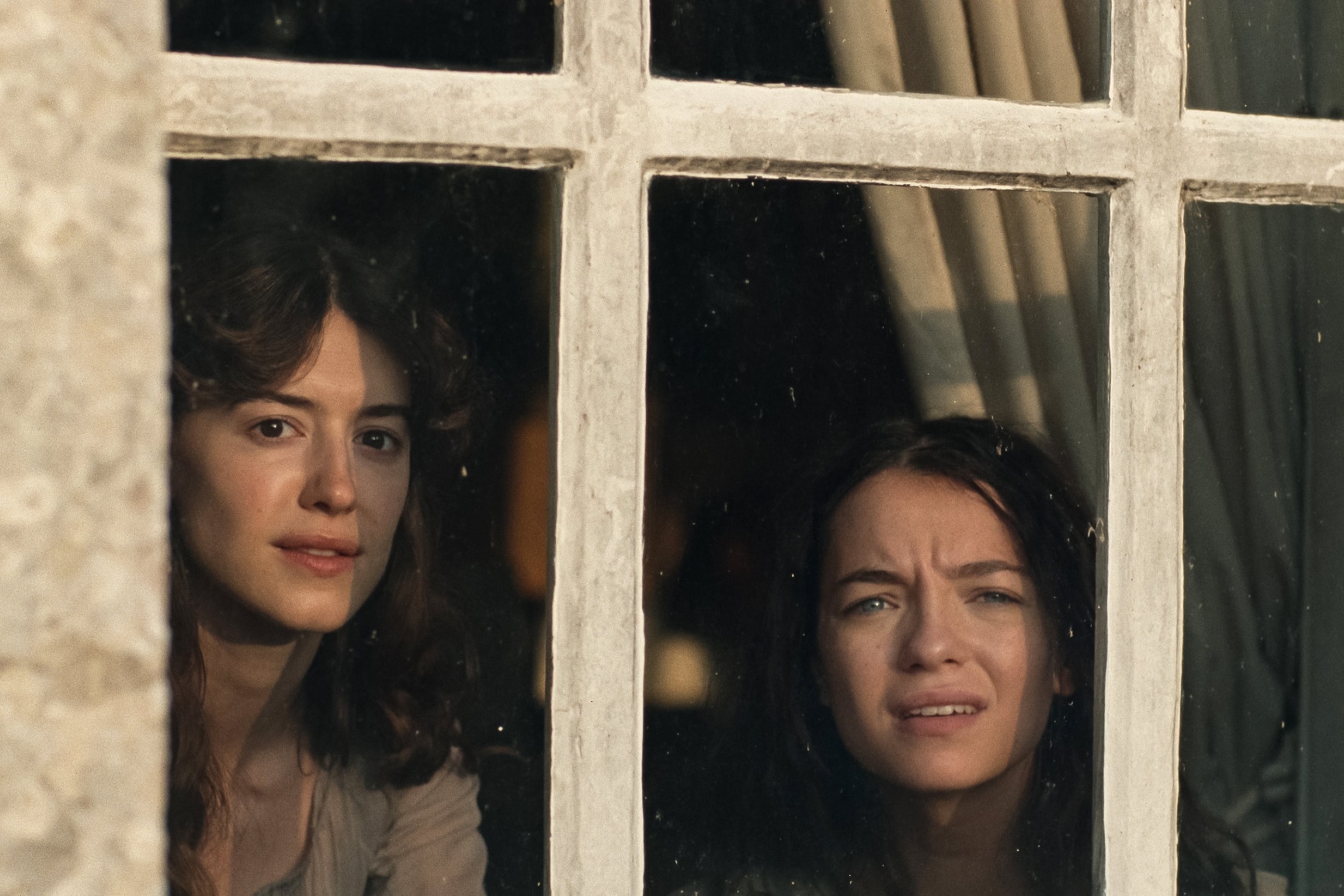
While shopping, Josie chooses Klara (Jenna Ortega in an impressive performance) as her AF. Although Chrissie initially pushes back against Josie’s choice — Klara is a slightly outdated model and has an awkward habit of standing on one leg — Josie insists that Klara is the one for her.
Naive Klara who, as the script tells us, is designed to start out with the intellect of a toddler, then be educated about life by her owner, thus becomes a witness to the emotional tensions and other problems besetting her new family. Among the latter is Josie’s poor state of health.
In adapting Kazuo Ishiguro’s 2021 novel, director Taika Waititi and his co-writer Dahvi Waller touch on such basic topics as the nature of love, the effects of grief and the uniqueness of each individual. It’s the screenplay’s depiction of religion, though, that will be of most interest to believing viewers.
Klara has a sui-generis faith that involves worshipping and praying to the sun. Josie responds to this behavior ambiguously. Early on, she acknowledges that the sun has given rise to — and sustains — all life on Earth. But she understands this in a purely scientific way and scoffs at the idea of the sun answering Klara’s prayers.
On the one hand, Klara is portrayed as more hopeful as well as more self-sacrificing than those around her. But the final sequence casts doubt on her account of her experiences and therefore on the efficacy of the trust she placed in the sun.
Is Klara’s self-invented religion merely an idolatrous illusion? Or is it a stand-in for faith in the broadest sense? Whatever its nature, does it help Klara or just allow her to lie to herself? Movie fans equipped to do so can weigh the evidence and come to their own conclusions.
The film contains mature themes, a few uses each of profanity and crude language, several milder oaths, at least one rough term and frequent crass talk. The OSV News classification is A-III — adults. The Motion Picture Association rating is PG-13 — parents strongly cautioned. Some material may be inappropriate for children under 13.
Read More Movie & Television Reviews





Copyright © 2026 OSV News
