ROSARIO, Argentina (OSV News) — “Don’t Cry for Me, Argentina,” the famous line goes. But during Pope Leo XIV’s four days in the country, he made millions of Argentines cry — and they repeatedly brought him to tears in return.
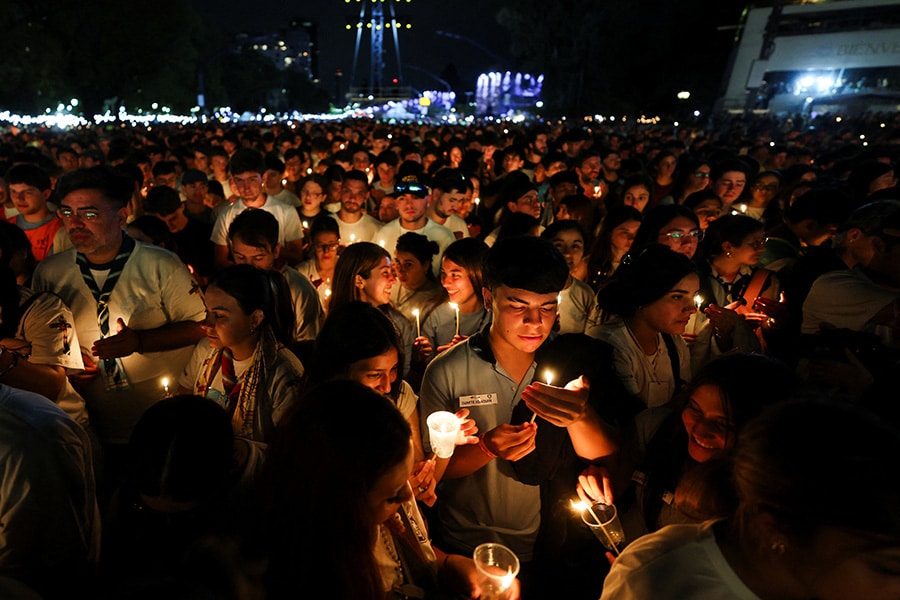
Public emotion is hardly foreign to Argentina. In its soccer stadiums, strangers embrace and grown men weep without embarrassment. During the papal visit, those emotions spilled into streets as millions cheered, prayed and cried.
Pope Leo, often reserved in public, entered that emotional register with them.
Three particularly powerful moments came not from the country’s political leaders or public figures, but from people describing disability, interrupted vocations, addiction, imprisonment and the discovery that their lives could begin again.
— Marta Torres: ‘I want my story to be known and heard’ to help others —
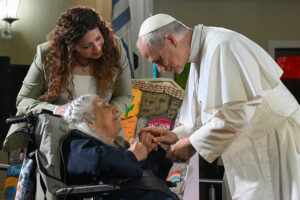
The first came Nov. 9 at the Don Orione “Little Cottolengo” in Claypole, a “city of charity” that is home to more than 400 people with physical and intellectual disabilities.
Seated in her wheelchair, her silver-gray hair carefully braided, Marta Torres told Pope Leo that she was born with a disability and abandoned by her mother when she was very young. For years, her family moved from one institution to another, searching for somewhere equipped to receive her.
“I went through many places, searching for somewhere to live. But those places were only temporary and not suitable for me — I needed a permanent home,” Torres said. “Then I arrived at Cottolengo.”
She described the home not simply as somewhere she could live, but as a place where she was welcomed, felt safe and could be simply Marta.
Torres said the community helped heal the sense of rejection she had carried and taught her that behind every disability is a person with a history, feelings, desires and something to offer.
“They helped me stop feeling rejected … here, I feel so happy,” Torres said, explaining why she had written a book that she presented to the pope.
“I want my story to be known and heard, because I want to do good. I hope this might be of help to others who find themselves in the same or a similar situation — to let them know that they are not alone.”
As Torres spoke, Pope Leo’s eyes filled with tears. The video of her testimony and his visibly emotional response quickly circulated across Argentina and beyond.
In his subsequent remarks, the pope drew directly from her story.
“Your lives are not a burden on society,” Pope Leo told the Cottolengo’s residents. “They are a blessing, because you can help us to remember the foundation of the dignity of every human being and what is truly important in life.”
“A nation’s progress,” he added, “is also measured by how it welcomes all people with disabilities and particular needs.”
A day later, in Córdoba, another testimony reached the pope personally.
— Father Martín Carranza — a silent testimony with the help of technology —
Father Martín Carranza, a priest of the Archdiocese of Córdoba, addressed Pope Leo during his Nov. 10 encounter with bishops, priests, deacons, seminarians and consecrated men and women at Córdoba’s cathedral.
Eleven years ago, a lack of oxygen to Father Carranza’s brain during what should have been a routine operation left him with multiple disabilities affecting his ability to walk, use his hands, speak and see.
“When I gradually became aware of my disability, I had to discern and decide how to continue living as a disciple of Jesus and as a priest,” Father Carranza said.
He could have chosen bitterness, anger, resentment or despair, he said. Instead, helped by the people who cared for him, he chose “to open myself up rather than withdraw,” and to continue listening, advising, praying, forgiving and serving as he could.
Unable to speak normally, Father Carranza used technology developed with the help of family, friends and Radio María to reproduce his pre-surgery voice through artificial intelligence. That recovered voice read the testimony he had written.
He asked Pope Leo how priests and religious whose health no longer permits them to carry their former responsibilities can continue offering themselves to God and the Church’s mission.
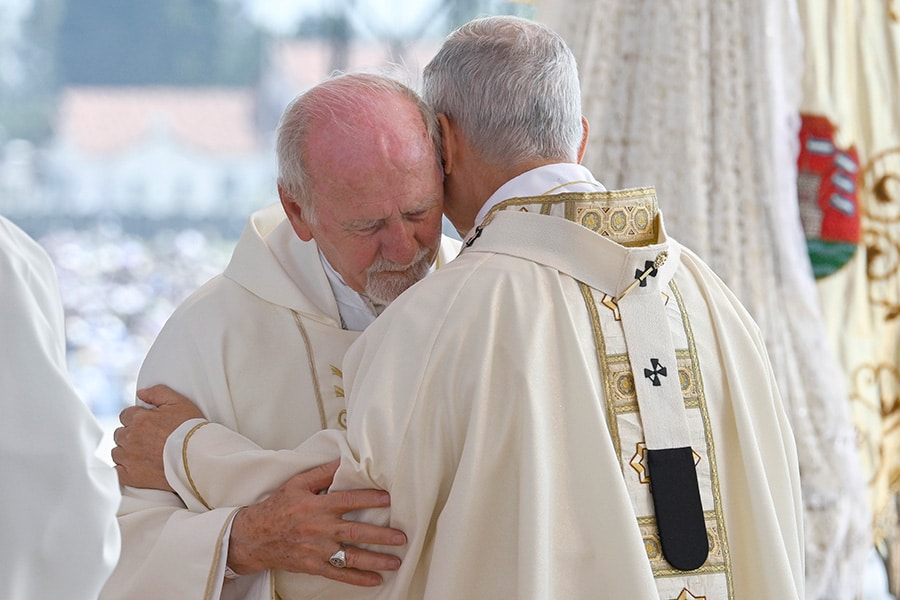
The pope appeared moved to tears, stood and embraced Father Carranza, speaking quietly into his ear.
In his address, Pope Leo connected the priest’s experience with his own recent hospitalization.
“Laura and Father Martín have made me reflect on my recent hospitalization,” he said, also recalling St. José Gabriel del Rosario Brochero, the Argentine “gaucho priest” who continued serving despite blindness and leprosy.
“Neither age nor physical limitations can extinguish our zeal,” Pope Leo said. “Our strength may run out, but God’s power never will.”
— Powerful moment at Villa Devoto —
Another such moment came early Nov. 11 at the federal prison in Buenos Aires’ Villa Devoto neighborhood.
There, Maximiliano, a 32-year-old inmate, described years consumed by drugs and alcohol. He lived at night, sometimes remaining awake for days, and gradually became estranged from his family.
He told the pope he deeply regretted losing time with his daughters — time that could never be recovered.
Paradoxically, Maximiliano said, incarceration began a process of interior freedom. At the prison chapel he rediscovered Jesus, memories of his childhood in the Church and the knowledge that he remained a son loved by God.
“I want to return to God and show my daughters that their father can change,” he said, his voice breaking. He asked forgiveness from his family, his daughters’ mother, his daughters and everyone he had harmed.
“Every day is an opportunity to start anew, and there is a life worth living,” he said. “Only love will change the world, and God is love.”
Once again, Pope Leo listened, visibly moved.
“I hope that all of us, myself included, can carry in our hearts this message that a new life is possible,” the pope said before addressing the inmates. “It is the hope we need.”
The three encounters offered an unofficial thread through the Argentine visit. Each spoke of a limitation that society could interpret as definitive. Each instead described it as the place where another life became possible.
Before departing for Peru, Pope Leo thanked Argentina “for welcoming me with open arms.”
“The Successor of Peter must now continue his mission elsewhere, wherever the Lord sends him,” he said, “but he would like to tell you that he carries all of you in his heart.”
Read more Vatican News
Copyright © 2026 OSV News
