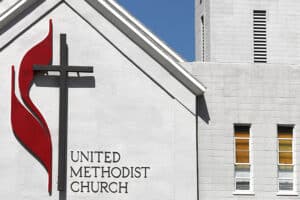
Q: I recently moved to a rural area, and my current parish is now nearly an hour drive away. There are no Catholic churches in my new area. There is, however, a Methodist church right across the street from my new home, in easy walking distance. They are open for services on Sunday morning and Wednesday night. I know the two faiths are different in some key areas, but, as a Catholic, how wrong would I be if I simply went to this Methodist church? I asked a cradle Catholic friend about this, and they said as long as I go to Catholic Mass once a year, I’ll be considered active in the Catholic faith, but if I miss over a year I’ll be considered a “lapsed Catholic,” and that if I ever want to come back I’ll be considered a “revert,” and have to go through RCIA again. Could you comment and clarify? (Southern Indiana)
A: There are several questions within your question. To start with the first one: It is not wrong or sinful for a Catholic simply to attend a non-Catholic religious service. However, a Methodist Sunday service would not fulfill the Sunday obligation for a Catholic.
Deliberately missing Sunday Mass is in itself “grave matter” and a serious sin that should be brought to the sacrament of penance. Still, it’s good to recall that the church’s law does not bind us to do the impossible. The sinfulness of your personally potentially missing Sunday Mass in your own situation might be diminished due to mitigating factors.
Regarding the idea that a Catholic only needs to attend Mass once a year to remain “active,” I think your friend might be a little confused. As noted above, Catholics are required to attend Mass every Sunday. But strictly speaking, a Catholic is only required to receive Holy Communion once per year (after the sacrament of penance if the Catholic is conscious of having committed a mortal sin in the past year). Among Catholics this is sometimes colloquially referred to as the “Easter duty.”
Naturally, we as Catholics are encouraged to go to confession and receive Holy Communion much more often than once a year! But if a Catholic for whatever reason discerns that he or she is not spiritually prepared to receive the Eucharist on a weekly basis, it is legitimate for him or her to fulfill the Sunday obligation by attending Mass without receiving Communion, as long as they receive Communion at least once during each Easter season.
While we might popularly use the term “active Catholic” to describe a Catholic who takes their faith seriously, technically “active Catholic” is not a category in canon law. Canon law does have some specific penalties such as excommunication that might restrict a Catholic from fully participating in the life of the church; and canon 916 reminds us that a Catholic should not receive Communion if they are conscious of having committed a serious sin that has not yet been absolved.
But once someone is baptized Catholic or formally received into the Catholic Church, they are always considered Catholic, even if they fall away from the faith or fail to practice it regularly. Nothing — not even neglecting the Sunday obligation — can “de-activate” a person’s identity as a Catholic.
Because of this, a lapsed Catholic who wanted to return to a full practice of the faith would not be eligible for RCIA, that is, the Rite of Christian Initiation for Adults. RCIA is primarily intended for catechumens, or unbaptized persons who are preparing to receive the sacraments of initiation. As such, RCIA would not be appropriate for a Catholic who has already been fully initiated. In the majority of situations, all a lapsed Catholic would need to do to return to a full participation in the life of the church is sincerely repent and make a good confession.
Read More Question Corner
Question Corner: Does holy water ‘absolve’ us from venial sin?
With respect to holy water in particular, St. Thomas Aquinas specifically identifies the “sprinkling of holy water” as a means for the remission of venial sin in question 87, article 3 of the “Third Part” of his work the “Summa Theologica.”
Continue Reading Question Corner: Does holy water ‘absolve’ us from venial sin?

Question Corner: How do you proceed if an ex refuses to be a part of the annulment process?
An important principle in the Church’s law regarding the marriage nullity process is treating both spouses as fairly as possible.
Question Corner: Can you use a deconsecrated altar for other purposes?
while a church building that could no longer be used for its original purpose might in some cases lawfully be sold and re-purposed as something like a museum or private residence, this relegation or re-purposing would not affect the status of the altar it once contained.
Continue Reading Question Corner: Can you use a deconsecrated altar for other purposes?
Question Corner: Does my ex have to be involved in the annulment process?
Practically speaking, when a respondent is willing to participate in the nullity process, this greatly helps the canon lawyer judges in a trial come to a fair and accurate decision, insofar as hearing from the respondent gives the judges a fuller picture of what actually happened.
Continue Reading Question Corner: Does my ex have to be involved in the annulment process?
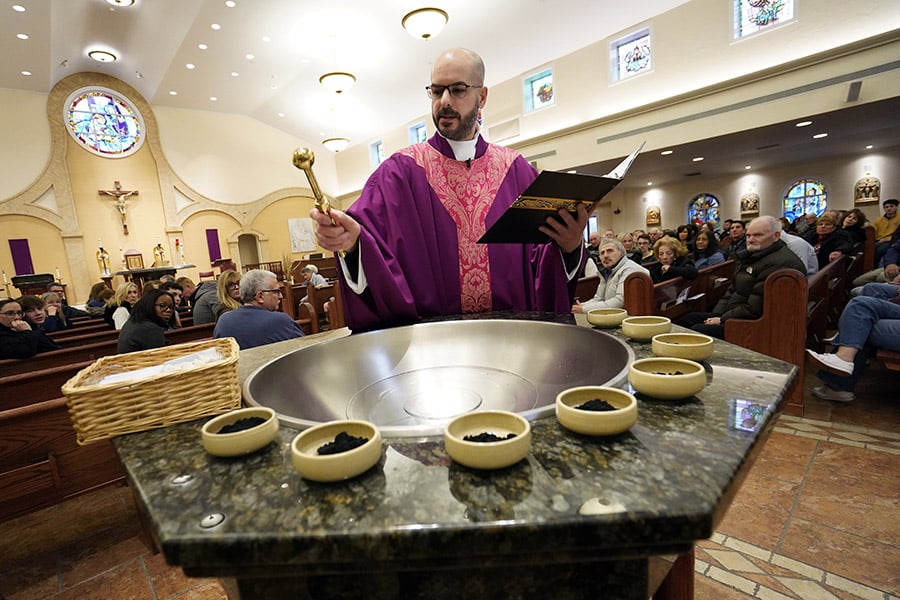
Question Corner: Should I give up prayers of petition this Lent as my priest suggested in his homily?
Prayers of intercession, where we ask God to help other people in their needs, are also prayers of petition. Since praying for both the living and the dead is a spiritual work of mercy, it wouldn’t seem fitting to give this up for Lent!

Question Corner: Why doesn’t the Church require more demanding fasting for Lent?
A more demanding common discipline would require far more exceptions, which could make it difficult for the majority of the Church to observe them together as one spiritual family.
Continue Reading Question Corner: Why doesn’t the Church require more demanding fasting for Lent?
Copyright © 2024 OSV News
