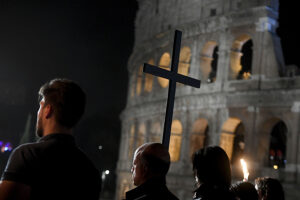
Q: In the Apostles Creed, we say that Jesus “descended into hell” after he died on the cross. But why would Jesus go to hell if he was sinless?
A: The short answer is that Jesus was not sent to hell as a consequence for his own sinfulness, but in order to free us from ours.
As you correctly point out, as the incarnate son of God Jesus was totally, completely without sin. As we read in the New Testament Letter to the Hebrews, “we do not have a high priest who is unable to sympathize with our weaknesses, but one who has similarly been tested in every way, yet without sin” (Heb 4:15). And the first Letter of St. Peter describes Jesus as “a spotless unblemished lamb” (1 Pt 1:19).
But on the other hand, with the singular exception of the Blessed Virgin Mary, who through a special action of God’s grace, was sinless from the first moment of her immaculate conception, the rest of humanity suffers from the consequences of original sin.
The first sin of Adam and Eve created a rupture between God and humanity, a rupture which carried over to all their descendants, the entire human race. And on top of this, every person throughout history has had to contend with their actual sins, or those which they have personally and freely committed.
Jesus’ saving mission was not only to grant forgiveness of our personal sins, but more foundationally to restore the possibility of human beings’ friendship with God that had been lost in the fall of Adam and Eve.
The fact that human beings suffer bodily death at all is understood to have been a consequence of original sin (for example, see Rom 5:12-14). And also because of original sin, the men and women who died prior to the coming of Christ — no matter how holy or virtuous they happened to be — were not capable of entering into the full blessedness of heaven.
And so the pre-Christian “hell” of the Old Testament is different from the “hell” that exists after the coming of Christ. The Catechism of the Catholic Church notes that: “Scripture calls the abode of the dead, to which the dead Christ went down, ‘hell’ … because those who are there are deprived of the vision of God. Such is the case for all the dead, whether evil or righteous, while they await the redeemer” (CCC 633).
However, as we know from Jesus’ parable of the rich man and the beggar Lazarus in Chapter 16 of St. Luke’s Gospel — where after their deaths the rich man is in torment because of his lack of charity, while Lazarus walks with Abraham — there apparently was a distinction between the virtuous dead and the dead who had separated themselves from God by their sins. As the Catechism goes on to tell us, “Jesus did not descend into hell to deliver the damned, nor to destroy the hell of damnation, but to free the just who had gone before him” (CCC 633).
After his death on the cross, Jesus descended into the “hell” that was simply the netherworld in order to free the dead who had sought to love and honor God despite the original sin that bound them, in order that Jesus might bring them into the fullness of life. This is why most traditional art which depicts the events of Holy Saturday show Christ descending into hell as a triumphant victor, rather than as a suffering victim as he was on Good Friday.
The catechism describes this beautifully: “The descent into hell brings the Gospel message of salvation to complete fulfillment. This is the last phase of Jesus’ messianic mission, a phase which is condensed in time but vast in its real significance: the spread of Christ’s redemptive work to all men of all times and all places, for all who are saved have been made sharers in the redemption” (CCC 634).
Jenna Marie Cooper, who holds a licentiate in canon law, is a consecrated virgin and a canonist whose column appears weekly at OSV News. Send your questions to CatholicQA@osv.com.
Read More Question Corner
Question Corner: At what point does being a pro-choice Catholic become sinful?
Q: Catholic governors commit an obviously sinful act when they sign extremely permissive abortion laws. On the other hand, there is an extraordinary minister of holy Communion in my parish who told me she is pro-choice, but I’m not aware she has done anything to support abortion except maybe vote for a pro-choice candidate. My question is: At what point does being a pro-choice Catholic become sinful? (Indianapolis, Indiana)
Continue Reading Question Corner: At what point does being a pro-choice Catholic become sinful?

Question Corner: How can a priest deal pastorally with those who are quick to suspect people of being Freemasons?
Q: As a parish priest, I found your recent article on the Church’s teaching on Freemasonry interesting, and I have a follow-up question: How can one deal pastorally with parishioners who are quick to suspect people of being Freemasons? I can think of one or two parishioners who are convinced the Vatican is infiltrated by Freemasons, and anybody in Church life they in any way disagree with must be a Freemason. They can be frustrating, as it’s hard to argue with them without them turning around and saying that you must be a Freemason! (Ireland)
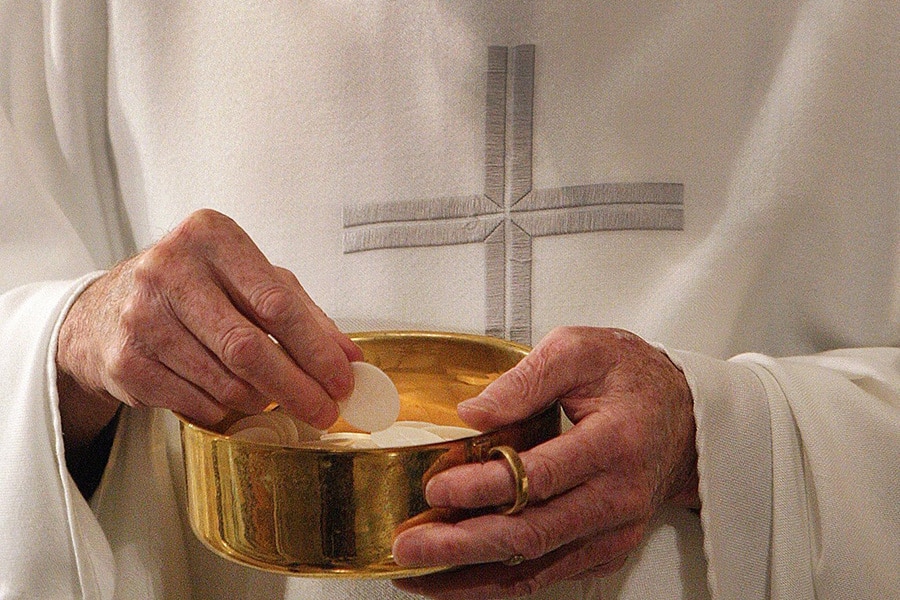
Question Corner: Can I receive Communion even if I didn’t attend the whole Mass?
Q: I’m a Catholic working at a funeral home and assisting at many Catholic funerals. I’m not always in the church for the entirety of Mass. I’m sometimes out during the Gospel and homily or after Communion since I’m helping with the arrangements. Since it’s not fulfilling my Sunday obligation, is it still OK for me to receive Communion to offer up for the deceased if I’m not there for the entire Mass? (Illinois)
Continue Reading Question Corner: Can I receive Communion even if I didn’t attend the whole Mass?
Question Corner: Why wasn’t Jesus clearer in making St. Peter head of the Church?
Q: In the Gospel’s account of Peter’s confession of Christ, Jesus responded with: “You are Peter, and upon this rock I will build my Church.” I sometimes wonder if it wouldn’t have been better if Jesus would have skipped the wordplay and simply said: “Peter, I’m making you the first head of my Church.” The verse as is, seems subject to a lot of interpretation. When I was Protestant we all said that the verse implied that the Church would be built on a general confession of Christ, and Peter’s was but one example. Could you comment? (Indiana)
Continue Reading Question Corner: Why wasn’t Jesus clearer in making St. Peter head of the Church?

Question Corner: What is the Catholic Church’s teaching on the death penalty?
Q: I know officially the Catholic Church is against the death penalty, but what about Genesis 9:6?
A: It looks like there are two dimensions to your question: the Church’s teaching on the death penalty, and how we are to read the Old Testament as Catholics.
Continue Reading Question Corner: What is the Catholic Church’s teaching on the death penalty?
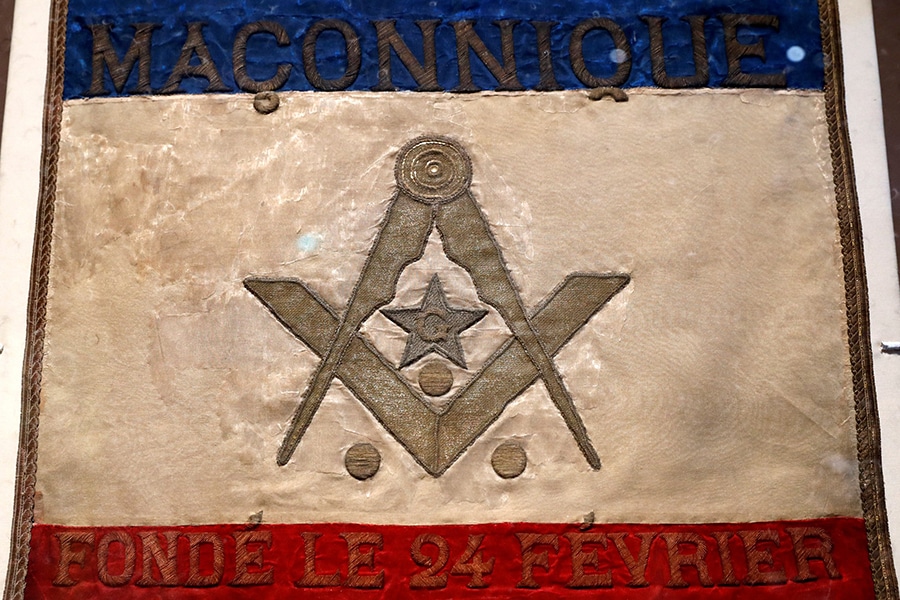
Question Corner: What is the Catholic Church’s current stance on Freemasonry?
Could you clarify the Church’s current stance on Freemasonry? Some seem to think that these days it’s “no different than belonging to Rotary” or any other service club. The local church has parishioners that belong to the local Masonic lodge.
Continue Reading Question Corner: What is the Catholic Church’s current stance on Freemasonry?
Copyright © 2026 OSV News
