
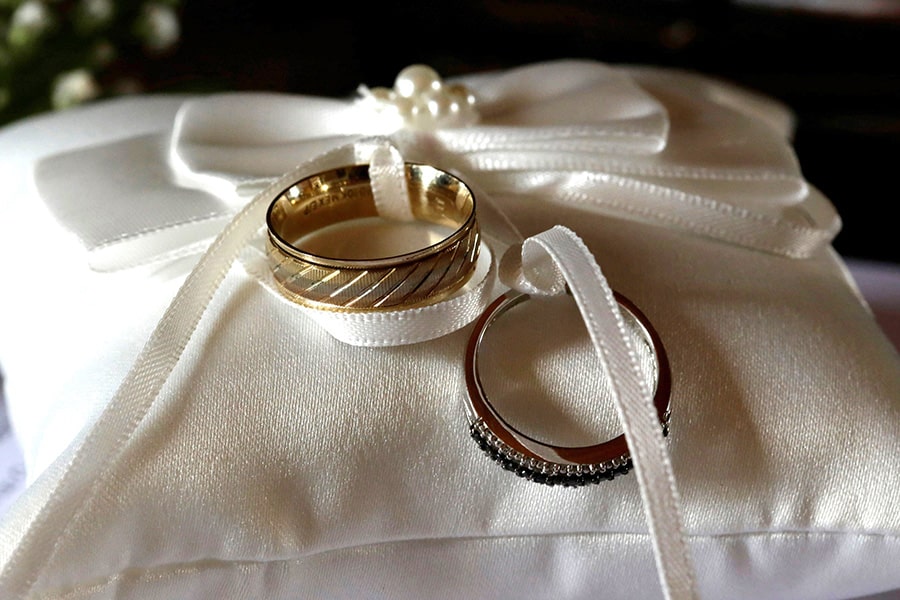
Q: This past weekend my parents celebrated their 50th wedding anniversary, and part of the celebrations included renewing their wedding vows. At this point I’m not worried about my parents staying together, but it got me wondering: Hypothetically, would a vow renewal like this have any impact if a couple were to try for an annulment later?
A: Congratulations on your parents’ anniversary! But with respect to your question, like so many canon law-related things, the answer is: It depends on the exact circumstances of the specific case.
First of all, on a very technical level, canon lawyers don’t actually speak of a bride and groom as making “wedding vows.” Rather, we refer to the “exchange of consent” between spouses.
Strictly speaking, as per Canon 1191 of the Code of Canon Law, a vow is “a deliberate and free promise made to God, concerning some good which is possible and better.” For example, men and women in religious life make vows properly so-called, since they are making their promises to God with their legitimate religious superior serving as the official witness.
In contrast, for spouses, “matrimonial consent is an act of will by which a man and a woman by an irrevocable covenant mutually give and accept one another for the purpose of establishing a marriage” (Canon 1057). That is, the bride and groom are not making promises directly to God — although of course it is to be hoped that they intend for God to be involved in their married life — but rather to each other.
Granted, in normal everyday life it’s usually fine to speak of “wedding vows,” since in most contexts it’s generally understood what is happening when the couple commit to each other at their wedding. But there are some times when it is necessary to be a bit more precise.
In situations like your parents’ case, where a married couple wishes to “renew their vows” simply as a way to show their continuing love for each other, in a literal sense the Catholic Church would not allow for this since matrimonial consent is exchanged in a once-and-for-all sort of way. Or in other words, valid matrimonial consent doesn’t need to be “renewed” because it doesn’t expire.
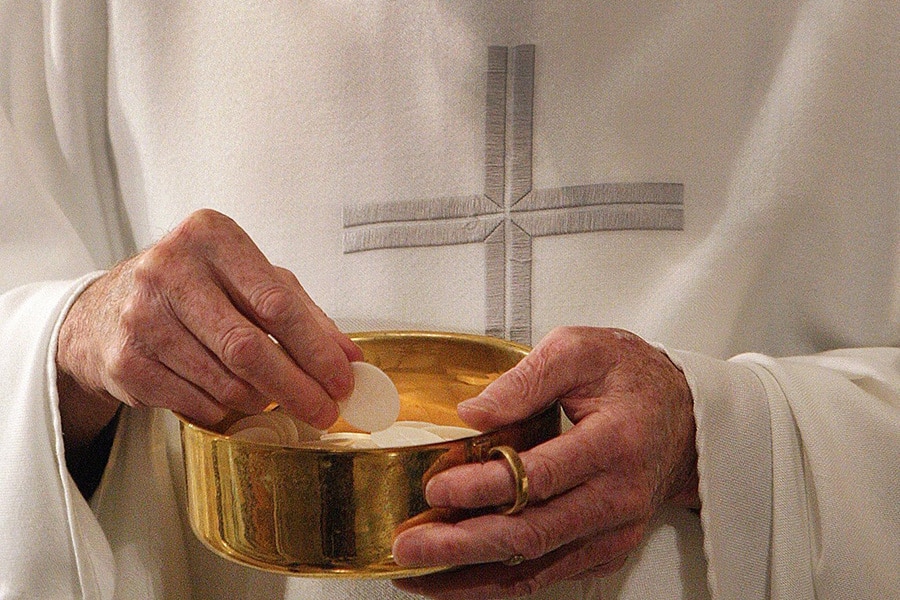
What is a possibility for Catholics, though, is a ritual “blessing a married couple within Mass on the anniversary of marriage.” For this kind of anniversary blessing, a couple might repeat the words of matrimonial consent, only in the past tense, to show that they are joyfully continuing to live out the commitment they have already made.
Since an anniversary blessing is not doing anything “new” in a marriage, for the most part this would not be something a Catholic marriage tribunal would be concerned with. (Though in theory, I suppose it could demonstrate a couple’s ongoing intention to be married and thus potentially be a factor in a petition for nullity being denied.)
On the other hand, sometimes some Catholics speak of “renewing their wedding vows” when what is actually happening is that they are regularizing their marriage in the eyes of the Church. This can happen when, for instance, a Catholic couple who initially married only civilly decides to marry within the Church. Sometimes this is popularly called a “convalidation.”
In this kind of scenario, even though the couple already “said their vows” once before in a secular or non-Catholic religious ceremony, they are once again saying the words that constitute the exchange of matrimonial consent, only this time in the eyes of the Church. While it may subjectively feel to the couple that they are merely “renewing” their commitment, as far as canon law is concerned they are actually contracting a binding marriage as if for the first time.
So, if a “vow renewal” is actually a “convalidation,” that could be relevant to a marriage tribunal insofar as the “vow renewal” date would be the exchange of consent which the tribunal would actually investigate.
read more Question Corner


Copyright © 2026 OSV News
