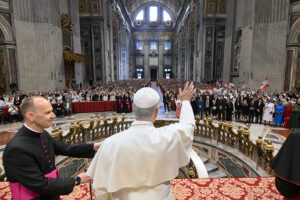
VATICAN CITY (CNS) — Singing and playing music during the liturgy is an integral and necessary part of the celebration, which means it is much more than something “decorative,” Pope Leo XIV said.
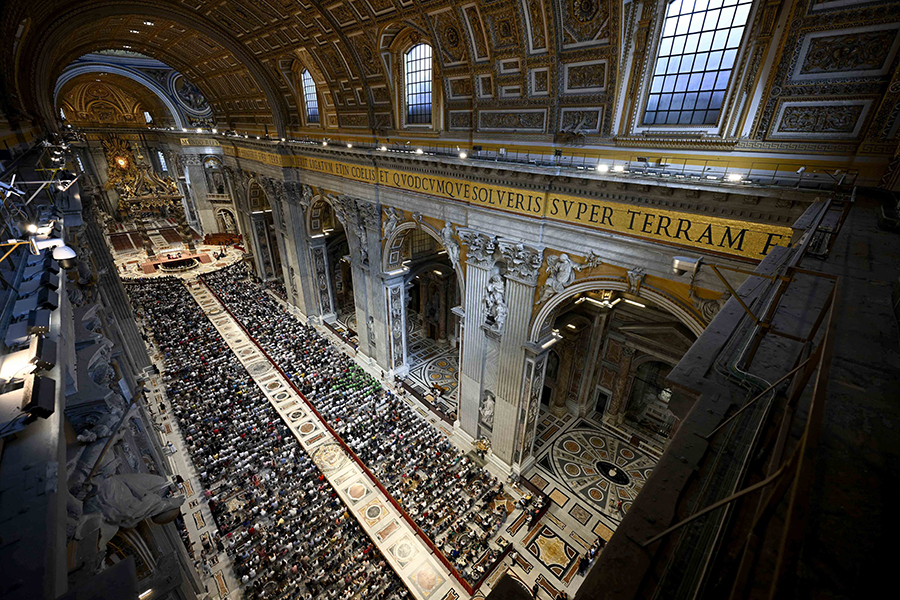
“In the liturgy, to sing and to play music means to pray, attuning one’s heart to that of our sisters and brothers and to God, through active participation in the mystery that is being celebrated,” he said during his general audience talk in St. Peter’s Basilica Aug. 19.
“Far from being merely decorative, therefore, sacred music is a treasure of profound value. It should always be dignified, draw inspiration from Sacred Scripture and reflect the grandeur of the mystery celebrated,” he added.
During the audience, the pope also invited all Catholics to continually cultivate “a genuine awareness of peace.”
“May you sincerely recognize that peace is a precious and great gift, and that it requires a strong and constant commitment to achieve it, by honestly and truthfully following the paths that build and sustain it in society,” he said in Italian.
In his main talk, Pope Leo continued his series of talks on the Second Vatican Council, focusing on the importance of sacred music as outlined in the council’s constitution on the sacred liturgy, “Sacrosanctum Concilium.”
“Indeed, singing and playing a musical instrument are acts of prayer,” he told English-speakers in his summary. “Music thus fosters our unity in praising God and opens our hearts to be fashioned by his grace.”
The council’s text “confirms and deepens the ministerial function of music in the liturgy, which had already been highlighted by St. Pius X” in 1903 with his document, “Tra Le Sollecitudini” (“Among the Concerns”), Pope Leo said in his main talk in Italian.
The Council Fathers recognized that “certain requirements” are, therefore, necessary, the first being that “it must respond at every level to what is most appropriate for the liturgical moment, beyond fashions or the particular sensitivities of composers,” he said.
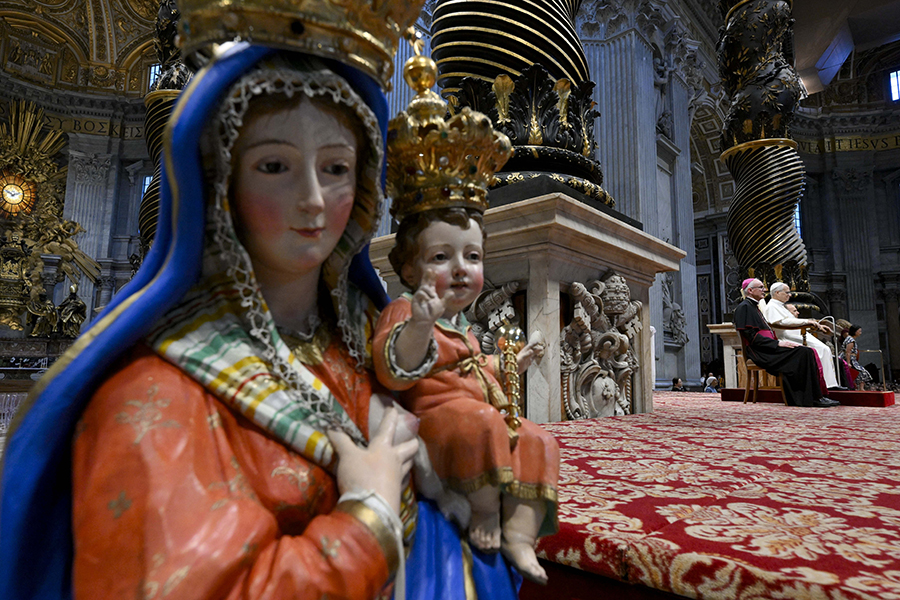
“Its form, especially in its melodic aspect, must be at once noble and simple, of high musical quality and easily performable, particularly when it is intended to be sung by the whole assembly,” he added, referring to the teachings in the conciliar document.
The council recommended that “the texts too should be suitable, profound and at the same time readily understandable, inspired mainly by Sacred Scripture, the liturgical books and the spiritual tradition of the Church,” so that “the law of prayer,” which is also “the law of faith, may remain alive and continue to grow,” the pope said.
“‘Sacrosanctum Concilium’ devotes considerable attention to the theme of the active participation of the faithful,” because the emphasis is on fostering a “greater awareness of the mystery being celebrated and its relationship to daily life” in a “spirit of constant conversion,” he said, quoting Pope Benedict XVI.
Each minister and member of the faithful is called to perform those parts which pertain to their office in a “harmonious balance between the different ministries” and with appropriate moments of “reverent silence,” he added.
The council attributes “great value to Gregorian chant, without excluding other genres of sacred music from the celebration,” as well as to the organ, he said. The use of other instruments is permitted as long as the instruments are suitable for sacred use “and truly contribute to the edification of the faithful,” he added, citing “Sacrosanctum Concilium.”
Because inculturation was part of the council’s reform, including in the field of sacred music, the Council Fathers underlined the importance of taking the musical traditions of different cultures seriously into consideration, making every practical effort to promote traditional music.
The formation and practice of sacred music should be encouraged in seminaries, novitiates and other Catholic institutions, he said, while composers of sacred music must “know and preserve the musical heritage of the Church.”
To guarantee the “dignity and excellence” of new compositions, they should be “at the service of the liturgy, while respecting contemporary sensibilities and the different cultural traditions, so as ‘purify worship from ugliness of style, from distasteful forms of expression, from uninspired musical texts which are not worthy of the great act that is being celebrated,'” Pope Leo said, quoting from St. John Paul II’s 2003 document on sacred music.
“Dear brothers and sisters, the Fathers of the Church held liturgical singing in great esteem as a symbol of ecclesial communion,” Pope Leo said, asking that “we join together in love, and — in the words of St. Ignatius of Antioch — ‘with one voice sing to the Father through Jesus Christ.'”
Read More Vatican News
Copyright © 2026 OSV News
