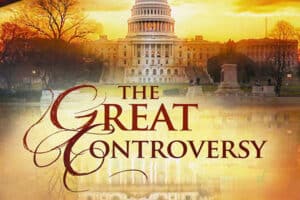
A book that espouses the theology of the Seventh-Day Adventist religion and contains anti-Catholic messaging is causing a bit of stir in some circles in the Baltimore area.
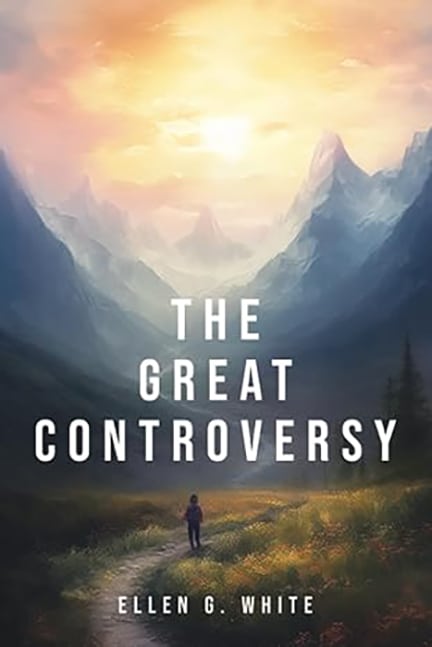
“The Great Controversy,” a book written by Seventh-day Adventist founder Ellen G. White and first published in 1858, has been appearing in Baltimore-area mailboxes in recent months.
Sulpician Father Philip Brown, president-rector of St. Mary’s Seminary and University in Roland Park, said Catholics should be “on guard” when receiving such material.
“Catholics should be aware when receiving unsolicited books on religion that the authors of such books are often trying to gain adherents to their own religion,” said Father Brown, also a professor of canon law. “Unsolicited books often contain views that are not consistent with the Catholic faith. When reading them, a Catholic should judge the content in relation to his or her Catholic faith.”
The book describes Catholicism as having corrupted true Christianity and portrays the papacy as aligned with persecution, deception and even the Antichrist.
According to reports by WYPR and the Baltimore Sun, Michigan-based Remnant Publications and Virginia-based Project Restore mailed the books.
Seventh-Day Adventists believe there is a battle “being fought for humanity” and “this epic battle is sometimes referred to as the ‘Great Controversy,’ the conflict between God and Satan. And all humanity is caught up in it due to our free will, and the fact we chose the ‘knowledge of good and evil’ back in the Garden of Eden,” according to Adventist.org.
In addition to worshipping strictly on Saturdays instead of primarily on Sundays, Adventists emphasize a return to Scripture alone as the ultimate authority, while the Catholic Church views both Scripture and church tradition as authoritative.
Ron Goss, a Seventh-Day Adventist minister who works with Remnant Publications, told WYPR that “Baltimore isn’t the first city to receive the books. Philadelphia has gotten about 720,000 copies, as have San Francisco, Portland and Chicago.”
“The goal is to try to urge people to accept it,” Goss said in the WYPR report. “They can throw it away. It’s up to them, but we just want to try to help them to understand about history.”
Father Brown said Catholics can use the book to strengthen their own Catholic faith.
“Reading such books can be an incentive to getting to know our faith better, which is a good thing,” he said. “But one should be on guard against being swayed toward views that contradict or disparage the Catholic faith. As members of a definitive faith community, ‘citizens’ of the church as it were, we have a duty in conscience to remain in communion with the Catholic faith and the Catholic Church under the guidance of the leaders of our faith. Intellectual inquiry is a good thing, but one should also be alert to subtle attempts to turn us away from important beliefs that we consider as Catholics will lead us to salvation.”
Dr. Aleksandar S. Santrac, assistant teaching professor of theology and adjunct professor of philosophy at Loyola University Maryland in Baltimore, said the mailing is a common strategy.
“Mass mailing of ‘The Great Controversy’ reflects a particular missionary strategy,” said Santrac, an ordained minister in the Seventh-day Adventist Church. “Fundamentalist groups within the church invest heavily in promoting its eschatological message of an imminent crisis before Christ’s return.”
He noted that the book frames history as a struggle between good and evil, emphasizing apostasy in Christian history and warning against threats to the Christ-centered, apostolic tradition as understood by the Seventh-day Adventist Church.
“The approach seeks rapid conversions and is mainly practiced in the U.S., where the church has greater resources and distribution networks,” Santrac said.
He also said there’s little to gain for a religion by using such an approach.
“Many Adventist ministers and members oppose this initiative because it rarely prompts people to rethink their faith,” Santrac said. “Instead, it often provokes hostility and wastes resources that could better serve local communities. Adventist mission is broader – public meetings, education, health care and social justice – and these offer more meaningful ways to share the Gospel. While some conservative circles may see value in mass mailings, I believe personal, loving care is the truest expression of the Christ-centered message.”
Santrac noted some of the major differences between Adventism and Catholic teachings.
“Adventism places strong emphasis on end times, the Sabbath and Christ’s imminent return, often fueling distribution of apocalyptic literature,” he said. “While Catholicism also affirms the Second Coming, it emphasizes present social engagement and transformation. Adventism values social justice but, paradoxically, often frames the world as ultimately doomed.”
Goss told WYPR that the books “cost about $1.40 to make and send out,” something he says is a cheap way to spread the word.
According to a report in The Baltimore Sun, about 25 million copies of “The Great Controversy” have been sent by the two nonprofit organizations to “designated ZIP codes in major cities across the United States, including New York; Philadelphia; Boston; San Antonio; San Francisco; and Portland, Oregon.”
Loyola’s Santrac also noted the differing schools of thought among Adventists.
“A recent publication (“Adventists and Catholics: The History of a Turbulent Relationship”) by an ex-Adventist leader (Reinder Bruinsma) highlighted tensions between Adventism and Catholicism,” he said. “Conservative Adventists resisted its ecumenical tone, while liberal circles welcomed dialogue, social service and justice-oriented mission – areas where Adventism remains less established.”
Email Gerry Jackson at gjackson@CatholicReview.org
Read More Local News


Copyright © 2025 Catholic Review Media
