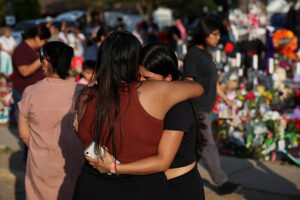
Over these past few weeks, we have seen many serious, sad headlines and news stories reflecting a growing disrespect for the dignity of human life.
Every day, there is news about the suffering of the people of Ukraine who are fighting against an unjust and merciless aggressor. Russia’s deliberate targeting of nonmilitary targets and other atrocities violates the basic secular standards of a “just war,” let alone our Christian principles. For this reason, the community of nations is responding with material support for Ukraine and sanctions for Russia.
Within our own country, we seem to be in an epidemic of mass shootings, with so many innocent people killed, leaving entire communities in deep pain.
Simple, daily activities like going to a supermarket in Buffalo, New York, or to school in Uvalde, Texas, or a hospital in Tulsa, Oklahoma, are now associated with scenes of carnage.
While the root causes of these recent tragedies are legion, society has every obligation to improve gun safety as prudence would dictate.
And as we patiently await the Supreme Court to overturn nearly 50 years of mandated legal abortions in every state, we will soon find debates close to home about where to draw the line between private, individual choice and the right to life of the little “somebody” already present in the womb.
Some, including the Supreme Court, have been wrong before about the dignity of all human life, as when slavery and racism were legally protected and enshrined into law.
It is a sober fact: Whenever we disregard the dignity of any class of human beings, we impoverish our own dignity and the bonds that hold our nation together suffer.
The laity, with well-informed consciences, must prudently judge the specific steps to limit, if not altogether eliminate, the means and opportunities for violence against innocent human beings in our world, nation and local communities.
Justice and the natural law demand it.
While the Catholic Church has every right and obligation to speak to the political issues of our time and to be clear about what our faith teaches, it would fail in its mission if its clergy reduced its sphere of concern to the political.
Preaching from the pulpit in a manner that condemns those who are wrong and does little to provide hope for the fallen only exacerbates this diminishment. We are a Church of relationships, through which the grace of God extends to the poor and brokenhearted, especially in our celebration of the sacraments.
As the chief pastor of the Diocese of Jefferson City, I have a responsibility to address the spiritual sickness which is at the root of the growing violence around us.
It is hard to fathom the internal motivations one might have to kill the innocent. Confusion, disillusionment and despair come to mind.
But whatever the motivation and wherever it comes from, the parish can and should be the place in which people are taught and shown the dignity we all have as God’s children.
Pope Francis described his dream for the parish as “the presence of the Church in a given territory, an environment for hearing God’s word, for growth in the Christian life, for dialogue, proclamation, charitable outreach, worship and celebration” (“Joy of the Gospel,” No. 28).
Accordingly, our diocesan pastoral plan calls parishes to prioritize becoming centers of charity and sanctuaries of mercy, where those who are in need may experience help and support, not condemnation and rejection.
We have some work to do in this area, however. Our listening sessions for the synodal process surfaced that even some in our pews do not feel welcome. Their reasons are various; some find themselves to be judged because of circumstances of their lives, others feel they are invisible, hiding in plain sight in the pew.
The more our parishes can be true communities of welcome and hospitality, the more we will fulfill our mission to proclaim the Gospel and the more our society will be healed from its underlying spiritual sickness.
I am heartened by the many good things our local church in central and northern Missouri is already doing to counter the throwaway culture and foster an integrated pro-life witness.
Our Catholic Charities organization is actively supporting immigrants and refugees from war and continues to feed the hungry, heal the sick, and educate those from broken families.
Many Catholics support and work for the Vitae Foundation and other organizations that support a culture of life by providing a pro-woman approach to reach those struggling with an unplanned pregnancy.
Many of our fellow parishioners belong to the Society of St. Vincent de Paul, developing their own spirituality through their personal interactions with people who are poor in their local territories.
As we face the turmoil of our times together, I pray that our parishes going forward may manifest the culture of life that our world so desperately needs by teaching and healing with the hope we have in the grace of the resurrection of Jesus Christ from the dead.
Bishop McKnight has been the head of the Diocese of Jefferson City, Missouri, since 2017. This commentary is his June 8 “Making Connections” column, published in The Catholic Missourian, the diocesan newspaper.
A simple guide to Holy Week
During this special time, we enter into the passion of Christ — his Crucifixion, death and Resurrection — through liturgical celebration and personal conversion.
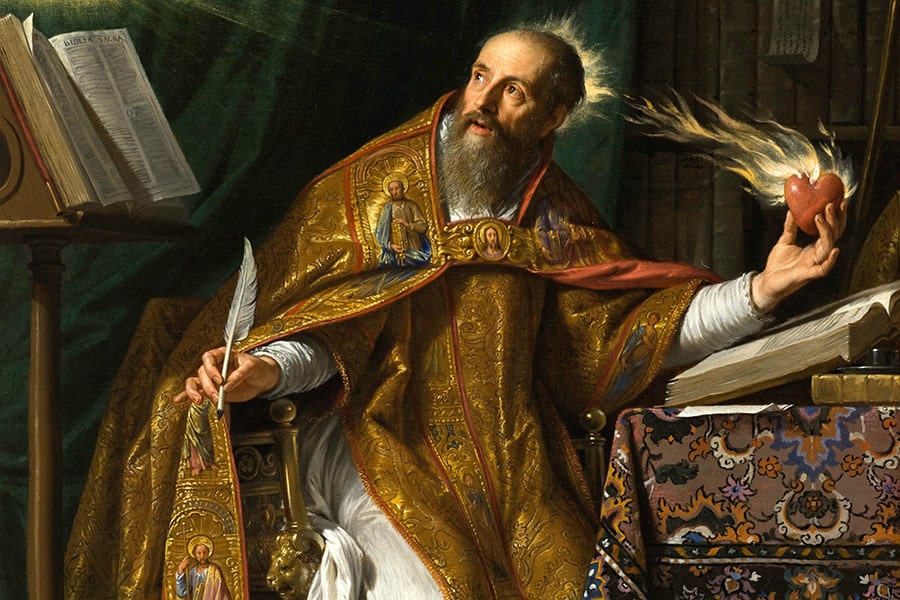
The Donatist comeback
The strange, Donatist parallelism between the SSPX leadership and the German Synodal Path illustrates what’s come to be called the “horseshoe effect:” in a moment of cultural turbulence, social fragmentation, and political dysfunction like our own, the extremes of left and right bend toward each other rather than occupying two ends of a linear spectrum.
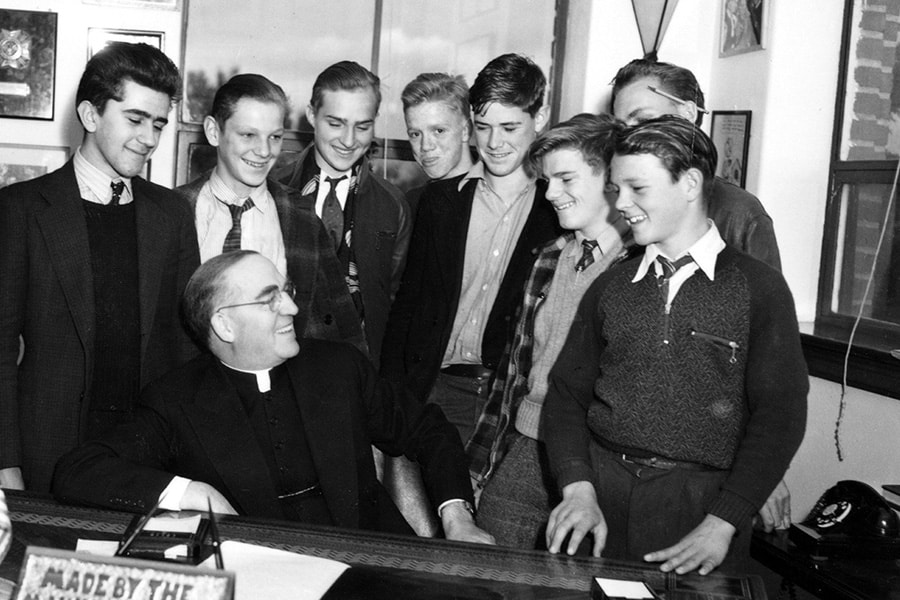
Who was Venerable Father Flanagan, Boys Town founder?
Father Flanagan is an icon of the power of diaconal identity. It both shows us and makes effective now the power of Christ the Servant. Where Father Flanagan saw pain, he rushed in and embraced the child of God who suffered. When he saw injustice, he spoke out eloquently and forcefully called others to greater charity in Christ.
Continue Reading Who was Venerable Father Flanagan, Boys Town founder?
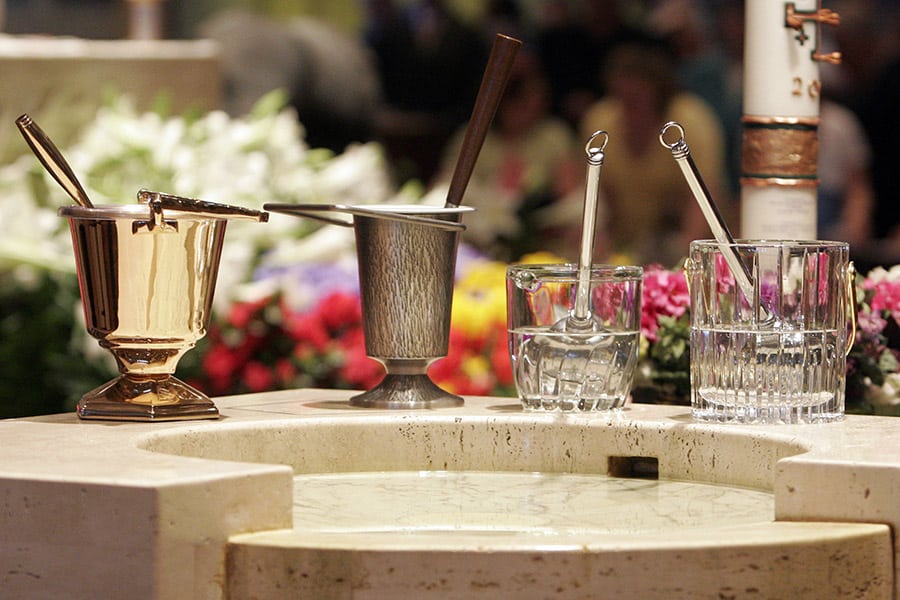
Question Corner: Does holy water ‘absolve’ us from venial sin?
With respect to holy water in particular, St. Thomas Aquinas specifically identifies the “sprinkling of holy water” as a means for the remission of venial sin in question 87, article 3 of the “Third Part” of his work the “Summa Theologica.”
Continue Reading Question Corner: Does holy water ‘absolve’ us from venial sin?
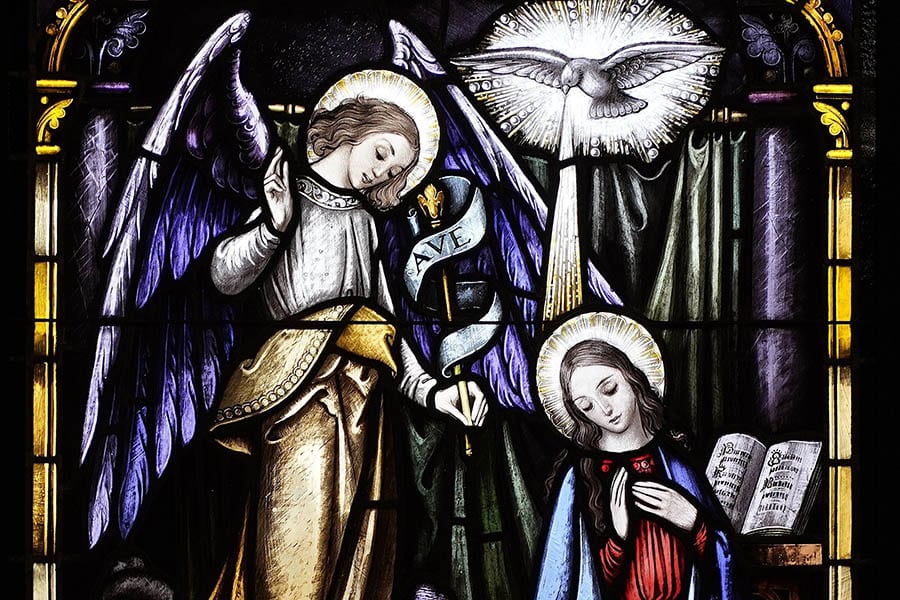
Why does the Annunciation loom so large in Catholicism?
The Annunciation is the full-on proof of Augustine’s words: “God created us without us, but he will not save us without us.” Just as God’s own Word of assent was necessary for the creation and sustained expansion of the universe, Mary’s “yes” was necessary to its salvation.
Continue Reading Why does the Annunciation loom so large in Catholicism?
What I have done and what I have failed to do
I’m on a quest to attend 226 Masses during 2026. So, back at the end of January, I decided to try to go to Mass every day of February. February is the shortest month, so I thought maybe I would have a chance at hitting that goal. But going every day is a real challenge…
Continue Reading What I have done and what I have failed to do
Copyright © 2022 Catholic News Service/U.S. Conference of Catholic Bishops
