Since the start of the U.S. and Israel’s war on Iran, some U.S. Catholic bishops have highlighted Church teaching on what constitutes a “just war” — with one cardinal flatly declaring the current conflict fails to meet the necessary criteria, and is therefore “morally illegitimate.”
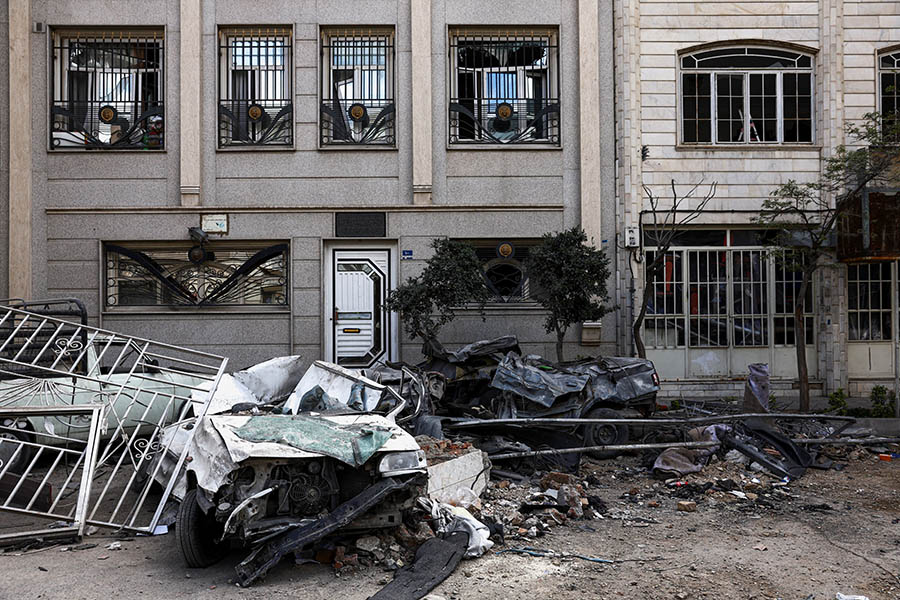
Now in its second week, the war — which has spread throughout the Middle East — has seen some 2,000 people killed, with an estimated 1,300 of the deaths in Iran.
Those fatalities include that nation’s supreme leader Ayatollah Ali Khamenei and several senior officials. At least 165, including a number of children, died at a school adjacent to an Iran Revolutionary Guard Base in Minab. Emerging footage indicates that the strike appeared to have been initiated by the U.S.
With the war engulfing multiple nations in the Middle East, another 400 have been reported killed in Lebanon — among them, a Maronite Catholic priest — and 11 in Israel. Seven U.S. soldiers have so far been killed, and more than 140 injured, amid the war.
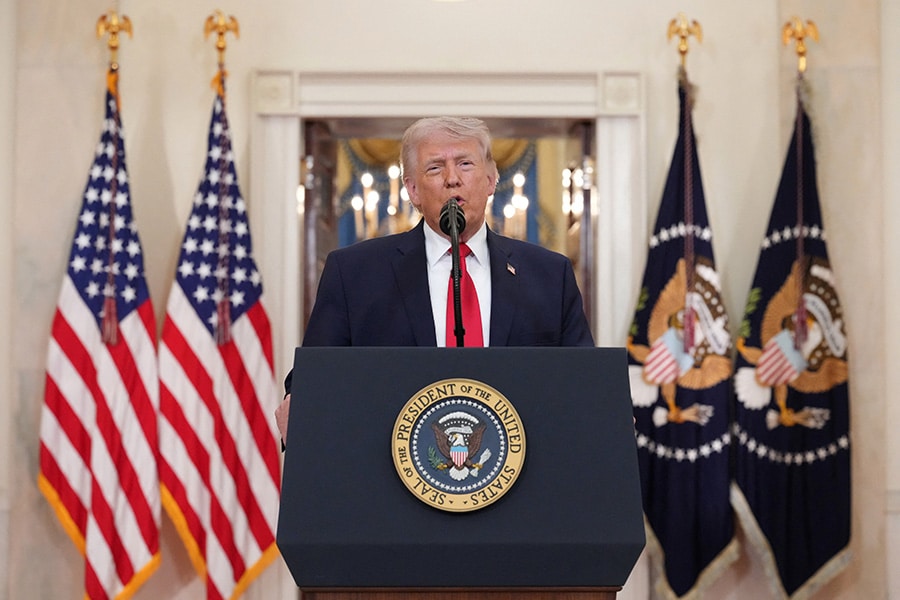
The Trump administration maintains the joint U.S.-Israel attacks have been necessary to counter threats posed by Iran — but several American Catholic prelates have pushed back, either directly or indirectly, on that assertion, while urging prayer, diplomacy and moral renewal.
Two of the most explicit condemnations of the war in light of Catholic teaching have come from Cardinal Robert W. McElroy of Washington and Bishop Anthony B. Taylor of Little Rock, Arkansas.
In a March 9 interview with The Catholic Standard, the newspaper of the Archdiocese of Washington, Cardinal McElroy said an analysis of U.S. actions against Iran “leads to the conclusion that our entry into this war was not morally legitimate.”
Bishop Taylor issued a March 3 statement on the use of military force, expressing his “deep concerns that the necessary conditions for so-called ‘just war’ do not appear to be met” in the current war, “based on the information publicly available.”
Both Cardinal McElroy and Bishop Taylor explained Church teaching on the concept of just war in their respective remarks.
Bishop Taylor noted that the Catechism of the Catholic Church (2309) outlines “four strict conditions” for “legitimate defense by military force,” and quoted the Catechism’s enumeration of those criteria:
- -the damage inflicted by the aggressor on the nation or community of nations must be lasting, grave and certain;
- -all other means of putting an end to it must have been shown to be impractical or ineffective;
- -there must be serious prospects of success;
- -the use of arms must not produce evils and disorders graver than the evil to be eliminated.
For the final condition, the Catechism adds, “the power of modern means of destruction weighs very heavily in evaluating this condition.”
In a March 4 statement, Bishop William Joensen of Des Moines, Iowa, invited the faithful to “learn what the Catechism of the Catholic Church teaches about conditions necessary for legitimate defense using military force,” directing readers to both sections 2309 and 2310.
In his March 9 interview, Cardinal McElroy noted that the Church has historically required six conditions to be met “clearly and simultaneously” if war is to be engaged “in some emergency situations.”
Along with those specified in the Catechism, “the legitimate authority in the country contemplating war must declare war,” and a nation must enter war “with right intention, namely to redress the specific just cause and restore peace,” said Cardinal McElroy.
Citing the relevant Latin terms, Bishop Taylor explained that the Catechism “elaborates not only on the ius ad bellum (the legitimate conditions for going to war), but also on the ius in bello (right conduct within a war).
“In other words, even if the initial use of defensive military force is morally legitimate, not all actions thereafter are necessarily morally permissible,” he said.
Cardinal McElroy said, “At this present moment, the U.S. decision to go to war against Iran fails to meet the just war threshold for a morally legitimate war in at least three requirements.”
The threshold for just cause was not met “because our country was not responding to an existing or imminent and objectively verifiable attack by Iran,” said the cardinal, adding that Pope Benedict XVI (as Cardinal Joseph Ratzinger) held that “Catholic teaching does not support preventative war.”
“If preventative war were to be accepted morally, then all limits to the cause for going to war would be put in extreme jeopardy,” Cardinal McElroy said.
He added that the U.S. had also not demonstrated “right intention” in attacking Iran.
“Our goals and intentions are absolutely unclear, ranging from the destruction of Iran’s conventional and nuclear weapons potential to the overthrow of its regime to the establishment of a democratic government to unconditional surrender,” said Cardinal McElroy. “You cannot satisfy the just war tradition’s criterion of right intention if you do not have a clear intention.”
And, he said, “Our current war effort does not meet Catholic just war teaching because it is far from clear that the benefits of this war will outweigh the harm which will be done.”
The cardinal described the Middle East as “the most unstable region in the world, and the most unpredictable,” adding that the war has already “had unintended consequences.”
Among those are “Iran’s morally despicable decision to target its neighbors in the region,” which has “has spread the expanse of destruction.”
As a result, said Cardinal McElroy, “Lebanon may fall into civil war. The world’s oil supply is under great strain. The potential disintegration of Iran could well produce new and dangerous realities. And the possibility of immense casualties on all sides is immense.”
Cardinal McElroy also said the U.S. “must insure that this war does not turn into a prolonged conflict, lurching from goal to goal and from strategy to strategy.”
“One of the most important Catholic teachings on war and peace is that nations have the strict obligation to end a war as soon as possible,” he said.
The cardinal, along with Bishops Taylor and Joensen, stressed the need for peace, prayer and moral renewal.
Church teaching on just war has at its heart “an abiding resistance to war,” as part of Christ’s call to discipleship, said Cardinal McElroy.
Ultimately, he said, “the moral questions that confront us today in Iran are part of a larger issue of moral renewal and dialogue that is deeply needed in our country that we reverence so profoundly.”
Read More Conflict in the Middle East
Copyright © 2026 OSV News
