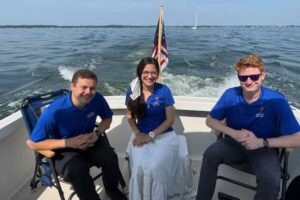
ON THE CHESAPEAKE BAY – For the nine “perpetual pilgrims” traveling with the National Eucharistic Pilgrimage from Florida to Maine to Pennsylvania, prayer and mission are at the center of their journey.
They started with a retreat before leaving St. Augustine, Fla., and will end with one after they complete the trip in Philadelphia July 5. In the middle, they will have another two-day retreat in New York.
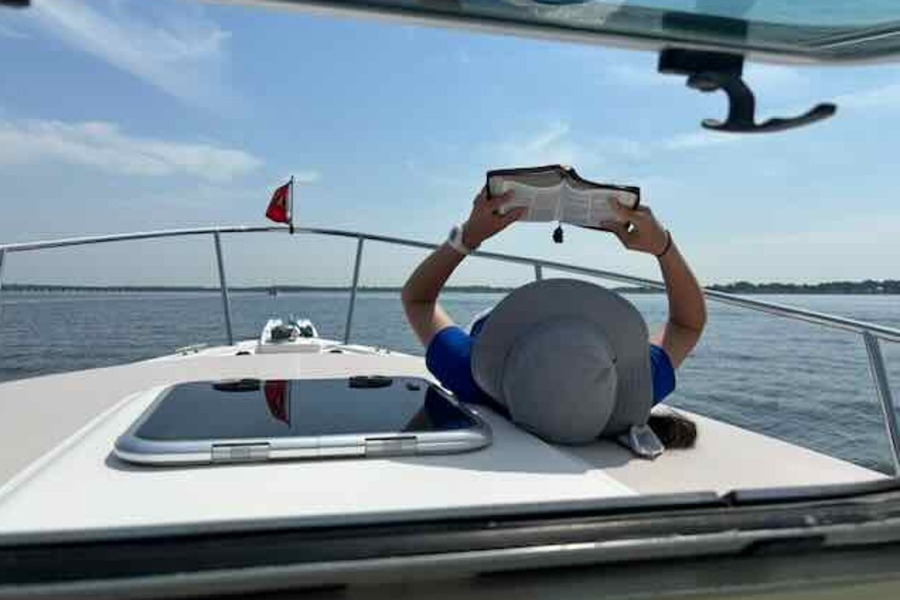
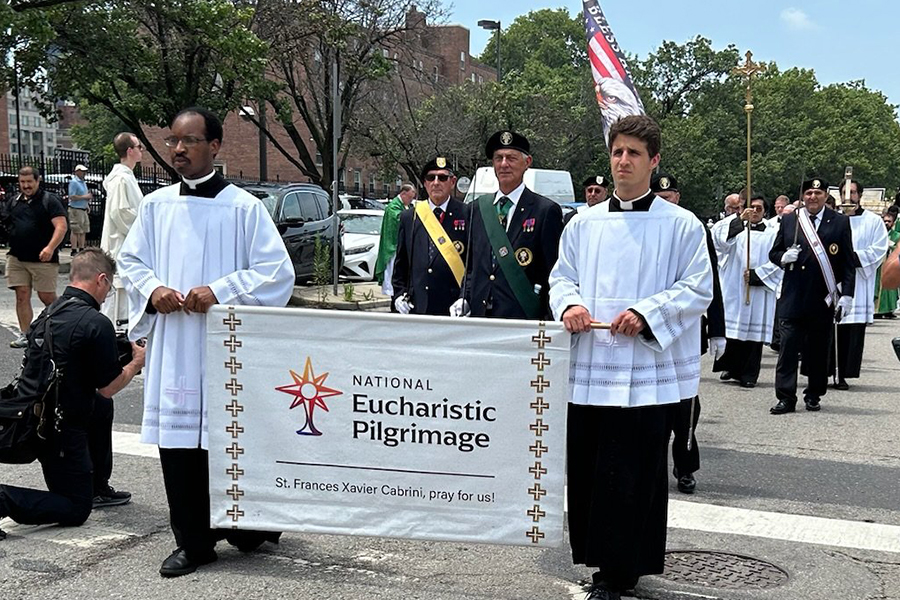
Along the way, they participate in adoration of the Blessed Sacrament, eucharistic processions, service projects and Masses – lots of Masses. For example, the schedule June 11 started with Mass at St. Mary in Annapolis and included Mass at St. Christopher in Chester on Maryland’s Eastern Shore and another at St. Michael the Archangel and Mary Mother of Peace in Georgetown, Del.
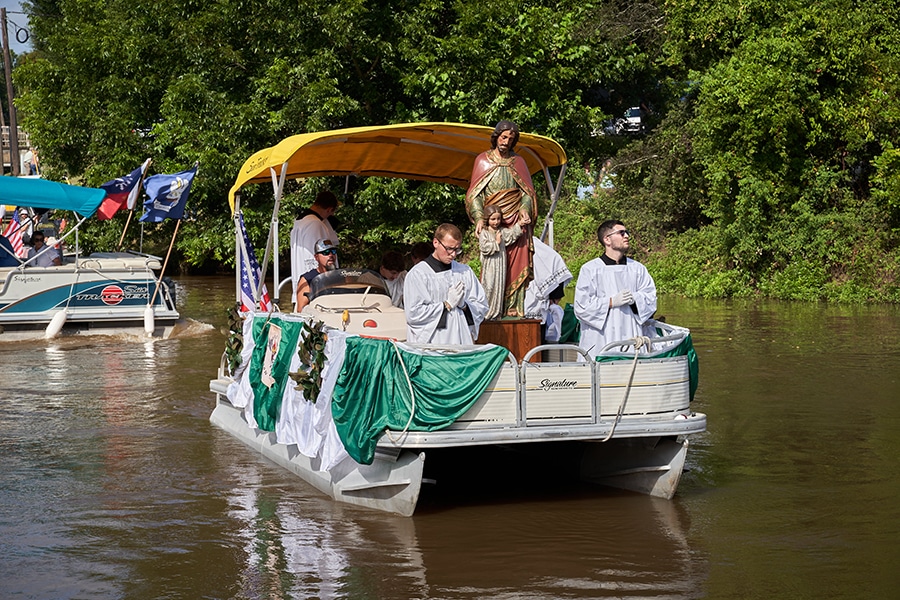
Each pilgrim has his or her own motivation for joining the pilgrimage. Three of them shared their thoughts with the Catholic Review on board the Moontower, one of five boats in a flotilla in the shape of the cross that executed what is believed to be the first eucharistic procession across the Chesapeake Bay June 11.
Mary Carmen Zakrajsek, 26, a director of youth faith formation at St. Vincent de Paul Parish in Elkhart, Ind., said she considered the pilgrimage “an invitation to spend a summer of intimacy with the Lord.” It was an opportunity to realign her life with the will of Christ.
The ability to spread devotion to the Lord in the Eucharist drew in Raymond Martinez II. “The Eucharist has had such a profound impact on my life and I just want everybody to know that he really is truly present in the Eucharist. I want them to experience our Lord in the same way as I do through the Eucharist.”
John Paul Flynn, a 20-year-old student from Bowie, Md., said he was always happiest and filled with joy when he went on summer missions.
“So, wanting to go on mission again and seeing the opportunity of getting to be in such close proximity to Christ, of getting to walk with him every day,” he said. “And I never saw this opportunity coming; I don’t think it would ever happen again. And so, it was really just beautiful to have this summer to spend it with Jesus.”
Martinez and Zakrajsek admitted they did not do as much physical training for the walking as they might have. Instead, they focused on spiritual training. Zakrajszk increased her visits to the Blessed Sacrament and started collecting prayer intentions ahead of the pilgrimage.
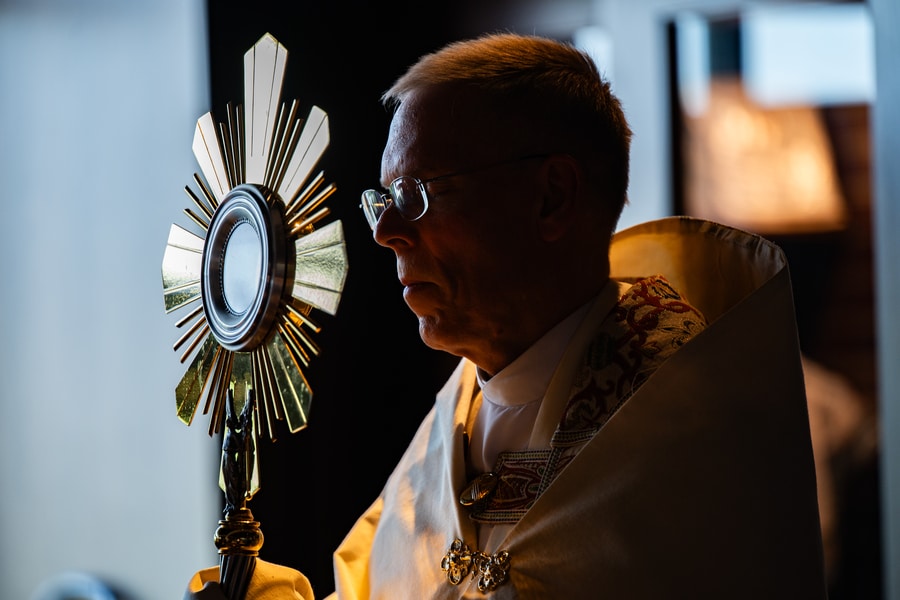
Martinez, 20, a rising senior at Conception Seminary College in Conception, Mo., explained that most of the miles are covered in a van that has a place for the monstrance to be mounted so the Eucharist can be exposed on the route. It also has a tabernacle where the Eucharist can be reposed.
“I didn’t really train enough for the walking, but really that is secondary to our mission to spread devotion to our Lord in the Eucharist this summer,” said Martinez, who hails from San Angelo, Texas.
Zakrajsek noted that the pilgrim team met once a week over Zoom and had guest speakers to provide formation. “But I did get new walking shoes before coming,” she said.
Flynn, who is in the Reserve Officer Training Corps at school, said that because of the ROTC training, he was physically ready. “But there is mental fatigue of going every single day. And through that mental fatigue, just seeing all the graces that are being poured into us that we can only do so much physically beforehand to prepare for it,” he said.
“I think it’s really beautiful seeing people and talking with people who have traveled long distances, traveling multiple hours, just to drive to a parish that we’re stopping at just so they can come see Jesus,” Flynn said. “It reminds me of the stories in the Gospels of people traveling from all over the place in huge crowds coming to see Jesus. I think that exact same thing is happening here today and it’s really, really cool to see.
Martinez said he encountered a woman, who he thinks was Jewish, at a nursing home they visited. “It seemed like this was the first time that the Eucharist had really been explained to her. And she was so moved that the Lord was coming to her home and that he was going to be present there with her,” he said.
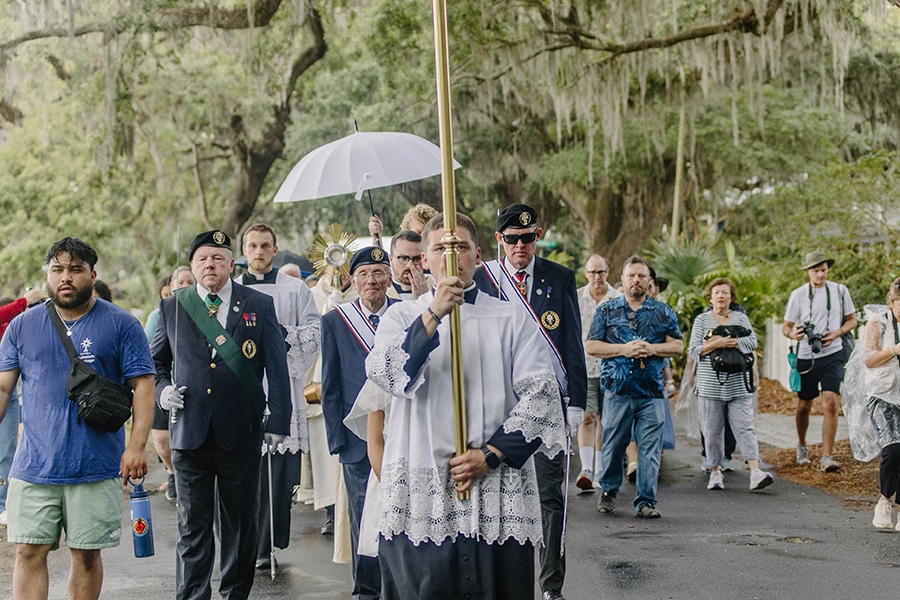
Zakrajsek recalled walking through downtown Savannah, Ga., when a woman came up and joined her toward the back of the procession. “I turned to her and I was like, ‘Isn’t this just amazing? Have you ever been in a eucharistic procession before?” She said no, she had just joined. I think she was just on the street and saw us and decided to walk with us.”
As the woman veered off from the procession, she said she was glad she did and felt good as she left.
“So that was a little God moment: Jesus attracts people, attracts all people to his heart,” Zakrajsek said. “There have just been a lot of small and big encounters, but overall, I’ve been really moved and inspired by the people of God and large crowds showing up to these parishes. And the joyful expectation they have of receiving Jesus into their hometown, even though he’s already there, right? But to be seen by God in a distinct way, in a historic way, in this nation’s 250th anniversary has been special.”
Martinez said the pilgrimage shows the universality of the Church, bringing together people from all walks of life and all kinds of locations – from a pregnancy clinic to a thriving Catholic school.
Flynn added that it gives them a chance to show that they are proud of their faith. “This is what we believe and we know it’s true. This is us as the Catholic Church and we want to invite you into it. We’re going to where they are and saying we believe this is Jesus, like really present in the sacrament, in the Eucharist,” he said.
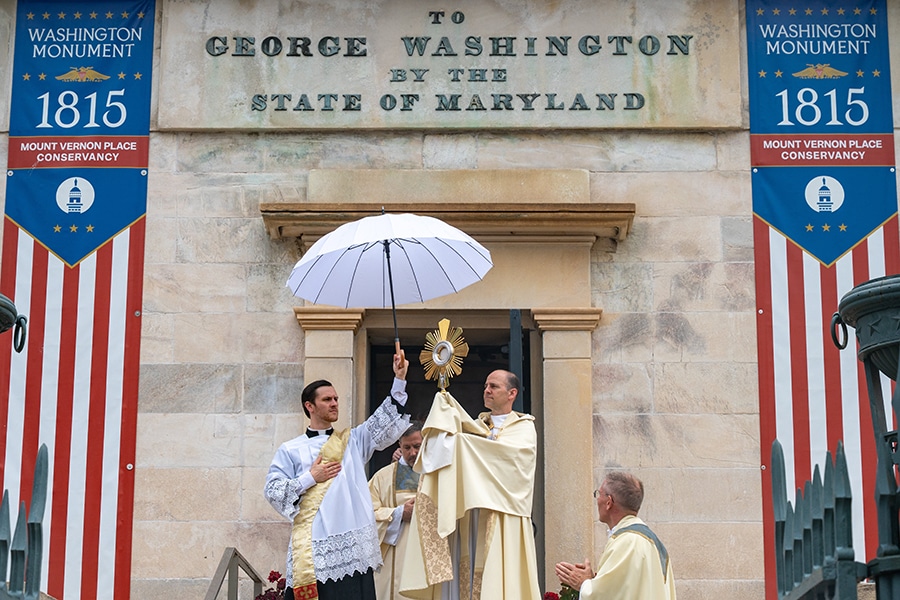
The National Eucharistic Pilgrimage is necessary for the United States, Zakrajsek said. “Our nation is in need of renewal and conversion, and we get to pray for our nation and also celebrate God’s blessings for 250 years, celebrate the fact that we can proclaim our faith publicly and boldly,” she said, noting that Charles Carroll of Carrollton laid the groundwork for religious freedom by persuading the Maryland legislature to overturn anti-Catholic laws.
The pilgrims get to rest one day a week, but even that day often includes preparing the van for the next week’s schedule. And they do laundry every few days at host families’ homes or retreat centers. But mostly, they are focused on the mission of bringing Jesus to the places they visit.
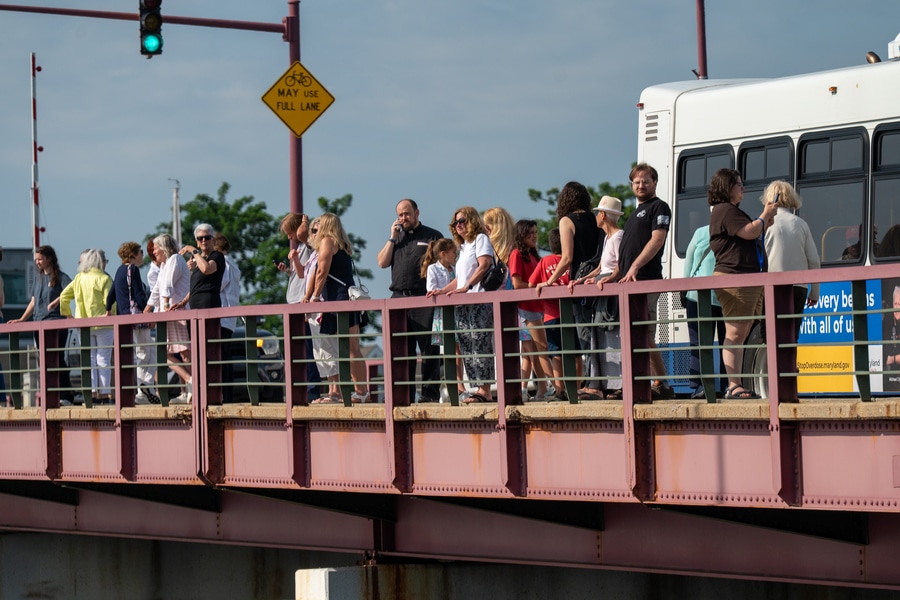
“I’ve been really struck by every time I see our Lord of the Eucharist in the streets and processions – even just the small processions of bringing him from the tabernacle in a parish to our van – and really seeing in a visual way that God became flesh for man. And he became flesh not just for me, not just for the people at this parish, but for the people walking on the crosswalks, the people in their cars at the traffic lights, the people honking their horns,” Zakrajsek said. “This really is a movement taking place across our country to invite everybody, Catholic and non-Catholic, to unite under our Lord and to be drawn to him and to be converted in an interior way and receive him in the flesh.”
Also see
Copyright © 2026 Catholic Review Media
