At the time of the American Revolution, Catholics may have comprised only 1 percent of the total population of the colonies – with the majority of them living in Maryland. Despite their small numbers, Catholics played a role in the founding of the United States of America.
In the Revolution itself, Catholics were well-represented in the militia in Maryland and Pennsylvania. And, especially in Maryland, the faith of Catholics – and their commitment to religious freedom – helped shape what this new nation would become.
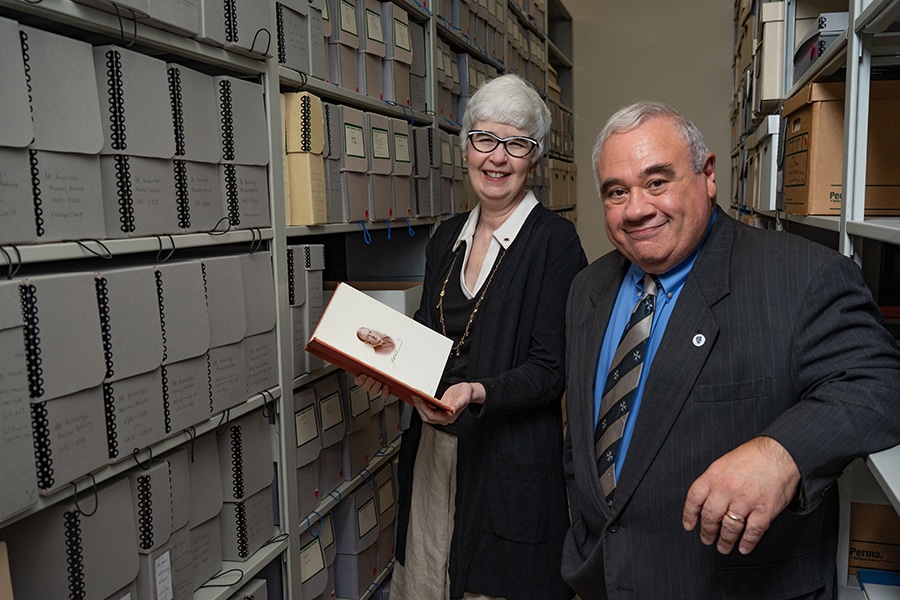
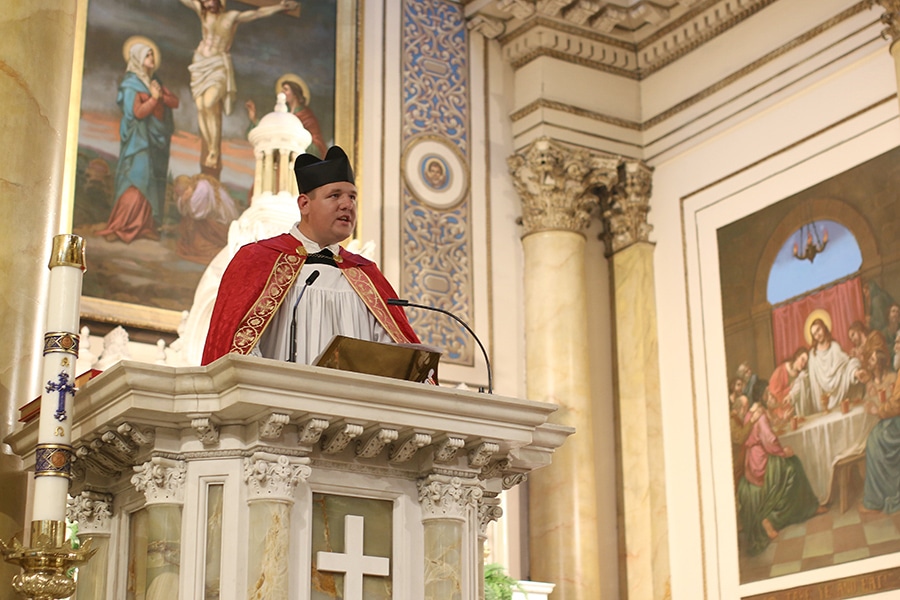
“Maryland was founded originally by the Calverts as a refuge for Catholics, but to their credit, it was for Catholics and all other people seeking religious liberty,” said Dennis Castillo, associate dean of assessment and accreditation and professor of church history at St. Mary’s Seminary and University in Roland Park. “So, we were not a big group. Our role in American independence is out of proportion to our size.”
Ensuring religious freedom was important to Catholics in the new world – fueling the fire to separate the colonies from England, where Catholics faced discrimination. Thanks to the Test Act of 1673 in England, Catholics were not able to serve in the military or hold public office.
“To hold any office in England, you had to reject transubstantiation and receive Communion according to the rites of the Church of England. Now, this was not just for teaching at Oxford or Cambridge or whatever. This would be like being Lord High Commissioner of Dog Catchers – any office,” Castillo said. “So, for Catholics, England represented restrictions. And England’s attitude to Catholics was always highly political. So, there’s actually a Catholic cause of the American Revolution.”
Although Catholics might have been committed to religious tolerance and freedom, it was not guaranteed those values would be considered an integral part of this new country when it was established.
“In this period, we see religious pluralism and the idea of openness to toleration emerging amongst the peoples of the new nation,” said Tricia Pyne, director of the Associated Archives at St. Mary’s Seminary and University and the archivist for the Archdiocese of Baltimore. “But it was by no means settled that the country was going to embrace religious toleration. So, Catholics were out there advocating. They knew what was at stake. They knew if they were ever to be accepted and allowed to participate and be recognized as full citizens, religious liberty needed to be embraced by the new country.”
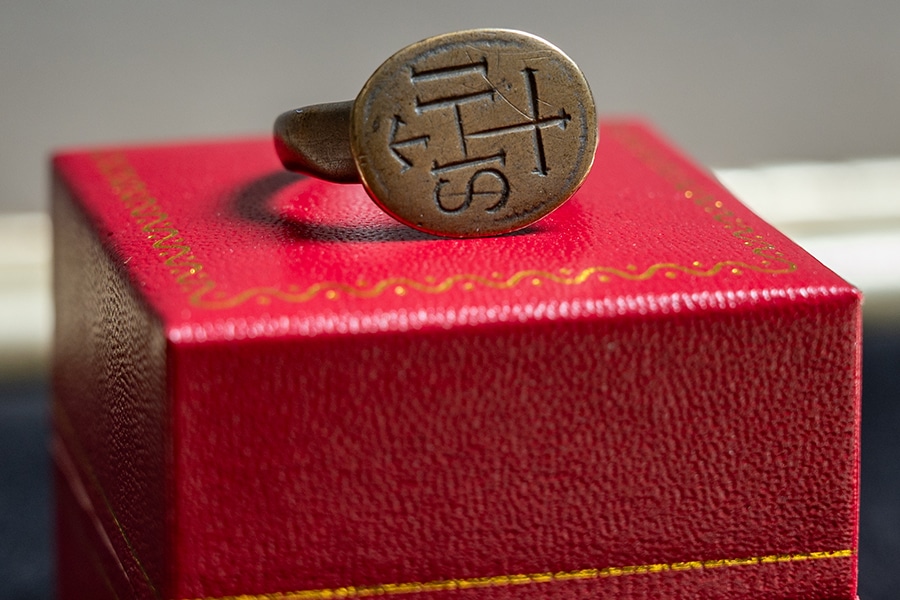
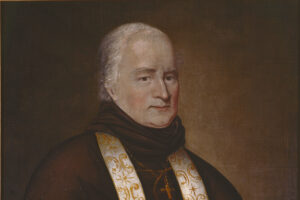
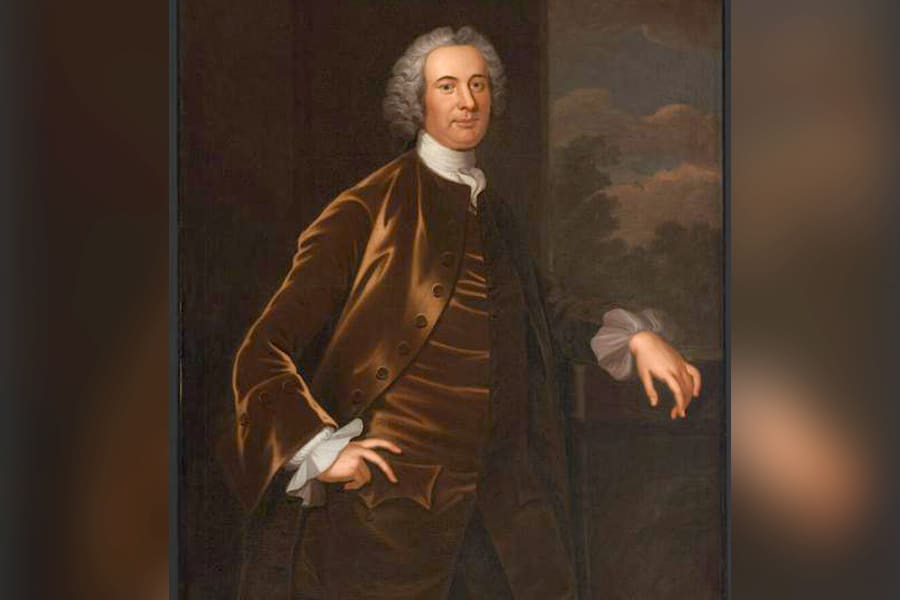
Two of those Catholics who were influential figures during this time were Charles Carroll and Archbishop John Carroll. Charles Carroll of Carrollton is best known as the only Catholic signer of the Declaration of Independence. His cousin John Carroll – who was related to him both on his mother’s and father’s sides – became the first bishop of what was, at the start, the Diocese of Baltimore, which included all the colonies and land to the west, such as that acquired through the Louisiana Purchase.
John, his brother Daniel and their cousin Charles were educated in Europe, where they were exposed to ideas of the Enlightenment and where Charles came to the conclusion that he would support the patriot cause.
“Things were brewing for years as to which way the colonies were going to go,” Pyne said. “But he made the decision that if the rupture did come, it would be best if Catholics threw their fate in with the patriot cause, because the crown had been doing very little to promote their rights and interests.”
Charles Carroll, who was one of the wealthiest men in the colonies, helped persuade members of the Catholic community in Maryland to support the patriot cause.
“It would have come at great cost had the revolution been suppressed,” Pyne said. “He would have probably been stripped of his fortune.”
Much of the wealth of the Catholic gentry in the colonies was built on plantation economy and many held people who were enslaved.
“A lot of the wealth that protected the Catholic community and enabled them to survive under what they call the Penal Years in Maryland history came from the profits that came out of enslaved labor,” Pyne said. “That’s so important to acknowledge.”
Economic interests were one factor that pushed Charles Carroll and others to support separation from England. Equally important, however, was the desire to secure freedom of worship, especially for Catholics. During the Penal Period, from the late 17th century through 1776, Catholics in Maryland faced legal and political restrictions under anti-Catholic laws modeled on those enacted in Britain.
Enduring religious toleration, followed by suppression and then a return to toleration shaped Catholic attitudes toward religious liberty. The Carrolls’ voices were influential at the time of the Revolution and their outspoken advocacy for embracing religious toleration was critical. Archbishop Carroll’s brother Daniel attended the Constitutional Convention and served on the committee that helped draft the First Amendment.
A Catholic vision for America
At the time of the American Revolution, the Archdiocese of Baltimore encompassed the entire nation. For a while, however, there was no designated bishop or archbishop.
“Because of strong anti-Catholic feelings, American Catholics were really nervous about establishing a diocese, having a bishop in the United States,” Castillo said. “So, the American clergy, all 25 of them, asked the pope, give us something that looks like a bishop and acts like a bishop, but it’s not a bishop.” Pope Pius VI instead created a role called the superior of the mission and selected Father John Carroll, a Jesuit priest who was already working to organize American priests.
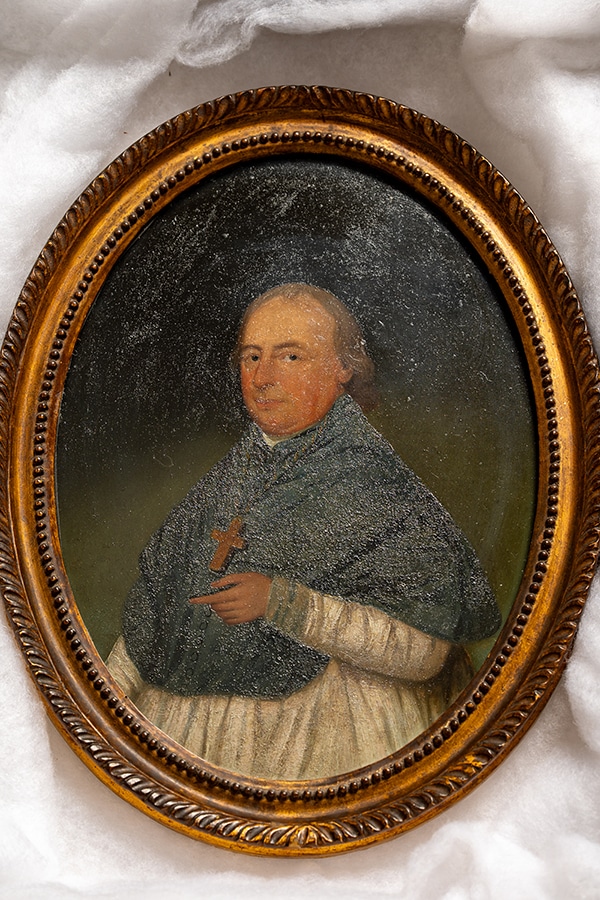
After the Methodists named a bishop and there was no backlash, the Catholics in the colonies reached out to the pope to ask for the right of American clergy to choose where the diocese would be and to elect their own bishop, Castillo said.
“Now, neither of the choices are a big surprise,” he said. “John Carroll is picked, and Baltimore is picked.”
When Benjamin Franklin was at the Bourbon Court in Paris, he had recommended that John Carroll be the first bishop, said Father Michael Roach, a priest of the Archdiocese of Baltimore and a member of the faculty at Mount St. Mary’s Seminary in Emmitsburg. Franklin and Father Carroll had connected on a diplomatic mission to Montreal.
“Benjamin Franklin never forgot Carroll’s kindness to him because he was suffering from the gout and all sorts of things, and John Carroll really took good care of him,” Father Roach said. “So, when he was talking to the Vatican ambassador in Paris, he said, ‘I know Father John Carroll would be a good bishop.’ ”
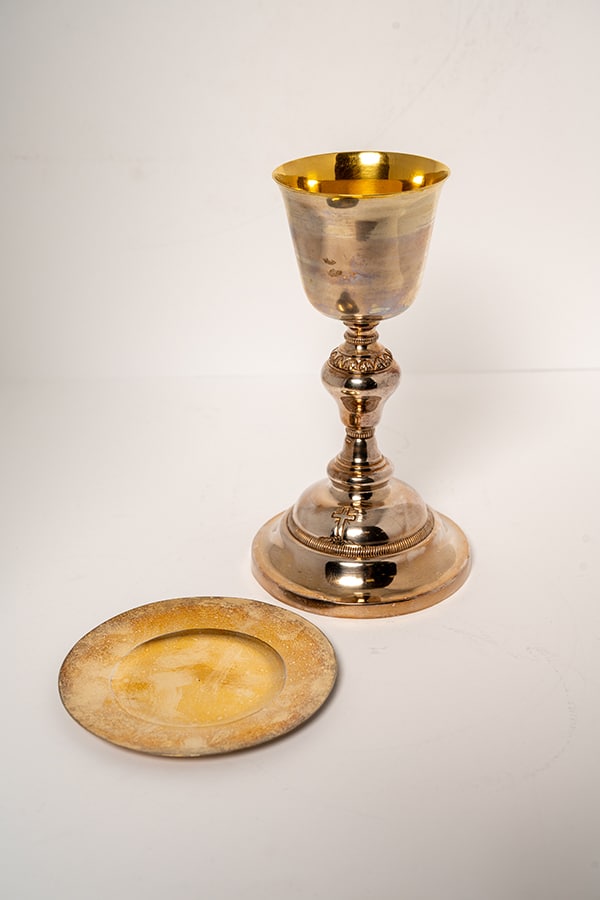
Archbishop Carroll had a vision for a distinctly American Catholicism, one rooted in religious freedom, civic participation and adaptation to a democratic society – and one in a nation not just of religious tolerance but also where church and state were separate.
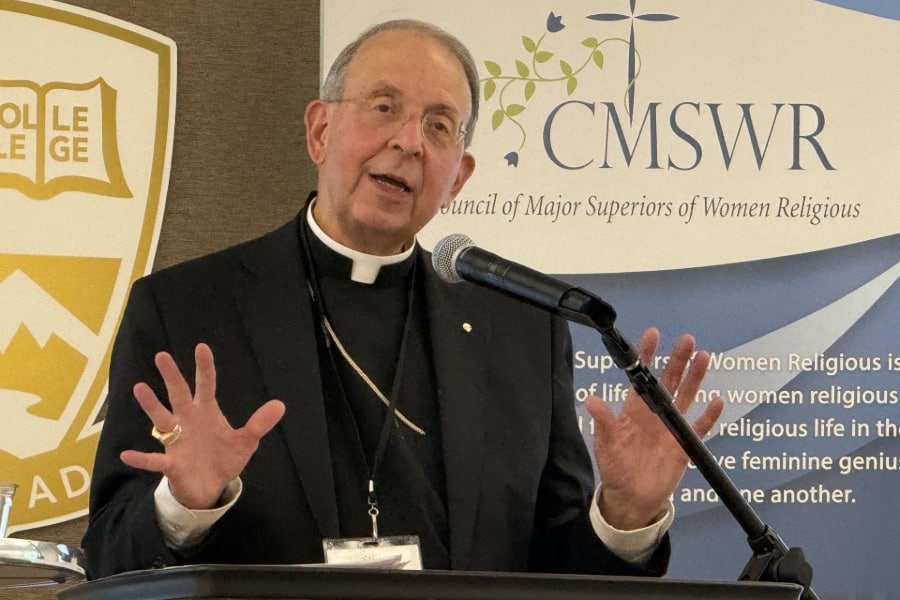
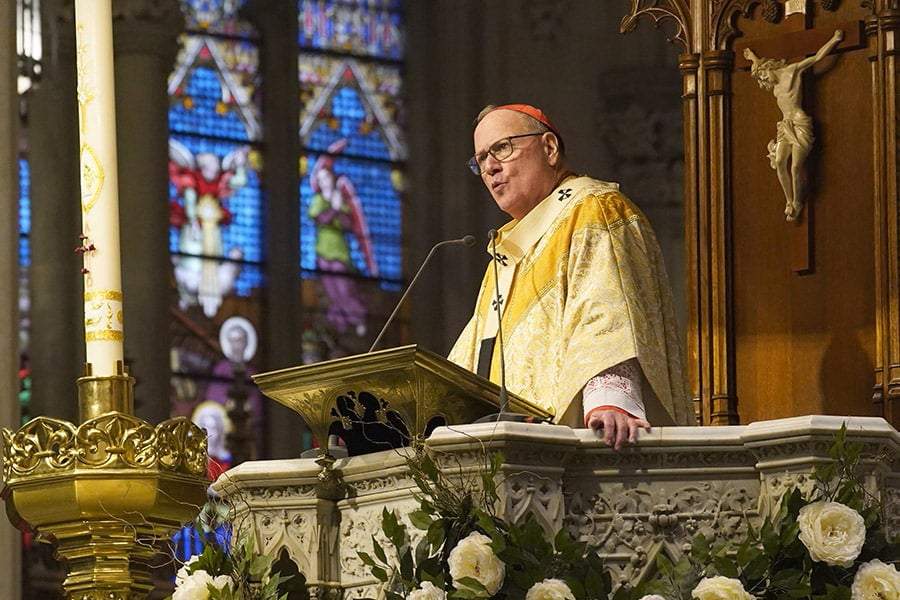
“Archbishop Carroll knew many of the founders and understood their aspirations. It fell to him to chart the course of the Catholic Church in a new nation that eschewed established religion, but instead recognized freedom of religion as a God-given right. This was no easy task,” Archbishop William E. Lori wrote in a Catholic Review column earlier this spring. “In spite of the constitutional guarantee of religious freedom, anti-Catholicism was in the air. So also, the Vatican authorities were wary of religious freedom, fearing it would lead to indifferentism. Archbishop Carroll proceeded with a wisdom and restraint that served well the cause of democracy and the cause of religious liberty.”
Although the size of John Hancock’s signature on the Declaration of Independence tends to be noted most often, Castillo noted that Charles Carroll’s is significant.
“People make a big deal about John Hancock’s signature. It’s really big and all that. But Charles Carroll of Carrollton’s signature is pretty big as well.”
read more america 250
Copyright © 2026 Catholic Review Media
