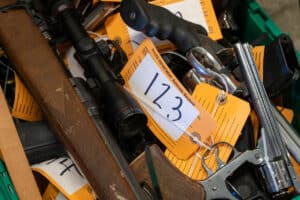
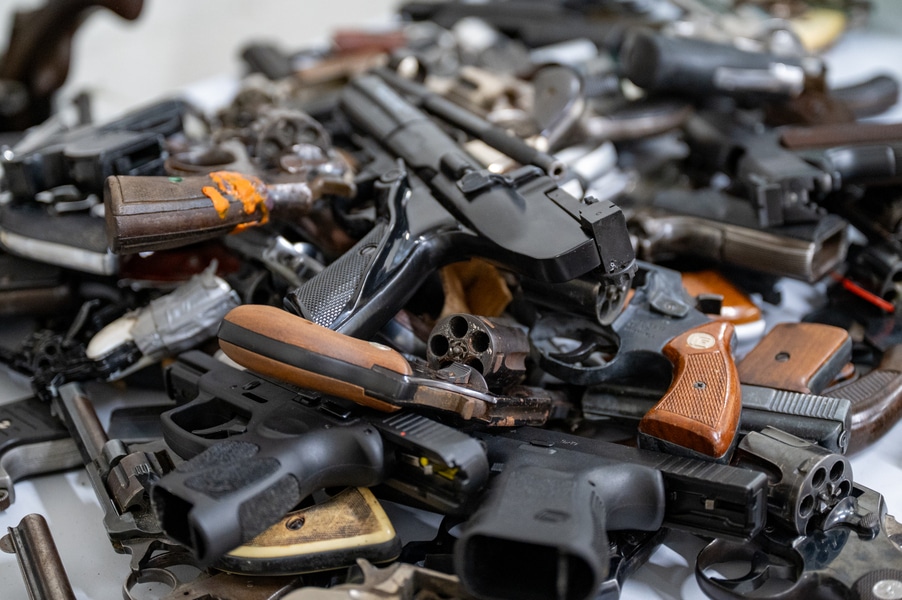
The 410 firearms collected during the Archdiocese of Baltimore’s third annual gun buyback Aug. 9 exceeded expectations and boosted hopes of ending gun violence. The day’s urgency was underscored hours later when a mass shooting in Park Heights left a 38-year-old man dead and injured four other adults and a 5-year-old girl.
Held at Westside Shopping Center in Southwest Baltimore, other co-sponsors were the Baltimore City Police Department, St. Joseph’s Monastery Parish and the Health by Southwest coalition.
Organizer Father Michael Murphy, pastor of Our Lady of Victory in Arbutus and St. Joseph Monastery in Southwest Baltimore, had hoped to net 300 weapons this year, considering a total of 646 guns were recovered during the 2023 and 2024 gun-buybacks.
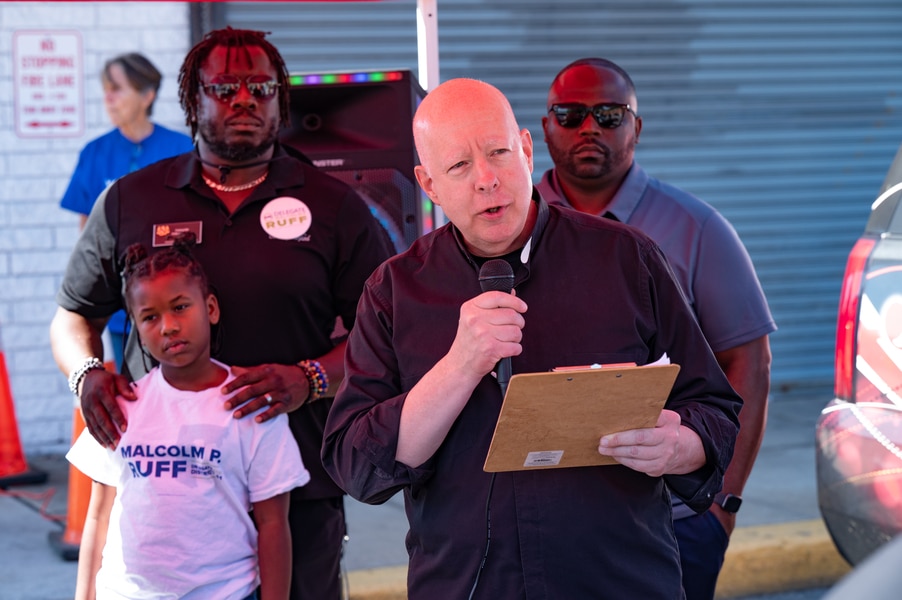
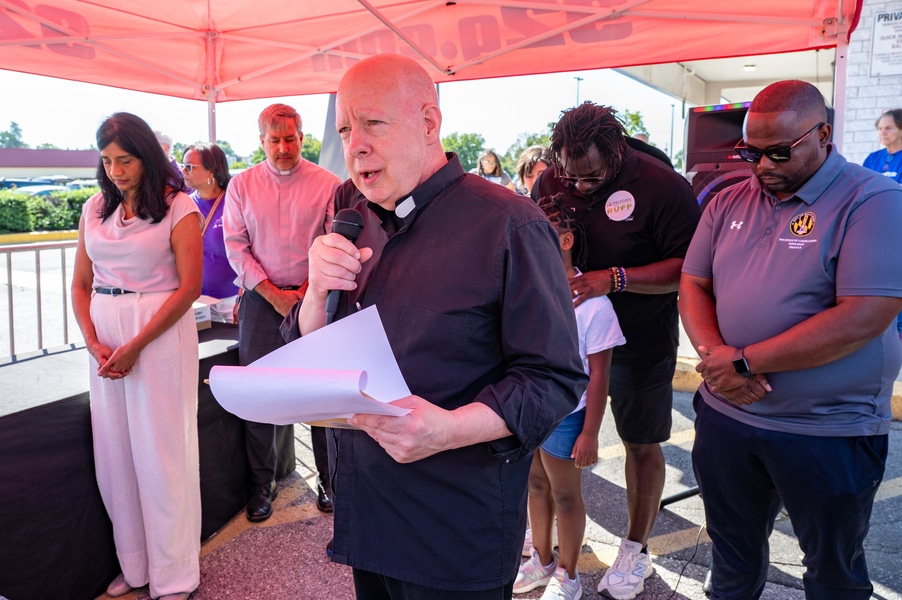
“This is about building a culture of peace one step at a time,” Father Murphy said during his welcome. “Each year we build upon this event and do things throughout the year to remind people that all life is sacred. … We have a long way to go to make that a reality.”
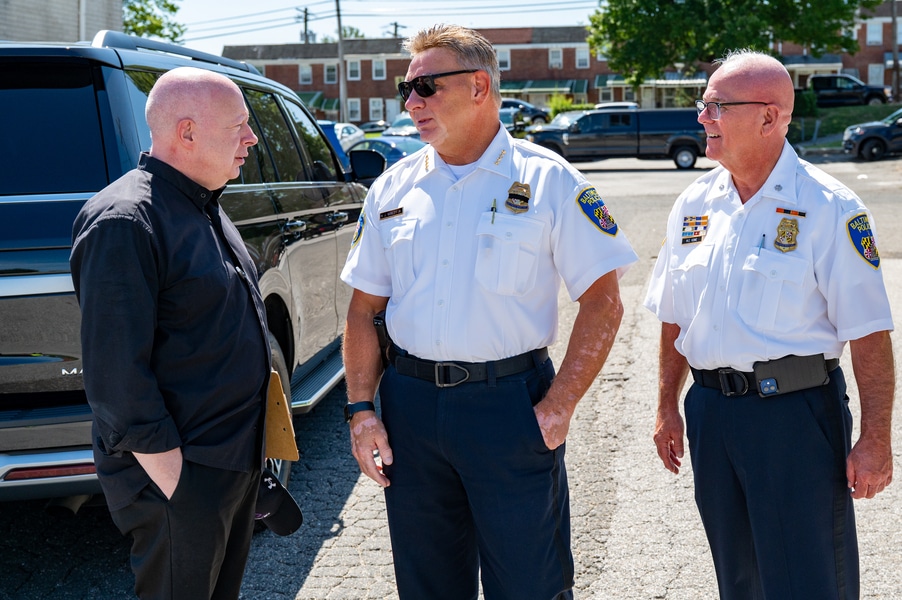
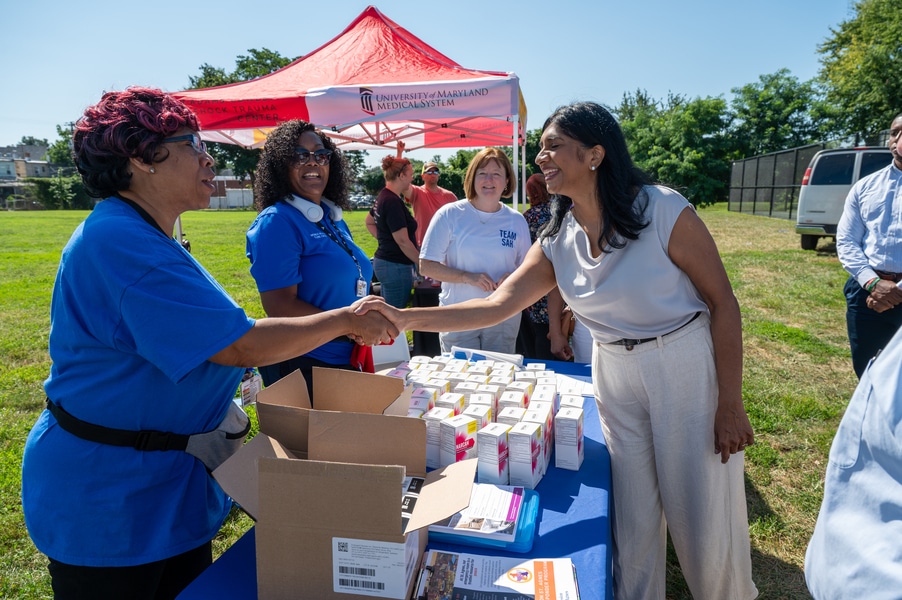
Father Murphy was flanked by parish volunteers, ministers, officers and elected officials, including Maryland Lt. Governor Aruna Miller. The “hard truth,” she said, is that “two-thirds of the guns that come into Baltimore are from out of state,” brought by traffickers “moving violence, too, from neighborhood to neighborhood.”
Even so, she continued, “the best cure against gun violence is “you, Baltimore. … You … don’t believe that violence is an inevitable part of your day. … You believe in prevention, intervention and, most importantly, redemption.”
Because she and Maryland Gov. Wes Moore both believe in redemption, in putting on the right path those who made harmful choices, she said, the Center for Firearm Violence Prevention and Intervention was created and situated in the Maryland Department of Health.
“Violence should be seen through a public health lens,” Miller insisted, “because safety is not just the absence of crime. Safety is the presence of hope, and that’s why we are here today.”
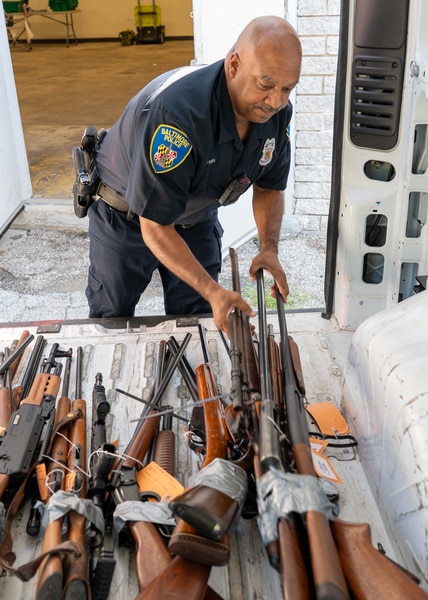
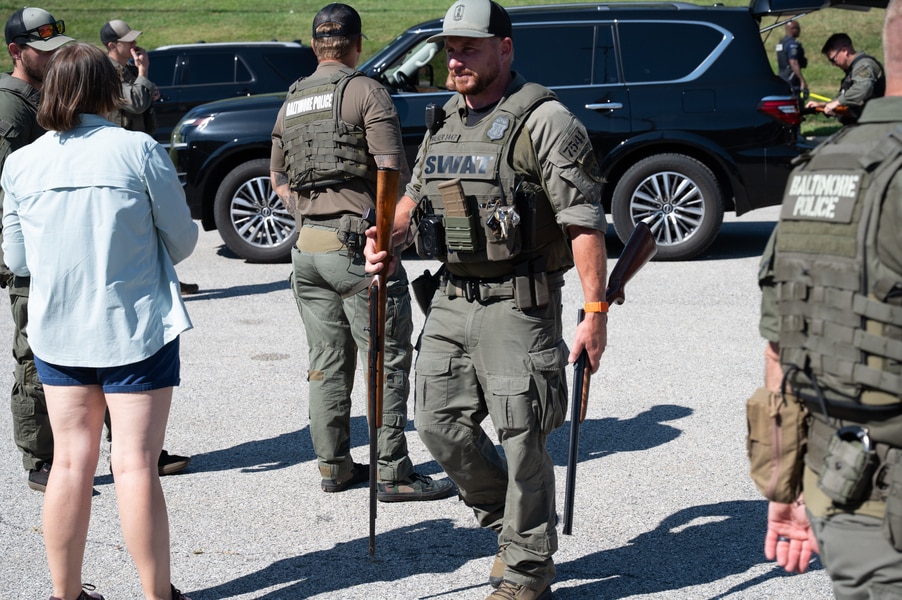
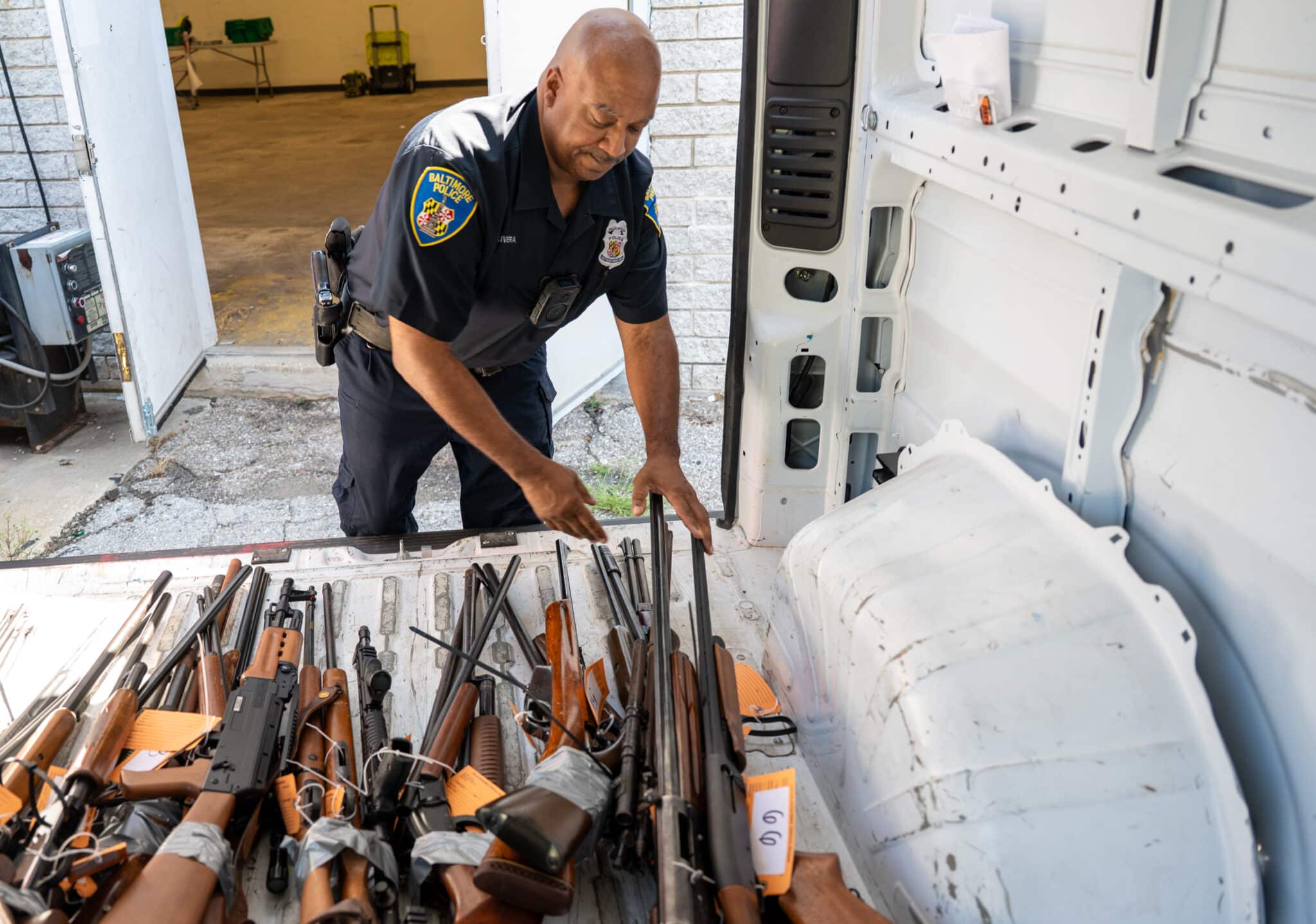
Baltimore Police Captain Jeffrey Dipaola echoed her sentiment. He was responsible for security and will oversee the destruction of turned-in firearms.
“Our first and foremost goal is safety today,” he explained. “We’ve instructed our officers not to have their body-worn cameras on. This is an anonymous event.”
Reasons for people taking advantage of the buyback varied. Some had more guns than they needed while others were attracted by the cash offer.
“I’m giving my guns back because I don’t shoot them anymore, and I’m having a kid in December,” said one man.
Local resident Dorothy Cunningham welcomed the buyback but lamented that the young people often responsible for the city’s gun violence were not seen participating.
“My grandson got killed coming home from school, got caught in a crossfire,” she said. “So it means a lot to me to get these guns off the street.
“They started shooting (at) 4 o’clock yesterday morning in my community,” she added. “A 16-year-old and a 14-year-old were robbing two 14-year-olds.
“Why are you out in the street (at) 4 o’clock in the morning?” she asked. “That’s a big problem with these young people. They’re the ones toting the guns and may not turn them in. Parents know what’s happening. You’ve got to know what’s (going on) in your house.”
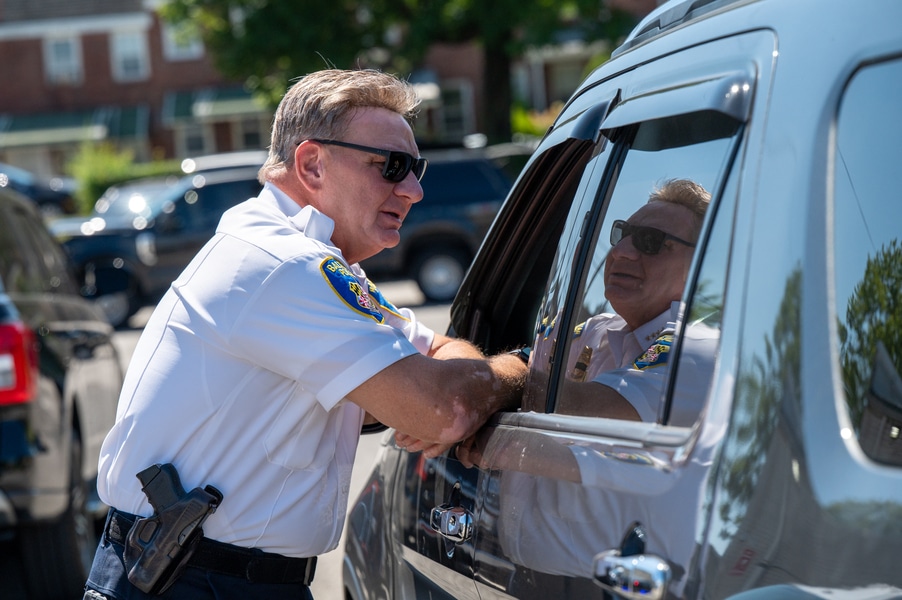
Another man who had just received his payment spotted Baltimore Police Commissioner Richard Worley. He shouted his thanks for the program and said he had spent 40 years fearing the gun would be stolen. Now he was relieved.
It’s just as important to limit access to guns in homes as it is to get weapons out of the wrong hands, Worley said. “Guns in the home are the ones that could get stolen, … so I appreciate everyone turning them in if they’re not going to use them.”
Worley told the Catholic Review that the archdiocese has “always been a good partner” with projects involving the police. He recalled enjoying occasional breakfasts or lunches with Archbishop William E. Lori.
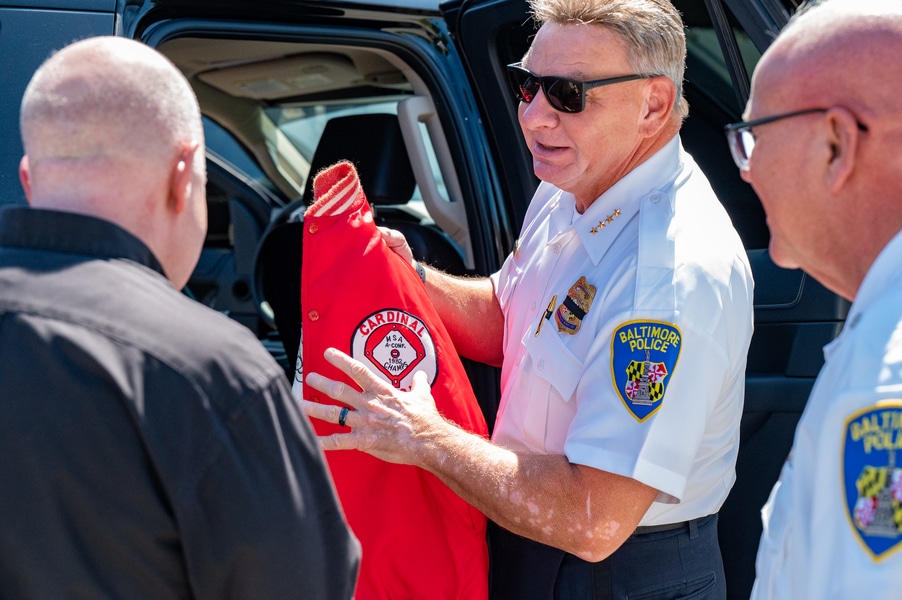
“I’m a Catholic school boy,” said Worley, “a graduate of Cardinal Gibbons. Got to make sure the St. Joe graduate hears me up there,” referring to a nearby priest friend who replied, “Priests have very good hearing.”
Following his family’s move to Baltimore about eight months ago, Worley’s wife found his Cardinal Gibbons jacket and asked if she could throw it away, he said.
“I told her no!” he laughed. He even brought the jacket to the gun-buyback. Everything isn’t all work, he said. “We have a lot of fun” when we can, and the gun-buyback “is a great event.”
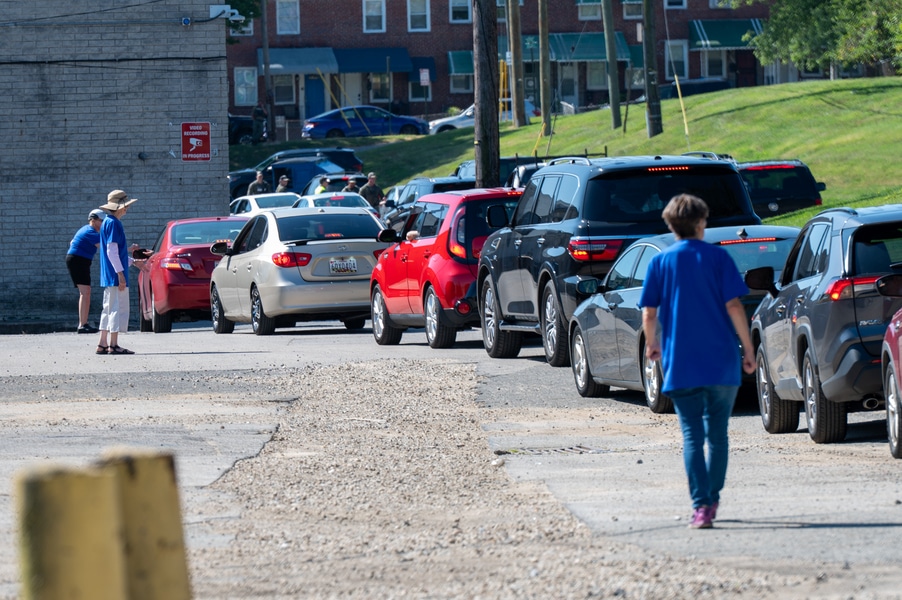
Buyback participants lined up in their vehicles well before the start time of 10 a.m. The line of cars stretched the whole length of the shopping center and wrapped around to the far side of the parking lot.
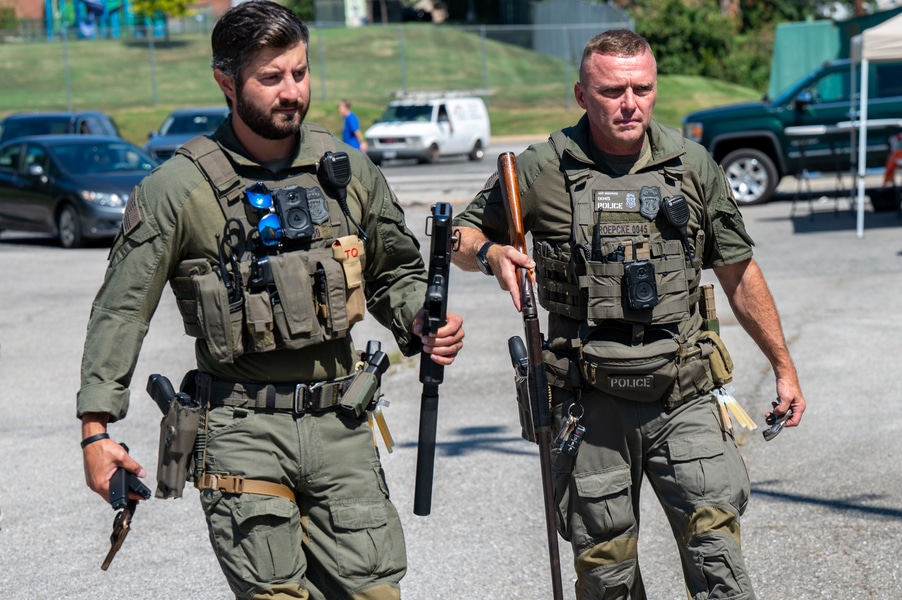
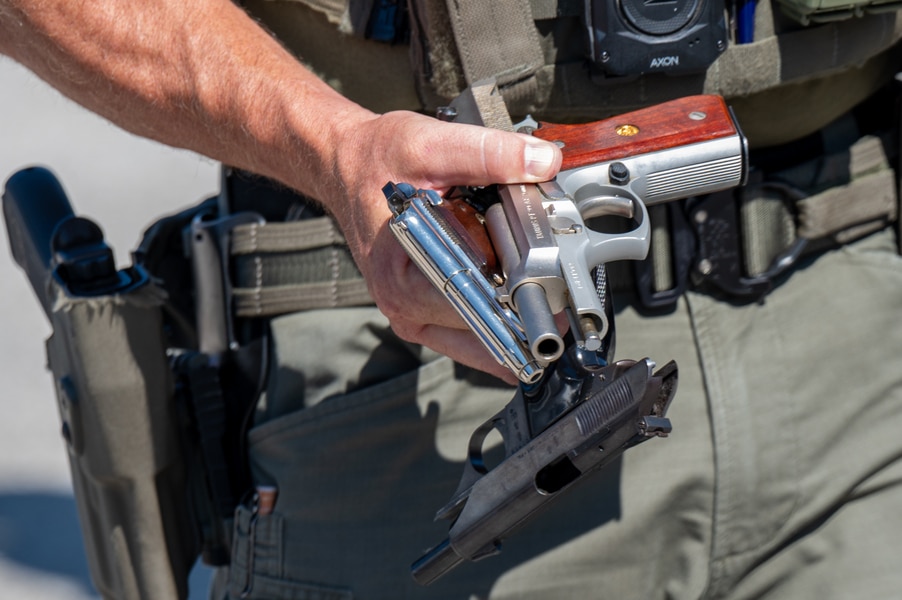
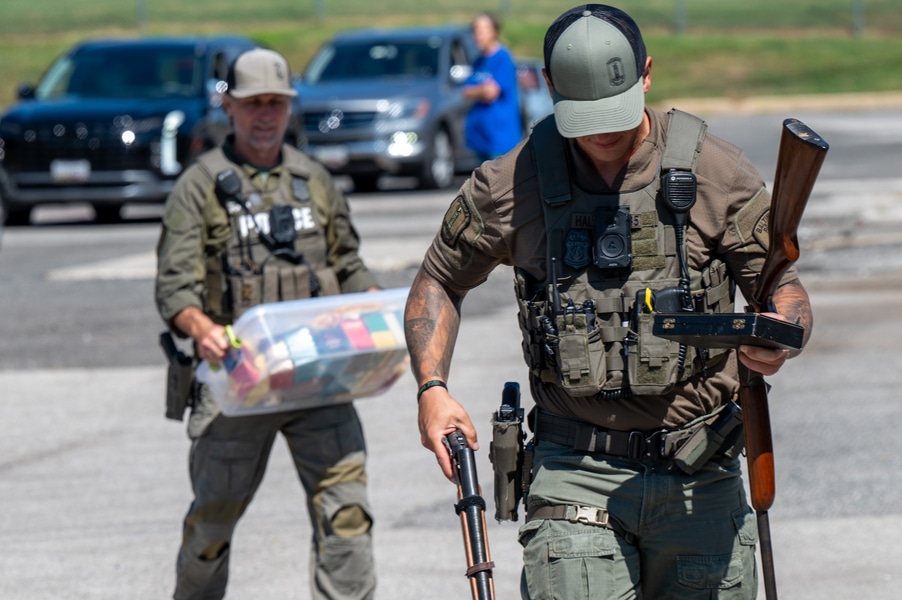
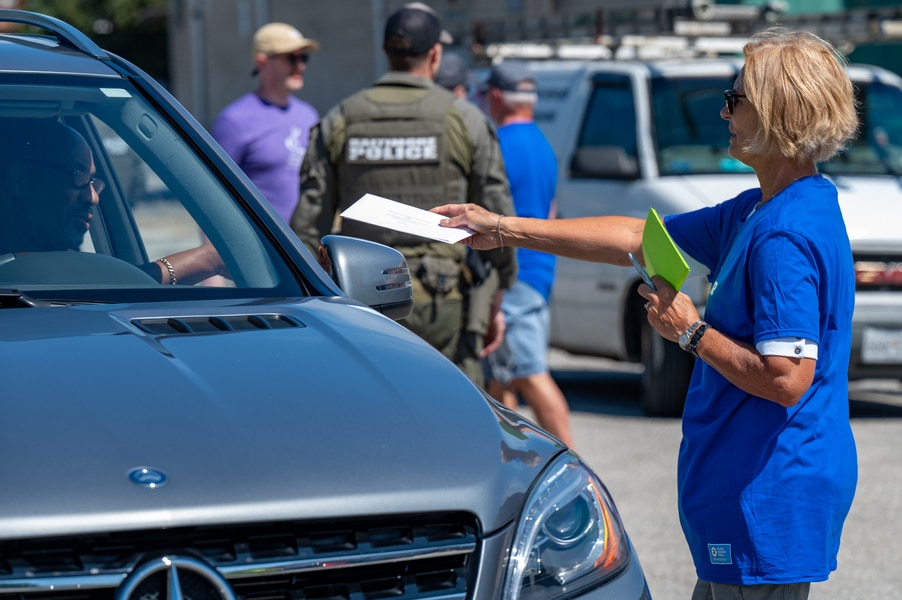
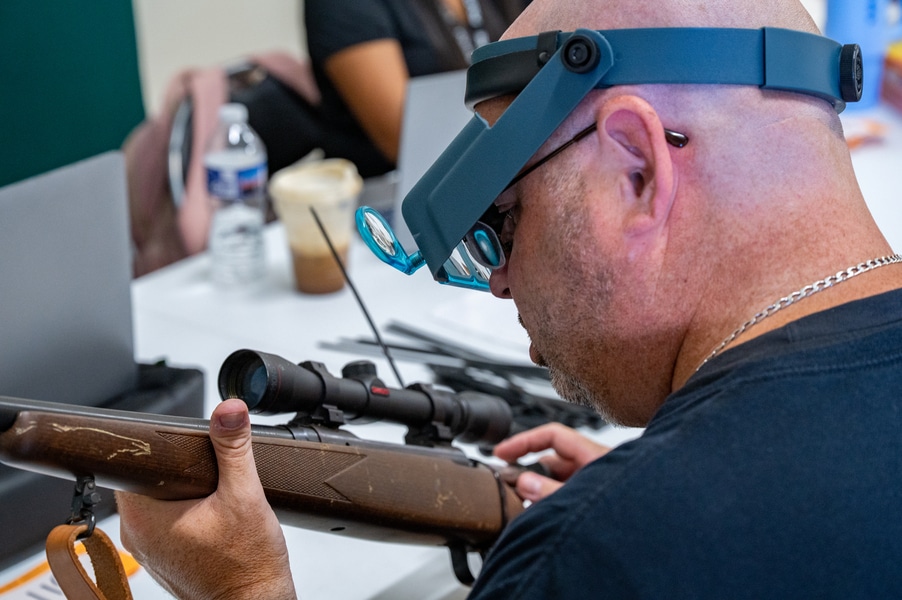
They were instructed to stay inside their vehicle, place their gun(s) in the trunk after removing bullets and proceed in single file to the spacious area behind the stores. There officers would examine each weapon and note on a card its type and corresponding payment due: $100 for revolvers, $150 for shotguns, $200 for handguns and semi-automatics and $300 for AR15s.
An officer would then present the card to volunteers stationed nearby who handed out cash-enclosed envelopes that the officer took back to the driver.
In late July, Father Murphy said $60,000 was available for the buyback. Donations came from parishes, religious orders and his contacts.
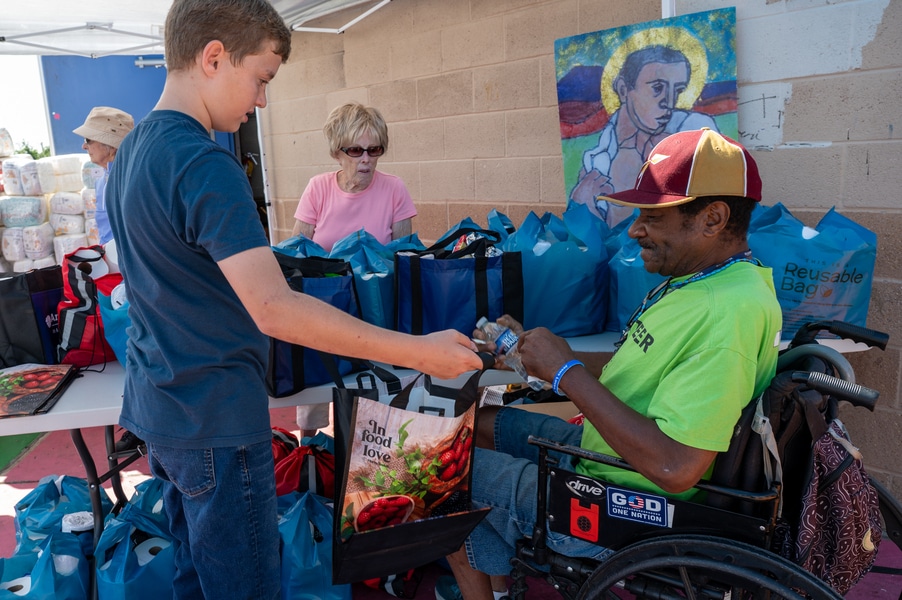
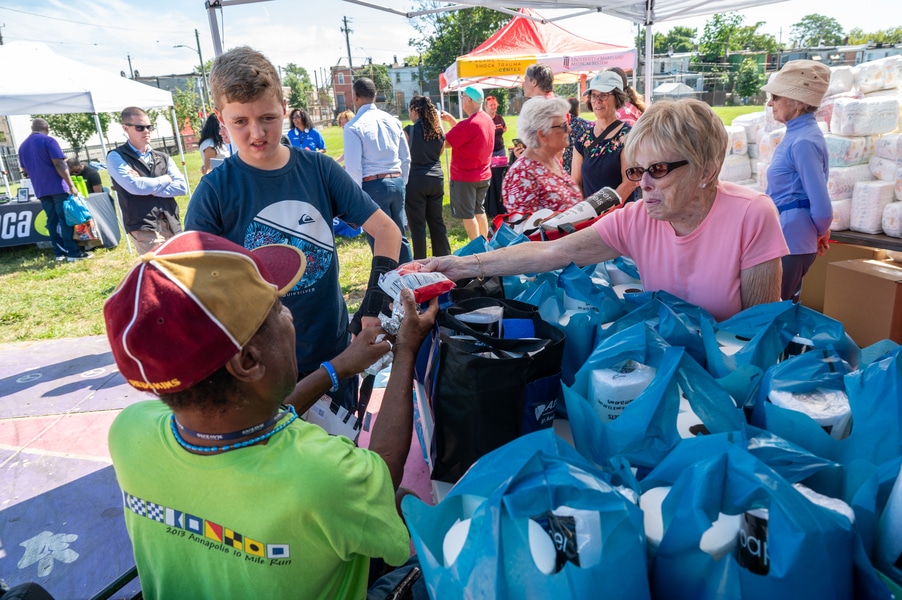
Happening simultaneously with the gun-buyback in a small park across from Westside was a Peace Building Fair spearheaded by the archdiocese and partner organizations.
Yvonne Wenger, the archdiocese’s public relations director, and Christian Kendzierski, its director of communications, said resources for families were available at the fair: support services, back-to-school items, toiletries, diapers, hot meals, snacks, beverages and a chance to speak with elected officials. Olivia Farrow, vice-president for external affairs with Ascension St. Agnes Hospital, distributed 200 Narcan nasal spray kits for treating opioid overdoses.
Volunteer Jeanne McCauley, a member of St. Joseph Monastery, said, “We want to get guns off the street because they frequently end up in the hands of people who shouldn’t have them, like children or adolescents who are trying to commit suicide.
“Suicide is the largest cause of adolescent death in the United States. … They get upset about something. They grab a gun and shoot themselves, and it’s irreversible. Very sad.”
People who missed the buyback and want to get rid of guns may call 3-1-1 and officers will come out and collect them, no questions asked, Worley said. “But no, we don’t have the budget to pay them.”
Father Murphy, in partnership with archdiocesan and community leaders, is planning to bring to Baltimore a powerful work of public art – a statue of Jesus mourning a homicide victim. Created by internationally acclaimed Canadian sculptor Timothy Schmalz, the piece is awaiting final approval of its location.
To view more photos from the gun buyback, click through the slideshow below:
Read More Gun Violence
Copyright © 2025 Catholic Review Media
