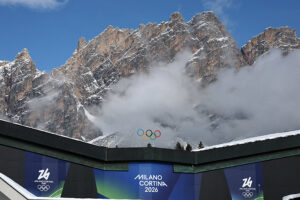
The 2026 Winter Olympic and Paralympic Games opening Feb. 6 are not merely a display of athletic prowess, but an opportunity to rediscover sports as a means of fostering peace in a fractured world, said an official of the Archdiocese of Milan.
“Sport is a common good, a good for everyone,” Father Stefano Guidi, director of the Foundation for Milanese Oratories, said in a telephone interview with OSV News Feb. 2.
The foundation, known by the Italian acronym FOM, serves as the operational hub for youth ministry across the Archdiocese of Milan. According to Father Guidi, FOM oversees nearly 1,000 parish youth centers in the archdiocese and over 2,000 across the northern Lombardy region.
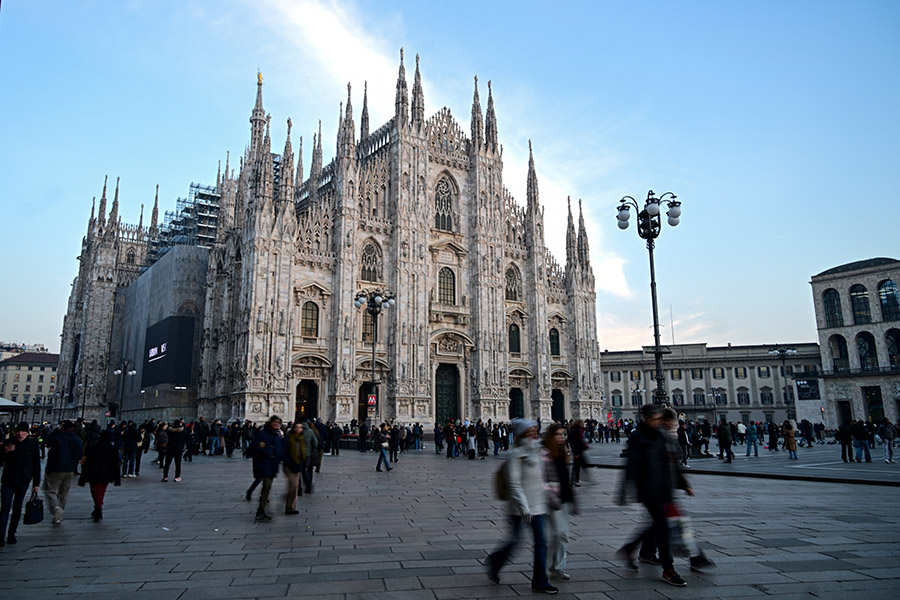
Father Guidi was involved in developing the archdiocese’s Olympic pastoral initiative, “For Each Other.”
Officially launched Jan. 29, the initiative, which will coincide with the Feb. 6-22 Winter Olympics and the March 6-15 Paralympics, will feature activities, performances and events hosted in parishes across Milan.
At the heart of the activities is the 11th-century Basilica di San Babila, dedicated to St. Babylas of Antioch, and will be known as the “Church of Athletes” throughout the Olympic and Paralympic Games.
During the Mass, the “Cross of Athletes” was entrusted to the archdiocese by Athletica Vaticana, the Holy See’s sports association. Blessed by Pope Francis at the 2013 World Youth Day in Rio de Janeiro, the cross has been placed in chapels in the Olympic host cities of London in 2012 and Paris in 2024.
Father Guidi told OSV News that the choice of placing the “Cross of Athletes” at San Babila was due to its location “right in the heart of Milan” in order to make it “as accessible as possible to everyone: athletes, staff working in the Olympic Village, tourists, fans and the citizens of Milan.”
The Milanese priest said the cross, which features a void silhouette of Christ’s crucified body, “evokes an opening” offered by the body of Christ that “allows us to look beyond.”
“It opens us to a mystery that goes beyond our lives while pointing back to the mystery of our own bodies. The body, as we know, is central to the experience of sport,” Father Guidi said. “We should live these weeks of the Games as a time when the body can speak and open itself to a dimension of otherness, the very dimension opened to us by the mystery of Jesus’ risen body.”
Father Guidi said the archdiocese’s primary challenge was to ensure that everyone, especially young people, felt engaged and involved during the Winter Games.
The “For Each Other” initiative will feature the “Tour of Sports Values,” in which local parishes will host three “Values Villages,” each highlighting the values espoused in the Olympic Chart: excellence, friendship and respect.
Exhibitions, discussions with athletes, educational workshops, and theatrical performances will be held in each of the villages, centered on the Olympic values.
Father Guidi told OSV News that the villages were “designed precisely to deepen the understanding of each of the three words of the Olympic Charter.”
“The first way we want to involve the youth of the city of Milan, from the oratories and schools, is to make them feel like participants, not spectators of something others are doing,” he said.
In each village, he explained, young people “will meet sports champions and encounter experiences of service. They will experience sports as an essential component” in creating an “experience of encounter and relationship with others.”
“We believe this is how the Olympics will effectively leave something in the hearts and lives of the young people living in Milan today,” he added. “They are already citizens of the city, but they will become even more so, enriched by this experience they will share.”
At his Sunday Angelus address Feb. 1, Pope Leo XIV said the Olympic and Paralympic Games were a “powerful message of fraternity and rekindle hope for a world at peace.”
“This is also the meaning of the Olympic truce, an ancient custom that accompanies the Games,” the pope said. “I hope that all those who care about peace among peoples and are in positions of authority will take this opportunity to make concrete gestures of détente and dialogue.”
Father Guidi said the pope’s call for an Olympic truce is a message that is “at the heart of these Olympics,” especially for those in power today.
“We are all very worried because we desire this peace but cannot find it. Therefore, the Holy Father’s message has extraordinary strength because it calls all those with political responsibilities to the great duty of peace,” he said.
However, Father Guidi also noted that Pope Leo’s call for peace is also a universal message because “we have educational responsibilities that are of no less importance.”
“Precisely for this reason, and at the Holy Father’s invitation, we want to help our young people welcome the gift of peace. There is no better way to do this than by learning mutual welcome,” he said.
“In this sense, sports, when experienced as encounter, relationship, and socialization, is among the determining factors that educate a young person in welcome and respect,” Father Guidi said. “It is the grammar of peace that is built from an early age and is acquired and practiced throughout one’s life. It is the grammar of welcome and respect that becomes the premise for welcoming the gift of peace in life.”
Read More Sports

Copyright © 2026 OSV News
